A crowded rail makes garments harder to wear, but it also makes them harder to care for. A good wardrobe organisation guide should help you decide what deserves hanger space, what needs folding, and what should be stored away until the right season. The aim is not a perfect-looking wardrobe; it is a system that keeps daily clothes visible while protecting fabrics from stretching, crushing, fading and damp.
The most useful approach is to sort clothes in two passes. First, group them by how you use them: daily wear, workwear, gym kit, occasion clothing, outerwear and seasonal pieces. Then refine each group by fabric needs, because cotton shirts, wool jumpers, viscose dresses and synthetic sportswear do not behave the same way in storage.
The short version
Sort by use first, then by fabric. Use decides where each garment lives; fabric decides whether it is hung, folded, aired, protected or rotated. The best system is one you can maintain on a wet Tuesday morning, not just one that looks tidy on the day you reorganise it.
- Keep daily clothes at eye level: shirts, trousers, uniforms, underwear, school items and weather-appropriate layers should be easy to reach.
- Fold anything that stretches: knitwear, heavy jersey, beaded items and soft wool blends usually fare better folded than hung.
- Hang items that crease sharply: woven shirts, tailored trousers, blazers, dresses and structured coats need room rather than pressure.
- Separate clean storage from worn-but-not-dirty clothes: this prevents odours and lint transfer.
- Give seasonal pieces a proper home: do not let summer linen or winter wool take up prime rail space all year.
Start with use: what do you actually reach for?
Before thinking about hangers, boxes or drawer dividers, split your clothing into practical use groups. This makes the wardrobe match real life rather than an idealised version of it. For most UK households, the useful groups are daily basics, smart work clothes, uniforms or workwear, exercise clothes, outerwear, occasion wear, loungewear and off-season clothing.
Daily clothing needs the easiest access. If you wear jeans, T-shirts, school shirts, office shirts or plain knit layers every week, they should not sit behind wedding outfits or heavy coats. Put these pieces between shoulder and waist height if possible, where you can see colours and repeat-wear items quickly.
Workwear deserves its own section if it carries dirt, odour, grease, lint or specialist care rules. Chef whites, care uniforms, high-vis layers, workshop trousers and office shirts should not all be mixed together. Keeping them separate makes laundering decisions easier and reduces the chance of work residues transferring to delicate or pale items.
Occasion clothes should be accessible enough to inspect before an event, but not so prominent that they crowd daily pieces. Dresses, suits, formal shirts and evening tops do well in garment bags or the quieter end of a rail. Choose breathable covers for natural fibres and avoid sealing anything away while it is even slightly damp.
Then sort by fabric behaviour
Once clothes are grouped by use, decide how each fabric wants to be stored. This is where many wardrobes go wrong: garments are sorted by colour or outfit type, but not by how the material reacts to weight, pressure, humidity and friction.
Cotton and linen
Cotton is usually forgiving, but it creases and absorbs smells. Shirts, blouses and smarter cotton trousers are easiest to manage on hangers with enough space between them. Fold casual T-shirts and sweatshirts, but avoid stacks so tall that the bottom pieces become compressed and forgotten. Linen needs airflow and room; overpacking it into drawers creates deep creases that take longer to remove.
Wool, cashmere and knitwear
Knitted garments should usually be folded because hangers can pull the shoulders out of shape. Keep heavier jumpers lower down, not in a high wobbling stack. If you are storing woollens between seasons, wash or air them first, let them dry fully and place them in a clean, dry drawer or breathable storage bag. For shape-safe drying before storage, use the steps in how to dry knitwear flat without stretching it.
Viscose, satin and other drapey fabrics
Viscose, satin, modal and many occasion fabrics can crease, mark or distort when packed too tightly. Hang dresses and blouses on smooth hangers if they are light enough not to stretch. If a garment is bias-cut, heavily embellished or very delicate, folding with tissue between layers can be safer than hanging. Keep these fabrics away from rough zips, hook-and-loop fastenings and heavy outerwear.
Synthetics and activewear
Polyester, nylon and elastane-rich garments are often low-crease but can hold odours if stored while even slightly stale. Give sportswear a separate drawer or basket so it does not mingle with clean cottons and delicates. Make sure it is completely dry before putting it away, particularly in winter when indoor drying is slower.
Outerwear and structured garments
Coats, blazers and tailored jackets need supportive hangers and enough shoulder room. Do not squash wool coats into a narrow rail between slippery satin and heavy bags. If space is tight, keep only current-season outerwear in the main wardrobe and move off-season coats to a clean, ventilated secondary area.
Give each zone a clear purpose
A well-organised wardrobe should answer three questions quickly: what can I wear today, what needs care before wearing, and what is being stored for later? Creating zones prevents clean laundry from drifting into piles and stops half-worn items from contaminating fresh clothes.
- Ready-to-wear zone: freshly laundered, dry and wearable clothes. This should be the neatest and easiest area to access.
- Refresh zone: garments that can be worn again after airing, steaming or lint removal. A hook outside the wardrobe or a small open rail works better than putting them straight back in.
- Repair or care zone: items needing buttons, stain treatment, de-bobbling, steaming or washing. Keep this small; if it grows, it becomes a hidden laundry backlog.
- Seasonal zone: clothes you are not using for several months. Store these clean, dry and labelled.
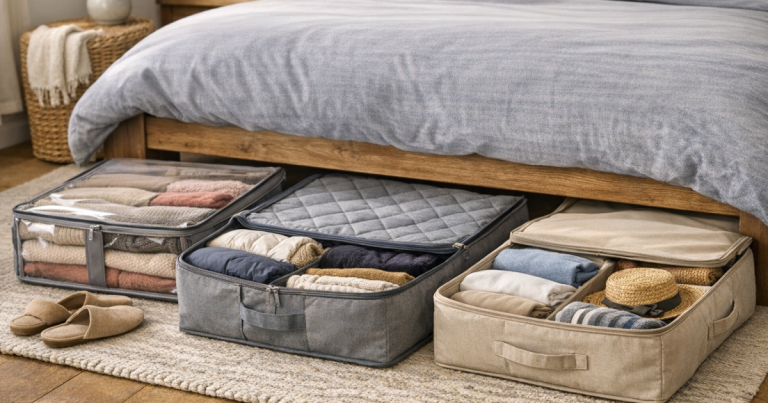
For seasonal rotations, under-bed storage can be useful in smaller UK homes where cupboard space is limited. The key is to keep fabric type in mind: wool and occasionwear need protection from dust and pressure, while cotton summer clothing can usually tolerate more compact folding. If you are short on wardrobe space, the guide to under-bed clothes storage bags for seasonal wardrobes explains the storage trade-offs to check.
Use hanger and drawer space according to garment risk
Not every garment deserves a hanger, and not every drawer stack is harmless. Use your best rail space for pieces that crease, need structure or must be visible for daily use. Use drawers for soft garments that can fold without damage.
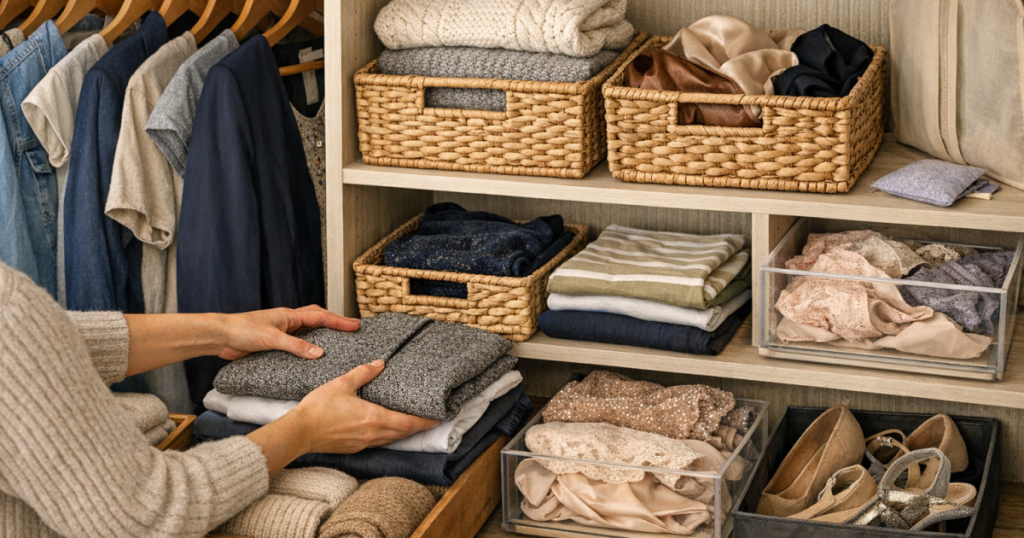
- Hang: shirts, blouses, tailored trousers, pleated skirts, blazers, lighter dresses and coats.
- Fold: jumpers, cardigans, heavy jersey, sweatshirts, T-shirts, activewear, scarves and soft loungewear.
- Protect: formalwear, pale occasion pieces, embellished garments, delicate satin, silk-like fabrics and out-of-season wool.
- Keep separate: worn workwear, gym clothing, muddy outer layers and anything waiting for stain treatment.
Drawer organisation does not have to be elaborate. A simple front-to-back fold helps you see more garments at once than a pile. Keep similar fabric weights together so thin camisoles do not disappear under sweatshirts and gym leggings do not tangle with tights.
Common sorting mistakes that damage clothes
The most common mistake is hanging everything. It feels tidy at first, but heavy knits and soft jersey can stretch at the shoulders, while slippery garments slide off and crease at the bottom of the wardrobe. Another mistake is sorting only by colour. Colour order looks satisfying, but it does not solve fabric problems such as crushed linen, misshapen knitwear or satin marked by friction.
Overfilling is just as damaging. When clothes are packed tightly, air cannot move between them and fabrics rub every time you pull something out. This can lead to creasing, lint transfer and surface wear. Leave enough space that you can move hangers along the rail without dragging one garment across another.
A third mistake is storing clothes before they are fully clean and dry. Body oils, deodorant, food marks and faint damp smells can become more noticeable in storage. In a typical UK home, especially during wet weather, give laundry extra airing time before closing drawers or storage bags.
Build a small fabric-care station near the wardrobe
A wardrobe works better when quick care tasks have a home. Keep a lint tool, spare buttons, a small sewing kit, a clothes brush and suitable hangers close by. This turns small maintenance jobs into two-minute tasks rather than reasons to abandon garments on a chair.
For wool coats, dark work trousers, tailoring and pet hair, a reusable lint tool can reduce waste compared with constantly using disposable sheets. If lint is a regular problem in your home, compare the practical differences in reusable velvet lint brushes versus sticky rollers.
Keep stain treatment away from the main wardrobe unless the container is secure and clearly separate from clean clothes. The care area should support good habits, not introduce spill risks or clutter.
A simple weekly reset
The easiest way to maintain the system is a short weekly reset rather than a full reorganisation every few months. Put clean laundry directly into its use group, remove anything that needs repair, and return seasonal pieces to their proper storage rather than letting them creep back into daily space.
- Move clean daily clothes to the most accessible rail or drawer.
- Air worn-once garments before deciding whether they return to the wardrobe.
- Fold knitwear back into shape rather than pushing it onto hangers.
- Check collars, cuffs and underarms before storing shirts or dresses.
- Keep the floor of the wardrobe clear so shoes, bags and hems do not gather dust together.
This quick routine is particularly helpful during changeable weather, when coats, knitwear, shirts and summer layers can all be in use during the same fortnight. The goal is not perfection; it is preventing the wardrobe from becoming a mixed pile of clean, worn, seasonal and neglected clothes.
Helpful questions
Should I organise clothes by colour or fabric?
Use fabric and use first, then colour within each section if you like the look. Colour sorting alone does not protect knits from stretching or delicate fabrics from crushing.
Is it better to hang jeans or fold them?
Most jeans can be folded without harm. Hang tailored denim or jeans you wear for smarter outfits if creasing across the leg bothers you, but everyday pairs are fine in a drawer or shelf stack.
How often should I rotate seasonal clothes?
Twice a year is enough for most UK wardrobes, with smaller swaps during unpredictable spring and autumn weather. Store only clean, fully dry garments, and keep a few transitional layers accessible.
What should not go into vacuum storage bags?
Avoid compressing structured coats, tailored jackets, embellished garments and delicate fabrics that may crease or distort under pressure. Vacuum bags are usually better for robust, fully dry casual clothing and spare textiles.
How do I stop a wardrobe smelling stale?
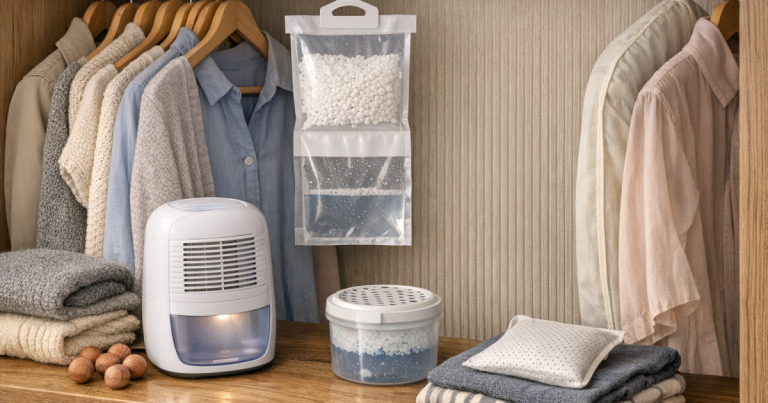
Do not store damp or half-dry laundry, avoid overpacking, and air worn-once clothes before returning them. If the smell persists, empty the wardrobe, clean the surfaces and check for condensation or poor airflow.
Final thoughts
A useful wardrobe system is built around behaviour, not just appearance. Start with the clothes you use most, protect the fabrics that are easiest to distort, and move seasonal items out of prime space. When every garment has a reason for where it lives, dressing is quicker and fabric care becomes part of the routine rather than a separate chore.