A jumper that looks bobbled before it looks worn out is frustrating, especially when the fabric still has plenty of life left. This Steamery Battery Operated Lint Shaver review looks at whether Steamery’s battery-powered de-piller is a sensible buy for UK wardrobes, from school cardigans and work knits to wool-blend coats and sofa throws. The appeal is simple: a small tool that can make tired fabric look neater without washing, trimming with scissors or hiding the garment at the back of the wardrobe.
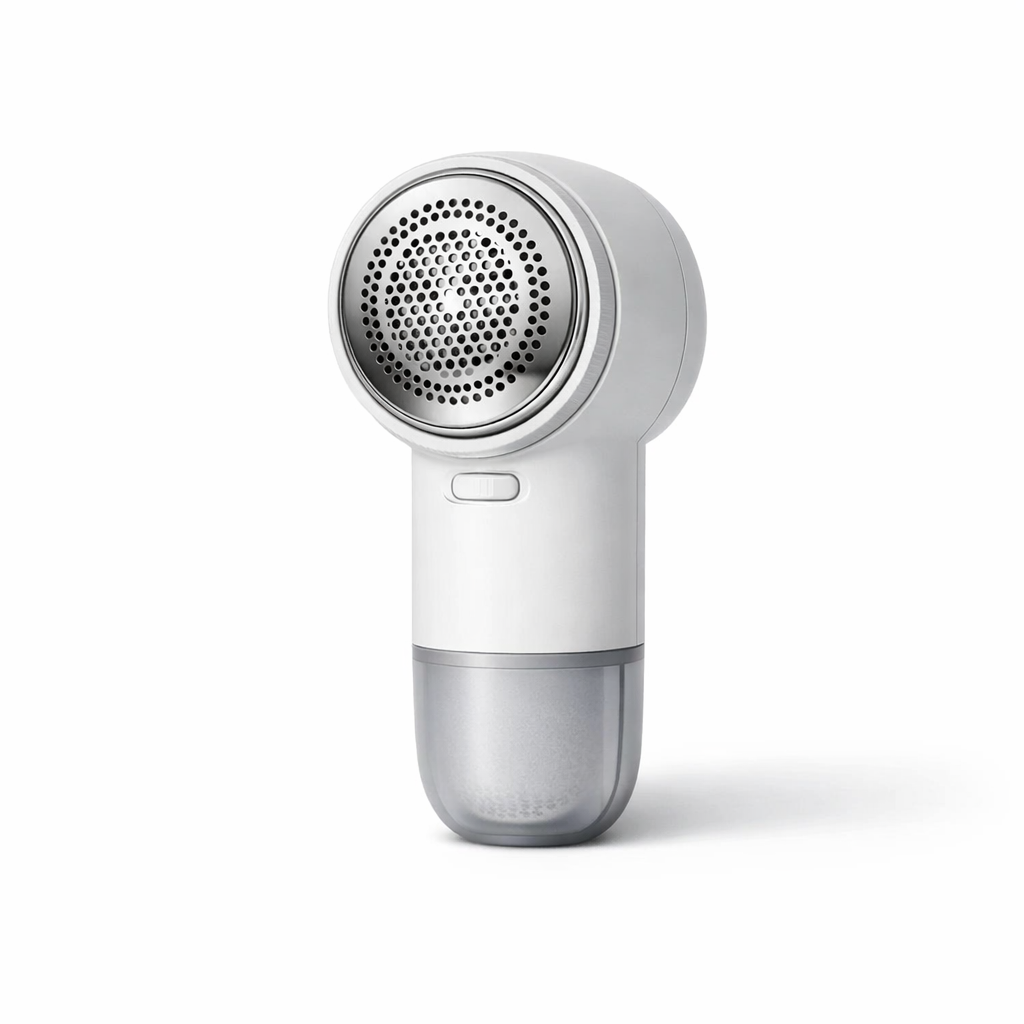
Battery Operated Lint Shaver
Trus
Quick verdict: the Steamery Battery Operated Lint Shaver is best treated as a careful finishing tool rather than a brute-force bobble remover. It suits people who want a more considered alternative to disposable lint rollers, but it still needs slow handling, fabric testing and realistic expectations on delicate knits.
Before buying, check the current retailer listing for what is included in the box, the battery requirements and the exact care restrictions. Steamery’s styling tends to be more design-led than budget-tool utilitarian, so the value question is not only “does it shave lint?” but also whether you will use it regularly enough to justify choosing it over a cheaper de-piller.
Product overview
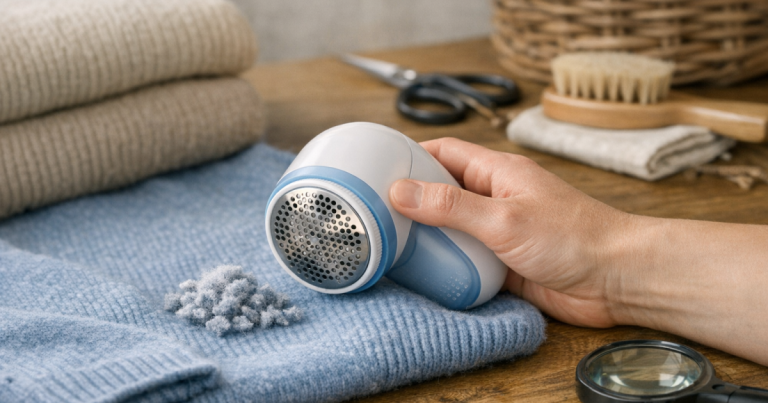
The Steamery Battery Operated Lint Shaver is a handheld fabric shaver designed to remove lint, fuzz and pills from suitable textiles. It sits in the small garment-care-tool category alongside clothes brushes, steamers, pressing cloths and fabric combs: not essential for every household, but potentially useful if you own knitwear that pills quickly.
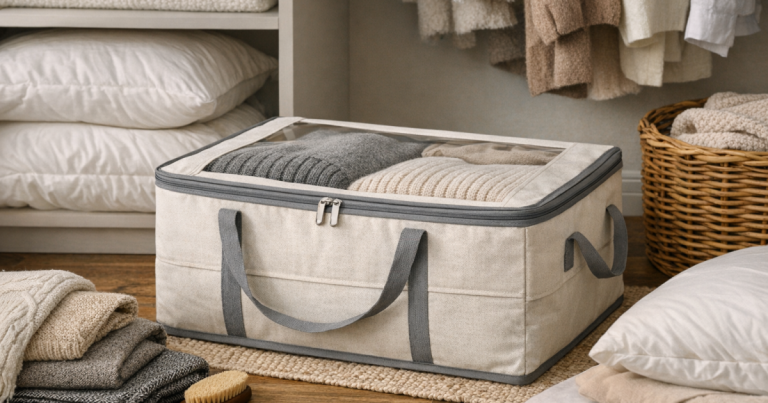
Its strongest use case is maintenance. A few minutes of controlled shaving can make cuffs, underarms, waistbands and front panels look cleaner, which is particularly helpful on jumpers and cardigans that are structurally fine but visually tired. It can also be useful before storing seasonal knitwear, because removing loose pills and fuzz helps garments look fresher when they come out again.
The important limitation is that pilling is not a fault the tool can permanently cure. Pills form where fibres rub together, so high-friction areas will bobble again. That is true whether the garment is wool, acrylic, polyester blend, cashmere blend or cotton knit. The shaver helps with appearance; it does not change the fabric’s fibre content or stop abrasion from bags, desks, coats and seat belts.
It is also not a universal tool for every textile. Loopy knits, embroidery, lace, loose weaves, sequins and very fine delicate fabrics need particular caution. Always test on a hidden area first and keep the garment flat, because snagging usually happens when fabric lifts into the cutting surface or when the tool is pressed too hard.
Key specs
- Reviewed product: Steamery Battery Operated Lint Shaver.
- Brand: Steamery.
- Product type: battery-operated fabric shaver and de-piller.
- Main purpose: removing visible lint, fuzz and fabric pills from suitable garments and home textiles.
- Power: battery operated; verify the required battery type, whether batteries are supplied and any retailer-specific bundle details before purchase.
- Best used on: stable knitted or woven fabrics that can be laid flat and safely shaved according to the product instructions and garment care label.
- Use with caution on: loose knits, textured yarns, embroidery, very fine wool, silk blends and anything with raised decorative detailing.
- Maintenance to check: lint compartment emptying, blade cleaning and whether spare or replacement parts are available through the retailer or brand.
Pros and cons
Pros
- Good for visible refreshes: it can make bobbled areas look tidier quickly when used carefully on a flat surface.
- Useful for regular wardrobe maintenance: it encourages repairing the look of clothes rather than replacing them too soon.
- Portable and easy to store: the battery-operated format suits small homes, shared accommodation and quick touch-ups without needing a plug socket nearby.
- More controlled than scissors: it is usually a safer, neater option than trimming individual pills by hand with blades or nail scissors.
- Design-conscious choice: Steamery products often appeal to people who like garment-care tools that look tidy enough to keep accessible.
Cons
- Not risk-free: poor technique can thin fabric, create uneven patches or catch loose fibres.
- Battery details need checking: shoppers should verify battery requirements and what is included, as listings can vary.
- Not ideal for every knit: fluffy, loosely spun or highly textured yarns may respond better to gentle brushing or hand de-pilling.
- Requires patience: rushing over seams, ribbing and cuffs is where most avoidable fabric damage happens.
- Value depends on use: occasional users may find a cheaper fabric shaver or a cashmere comb sufficient.
Performance in real use
In day-to-day garment care, the main measure is not how aggressively a fabric shaver cuts. It is whether it removes bobbles evenly without leaving the fabric looking grazed. The Steamery Battery Operated Lint Shaver is at its best when used slowly over a taut, flat garment, working in small sections and checking the lint container frequently.
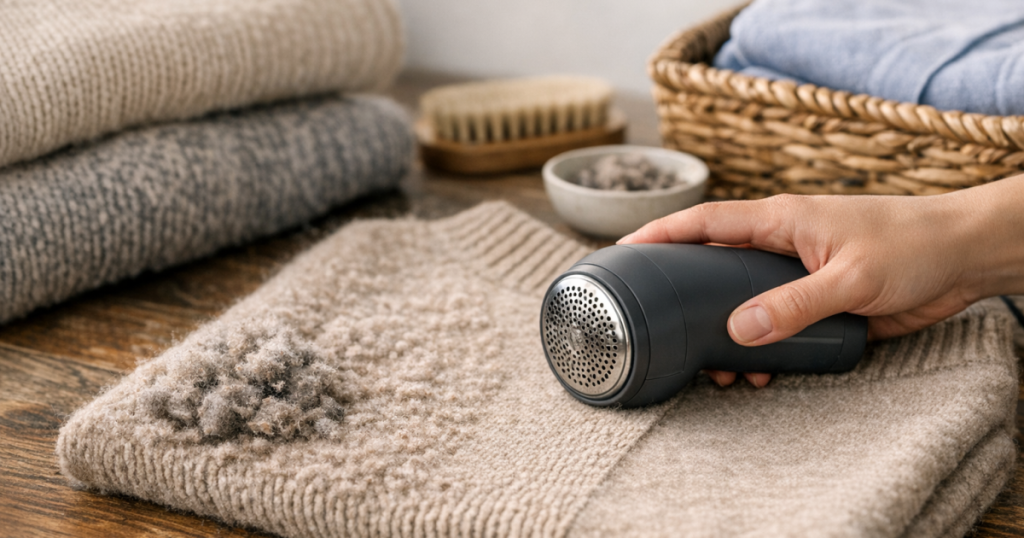
On smoother jersey knits, school cardigans, sweatshirt fabric and many wool-blend jumpers, a fabric shaver can give an immediate visual improvement. The highest payoff areas are usually inner sleeves, underarms, side seams and the front body, where rubbing is most obvious. Lay the garment on an ironing board or firm table, smooth it with your free hand and avoid digging the shaver into the fabric.
Thicker knitwear needs more care. Ribbed cuffs and hems can lift towards the blade, and cable knits create raised sections that should not be treated as if they are a flat panel. For technique, pressure control and what to avoid on jumpers, the detailed guide on how to use a fabric shaver without snagging knitwear is a useful next step before using any powered de-piller on a favourite garment.
Delicate fabrics are where restraint matters most. A cashmere or merino jumper may look better after careful de-pilling, but repeated shaving removes fibre from the surface. That is part of how any fabric shaver works. Use short sessions rather than repeatedly chasing perfection, and stop once the garment looks tidy from normal viewing distance.
The battery format is convenient for quick wardrobe jobs, but it also means buyers should check running costs and battery availability. If you already use rechargeable household batteries, this may fit smoothly into your routine. If you prefer not to manage batteries, a rechargeable fabric shaver may be more convenient.
Maintenance is straightforward in principle: empty the lint collector before it becomes packed, brush away trapped fibres and store the tool dry. Do not let lint build up around the cutting area, as it can reduce performance and encourage snagging through uneven contact. If replacement blades or guards matter to you, confirm availability before purchasing rather than assuming every retailer stocks them.
Who it’s best for / who should skip it
The Steamery Battery Operated Lint Shaver is best for people who already take some care over their clothes and want an easy way to extend the presentable life of knitwear, jersey basics, uniforms and soft home textiles. It makes particular sense if you regularly notice pilling but are not ready to replace otherwise wearable items.
It is also a strong fit for compact UK homes where a small garment-care kit is more realistic than bulky equipment. Pair it with a clothes brush, a decent airing setup and sensible storage, and it becomes part of a low-waste clothing routine rather than a gadget used once and forgotten.
Skip it if most of your problem garments are very loose, fluffy, open-weave or heavily textured. Those pieces may need a gentler fabric comb, hand picking or professional cleaning advice. It is also not the best first purchase if your main laundry problems are stains, odour or damp storage. A lint shaver improves the surface; it will not fix poor drying, mustiness or detergent residue.
For seasonal storage, de-pilling is only one step. Clothes also need to be fully dry, clean and protected from damp. If wardrobes or spare-room rails are prone to moisture, the guide to wardrobe dehumidifiers and moisture absorbers for stored clothes is more relevant than buying another surface-care tool.
Alternatives
If you like the idea of a fabric shaver but are not certain this Steamery model is the right match, keep the alternatives narrow and compare them by power source, blade guard design, ease of cleaning and how comfortable they feel in hand. Do not choose purely on speed: a gentler tool used well is usually better for clothes than an aggressive one used carelessly.
- Steamery Pilo 2 Fabric Shaver: worth comparing if you prefer a newer Steamery fabric shaver format; verify charging method, included accessories and current UK availability before buying.
- Philips GC026/80 Fabric Shaver: a widely recognised fabric shaver option to compare if you want a more mainstream, utility-focused de-piller; check current specifications and retailer bundle details.
A manual cashmere comb is another option, though it is slower and better suited to selected natural-fibre knits than to a mixed household laundry pile. For families dealing with school jumpers, work cardigans and everyday jersey, a powered shaver is usually more convenient.
Questions people ask
Can it be used on wool jumpers?
Yes, on many stable wool and wool-blend jumpers, but test first on a hidden area. Keep the fabric flat, use light pressure and avoid loose, fluffy or highly textured sections.
Will it stop clothes bobbling again?
No. It removes existing pills from the surface, but pilling can return wherever fabric rubs during wear, washing, drying or storage.
Is it better than a lint roller?
It does a different job. A lint roller lifts loose hair and fluff; a fabric shaver cuts off attached pills and fuzz. Many households benefit from both.
Can it damage fabric?
Yes, if used too firmly, over seams, on loose yarns or on unsuitable delicate fabrics. The safest results come from short passes, a flat surface and regular checking.
Should clothes be washed before using it?
They should be clean and fully dry. Shaving damp or dirty fabric can clog the tool and may make fibres more vulnerable to pulling.
Verdict + score
The Steamery Battery Operated Lint Shaver is a smart, wardrobe-friendly de-piller for people who want to refresh knitwear and everyday clothes without making garment care feel like a chore. Its appeal is strongest if you value compact design, controlled maintenance and extending the life of clothes you already own. It is not a magic fix for poor-quality yarns or heavy friction wear, and delicate fabrics still demand caution, but as a regular finishing tool it earns its place in a thoughtful clothes-care kit. Verdict: 8.1/10.
Battery Operated Lint Shaver
Trus
You might also like: How to Remove Grease Stains from Polyester Workwear.