Drying is where many otherwise careful laundry routines go wrong. A well-planned laundry drying setup gives moisture somewhere to go, supports garments in the right shape, and helps clothes dry without stretched seams, hard towels or lingering musty smells.
For many UK homes, the challenge is not one perfect drying method but a reliable mix: outdoor drying when weather allows, indoor airers for everyday loads, flat drying for knitwear, and controlled heat or airflow when space is tight.
In brief
- Match the drying method to the fabric, not just the amount of washing.
- Prioritise airflow over heat for most everyday clothes.
- Use flat drying for knitwear, heavy cotton and anything that can stretch when wet.
- Separate fast-drying synthetics from slow-drying towels and denim.
- Keep drying areas ventilated so moisture leaves the room rather than settling on walls and wardrobes.
Start with the fabrics you actually wash
A drying area should reflect your real laundry, not an idealised utility room. A household with school uniform, work fleeces and gym kit needs quick turnaround and good airflow. Someone who wears wool jumpers, viscose dresses or satin occasionwear needs more space for gentle drying and fewer harsh clips or narrow rails.
Group your regular laundry into drying behaviours. Light cotton T-shirts, shirts and pyjamas usually tolerate hanging on rails or hangers. Towels, jeans and sweatshirts hold more water and need more spacing. Knitwear needs support across the whole garment, because water weight can pull shoulders, cuffs and hems out of shape. Delicates often need lower heat, less handling and fewer pressure marks.
If jumpers are a regular part of your wash load, build in a flat area rather than improvising on a radiator or chair back. The technique matters as much as the surface: the guide to how to dry knitwear flat without stretching it explains how to reshape garments and avoid hanger distortion while they are still damp.
Choose drying zones, not just one airer
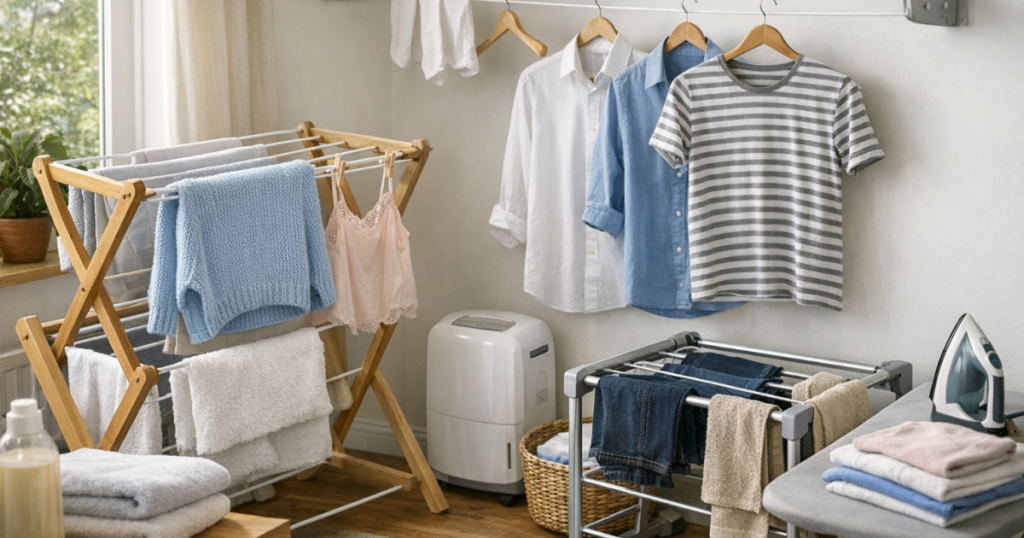
The most useful homes tend to have drying zones. Even a small flat can have a main airer, a flat-drying surface and a short-term hanger area near a window or in a well-ventilated room. Separating these zones makes drying faster and reduces fabric damage because everything is not squeezed onto the same rails.
Main rail space
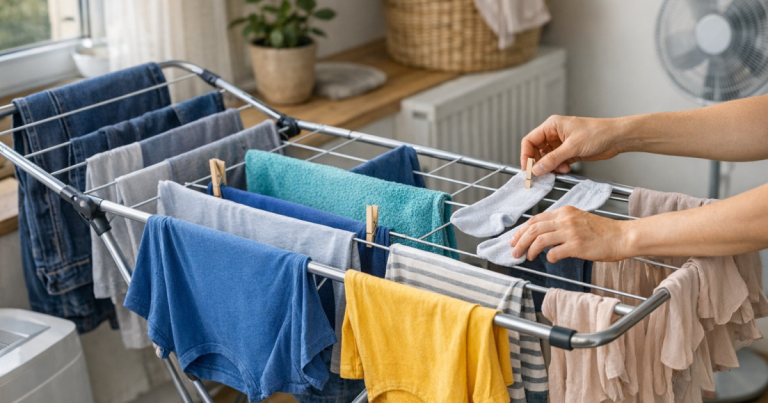
This is for everyday washable clothing: T-shirts, underwear, light trousers, pyjamas and children’s clothes. Choose spacing over maximum capacity. If garments touch each other along long wet edges, drying slows and musty odours are more likely. Leave a small gap between items and rotate thicker garments if one side stays damp.
Flat drying space
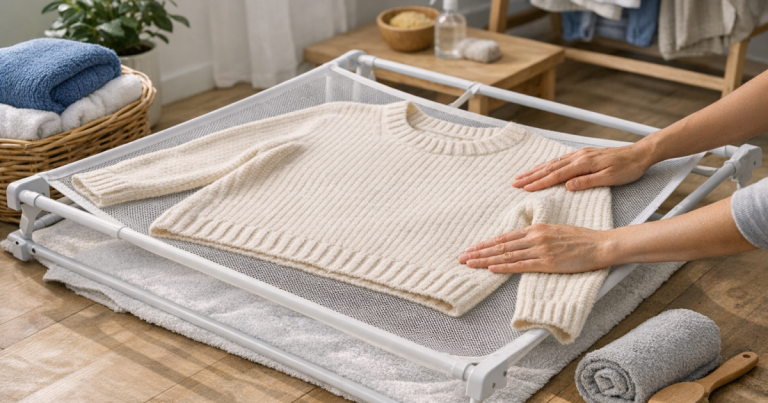
A mesh drying rack, clean towel on a waterproof surface, or dedicated flat tier is useful for wool, cashmere blends, heavy cotton knits and embellished garments. Avoid placing wet knitwear directly on bare wood or coloured towels that may transfer dye. Patting out excess water in a clean towel before drying reduces weight and shortens drying time.
Hanger drying space
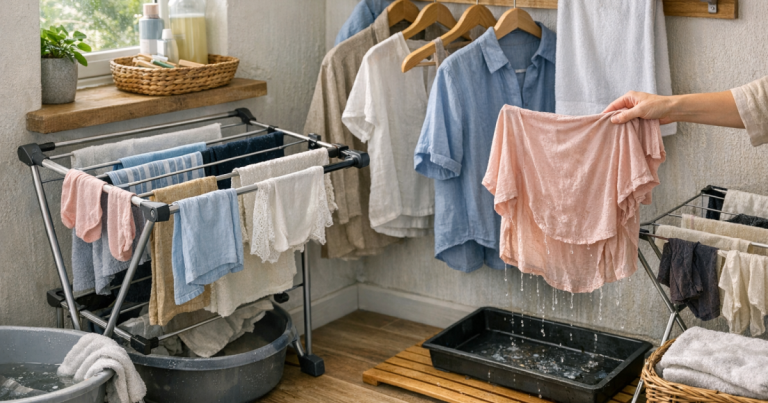
Shirts, blouses and some dresses dry more neatly on hangers, provided the hanger is broad enough to support the shoulder. Avoid thin wire-style hangers for wet garments, as they can leave sharp bumps and drag fabric at the shoulder point. Buttoning the top button of shirts can also help the neckline sit correctly as it dries.
Airflow beats direct heat for garment care
Heat dries clothes quickly, but it is not always kind to fabric. Direct radiator drying can create stiff areas, fade-prone hot spots and set creases into awkward places. Elastic, prints, coated fabrics and some synthetics can also suffer when repeatedly dried against high heat.
Airflow is usually gentler. A room with a slightly open window, an extractor fan running after showering, or a dehumidifier used according to the manufacturer’s instructions can help moisture move away from clothes. The aim is not to make the room hot; it is to keep damp air from sitting around wet garments.
A useful test is to check the room after an hour. If windows are streaming, the air feels heavy or clothes smell stale rather than clean, moisture is not leaving fast enough. Open a window briefly, increase spacing, move the airer away from cold external walls, or split the load between two drying points.
How different drying methods affect clothes
No single method suits every garment. The right answer often changes with the season, the fabric and how quickly the item is needed.
- Outdoor line drying: Excellent for airflow and freshness when weather allows. Turn dark or bright garments inside out to reduce sun fading, and avoid leaving delicate items in strong direct sun for longer than needed.
- Indoor airer: Flexible and gentle when clothes are well spaced. Best for mixed everyday loads, but it needs ventilation to prevent damp indoor air.
- Heated airer: Useful in colder months, particularly for smaller homes. Keep garments arranged loosely rather than piled, and check care labels before using heat on delicates, elasticated items or coated fabrics.
- Tumble dryer: Convenient for towels, bedding and some robust cottons when the care label permits. It is less suitable for wool, many viscose garments, bras, embellished clothing and items prone to shrinkage.
- Radiator drying: Best kept as an occasional last resort for robust items. It can dry unevenly and may leave garments stiff, misshapen or heavily creased.
Plan the load before you wash it
A protective drying routine begins before the machine finishes. If you wash a thick towel load late in the evening with no drying space ready, the clothes may sit damp in the drum or get crowded onto rails. Both increase odour risk and make fabrics harder to finish neatly.
Try sorting loads by drying behaviour as well as colour. A quick-dry load of sportswear and school shirts can be dealt with differently from towels and jeans. Lightweight synthetics may dry rapidly but can hold odours if they are bunched together. Heavy cotton needs more rail space and time. Workwear fleeces benefit from space and gentle handling, especially if the surface is prone to bobbling.
Spin speed also matters. A faster spin removes more water, but some delicate fabrics crease badly or distort under aggressive spinning. For viscose, satin and other drapey fabrics, a gentler spin and careful reshaping may produce a better finish than forcing out every drop of moisture.
Protect shape, surface and finish
Most drying damage is not dramatic. It shows up as a neckline that no longer sits flat, towel loops that feel harsh, shoulder points on tops, or a dress that has dried with water shadows. Small setup choices prevent these problems.
- Shake garments gently before hanging to release twisted seams and reduce deep creases.
- Hang trousers from the waistband or fold them evenly over a broad rail to avoid knee bulges.
- Keep pegs off visible areas where possible, especially on shirts, dresses and delicate cottons.
- Dry textured fabrics with enough space so pile, fleece or loops are not flattened against another garment.
- Reshape cuffs, hems and collars while damp, because they are easier to correct before fully dry.
Viscose deserves particular care because it can feel weaker when wet and may mark if water droplets dry unevenly. If a garment looks crumpled after drying, use gentle steam rather than heavy pressure; the advice on how to steam viscose clothes without water marks is a useful next step for restoring drape without soaking the fabric again.
Make a small-space setup work harder
Many UK homes do not have a separate utility room, so the best laundry drying setup is often compact and movable. Think vertically where you can: a tiered airer, door-mounted rail used carefully, or shower rail for hanger drying can create temporary capacity without turning every radiator into a clothes rack.
Keep the airer away from wardrobes, bedding and piles of clean clothes. Damp air can migrate into textiles that are not part of the wash load, leaving stored clothing smelling stale. A hallway or spare room may work better than a bedroom if it has better airflow and less soft furnishing nearby.
If drying in a bathroom, avoid leaving clothes in a room still damp from showers. Use the extractor, open the window where possible, and let steam clear before adding laundry. If drying in a living area, choose a corner where air can circulate around all sides of the airer rather than pushing it tight into a cold wall.
After drying: let clothes settle before storage
Clothes can feel dry on the surface while seams, waistbands and pockets still hold moisture. Before folding or putting items away, check thick areas by touch. Denim waistbands, hoodie cuffs, towel hems and sweatshirt seams are common slow spots.
Give freshly dried clothes a short airing before storage, especially if they have been dried indoors. This reduces the chance of trapping residual moisture in drawers or wardrobes. Once dry, store fabrics by use and care needs rather than forcing everything into the nearest space. The wardrobe organisation guide can help you keep everyday, delicate and seasonal items separate so they stay fresher between wears.
Helpful questions
Is it bad to dry clothes indoors?
Indoor drying is fine when moisture is managed. Space clothes out, ventilate the room and avoid drying large wet loads in enclosed spaces with no airflow.
Should I dry clothes on radiators?
Occasional radiator drying may be acceptable for robust items, but it is not ideal as a main method. It can dry fabric unevenly, set creases and add excess moisture to the room.
Why do clothes smell musty after drying?
Musty smells usually come from slow drying, overcrowding or clothes sitting damp before being hung. Wash smaller loads, increase spacing and make sure damp air can leave the room.
What should not go in a tumble dryer?
Always check the care label, but wool, many viscose pieces, bras, embellished garments, coated fabrics and items prone to shrinkage usually need gentler drying.
How can I speed up drying without damaging clothes?
Remove excess water with a suitable spin, shake garments out, leave gaps between items and improve airflow. Faster drying should come from air movement, not excessive heat.
What stands out
A clothes-protective drying setup is not about having the largest airer or the warmest room. It is about giving each fabric the support, space and airflow it needs while keeping household moisture under control.
Plan for your slowest-drying items first, keep a flat zone for garments that stretch, and treat ventilation as part of the laundry process. The result is clothing that dries more evenly, needs less rescue steaming or reshaping, and lasts better through ordinary weekly washing.