Hand-washed garments need time, support and somewhere safe for excess water to go. For drip drying clothes, the aim is to create a small zone where water can drain away without stretching fibres, staining nearby surfaces or making the room damp. The best setup is usually simple: a bath, shower tray, utility sink area or waterproof floor space, paired with good airflow and careful garment support.
At a glance
- Use a place where water can drain or be caught easily, such as a bath, shower tray, sink drainer or waterproof mat.
- Remove excess water before hanging, but do not wring delicate fabrics, wool, silk or embellished garments.
- Support heavy wet items from underneath so they do not grow longer, distort at the shoulders or pull at seams.
- Keep air moving gently around the garment; avoid shutting wet clothes into a cold, still room.
- Separate strong colours and pale items while they drip, particularly after hand washing for the first time.
Choose the right spot first
The easiest location is usually the bathroom, because the bath or shower tray already handles water. A utility room with a sink and washable floor can also work well. In a small flat, a compact airer placed inside a shower enclosure can create a neat temporary drying station without taking over the living space.
Avoid setting up over unsealed wood, carpet, laminate edges or painted furniture. Even a small amount of repeated dripping can leave marks, lift flooring or create damp patches behind skirting boards. If the only available area has a vulnerable floor, use a waterproof tray, a thick washable mat or a clean plastic storage box lid underneath the garment.
Think about reach as well as drainage. You need enough space to lift garments without dragging them across the bath, tap or floor. Long dresses, trousers and scarves need more drop than a short camisole or a child’s cardigan, so check the hanging height before you start washing.
Prepare clothes so they drip less
Good drip drying starts before the garment is hung. After rinsing, support the item in both hands and let the main water run off into the sink or bath. Press gently rather than twisting. Twisting can break fibres, crease silk sharply, distort viscose and pull knitted garments out of shape.
For very wet items, lay the garment flat on a clean white towel, roll it loosely and press down with your palms. This removes a surprising amount of water without the damage caused by wringing. Use a white or colourfast towel so dye does not transfer onto pale clothing.
Silk scarves, printed blouses and strongly dyed items need extra care because excess dye can move while wet. If you are dealing with silk accessories, the method in hand washing silk scarves without colour bleed is a useful next step before you hang them anywhere near pale fabrics.
Set up drainage without soaking the room
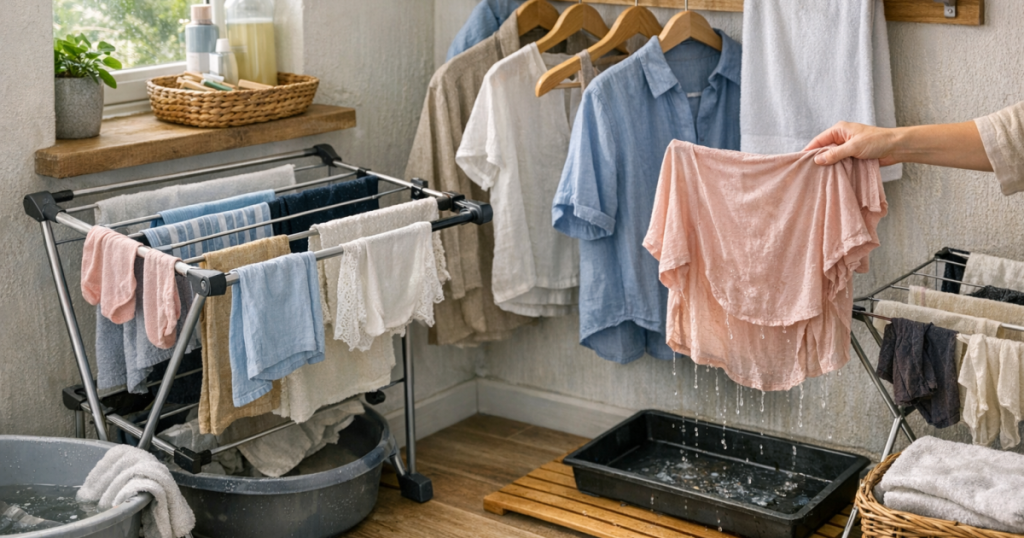
Your drip-drying area should either let water go straight into a drain or catch it in a container that is easy to empty. A shower tray works well for shirts, underwear and lightweight dresses. A bath gives more room for longer garments and lets you place a rack across the top, provided it is stable and clean.
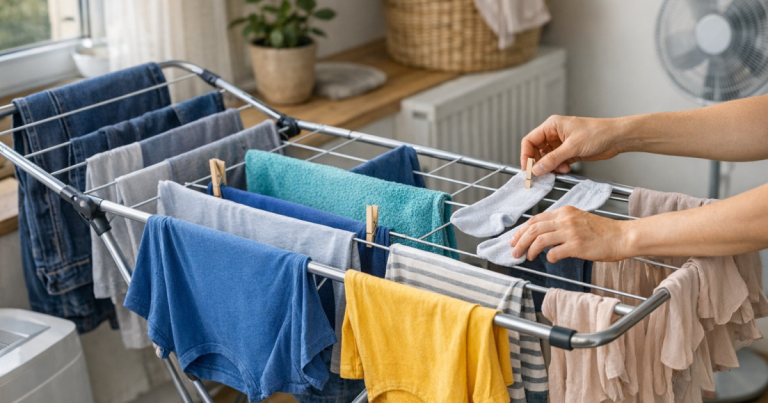
If you are using an airer, position it so the wettest part of the garment hangs over the bath or tray. Sleeves, hems and waistbands often hold more water than the body of the garment. Check the floor after 10 minutes; early drips show whether the setup is working before the room becomes wet.
For sink areas, avoid balancing hangers on taps. Taps are not designed as garment supports, and wet clothing can slide off suddenly. A tension rail, over-bath drying rail, shower rail or sturdy freestanding rack is usually safer and less messy. Put a clean towel beneath the setup only as a splash catcher, not as the main drainage method, because a saturated towel can sour quickly.
Support fabrics according to weight
Not every hand-washed item should hang freely while wet. Water adds weight, and that weight can stretch fibres before the garment is dry.
Lightweight woven clothes
Shirts, cotton camisoles, thin blouses and synthetic slips can usually hang from a smooth hanger once excess water has been pressed out. Use a wide or padded hanger where possible, especially for delicate shoulder seams. Fasten a few buttons or closures so the garment sits evenly rather than twisting as it dries.
Knitwear and wool
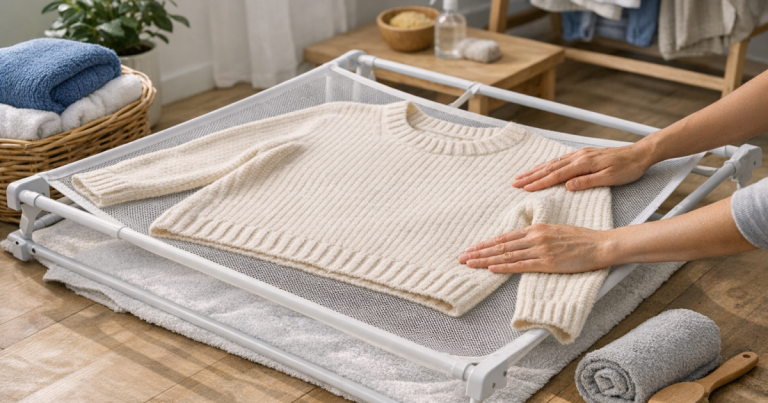
Jumpers, merino tops and wool cardigans should not be left to hang from the shoulders while wet. Lay them flat on a mesh rack, a clean towel over an airer, or a bath board with airflow underneath. Reshape the cuffs, hem and neckline while damp. If water is still dripping heavily, press again in a towel before laying flat.
Dresses and lined garments
Delicate dresses often need a mixed approach. Let the hem drip over the bath, but support the bodice on a padded hanger or over a rail so straps are not taking all the weight. Lined garments can trap water between layers, so turn them part-way through drying and check pockets, seams and gathered areas.
Plan airflow, not heat
Air movement matters more than high heat. A warm radiator or direct blast from a heater can set creases, shrink sensitive fibres or create dry patches while seams remain wet. Instead, open a window briefly when outdoor conditions allow, leave the bathroom door ajar, or use an extractor fan after showers so the room is not already humid.
Leave gaps between garments of at least 10–15 cm where you can. Clothes pressed together dry slowly and are more likely to develop stale odours. If your home often feels damp in winter, it is worth thinking about the whole drying routine, not just the hand-wash corner; the principles in planning a laundry drying setup that protects clothes also apply to delicate items.
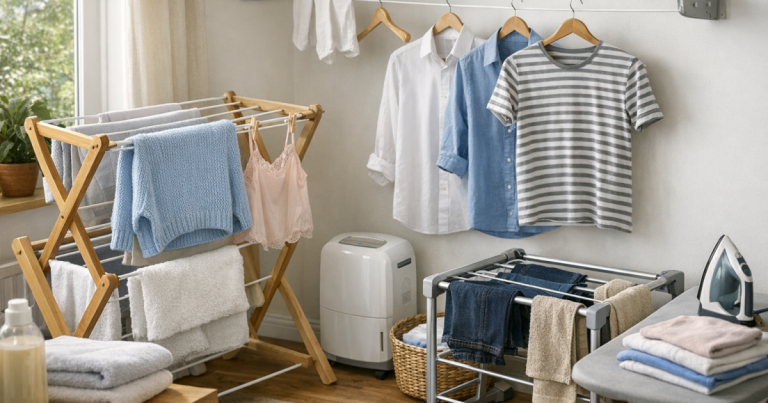
A dehumidifier can help in homes where condensation is a recurring issue, but the immediate goal is simple: remove moisture from the room as the garment releases it. Shut the door only if the room has active extraction or a dehumidifier running. Closing wet laundry into an unventilated bathroom slows drying and can leave fabrics smelling flat.
Prevent dye transfer and surface marks
Wet dye moves more easily than dry dye, especially on dark denim, bright viscose, silk prints and some hand-dyed garments. Keep dark and light garments apart while they drip. Do not let a red hem hang directly over a white blouse, and avoid overlapping sleeves from different items.
Use white towels, white mesh or colourfast drying surfaces under delicate garments. Printed tea towels, dyed bath mats and dark towels can transfer colour when pressed against wet fabric. Metal rails should be rust-free and clean; even a tiny rough patch can leave a mark on pale clothes.
Be careful with wooden hangers and bamboo racks if their finish is worn. Water can lift tannins or stain from untreated wood. For pale silk, linen or cotton, choose plastic-coated, stainless steel or padded supports that you know will not bleed colour.
A simple small-home setup
For a typical UK bathroom, a workable arrangement is a clean bath or shower tray, a stable folding rack placed inside or over it, and one clean white towel for pressing out water before hanging. Keep a few smooth hangers nearby for shirts and blouses, plus a mesh drying layer or spare towel for knitwear.
After washing, press each item in a towel, hang or lay it according to fabric type, then check the area after the first 10 minutes. Empty any caught water, straighten garments, and separate anything touching. Return after an hour to rotate lined items or reshape knitwear while they are still damp.
If you regularly hand wash uniforms, sports base layers or workwear, do not overload the same small space. Too many damp garments in one room are a common cause of stale smells. The same airflow habits used to dry work uniforms indoors without musty smells can help when your hand-wash pile is larger than expected.
Final checks before leaving clothes to dry
- Check the care label for drying restrictions, especially for wool, silk, viscose, beaded garments and structured pieces.
- Make sure the garment is not pulling sharply from one point, such as a thin strap or shoulder seam.
- Confirm that water is going into a drain, tray or washable surface rather than onto flooring.
- Separate strong colours from pale garments and from absorbent towels.
- Leave enough space for air to move around each item.
- Return while the garment is still damp to reshape hems, cuffs, collars and knitted edges.
Helpful questions
Can I drip dry clothes over a radiator?
It is better not to. Direct heat can distort fibres, set creases and dry outer areas before seams or waistbands are ready. Use airflow and drainage first, then finish drying at room temperature.
How do I stop wet knitwear stretching?
Do not hang it from the shoulders. Press out water in a towel, lay it flat on a breathable surface, and reshape it while damp so the weight is spread evenly.
Is the bathroom always the best place?
Usually, because it has drainage and washable surfaces. It only works well if the room is ventilated; a cold, closed bathroom can keep clothes damp for too long.
Should I use hangers for silk blouses?
Only after excess water has been pressed out. Use a smooth, padded or wide hanger, fasten the blouse lightly, and keep it away from dark wet garments while it dries.
Why do hand-washed clothes smell musty after drying?
They have usually dried too slowly, been crowded together, or sat in a damp room. Improve spacing, remove more water before hanging, and increase gentle ventilation.
Key takeaways
A good hand-wash drying zone is less about specialist kit and more about controlling water, weight and airflow. Choose a drainable spot, press garments gently before hanging, support heavy fabrics properly and keep damp clothes separated. With those basics in place, delicate items can dry more evenly, keep their shape better and avoid the musty smell that comes from slow indoor drying.