
A crowded rail makes it harder to dress quickly, but it also puts fabrics under unnecessary stress. Wardrobe zoning gives every garment a sensible place based on how often you wear it, how delicate it is, and what kind of storage it needs. The aim is not a perfect-looking wardrobe; it is a safer, easier system that protects clothes from crushing, damp, snags and neglect.
At a glance
- Keep daily clothes at eye level and within easy reach so you do not pull through delicate or rarely worn garments.
- Separate heavy, structured, delicate and knitted items because they fail in different ways when stored badly.
- Create a short-term holding area for worn-once clothes so odours and moisture do not spread through the whole wardrobe.
- Use the highest and lowest spaces for seasonal or occasional items, not anything you need every morning.
- Leave breathing room around fabrics, especially in colder UK homes where wardrobes can trap condensation.
Start with garment behaviour, not neatness
A well-zoned wardrobe starts with how clothes behave in storage. Wool trousers can shine or crease if tightly packed. Silk can snag against zips, sequins and rough hangers. Knitwear stretches when hung for too long. Polyester workwear may hold odours if it is stored before it has fully aired. Cotton shirts crease when crushed, but they usually tolerate hanging better than heavy knits.
Before moving anything, empty one section at a time and group garments by fabric risk rather than by colour alone. Put shirts, jackets, trousers, knitwear, delicates, uniforms, sportswear, occasionwear and seasonal pieces into separate piles. This quickly shows whether your wardrobe problem is lack of space, poor category placement, or too many clothes being stored in the wrong format.
Do not aim to make every hanger match or every shelf look symmetrical. A useful wardrobe has zones that reduce friction: fewer garments rubbing together, less searching, better airflow, and less chance of clean clothes being mixed with items that need airing or laundering.
The everyday reach zone
The easiest part of the wardrobe should hold the clothes you wear most often. For many households, this means school shirts, work shirts, trousers, everyday dresses, jeans, cardigans and coats used during the current season. These items should sit between roughly shoulder and knee height, where you can lift them out without dragging them past other fabrics.
Do not overfill this section. When garments are squeezed tightly, buttons, zips and seams press into neighbouring fabrics, causing shiny pressure marks, broken fibres and deep creases. A rail should let hangers move slightly from side to side. If you have to force a garment back into place, the zone is too full.
For uniforms and workwear, keep complete outfits together where possible. A cluster of shirts, trousers and cardigans is quicker than a colour-coded rail spread across the whole wardrobe. If uniform shirts regularly come out creased, it may be a pressing and storage issue rather than an ironing issue; the guide to ironing uniform shirts without shiny marks is a useful follow-up when fabric shine is becoming a problem.
The structured garment zone
Jackets, blazers, coats and tailored dresses need space more than they need compression. Store them on supportive hangers that match the shoulder width reasonably well, and avoid wedging them between heavy outerwear and textured fabrics. A jacket that is constantly crushed will lose its clean shoulder line and may develop stubborn lapel creases.
Place structured garments at one end of the rail rather than mixing them throughout. This stops firm seams, zip pulls and buttons from rubbing against softer everyday pieces. If you own wool trousers or suit separates, give them a calm section with enough drop length so hems are not buckling on shoes or storage boxes underneath.
For longer coats, make sure the lower section is clear. A coat hem sitting on a box can curl, crease or pick up dust. If wardrobe height is limited, store the coat elsewhere during off-season rather than forcing it into a space that distorts its shape.
The knitwear shelf
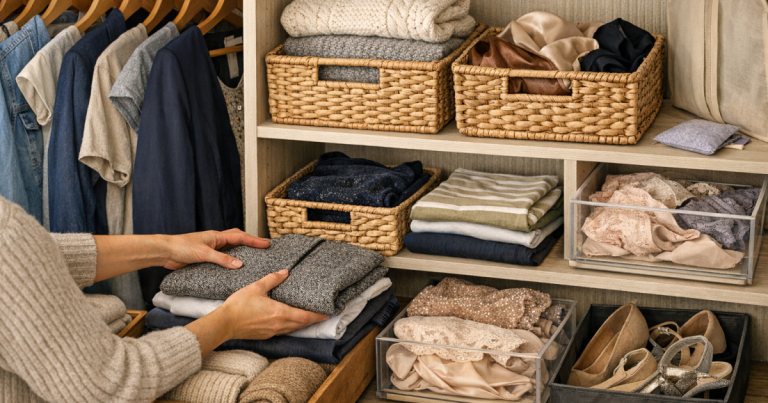
Knitwear usually belongs folded, not hung. Hanging can stretch shoulders, lengthen the body and leave hanger marks that are difficult to relax. Fold jumpers and cardigans into shallow stacks so you can lift one out without dragging the whole pile forward.
Sort knitwear by weight. Heavy wool jumpers should sit at the bottom of a stack or in a separate cubby, while lighter cardigans and fine knits can sit above. Avoid tall piles because weight compresses the lower garments and makes pilling more likely along folds and pressure points.
A small knitwear care zone is useful if you regularly deal with bobbling. Keep a fabric comb or shaver away from loose threads and use it only on stable surfaces, not while the garment is hanging. If you are nervous about catching loops, read how to use a fabric shaver without snagging knitwear before refreshing a favourite jumper.
The delicate and low-friction zone
Silk blouses, satin skirts, lace tops, embellished garments and scarves need protection from abrasion. They should not sit beside denim, exposed zips, hook-and-eye fastenings, sequins or rough coat fabrics. Use smooth hangers for garments that must hang, and consider breathable garment covers for special pieces that are worn only occasionally.
Delicates are often damaged by repeated handling rather than by storage alone. Place them in a section where you will not push past them daily. A side rail, upper shelf box or covered hanging section works better than the middle of a busy morning wardrobe.
For scarves, fold or roll them loosely rather than tying them tightly over a hanger. Tight knots create permanent creases and can encourage colour transfer where darker dyes press against pale fabrics. Keep pale silk away from leather belts and dark denim, especially in humid conditions.
The worn-once holding area
One of the most useful zones is not for clean laundry at all. It is a temporary holding area for clothes that have been worn briefly but are not ready for washing: a wool jumper worn over a base layer, trousers worn for a few hours, or a blazer that needs airing.
This zone should be separate from fully clean clothes. A hook on the inside of a wardrobe door, a small rail near a window, or a designated chair used deliberately can work. The important rule is that garments should be dry and aired before returning to the main wardrobe. Trapped body moisture and odour can spread quickly, especially in fitted wardrobes on cold outside walls.
Set a time limit. If an item sits in the holding area for several days and still does not feel fresh, it needs washing, steaming, brushing or airing properly. The holding zone is a decision point, not a second wardrobe.
The drying and reset zone
Clothes should never be put away even slightly damp. That includes hand-washed knitwear, blouses that feel cool at seams, and shirts that are dry on the body but damp at cuffs or collars. Damp storage encourages musty smells, mildew marks and weakened fibres.
If you hand wash delicates, create a clear route from washing to drying to storage. A garment should not have to pass through a pile of laundry, a warm radiator or a crowded wardrobe before it is fully dry. For small homes and flats, a planned drying corner is often more effective than improvising over doors and banisters; this guide to creating a drip-drying area for hand-washed clothes explains how to keep water, airflow and garment shape under control.
Once items are dry, give them a quick reset before storing: fasten buttons, close zips, empty pockets, remove tissues, brush off lint, and check for stains under good light. Stains become harder to deal with after time in a warm wardrobe, particularly on cuffs, collars and underarms.
The seasonal and occasional zone
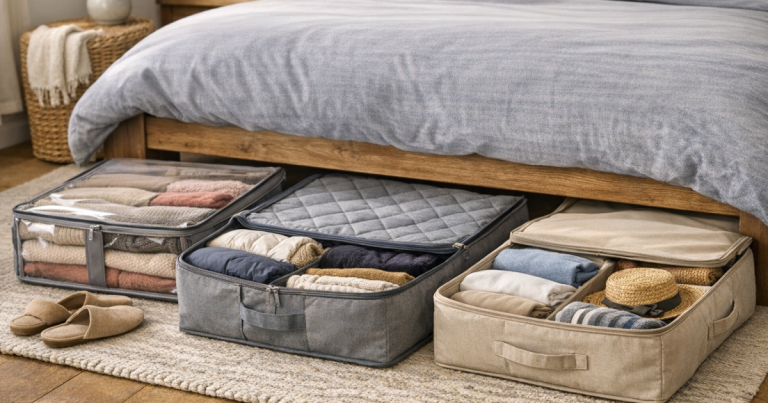
Seasonal clothes should not compete with what you wear this week. Out-of-season coats, summer dresses, ski layers, wedding outfits and rarely used formalwear can move to higher shelves, under-bed storage or the far end of the rail. Keep them clean, fully dry and loosely packed.
Use breathable storage for natural fibres where possible. Plastic boxes can be useful for dust protection, but they can also trap moisture if garments are not completely dry or the room is prone to condensation. Vacuum bags save space, but they are not ideal for structured garments, down-filled pieces or clothes that need loft and shape.
Label seasonal storage clearly. Labels reduce rummaging, and less rummaging means fewer snags, creases and pulled seams. Store heavier items lower down so you are not lifting bulky boxes from above head height during a rushed morning.
The damp-risk zone
Many UK wardrobes sit against external walls, in alcoves, or in rooms that cool quickly overnight. These areas need a damp-risk zone check. Signs include musty smells, cold-feeling fabrics, speckled marks, warped shoe boxes, or a stale odour when the door has been closed for a day.
Leave a small gap between clothes and the back wall where you can. Avoid packing shoes, bags and boxes tight against corners. Air circulation matters more than squeezing in one more storage cube. If a wardrobe consistently smells musty, remove everything, clean and dry the interior, and let it air before restocking.
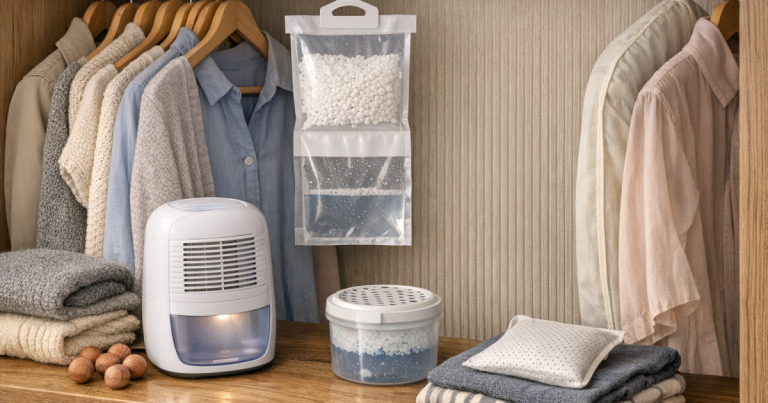
Moisture absorbers can help in some wardrobes, but they are not a cure for leaks, heavy condensation or poor ventilation. They need checking and replacing as directed, and they should sit where they cannot spill onto fabric. For a deeper look at the options, see the guide to wardrobe dehumidifiers and moisture absorbers for stored clothes.
What each zone should prevent
- Daily zone: prevents morning rummaging, crushed shirts and forgotten workwear.
- Structured zone: prevents collapsed shoulders, bent hems and pressure creases.
- Knitwear zone: prevents stretching, hanger bumps and compressed wool fibres.
- Delicate zone: prevents snagging, colour transfer and abrasion from zips or rough fabrics.
- Worn-once zone: prevents odours and moisture moving into clean clothes.
- Drying/reset zone: prevents damp storage, set-in stains and musty smells.
- Seasonal zone: prevents overcrowding and damage from unnecessary handling.
- Damp-risk zone: prevents mould-prone corners and stale, trapped air.
A simple zoning method for one afternoon
Start with the garments that cause the most daily frustration. Pull out only one rail or shelf so the task stays manageable. Remove anything that is clearly dirty, damaged, out of season, or in the wrong storage format.
Next, assign prime space to current weekly wear. This usually means the central rail, the easiest drawer, or the shelf you can reach without stretching. Move fragile and occasional items away from this busy zone. Put knitwear flat, give jackets more space, and separate worn-once clothes from clean garments.
Then test the system for a week. If you still have to move three garments to reach one shirt, the zones are too tightly packed. If a delicate blouse keeps getting shoved behind coats, it needs a quieter place. If worn-once clothes end up on the floor, the holding area is not convenient enough.
Good storage is allowed to change. Winter wardrobes need more coat and knitwear space; summer wardrobes may need more room for linen, dresses and lighter shirts. Treat the layout as a working system rather than a fixed display.
Common zoning mistakes
- Sorting only by colour: colour looks tidy, but it ignores fabric weight, abrasion and garment structure.
- Hanging every garment: many knits and heavy stretch fabrics store better folded.
- Using the floor as overflow: hems pick up dust, shoes scuff fabric, and airflow drops.
- Mixing clean and worn-once clothes: this makes freshness harder to judge and can spread odours.
- Overusing sealed storage: airtight spaces can trap moisture if clothes are not completely dry.
- Ignoring accessories: belts, bags and jewellery can snag or mark garments if they share the wrong space.
Things readers ask
Should jeans and jumpers be in the same zone?
They can share a drawer or shelf area if they are separated, but avoid placing rough denim directly against soft knitwear. Denim seams and rivets can rub delicate fibres and encourage pilling.
Is it better to organise a wardrobe by outfit or by garment type?
Use outfits for repeated routines, such as school or workwear, and garment type for everything else. This keeps mornings easy without making the whole wardrobe rigid.
How much empty space should a rail have?
You do not need a precise measurement, but hangers should slide without force. If fabric is compressed every time you put something away, remove items or move a category elsewhere.
Can shoes be stored under hanging clothes?
Yes, if the clothes do not touch them. Keep shoe soles away from hems, use a tray or rack, and avoid storing damp shoes in the wardrobe.
What should not go into long-term storage?
Do not store anything with food marks, body odour, damp seams or untreated stains. Clean and dry garments first, because storage usually makes hidden marks harder to remove later.
What to remember
A safer wardrobe is not simply a tidier wardrobe. It is a set of small decisions that reduce fabric stress: heavy garments supported properly, delicates kept away from abrasion, knitwear folded, damp clothes excluded, and daily items placed where they are easy to reach.
Once each zone has a job, you spend less time searching and less money replacing clothes damaged by crushing, mustiness or careless handling. The best test is simple: if you can take out and return your regular clothes without disturbing everything else, the wardrobe is working for both your routine and your fabrics.