Delicate fabrics can come out of the wash looking fine, then lose shape, shine or softness during drying. The safest way to dry delicates indoors is to remove excess water gently, keep heat away from the fibres, and use steady airflow instead of speed.
That matters in UK homes where damp weather, radiators and limited floor space often tempt people into rushed drying. A calmer setup protects silk, chiffon, wool, lace, viscose and garments with elastic, trims or embellishment.
The short version
- Do not wring, twist or hang heavy wet delicates by the shoulders unless the care label allows it.
- Blot water with a clean towel before air drying so the garment spends less time damp.
- Use flat drying for wool, cashmere, heavy knits, beaded items and anything likely to stretch.
- Use padded or smooth hangers only for lightweight woven pieces that can hold their shape.
- Aim for moving air, not high heat: open a window briefly, use an extractor fan or run a dehumidifier in the same room.
- Keep garments away from radiators, heated rails, direct sunlight through glass and hot tumble dryer programmes.
Why heat is hard on delicate fabrics
Heat damage is not always dramatic. It can show as a dull patch on silk, rippling at seams, hardened elastic, shrunken wool, puckered lace or a blouse that suddenly hangs unevenly. The problem is usually a combination of heat, moisture and tension: fibres are softer while wet, so they distort more easily when pulled, clipped or dried too quickly.
Once you know how to dry delicates indoors without relying on direct heat, the process becomes more predictable. Instead of trying to force moisture out, you reduce the water load first, give the garment the right support, and let air circulation do the remaining work.
Indoor drying also needs more care because rooms can become humid. If several wet garments sit close together with little airflow, they dry slowly and may become stiff, musty or misshapen. A good setup keeps items spaced out and prevents one fabric transferring dye, lint or texture to another.
Step 1: check the label and sort by fabric behaviour
Before drying, read the care label for tumble drying, drying flat, drip drying and ironing symbols. If the garment says dry flat, treat that as a shape-protection instruction rather than a suggestion. If it says do not tumble dry, avoid using a hot dryer even for a short finish.
Sort delicates by how they behave when wet:
- Silk and satin: avoid direct heat, direct sunlight and rough towel surfaces that can dull the finish.
- Chiffon, georgette and fine polyester blouses: prevent snagging by drying away from zips, hooks, rough airers and laundry baskets with sharp edges. If washing has already made the fabric vulnerable, use the same gentle handling principles described for washing chiffon blouses without pulling threads.
- Wool, cashmere and fine knits: support the full garment while damp to prevent shoulder peaks and stretched hems.
- Lace, mesh and embroidered pieces: keep flat or lightly supported so trims do not pull against the base fabric.
- Viscose and modal: expect extra weakness while wet; shape carefully and avoid hanger stress unless the garment is very light.
- Elasticated lingerie and sports-delicate blends: keep away from heat that can weaken stretch fibres over time.
Step 2: remove water without wringing
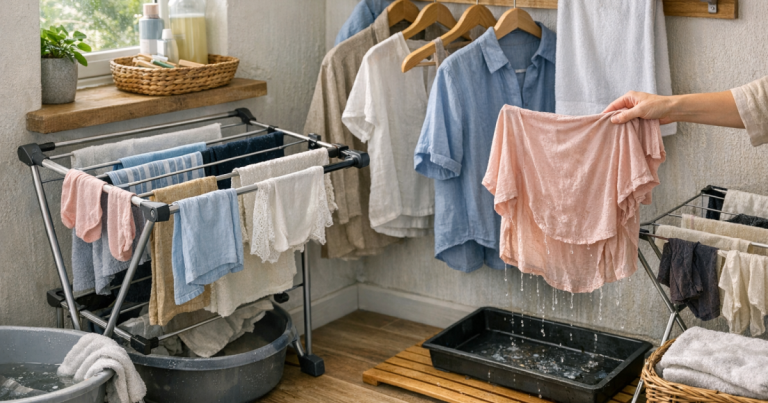
Delicates dry better when they are not dripping wet, but wringing is one of the quickest ways to damage them. Twisting can strain seams, crush pile, pull yarns and leave permanent creases in fragile fabrics.
Use this towel method instead:
- Lay a clean, absorbent towel on a flat surface.
- Place the garment on top in its natural shape, smoothing seams and hems with your hands.
- Roll the towel and garment together loosely, then press along the roll with your palms.
- Unroll and move the garment to a dry section of towel if it still feels very wet.
- Never grind, scrub or twist the roll; pressure is enough.
For very fine silk or lace, use a smooth white or colourfast towel to reduce the risk of dye transfer and surface abrasion. For wool, pressing out water before drying flat is especially important because excess weight can stretch the garment. If you are dealing with a jumper rather than a blouse or slip, follow a more structured flat-drying method such as the one used to dry wool jumpers flat without stretching.
Step 3: choose the right indoor drying position
Flat drying for shape-sensitive items
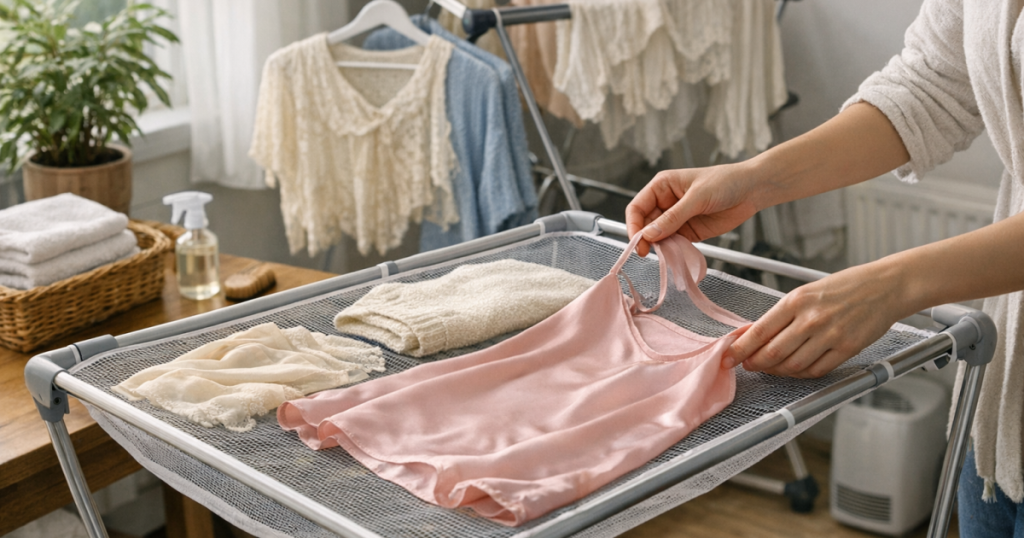
Flat drying is the safest option for wool, cashmere, heavy viscose, embellished tops, beaded dresses and anything with a loose knit or open weave. Use a mesh drying rack, a clean dry towel on an airer, or a spare towel laid over a drying frame. The key is airflow underneath or around the fabric, so avoid leaving thick garments on a sealed surface for hours without turning them.
Shape the garment before it dries: align side seams, straighten cuffs, flatten collars and ease hems back to their normal width. Do not stretch the fabric to make it look smooth; guide it back into shape gently.
Hanging for lightweight woven delicates
Some lightweight woven garments can dry on a hanger, provided they are not heavy with water. Use a smooth, wide or padded hanger rather than a thin wire one. Fasten the top button or closure if it helps the garment sit evenly, and smooth the placket, sleeves and hem.
Avoid peg marks on visible areas. If you need to secure a garment, clip it at a seam, waistband or hidden facing rather than across the middle of the fabric. For camisoles and slips, support both straps evenly so one side does not stretch longer than the other.
Draping with care
Draping over an airer can work for scarves, slips and fine tops, but the bar can leave a crease if the fabric dries folded over it. Place a clean towel over the bar first, or move the garment halfway through drying so the fold line does not set. Keep textured or dark towels away from pale silk and satin because lint transfer is more visible on smooth fabrics.
Step 4: create airflow without direct heat
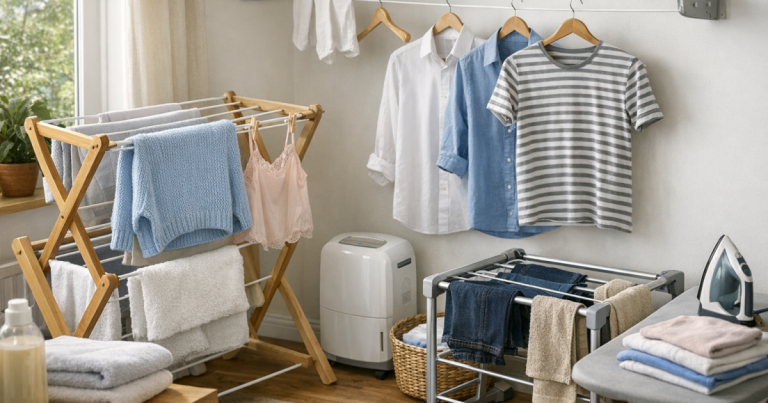
Airflow is safer than heat because it removes moisture gradually without shocking fibres. Put the airer in a room with space around it rather than wedged into a corner. Open a window for short periods when outdoor humidity allows, use a bathroom extractor after shower steam has cleared, or place a dehumidifier nearby to reduce moisture in the room.
A fan can help if it moves air gently across the room rather than blasting one garment at close range. The aim is circulation, not force. Leave gaps between items, rotate garments once or twice, and turn flat-drying pieces over when the top feels dry but the underside is still cool or damp.
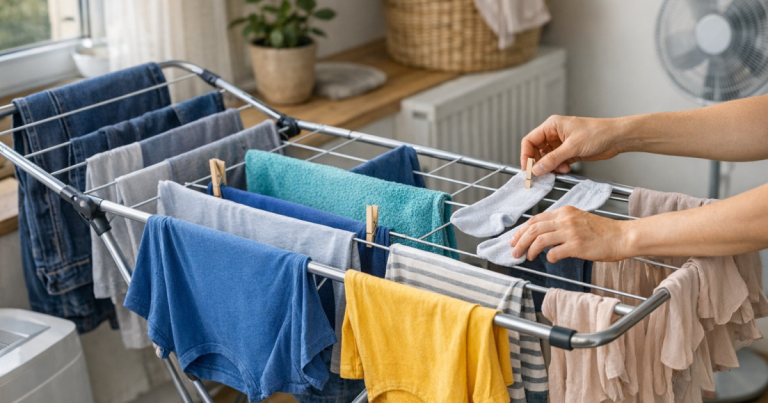
Radiators are tempting in winter, but direct contact can leave delicates stiff, scorched, shiny or misshapen. If you rely on a radiator rack for other laundry, keep fragile pieces away from the hottest zone and use the setup principles in our guide to using a radiator drying rack without stiffening clothes.
Step 5: handle common delicate items differently
- Silk blouses: blot, hang on a padded hanger if light enough, and dry away from direct sun. Smooth collars and cuffs by hand while damp.
- Chiffon tops: hang only after most water has been blotted out. Keep them away from rough airer joints and Velcro on other garments.
- Wool and cashmere: dry flat on a towel or mesh rack, reshaping while damp. Do not hang from the shoulders.
- Lingerie: press cups and elastic gently in a towel, then lay flat or hang from the centre front rather than stretching straps.
- Lace garments: support the whole piece and avoid pegs on scalloped edges, which can distort the pattern.
- Viscose dresses: blot thoroughly, then dry flat or over a broad support until the garment is light enough to hang without dragging.
Checks before you put delicates away
Delicates should feel dry all the way through before storage. Cuffs, waistbands, hems, linings and underarm areas often stay damp after the main fabric feels dry. Press these areas gently between your fingers; if they feel cool, heavy or clammy, give them more time.
Do not iron or steam a delicate garment just to finish drying it unless the care label allows that level of heat and moisture. Heat on a slightly damp delicate can set creases, flatten texture or leave shine. If a piece needs smoothing afterwards, use the lowest suitable setting, a clean pressing cloth where appropriate, and test an inconspicuous area first.
Only store the garment once it is fully dry and back in shape. Folding damp knitwear can encourage odour and crease lines, while hanging damp delicate dresses can stretch shoulders or seams. If the room itself feels humid, let the garment air for longer before moving it into a wardrobe or drawer.
Common questions
Can I dry silk near a radiator if it is not touching?
It is still risky if the fabric is exposed to strong heat. Keep silk in a warm room with airflow, but away from the radiator’s hottest rising air and away from direct sunlight.
Is a heated airer safe for delicates?
Use caution. Some delicates can be dried nearby rather than directly on heated bars, but wool, silk, lace, elastane and embellished garments are safer with unheated airflow and towel blotting.
Why do my indoor-dried delicates feel stiff?
Stiffness usually comes from slow drying, detergent residue, hard water, overloading the wash, or drying too close to heat. Rinse well, blot first and increase airflow.
Should I spin delicates in the washing machine?
Use the garment label as your guide. A short, low-speed spin in a mesh bag can help some sturdy delicates, but fragile silk, lace or embellished pieces may need gentler hand pressing in a towel.
Can I use clothes pegs on delicate fabrics?
Only on strong seams or hidden areas, and preferably with soft-grip pegs. Avoid pegging visible panels, lace edges, silk, satin or wet viscose where marks and distortion show easily.
What stands out
The safest indoor routine is not about drying delicates as quickly as possible. It is about controlling water, support and airflow so the fabric dries evenly without heat stress. Blot first, choose flat drying when weight or stretch is a concern, hang only when the garment can support itself, and keep fragile fibres away from radiators, hot rails and direct sun.
With a little extra spacing and reshaping, indoor drying can be gentle enough for everyday delicates and reliable enough for awkward UK weather. The main habit to build is simple: support the garment while it is weakest, then let air do the work.