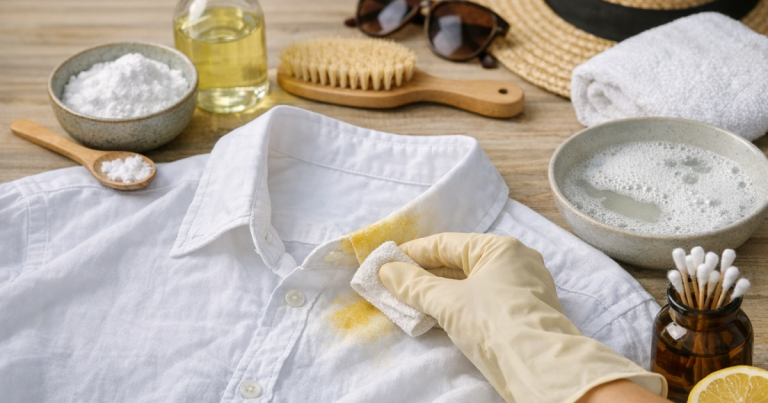
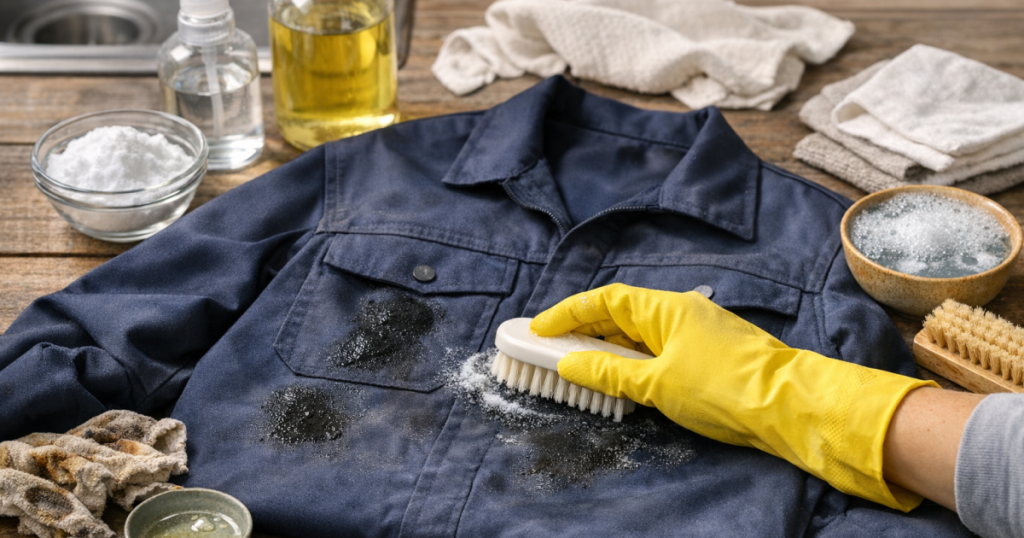
Polyester work trousers, tunics, aprons and hi-vis layers can look clean until an oily mark catches the light. The safest way to deal with grease stains from polyester is to lift the oil before the wash, avoid high heat, and check the garment again before drying.
Polyester is durable, but it is also oil-loving compared with cotton, so greasy residue can cling to the fibre surface. Quick treatment makes a real difference, especially on catering, warehouse, garage, cleaning and care-sector uniforms that are washed often.
Cleaning certified PPE, including flame-retardant or high-visibility workwear, is typically handled according to employer-approved laundry instructions or by a qualified workwear laundry provider to maintain compliance with UK workplace safety requirements and the garment’s certification.
What to know first
- Do not tumble dry or iron the stain first. Heat can make oily marks harder to remove and may leave a dull patch on polyester.
- Blot, do not scrub aggressively. Scrubbing can spread grease and roughen printed logos, reflective tape or coated finishes.
- Use a small amount of liquid detergent or washing-up liquid. Both can help break down oily residue, but they must be rinsed well before machine washing.
- Check the care label. Some workwear has coatings, reflective strips, waterproof finishes or industrial laundry instructions that need stricter handling.
- Repeat gently if needed. One careful second treatment is better than one harsh attempt with solvents or high heat.
Why polyester holds greasy marks
Grease behaves differently from mud, tea or water-based stains. It does not dissolve readily in plain water, and polyester fibres can attract oily soils, especially after repeated wear in warm workplaces. That is why a normal quick wash may remove odour and surface dirt while leaving a shadow where the oil was.
Workwear adds a few complications. The fabric may be a polyester-cotton blend, a stretch polyester mix, or a heavier synthetic weave designed to dry quickly. There may also be badges, embroidery, reflective tape, heat-applied logos or protective finishes. These details are the reason a gentle, targeted pre-treatment is usually safer than soaking the whole garment in strong stain remover.
Step-by-step: treating a fresh grease mark
1. Remove excess grease without pushing it in
Lay the garment flat with the stain facing up. Use kitchen roll, a clean white cloth or an old white towel to blot away any surface oil. Press lightly and lift; do not rub in circles. For thick grease, scrape off the excess with the edge of a spoon or a blunt table knife, working from the outside of the mark towards the centre.
2. Put an absorbent layer underneath
Slide a folded white towel or several sheets of kitchen roll under the stained area. This stops loosened grease transferring to the other side of the garment. It is particularly useful on work trousers, aprons and tunics where the stain may sit over a pocket or seam.
3. Add a small amount of detergent
Apply a pea-sized amount of liquid laundry detergent directly to the oily area. If you are using washing-up liquid, use only a tiny amount because it foams more than laundry detergent and is not designed to go straight into a washing machine in quantity.
Gently work the detergent into the stain with your fingertip or a soft toothbrush. Use short strokes rather than hard scrubbing. Leave it for 10 to 15 minutes, but do not let the treated patch dry out completely.
4. Rinse from the back of the stain
Rinse the area with warm water from the reverse side of the fabric. This helps push loosened oil out of the fibres rather than driving it deeper through the front. Warm water is usually enough; very hot water is not necessary and can be unkind to trims, coatings and prints.
5. Wash on the warmest permitted setting
Wash the garment according to its care label. For many polyester uniforms, a 30°C or 40°C wash is common, but the label is the deciding point. Use a normal dose of laundry detergent for the load size and soil level. Do not overload the machine, because greasy workwear needs room for detergent and water to move through the fabric.
If you are washing school-style uniform pieces, tunics or sensitive-skin household laundry alongside work items, detergent choice can matter. The same principles in choosing bio or non-bio detergent for uniforms are useful when deciding whether enzyme-based cleaning power or gentler washing is the better fit for your household.
For older or washed-in grease stains
Once a grease mark has been through a wash, it can become less visible when wet and then reappear after drying. Treat it as an oily residue problem rather than a simple surface stain.
- Re-wet the patch with warm water. This helps detergent spread into the fibres.
- Apply liquid detergent again. Work it in gently and leave it for 20 minutes.
- Rinse thoroughly. Leftover detergent can attract dirt and leave a dull patch.
- Wash separately or with similar workwear. This avoids transferring oily residue to lighter household laundry.
- Air dry first. Inspect the area in daylight before using any heat.
A faint shadow may need two or three careful treatments. Stop if the fabric starts to look abraded, shiny or distorted, particularly around reflective tape or printed branding.
What not to use on polyester workwear
Strong household solvents are risky on workwear because they can affect dyes, coatings, adhesive logos and reflective materials. They may also leave flammable or irritating residue if not handled correctly. For everyday home laundering, avoid petrol, white spirit, neat bleach and abrasive scouring powders.
Chlorine bleach is also a poor choice for most polyester garments. It can weaken trims, alter colours and damage specialist finishes. If a stain remover claims to be suitable for synthetics, still test it on a hidden seam allowance first and follow the garment label over the product label whenever they conflict.
Checking the stain before drying
Grease is easiest to spot when the garment is dry or nearly dry, but you should still inspect it before applying heat. Hold the area near a window or under a bright light and look from different angles. Oily marks often show as a slightly darker or shinier patch rather than a strong colour change.
If the stain remains, repeat the pre-treatment and wash again. Do not put the garment in a tumble dryer to “see if it comes out”, as this can make the next attempt harder. If you regularly dry uniforms indoors, good airflow is just as important as stain treatment; the advice on drying work uniforms indoors without musty smells will help prevent damp odours after washing.
Drying polyester workwear without setting residue
After the stain has lifted, reshape the garment and air dry it on a hanger or drying rack. Polyester usually dries quickly, but thick waistbands, pockets and reinforced panels can stay damp longer than the main fabric. Leave space between garments so air can circulate.
For hand-treated items that are wetter than usual after rinsing, set up a drip-safe spot rather than hanging them over radiators or wooden doors. A simple approach from creating a drip-drying area for hand-washed clothes works well for uniforms that need careful air drying before their next shift.
Examples by workwear type
Catering aprons and kitchen trousers
Food oil and butter marks respond well to prompt detergent pre-treatment. Treat before the garment goes into the laundry basket, because warm kitchens can make oily smells cling. Wash with similar sturdy items rather than delicate synthetics.
Garage, workshop and warehouse clothing
Machine oil and heavy grease may need repeated detergent treatment. Keep these garments separate from towels, bedding and lighter clothing. If the item is employer-issued PPE or has specialist protection, follow the official laundering route rather than experimenting at home.
Healthcare, cleaning and care-sector tunics
Body oils, barrier creams and food splashes can leave dull patches on polyester-rich tunics. Use a modest amount of liquid detergent on the mark, rinse well, and avoid fabric conditioner if the care instructions advise against it. Residue from conditioner can sometimes reduce absorbency or affect the feel of performance finishes.
Hi-vis polyester layers
Do not scrub reflective tape or heat-applied logos. Treat only the stained fabric area, rinse carefully, and dry away from direct high heat. Replace garments through the proper workplace process if visibility, reflectivity or protective performance appears compromised.
Helpful questions
What removes grease stains from polyester best?
For normal workwear, liquid laundry detergent is usually the best first choice because it is designed to break down oily soils and rinse in a washing machine. Washing-up liquid can help on a small fresh mark, but use it sparingly and rinse it out before the main wash.
Can I use bicarbonate of soda on greasy polyester?
Bicarbonate of soda can absorb some surface oil, but it is not enough for most workwear grease. If you use it, brush it off before wet treatment and avoid grinding it into the fabric.
Should I wash greasy workwear with other clothes?
Heavily greasy workwear is better washed separately or with similar items. This reduces the risk of oily residue transferring to lighter clothing, towels or delicate fabrics.
Why is the mark still there after washing?
The oil may not have fully emulsified before the wash, or the garment may have been dried with residue still present. Re-treat with liquid detergent, rinse from the back, wash again and air dry before checking.
Can polyester workwear be washed at 60°C?
Only use 60°C if the care label allows it and the garment’s trims, logos and protective features are suitable. Many polyester garments clean well at lower temperatures when the stain is pre-treated properly.
Final thoughts
The key to polyester workwear is patience rather than force. Blot first, pre-treat with a small amount of detergent, wash within the care-label limits and avoid heat until the oily shadow has gone. That routine gives you the best chance of removing the stain while protecting the fit, finish and useful life of the garment.