Getting cement dust out of clothes is easier if you treat it as grit first and laundry second. The biggest mistake is putting dusty site trousers or tops straight into a normal wash, where the fine particles can spread through the load, lodge in seams and leave the fabric feeling harsh.
Cement residue is also alkaline, so the aim is to remove as much dry dust as possible before you add water. Once the loose material is gone, careful rinsing and a separate wash can restore most washable workwear without grinding residue deeper into the fibres.
Safety note: Workwear heavily contaminated with wet cement, lime or site chemicals should be dealt with through your employer’s PPE or industrial-laundry process, handled by a competent workplace laundry or safety team in line with UK workplace safety requirements and the garment care instructions.
In brief
- Do not put dusty work clothes straight into a full family wash.
- Let dry cement dust stay dry at first, then shake and brush it off outdoors.
- Wear gloves and avoid breathing the dust while handling contaminated clothing.
- Use cool water for the first rinse; avoid hot water until the grit is gone.
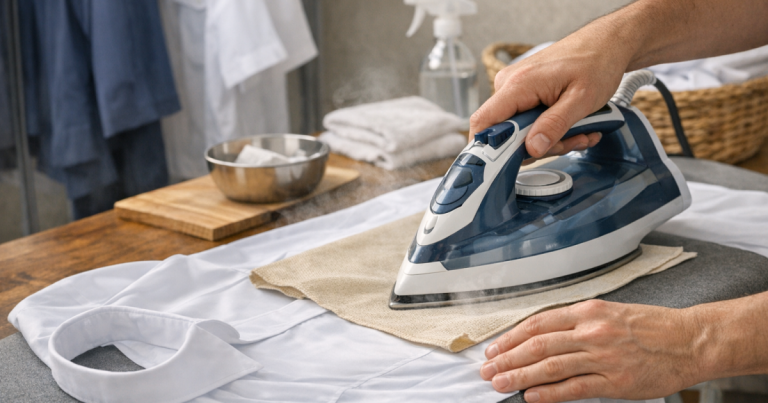
- Wash workwear separately and inspect before tumble drying or ironing.
- Stop home washing if the garment is stiff with set cement, damaged, chemically contaminated or part of controlled PPE.
Why cement dust is awkward on fabric
Cement dust is not like ordinary mud. It is very fine, abrasive and alkaline, so it can sit inside woven cotton drill, polyester work trousers, sweatshirt cuffs and hi-vis binding rather than staying on the surface. When it becomes wet, it can form a paste that clings to fibres and seams.
That is why a normal detergent wash is only part of the solution. Detergent helps lift soil and body oils, but it cannot magically dissolve a heavy layer of grit. If there is too much cement in the fabric, the wash action can rub the particles against the yarns, making cotton feel rough and causing premature wear at knees, hems, pockets and cuffs.
Hi-vis workwear needs extra care. Reflective tape, fluorescent panels and printed logos can be damaged by harsh scrubbing, chlorine bleach, high heat and aggressive stain treatments. Flame-retardant or water-repellent workwear may also have care restrictions, so always check the label before adding softeners, stain removers or high-temperature drying.
Step 1: Let the dust dry and remove loose grit outside
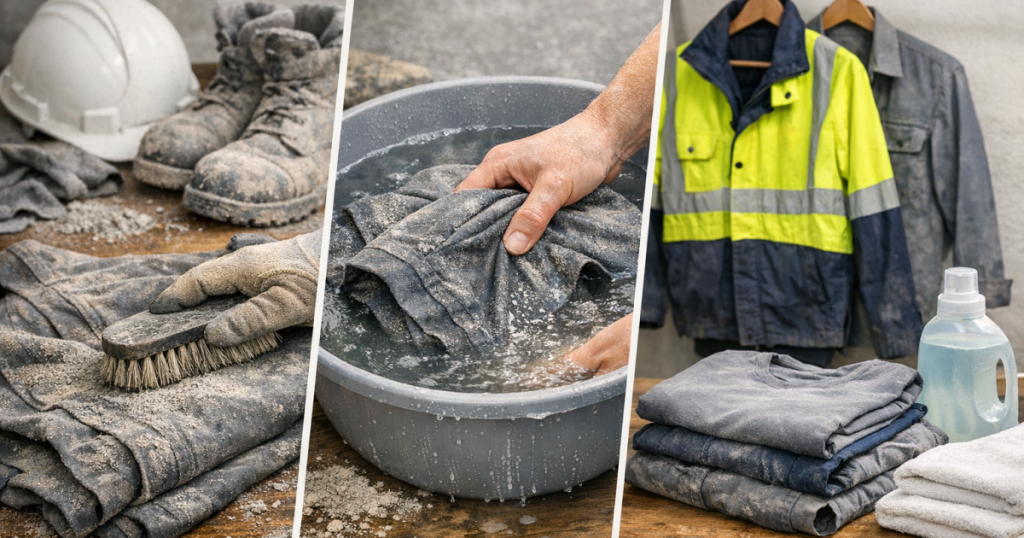
If the clothing is dusty but not soaked with wet cement, keep the first stage dry. Take the garment outdoors, away from open windows, washing lines and clean laundry. Wear gloves, and if the dust is heavy, use a suitable dust mask rather than shaking the garment close to your face.
- Empty pockets first, including nail pockets and knee pad compartments.
- Turn the garment inside out and shake it gently, then shake it right side out.
- Tap seams, hems and pocket corners where fine dust collects.
- Use a soft clothes brush to lift surface dust, working with the fabric rather than scrubbing across it.
- Avoid beating reflective tape or printed branding, as cracking or dulling can make the garment less effective.
A brush is useful, but pressure matters. If you are using a firmer laundry or stain brush on cotton work shirts, the same fibre-care principle applies as with shirt collars: gentle, repeated strokes are safer than hard scrubbing. For more on brush pressure and cotton fibres, see our guide to whether stain removal brushes damage cotton shirt fibres.
Step 2: Separate the load before rinsing
Cement-dusty workwear should be kept away from towels, children’s clothing, underwear and delicate fabrics. The fine particles can transfer easily, and grit left in the machine can affect later loads.
Sort the clothing into three groups:
- Lightly dusty, washable garments: T-shirts, sweatshirts and trousers with dry surface dust only.
- Heavily dusty workwear: Clothes with dust trapped in seams, pockets, knee areas or cuffs.
- Problem items: Clothing with wet cement, hardened patches, chemical splashes, damaged reflective tape or PPE markings that must remain compliant.
The first two groups can often be handled at home if the care label allows. The problem group needs caution. Hardened cement can be difficult to remove without damaging fibres, and PPE garments may need replacement if their protective function is compromised.
Step 3: Pre-rinse in cool water before the main wash
Once the loose dry dust has been removed, rinse the garment separately in cool water. A utility sink, large bucket or outdoor washing-up bowl is usually better than putting grit straight into the washing machine. Avoid using a kitchen sink for heavily soiled site clothing.
Submerge the garment, agitate it by hand, then lift it out and check the water. If it turns cloudy or gritty, replace the water and repeat. This stage is not about getting the garment perfectly clean; it is about removing enough residue so the washing machine is not dealing with a load full of abrasive particles.
Do not pour thick cement sludge into household drains. Let gritty water settle where practical, then wipe or lift settled solids into general waste according to local site or household waste guidance. Avoid tipping cement-contaminated water into surface drains, gardens or watercourses.
Step 4: Treat remaining marks without overworking the fabric
After rinsing, check for grey staining, stiff patches and residue in seams. A small amount of diluted liquid laundry detergent can be worked into durable cotton or polyester areas with your fingers. Leave it for a short dwell time, then rinse again before machine washing.
Avoid strong acids, neat vinegar, chlorine bleach or limescale remover on clothing. Although cement is alkaline, aggressive acidic treatments can affect dyes, elastics, reflective trims, metal fastenings and protective finishes. If a garment has a technical finish or safety rating, the safest route is to follow the manufacturer’s cleaning instructions rather than improvising.
If the workwear also has paint, sealant or site-product splashes, deal with those separately rather than treating everything as cement dust. Different residues need different handling, and the wrong solvent or heat can set marks permanently. Our workwear guide to removing paint splashes safely explains how to approach paint without damaging fabric or trims.
Step 5: Machine wash separately on a suitable programme
When the rinse water is mostly clear and the fabric no longer sheds obvious grit, wash the garments separately. Do not overfill the drum; work clothes need space for water and detergent to move through the fabric. A crowded wash can leave dust in seams and make trousers feel cardboard-stiff when dry.
- Use the care-label temperature, not the highest setting by default.
- Choose a normal or heavy-soil programme if the garment label allows it.
- Use the correct detergent dose for the soil level and local water hardness.
- Avoid fabric conditioner on flame-retardant, moisture-wicking, water-repellent or hi-vis safety garments unless the care label permits it.
- Add an extra rinse if the garment still feels gritty or the machine offers that option.
For cotton-rich work trousers and sweatshirts, a robust wash may be fine if the label allows it. For hi-vis jackets, branded uniforms and technical workwear, the label takes priority. Repeated hot washing can fade fluorescent colours, weaken reflective details and shorten garment life.
Step 6: Inspect before drying
Do not tumble dry cement-marked clothing until you are happy the dust and residue are gone. Heat can make remaining grime harder to shift and may set creases into stiff patches. It can also be too harsh for reflective trim or coatings if the care label requires low heat or line drying.
Shake the garment after washing and feel the seams, hems and pockets. If there is still grit, rinse and wash again before drying. Air drying is the safest first choice because it lets you inspect the fabric in natural light before using heat.
If you dry workwear indoors, manage moisture properly. Site clothing is often thick and slow to dry, especially in winter or in smaller UK homes. Good airflow helps prevent musty smells and condensation, so follow the principles in our guide to ventilating a room when drying laundry indoors.
What to avoid
- Washing dusty clothes with household laundry: Cement residue can transfer to softer fabrics and leave towels or bedding feeling gritty.
- Using hot water first: Heat is not needed for dry grit removal and can make some residues more stubborn.
- Scrubbing reflective tape hard: This can dull, crack or lift the reflective surface.
- Using bleach to make workwear look brighter: Chlorine bleach can damage dyes, trims and some safety finishes.
- Putting heavily dusty clothing straight into the machine: Large amounts of grit can leave residue in the drum, seal and filter area.
- Assuming all workwear is just tough cotton: Many modern uniforms include stretch fibres, coatings, reflective details or safety treatments.
Aftercare for the washing machine
Once the workwear is done, check the drum, door seal and detergent drawer for grit. Wipe around the rubber seal and remove any visible particles. If the machine has handled a dusty load, run a rinse or maintenance cycle empty before washing delicate or pale clothing.
Do not make a habit of using a domestic machine for very heavy cement contamination. Occasional lightly dusty workwear is one thing; regular loads of site residue can be hard on the appliance and may not be appropriate for garments that should be cleaned through workplace procedures.
When clothing may not be worth saving
Some work clothes cannot be restored safely or sensibly. If cement has hardened into thick patches, the fabric remains stiff after repeated rinsing, or the garment causes skin irritation after washing, stop wearing it. The same applies if hi-vis panels are faded, reflective tape is cracked, or a protective garment has lost the condition required for work.
Uniforms and site clothing are not only about looking tidy. They may be part of a workplace safety system, a brand standard or a hygiene routine. Replacing a damaged garment is usually better than trying to rescue clothing that no longer performs properly.
Common questions
Can I wash cement-dusty clothes in the washing machine?
Yes, but only after removing loose dry dust and pre-rinsing the garment until most grit has gone. Wash it separately and avoid overloading the drum.
Should I use vinegar on cement dust stains?
It is better to rely on dry removal, cool rinsing and detergent first. Neat or strong acidic treatments can affect dyes, trims, elastic and protective finishes.
Why do my work trousers still feel stiff after washing?
Fine residue may still be trapped in seams or dense fabric areas. Rinse again, wash with enough drum space, and inspect before using heat to dry.
Can cement dust damage hi-vis clothing?
Yes. Abrasive dust and harsh scrubbing can dull fluorescent fabric and reflective tape. Clean gently and replace the garment if visibility features are damaged.
Is wet cement treated the same as dry cement dust?
No. Wet cement is more irritating and can set into fabric. Remove the garment promptly, avoid skin contact, and follow workplace PPE procedures for contaminated clothing.
Main lessons
The safest home method is simple: remove dry dust outdoors, rinse separately in cool water, wash workwear on its own, then inspect before drying. Cement residue needs patience more than force. Gentle repetition protects fabric, reflective details and your washing machine far better than hard scrubbing or a hot emergency wash.
For everyday uniforms and work clothes, the goal is not just to make them look clean. It is to keep them comfortable, safe to wear and fit for the job they are meant to do.