Paint on work trousers, aprons or hi-vis layers is easiest to deal with while it is still soft, but dried marks are not always a write-off. The safest way to remove paint splashes from workwear is to identify the paint type first, lift rather than scrub, and protect any coatings, reflective tape or branded embroidery before using stain treatments.
Workwear is different from old decorating clothes: it may need to look presentable, keep a uniform colour, or retain protective finishes. Treat the stain in small stages and avoid heat until you are satisfied the paint has lifted as much as it safely can.
Solvent-heavy treatment of workwear contaminated with industrial coatings, two-pack paints or unknown site chemicals is typically handled by a qualified professional laundry or workplace safety provider to meet COSHH duties, PPE care instructions and UK safety requirements.
The short version
- Act quickly: blot wet paint, then lift excess with a blunt edge rather than rubbing it deeper.
- Check the paint type: water-based emulsion behaves very differently from oil-based gloss, varnish or specialist coatings.
- Read the garment label before using hot water, solvents, stain removers or a tumble dryer. If the symbols are unclear, use this guide to reading laundry symbols before washing new clothes.
- Keep hi-vis tape, printed logos and waterproof or flame-retardant finishes away from aggressive scrubbing and strong solvents.
- Do not iron or tumble dry the garment until the mark has been treated, as heat can make paint harder to shift.
Step 1: Work out what kind of paint you are dealing with
The method depends on the paint, not just the fabric. If you can, check the tin, tube, site materials or safety data sheet before treating the garment. Guessing can make a small splash spread or set.
- Water-based emulsion: common for interior decorating. Fresh marks often soften with cool water and laundry detergent.
- Acrylic paint: water-based when wet, but more stubborn once dry because it forms a plastic-like film.
- Oil-based gloss, undercoat or varnish: usually needs a compatible solvent for fresh marks, but solvents can affect dyes, coatings and trims.
- Masonry paint: can be abrasive and heavily pigmented, so scraping and repeated soaking may be needed.
- Spray paint or specialist coatings: often bond strongly and may not be realistic to remove fully from workwear without damaging the garment.
If the item is protective clothing rather than ordinary uniform, put safety performance ahead of appearance. Reflective strips, flame-retardant finishes and water-repellent coatings can be compromised by harsh treatment, even when the fabric itself looks intact.
Step 2: Lift wet paint before washing
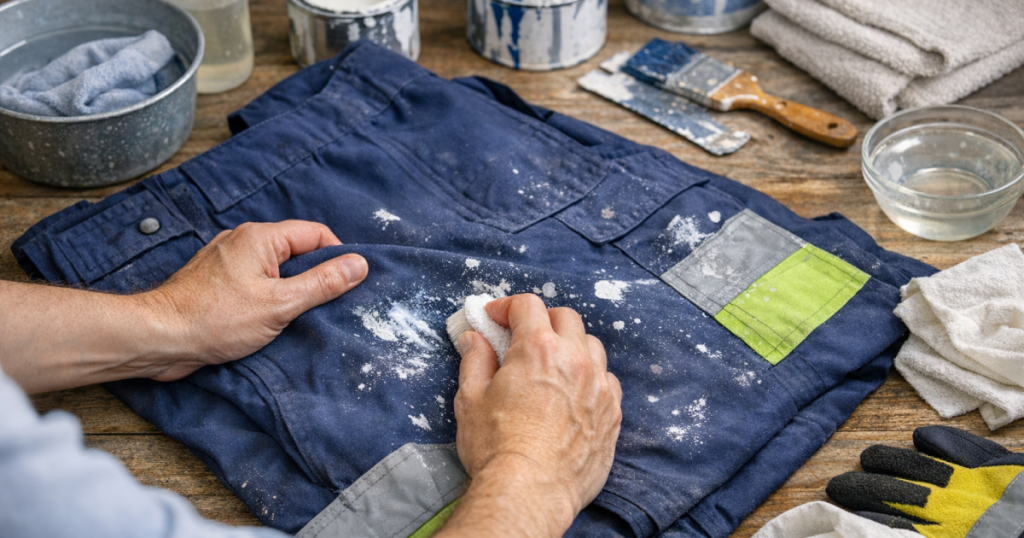
For a fresh splash, remove as much paint as possible before it reaches the fibres. Lay the garment flat, place an old towel behind the stained area, and use a spoon, blunt table knife or plastic scraper to lift paint from the outside edge towards the centre. The aim is to reduce the paint sitting on the fabric, not to scrub the colour through it.
For water-based paint, rinse from the back of the stain under cool running water. This pushes paint out of the fabric rather than driving it further in. Add a little liquid laundry detergent, work it in gently with your fingers, leave it for 10 to 15 minutes, then rinse again.
For oil-based paint, do not rinse first unless the paint manufacturer says it is water-clean-up. Blot the mark with a clean cloth to remove excess paint. If the garment care label allows solvent treatment, dab from the back using a small amount of white spirit or the solvent recommended for that paint, then rinse and wash promptly. Test first on an inside seam, because solvents can remove dye, dull prints and soften some synthetic trims.
Step 3: Treat dried paint patiently
Dried paint needs slower work. Pick off raised flakes with your fingernail or a blunt scraper, keeping the fabric flat so you do not stretch it. Avoid wire brushes, sandpaper or heavy scouring pads on uniform fabric; they can leave a fuzzed patch that looks worse than the stain.
For dried emulsion or acrylic, soak the stained area in warm water with a small amount of detergent for 20 to 30 minutes, then flex the fabric gently to crack the paint film. Work detergent into the reverse side and rinse. Repeat rather than escalating immediately to harsh stain removers.
For dried oil-based gloss, results are less predictable. A solvent may soften the edge of the mark, but it can also spread pigment or leave a halo. On dark work polos, aprons and branded tops, colour loss can be more obvious than the original paint speck. If fading is already a concern, the same principles used for washing black work polo shirts without fading apply: use the gentlest effective method, avoid unnecessary heat, and turn garments inside out for laundering.
Step 4: Choose the safest treatment for the fabric
Most everyday workwear is cotton, polyester, polycotton or denim, but trims can be less forgiving than the main fabric. A cotton drill trouser may tolerate more agitation than a printed softshell jacket or hi-vis vest.
Cotton and polycotton shirts
These usually respond well to detergent, cool rinsing and repeated light treatment. Avoid chlorine bleach unless the care label specifically permits it, as it can weaken fibres and alter uniform colour. For small specks, a soft nail brush can help, but brush from the reverse where possible and stop if the surface starts to roughen.
Denim and heavy work trousers
Scraping and repeated detergent treatment are often safer than strong solvent use. Denim can lose dye at the treated spot, so test carefully if the trousers are part of a uniform. Wash separately after treatment to prevent loosened pigment or paint residue transferring to other items.
Hi-vis and reflective workwear
Do not scrub reflective tape, printed standards markings or coated panels. Blot around the splash and follow the garment label. If paint has covered reflective areas, the garment may no longer be suitable for visibility-critical work even if the fabric can be cleaned.
Waterproof, coated or softshell garments
Solvents and heavy detergent use can affect water-repellent finishes. Spot-treat only the stained area and avoid long soaking unless the care label permits it. If paint is bonded into a coated surface, full removal may not be possible without harming the finish.
Step 5: Wash without setting the stain
Once the paint has been lifted as far as practical, wash the workwear according to the care label. A 30°C or 40°C cycle is usually a safer starting point than a hot wash, especially for mixed-fibre uniforms, logos and dark colours. Use enough detergent for the soil level, but do not overload the drum; stained workwear needs room for water and detergent to move through the fabric.
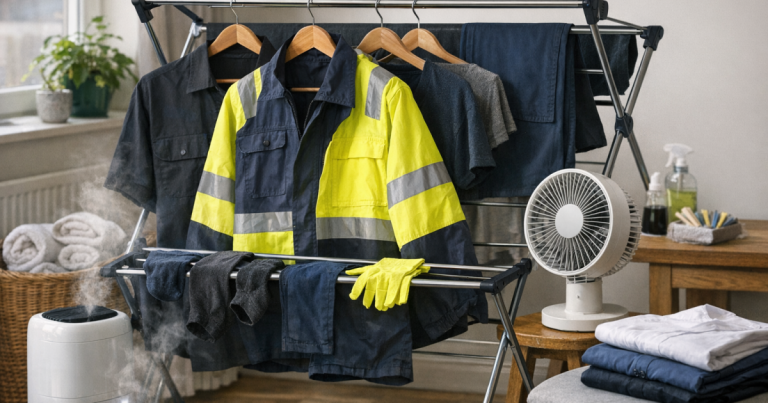
Check the mark before drying. If any paint remains, repeat the stain treatment while the garment is still damp. Tumble drying, radiator drying and ironing can harden residue, making the next attempt much less effective. If you need the uniform ready quickly, use airflow rather than high heat; the drying approach in drying school uniforms overnight without shrinking is also useful for many work shirts, trousers and polos.
What not to do
- Do not rub wet paint hard: it spreads the stain and pushes pigment into the weave.
- Do not use boiling water: heat can set some stains and may shrink or distort workwear.
- Do not soak hi-vis garments for hours: prolonged soaking can affect trims, coatings and reflective performance.
- Do not mix stain chemicals: use one method at a time, rinse thoroughly, and follow product safety labels.
- Do not use acetone casually: it can damage synthetics, prints, coatings and some dyes.
- Do not launder heavily contaminated workwear with household clothes: paint residue, dust and site grime can transfer.
When the mark is better left alone
Sometimes the safest outcome is not perfect stain removal. A tiny dried speck on heavy-duty trousers may be less of a problem than a pale solvent patch, a frayed area or damaged reflective strip. This is especially true for uniforms that need to stay smart and consistent, or protective clothing that must retain its finish.
If the paint is embedded, unknown, or sitting on a safety-critical part of the garment, stop before the treatment becomes destructive. Photograph the mark, check workplace clothing policies, and replace the item if visibility, flame resistance or waterproofing is part of its job.
FAQ
Can dried emulsion come out of work trousers?
Often, yes, if it is on cotton or polycotton and has not been heat-set. Soften it with warm water and detergent, scrape gently, rinse from the back and repeat before washing.
Will white spirit ruin workwear?
It can. White spirit may affect dyes, logos, reflective trims and coated fabrics. Test on an inside seam first and use it only when the paint and garment labels make it suitable.
Can I put paint-stained workwear straight in the washing machine?
Not if the paint is still wet or thick. Lift off excess first, spot-treat the area, and wash the item separately so residue does not transfer to other laundry.
What if the paint is on hi-vis tape?
Blot gently and follow the care label, but avoid scrubbing or solvents on the reflective surface. If visibility is reduced, the garment may need replacing for work use.
Is it safe to iron over a small paint mark?
No. Ironing can set paint residue and may transfer it to the iron soleplate. Treat and wash the garment first, then check the area carefully before applying heat.
Why it matters
Paint removal from workwear is a balance between appearance, fabric condition and safety. Start with the paint type, keep treatments gentle, and protect the parts of the garment that make it useful for work: colour, fit, logos, coatings and reflective details. A careful staged approach gives you the best chance of saving the garment without turning one splash into permanent damage.