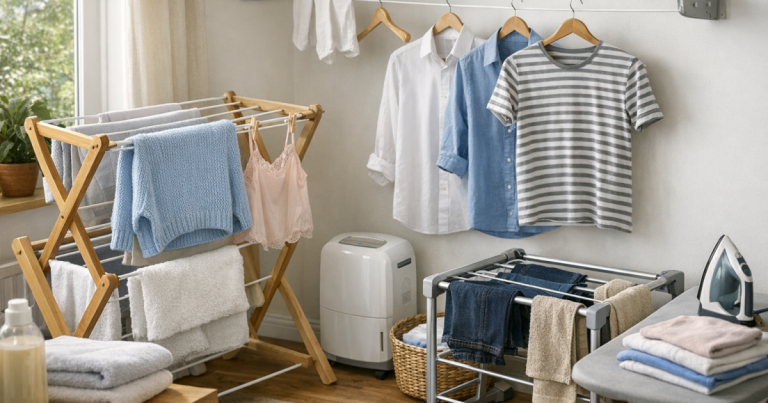

Radiators can rescue a damp school shirt or gym top on a wet evening, but they can also leave cottons crisp, synthetics clammy and wool blends misshapen. Used well, radiator drying racks lift garments away from direct heat so air can move around them and moisture can escape more evenly.
The aim is not to cook clothes dry. It is to use gentle warmth, space and timing so garments dry without becoming board-like, over-heated or musty.
The short version
- Use the rack as an air gap, not as a way to press clothes against the radiator.
- Spin clothes well in the washing machine, then shake and reshape them before hanging.
- Leave gaps between garments so warm air can circulate.
- Remove items while they are just dry, not after hours of extra heat.
- Ventilate the room to move moisture out, especially in winter.
- Avoid radiator drying for heavy towels, structured garments, wool that needs flat drying, and anything labelled dry clean only.
Why clothes go stiff on a radiator rack
Stiffness usually comes from a mix of heat, trapped moisture, detergent residue and poor airflow. When fabric dries too quickly on the outside, fibres can set in a rigid position before the inside has released moisture properly. Cotton shirts, school polo tops and denim are particularly prone to this crisp, papery feel.
Detergent residue can make the problem worse. If too much laundry detergent is used, or the load is packed too tightly in the washing machine, residue can remain in the fibres. Direct heat then dries that residue into the cloth, making it feel scratchy even when the item is clean.
Hard water can add to the rough feel in many UK homes. You do not need to overhaul your whole laundry routine, but using the correct detergent dose, avoiding overloaded wash cycles and choosing an extra rinse for residue-prone items can make radiator drying much kinder to fabrics.
Set up the rack so heat is indirect
A radiator rack works best when it creates separation. Clothes should sit on the rails of the rack, not drape down onto the hot metal behind it. If sleeves, hems or trouser legs touch the radiator, those areas can dry too fast and become stiff or shiny.
- Hook the rack securely so it sits level and does not sag towards the radiator.
- Use only one layer of clothing per rail where possible.
- Keep heavier items at the outer edge rather than pressed close to the heat.
- Move long garments to an airer if they hang low enough to touch the radiator.
- Do not pack the rack so tightly that fabric folds stay damp inside.
If the radiator is very hot, turn it down rather than trying to dry everything faster. Gentle warmth is more fabric-friendly than intense heat, particularly for elastane blends, printed sportswear and anything with a brushed or textured finish.
Prepare clothes before they reach the radiator
The way garments leave the washing machine affects how they dry. A good spin removes excess water, but it can also leave cottons twisted and creased. If you hang them in that compressed state, the heat can set creases and stiffness into the fabric.
Before hanging, do three quick things
- Shake each item open. This loosens compacted fibres and helps air reach seams, cuffs and hems.
- Smooth the shape by hand. Flatten collars, plackets, waistbands and pocket edges before they start drying.
- Turn thick areas outwards. Cuffs, hoods and waistbands dry slowly, so give them the most exposed position.
For shirts and blouses, hang the body over one rail and let the sleeves fall freely if there is space. For T-shirts, avoid folding them over a rail in a thick double layer; this often creates a stiff crease across the middle. If space is tight, rotate garments halfway through drying rather than leaving one folded section damp until the end.
Control moisture in the room
Warm air holds moisture, but it still needs somewhere to go. If windows are shut, doors are closed and several wet garments are drying on radiators, the room can feel damp and the clothes may dry unevenly. That combination often leaves fabrics stiff in some areas and slightly clammy in others.
Open a window slightly for part of the drying time, use a trickle vent where you have one, or leave an internal door open to improve air movement. If you regularly dry laundry indoors, it is worth reading our guide to ventilating a room when drying laundry indoors, as the right setup helps protect both clothing and the room from excess moisture.
Try not to dry several full wash loads on radiators across the home at once. It may feel efficient, but it raises indoor humidity quickly. A smaller number of well-spaced items will usually dry with a softer handle than a crowded rack of damp laundry.
Match the method to the fabric
Not every garment responds to radiator drying in the same way. The safest approach is to use the rack for items that benefit from short, gentle drying, and choose another method for garments that are heavy, delicate or easily distorted.
Cotton shirts and school uniform
Cotton can dry crisp if it is over-heated, but it responds well to shaping. Smooth collars, button bands and cuffs before hanging, then remove the item as soon as it feels dry to the touch. If it still feels slightly firm, a short period on a hanger away from the radiator can allow the fibres to relax.
Synthetic sportswear
Football tops, gym shirts and polyester school PE kit usually dry quickly, so they rarely need prolonged heat. Keep prints, badges and elasticated areas away from direct contact with the radiator. Warm air is enough; direct heat can make some finishes feel harsh or distorted.
Knitwear and wool blends
Many wool and wool-blend garments are better dried flat away from direct heat. Hanging them on a radiator rack can stretch shoulders, sleeves or hems while the fibres are wet. If the care label allows washing, press out moisture gently in a towel, reshape the garment and dry it flat on an airer or towel-covered surface.
Dry-clean-only garments
A radiator is not a safe shortcut for freshening structured coats, tailored trousers or delicate dry-clean-only fabrics. Heat and moisture can affect linings, interfacings and finishes. For these pieces, use airing, brushing and careful storage instead; our guide to keeping dry-clean-only clothes fresh between wears explains safer options.
Towels and heavy hoodies
Thick items dry poorly on small radiator racks because they hold a lot of moisture and block airflow. They may feel cardboard-stiff by the time the centre is dry. Use a larger airer, a well-ventilated room or a suitable tumble-drying cycle if the care label allows it.
Remove clothes before heat overdoes the fibres
One of the easiest ways to prevent stiffness is to stop drying at the right moment. Clothes do not need to sit on the rack long after they are dry. Extra heat can flatten fibres, set creases and make cotton feel harsher than necessary.
Check lighter garments after a short drying period rather than leaving everything until bedtime. Feel seams, cuffs and waistbands, as these areas hold moisture longest. If the main fabric is dry but the thick sections are not, move the garment to a hanger near the radiator rather than keeping the whole item on direct warmth.
For shirts, blouses and school uniform, a slightly damp finish can actually help. Hang the item on a hanger, smooth it by hand and let it finish drying in room air. The result is often softer and easier to iron than a garment that has been baked completely dry.
Soften the finish after drying
If an item has already dried stiff, do not assume it needs rewashing. First, shake it firmly, rub fabric lightly against itself and hang it in a steamy bathroom for a short time after a shower. This can relax cotton and blends without soaking them again.
For garments that need ironing, use steam and a suitable heat setting from the care label. Delicate fabrics, dark cloth and textured materials can mark if pressed directly, so use a cloth barrier where appropriate. Our advice on choosing the right pressing cloth for delicates is useful if you are trying to restore shape without adding shine.
If clothes regularly dry stiff even when spaced properly, revisit the wash stage. Reduce detergent to the recommended dose for the load and water hardness, avoid overfilling the drum, and consider an extra rinse for towels, shirts and baby clothes where residue is more noticeable.
Common mistakes to avoid
- Draping clothes directly over the radiator. This can overheat sections of fabric and trap moisture behind the garment.
- Stacking several items on one rail. Layers block airflow and dry with hard creases.
- Leaving clothes on for hours after they are dry. Prolonged heat can make cotton and blends feel rough.
- Drying in a sealed room. Moisture stays in the air and can settle back into fabrics and surfaces.
- Using the rack for everything. Heavy, structured and delicate items often need a different drying method.
Common questions
Are radiator drying racks bad for clothes?
Not when used carefully. Radiator drying racks are best for small batches of everyday garments that can tolerate gentle warmth, provided clothes are spaced out and kept away from direct radiator contact.
Can I leave clothes on a radiator rack overnight?
It is better to avoid leaving them for longer than needed. Overnight drying can over-dry lighter fabrics and increase room humidity if ventilation is poor.
Why do my towels go hard on the radiator?
Towels hold a lot of water and need strong airflow as well as warmth. On a small rack, the loops can dry flattened and residue can stiffen, leaving the towel rough.
Does fabric conditioner stop radiator stiffness?
It can make some cottons feel softer, but it is not a fix for poor rinsing or overcrowded drying. It can also reduce absorbency in towels and affect some sportswear finishes.
Should clothes be fully spun before radiator drying?
Yes, within the care label limits. A good spin reduces drying time, but shake and reshape garments afterwards so creases and compressed areas do not set as they dry.
The big picture
A radiator rack should be treated as a source of gentle assisted drying, not a hot plate for wet fabric. The softer results come from indirect heat, fewer layers, better ventilation and removing clothes as soon as they are dry enough.
For everyday UK laundry, this makes radiator drying more useful without sacrificing fabric feel. Keep it for quick-drying essentials, give heavier items more space elsewhere, and deal with stiffness at the wash and finishing stages rather than blaming the rack alone.