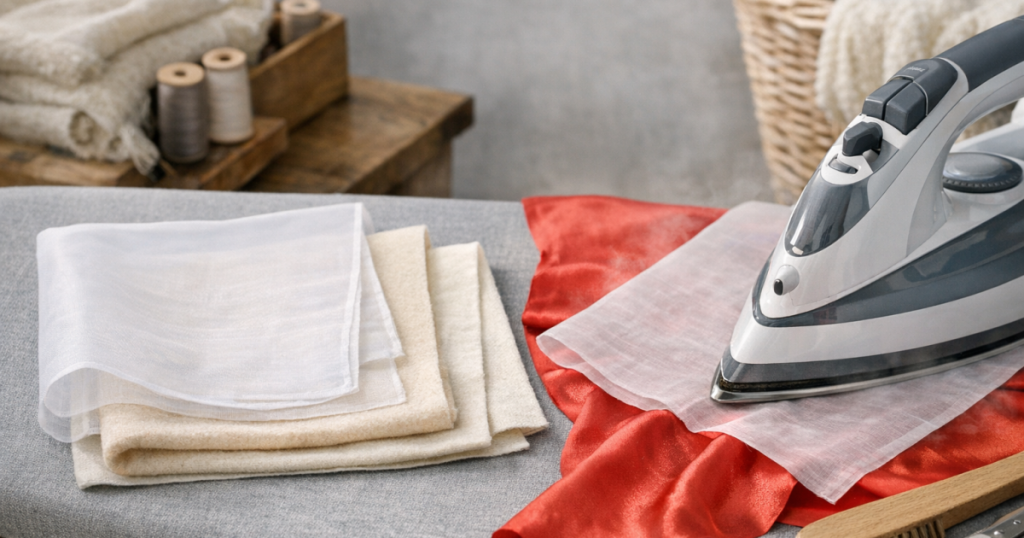
Shine marks on wool trousers, flattened nap on velvet and heat gloss on silk can happen in seconds. A pressing cloth for delicate fabrics gives you a controllable buffer between the iron soleplate and the garment, so you can smooth seams, refresh creases and tame wrinkles with less risk.
the right cloth is not simply any spare rag. It should be clean, pale, smooth, heat tolerant and suited to the fabric underneath, because thickness, fibre content and weave all affect how heat and steam reach the garment.
The quickest way to choose
- For silk, viscose and fine blouses: use a smooth, lightweight white cotton cloth or real silk organza so you can control heat without adding bulk.
- For wool trousers, jackets and tailoring: choose a slightly thicker cotton cloth that can hold a little moisture and spread steam evenly.
- For fabrics that mark easily: avoid dragging the iron; press, lift, move, then press again.
- For textured fabrics such as velvet or corduroy: do not flatten the pile against a hard board. Use very gentle steam and consider pressing from the reverse with minimal pressure.
- For embellishments, prints and synthetics: use the lowest suitable heat, keep the cloth dry unless the care label allows steam, and test first in a hidden area.
What a pressing cloth actually does
A pressing cloth reduces direct contact between the hot soleplate and the fabric. That helps prevent scorching, heat shine, adhesive transfer from prints, and compression marks on more sensitive weaves. It also softens the delivery of steam, which is useful when shaping wool or easing wrinkles from fabric that dislikes aggressive heat.
It does not make every garment safe to iron. The care label still matters, particularly on acetate, some coated fabrics, pleats, sequins, flocked prints and garments with glued details. If the label says do not iron, the cloth is not a loophole. For garments that are labelled for specialist care, refreshing and airing may be safer than pressing; our advice on how to keep dry-clean-only clothes fresh between wears is a better next step before you reach for the iron.
Choose by fabric, not by habit
Silk, satin and fine viscose
Use a very smooth, pale cloth with a close weave. Fine cotton lawn, clean white muslin or real silk organza can work well because they create a barrier without trapping too much heat. Keep the iron moving between press points rather than sliding across the garment, and avoid heavy steam unless the label permits it. Satin weaves can show water marks, so a dry cloth and a lower setting are usually safer.
Wool, suiting and tailored garments
Wool often responds well to controlled steam, but it is prone to shine if the iron touches the face of the fabric. A white cotton cloth, lightly dampened and wrung out, can help steam reach the fibres without polishing the surface. Use firm but brief pressure, lift the iron, then let the area cool flat before moving the garment. Cooling time matters because wool can re-set into a new shape while warm.
Linen and crisp cotton blends
Linen is tougher than silk, but dark colours and seams can still develop shine. A medium-weight cotton cloth is usually enough. For stubborn creases, dampen the cloth slightly rather than soaking the garment, then press from the reverse where possible. If the board surface is rough, compressed or stained, the cloth alone may not solve the problem; choosing a fabric-safe ironing surface also helps, as explained in our guide to an ironing board cover that protects fabrics.
Tulle, net, lace and decorative layers
Open, snag-prone fabrics need a very light touch. Use a smooth cloth, low heat and almost no pressure, and never drag the iron across the surface. Tulle and netting can distort or melt if the fibre content is synthetic, so check the label and test carefully. For cleaning before pressing, see our separate guide to washing tulle skirts without tearing the netting.
Common pressing cloth materials compared
- White cotton muslin: versatile, washable and easy to inspect for dirt or dye. Best for everyday delicates, blouses and light cottons.
- Cotton lawn or a clean white handkerchief: smoother and finer than many tea towels, so it is useful for silk-like fabrics and small areas such as collars.
- Silk organza: useful when visibility matters, such as aligning hems or pressing around seams. Make sure it is genuine silk organza, not a synthetic lookalike that may react badly to heat.
- Plain white cotton tea towel: handy for wool and heavier garments, provided it is not textured, printed or linty.
- Commercial ironing cloth: convenient if you want a dedicated item that stays with your ironing kit. Check the fibre content and temperature advice on the packaging rather than assuming it suits every garment.
Ready-made options such as the Prym Ironing Cloth or Hemline Ironing Cloth are worth comparing if you prefer a dedicated cloth instead of repurposing household cotton. Look for a smooth surface, easy laundering instructions and a size that covers the area you normally press, such as trouser legs, jacket fronts or dress panels.
What to avoid using
- Coloured cloths: heat and steam can encourage dye transfer, especially onto pale garments.
- Printed tea towels: inks and raised designs can mark fabric or transfer residue to the iron.
- Microfibre cloths: many are synthetic and not intended for direct use with a hot iron.
- Thick terry towels: the looped surface can imprint texture and block too much heat for precise pressing.
- Kitchen roll or tissues: they can shed lint, tear when damp and stick to textured trims.
- Any cloth with detergent, starch or fabric conditioner residue: residues may transfer under heat and leave marks.
Step-by-step: how to use it safely on delicates
- Read the care label first. Match the iron temperature to the most sensitive fibre in the garment, not the fibre you assume is dominant.
- Check the cloth is spotless. Hold it to the light and look for stains, lint, loose threads, scorch marks or colour.
- Decide whether it should be dry or damp. Use dry for water-mark-prone fabrics such as some silks and satins. Use barely damp cotton for wool or linen when steam is allowed.
- Test a hidden area. Press an inside seam allowance or hem area, then let it cool before checking for shine, colour change or texture loss.
- Press rather than iron. Place the cloth flat, lower the iron, hold briefly, lift, then move to the next section. Sliding increases distortion and shine.
- Let the fabric cool before handling. Moving a warm delicate garment can stretch seams or set creases in the wrong place.
Care and storage checks for the cloth itself
Wash the cloth separately from heavily dyed or fluffy laundry, and avoid strong fragrance or fabric softener if you use it on silk, wool or formalwear. Once dry, store it somewhere clean rather than leaving it on the ironing board, where it can pick up dust, starch spray or residue from other jobs.
It is sensible to keep two cloths: a very fine one for delicate garments and a sturdier cotton one for wool, linen and workwear. Replace either cloth if it becomes scorched, rough, stained or permanently creased, because those flaws can transfer straight onto the garment you are trying to protect.
FAQ
Can I use a tea towel as a pressing cloth for delicate fabrics?
Yes, but only if it is plain white cotton, smooth, clean and free from prints or texture. It is usually better for wool and linen than for very fine silk.
Should the cloth be wet or dry?
Use it dry for fabrics that water-mark easily. Use it lightly damp for wool, linen or sturdy cotton where the care label allows steam and moisture.
Is baking parchment a good substitute?
It can help with some craft pressing tasks, but it is not the best everyday choice for garments because it does not absorb moisture or behave like woven cloth.
Why did my garment still get shiny?
The iron may have been too hot, pressure too heavy, or the cloth too thin. Shine can also happen if you slide the iron across wool or dark synthetic blends.
How large should the cloth be?
Choose one large enough to cover the iron’s soleplate plus the area you are pressing. For trousers and jackets, a cloth roughly the size of a small tea towel is easier to manage than a tiny square.
Main lessons
Choose the barrier to suit the garment: fine and smooth for silk-like fabrics, slightly thicker cotton for wool, and very low pressure for textured or decorative materials. Keep it pale, clean and residue-free, test before pressing visible areas, and treat the cloth as part of your fabric-care kit rather than an afterthought.