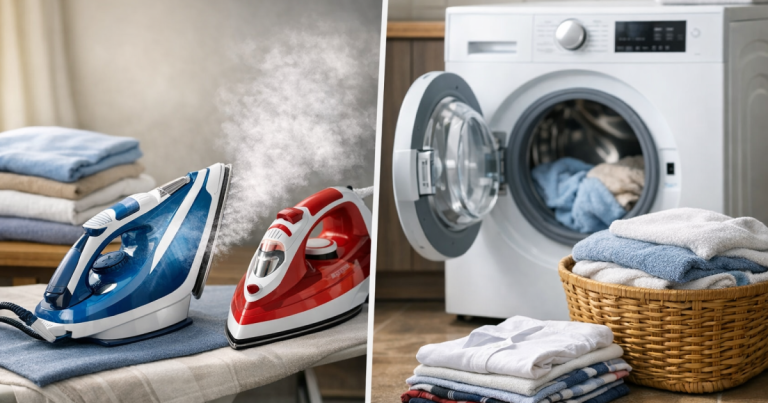
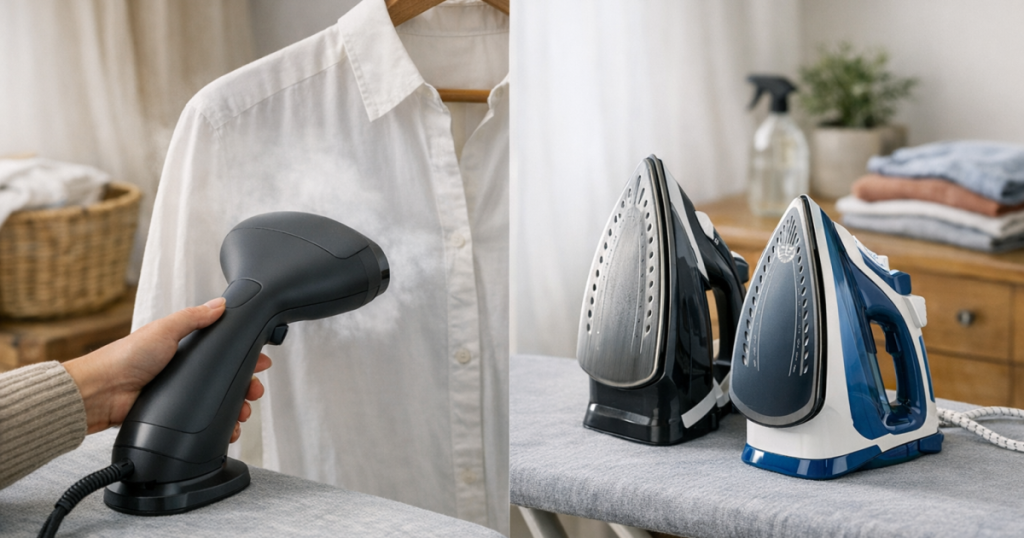
A handheld steamer-iron can look like the neater answer when your shirts, dresses and workwear need a quick refresh without setting up a board. Steamery vs Tefal is really a question of workflow: do you need fast garment touch-ups on a hanger, or stronger crease removal across a proper ironing surface?
Quick Buying Links
Steamery Cirrus No.3 Iron Steamer
The Steamery Cirrus No.3 Iron Steamer is a compact hybrid designed for steaming and light pressing.
shopping/TefalSteamIrons
Worth considering if its strengths better match your needs.
The Steamery Cirrus No.3 Iron Steamer is a compact hybrid designed for steaming and light pressing. Tefal steam irons, such as the Tefal Express Steam FV2835 and Tefal Ultraglide models, are more traditional irons built around a soleplate, an ironing board and direct contact with fabric. Both can improve how clothes look, but they solve slightly different problems.
What to know first
Choose the Steamery Cirrus No.3 if your main problem is light creasing on hanging garments, last-minute outfit refreshing, awkward ruffles, dresses, overshirts, soft tailoring or clothes that are annoying to position on a board. It suits people who want something quick, compact and less formal than a full ironing setup.
Choose a Tefal steam iron if you regularly press cotton shirts, school uniform, work trousers, pillowcases, linen, jeans or anything that needs flatter seams, sharper cuffs or a crisper finish. A traditional steam iron has the advantage when fabric needs pressure as well as heat and moisture.
For shoppers comparing Tefal against other everyday irons, our Tefal Express Steam FV2835 vs Philips EasySpeed GC1740/26 comparison is a useful next step because it looks at what matters in a standard household steam iron rather than a handheld steamer.
Side-by-side: the practical differences
- Crease removal: Tefal steam irons are generally stronger for set-in creases because you can apply steady pressure against a board. The Steamery Cirrus No.3 is better thought of as a refresher and light crease remover, with some pressing ability from its heated plate.
- Finish: Tefal is the better choice for crisp shirt fronts, collars, cuffs, pleats and pressed trouser seams. Steamery gives a softer, more relaxed finish, which can be preferable for fluid fabrics and casual outfits.
- Speed: The Steamery option wins when you want to deal with one garment quickly without unfolding a board. A Tefal iron makes more sense when you are doing a batch of laundry in one session.
- Fabric handling: Steam is useful on many fabrics, but garment labels still matter. Tefal gives more control for structured pressing; Steamery is easier to move around delicate shapes, linings and areas that are hard to lay flat.
- Storage: A handheld steamer-iron takes up less space. A Tefal iron usually needs an ironing board or heat-safe surface, plus somewhere to store both.
- Running care: Both use water, so limescale matters in many GB homes. Check each current model’s water guidance, cleaning routine and anti-calc arrangement before buying.
Where the Steamery Cirrus No.3 makes more sense
The Cirrus No.3 is strongest when your clothes are not truly “ironing pile” items. Think viscose blouses, soft dresses, creased T-shirts, overshirts, travel-wrinkled garments, occasionwear that needs lifting rather than flattening, or a jacket that has been crushed on the back of a chair. It is also more convenient for people who do not want a full ironing board permanently in the way.
Its appeal is partly behavioural: if a tool is easy to reach for, you are more likely to use it. A compact steamer-iron can sit in a bedroom cupboard or utility area and deal with one outfit before work. That can be more realistic than planning a Sunday ironing session, especially in smaller flats and shared homes.
It is not the right answer for every crease. A handheld steamer-iron has a smaller contact area than a full-size soleplate, and you do not get the same leverage as pressing fabric flat on a board. Heavy cotton, linen trousers, chef whites, school shirts and uniform shirts usually need more pressure than a handheld tool comfortably provides.
It is also worth being careful with pile fabrics. Steam can revive velvet, but contact pressure can flatten the nap if handled badly. If that is a fabric you wear often, read our guide to steaming velvet without crushing the pile before using any heated plate or steamer head near it.
Where Tefal steam irons have the advantage
A Tefal steam iron is the more dependable choice for households with regular, mixed laundry. If you iron several shirts at once, press bedding, sharpen cuffs, flatten hems or remove stubborn creases from cotton and linen, the traditional format is still hard to beat. The soleplate covers more area, the board supports the fabric, and your hand pressure helps reshape fibres more decisively.
Within Tefal’s steam-iron range, the exact experience depends on the model. Some are positioned as everyday irons, while others focus more on glide, scale management or higher-performance steam features. Do not rely on the brand name alone: check the current listing for soleplate type, water capacity, steam settings, anti-calc maintenance, cord length, weight and any safety features that matter in your home.
The Tefal Ultraglide Anti-Calc Plus is a recognisable example of the kind of iron shoppers often compare when they want a step up from a basic model. It is still a conventional steam iron, so its usefulness depends on whether you have the space and habit for board-based pressing.
A Tefal iron also pairs better with a stable ironing board. A board such as the Minky Homecare Ironing Board is not glamorous, but the surface underneath the garment affects the result. A wobbly board, thin cover or cramped setup can make even a good iron feel frustrating.
Fabric-by-fabric judgement
Cotton shirts and school uniform
Tefal is the safer bet for a crisp result. Cotton shirts respond well to steam plus pressure, and areas such as collars, cuffs and button plackets are easier to control on a board. The Steamery Cirrus No.3 can freshen a shirt that has only light wardrobe creasing, but it is less convincing for a full weekly stack.
Linen and linen blends
Linen creases by nature, so expectations matter. If you want a sharply pressed linen shirt or trousers, use a Tefal steam iron and work while the fabric is slightly damp if the care label allows. If you prefer a softened, relaxed look, the Steamery can reduce the worst folds without making the garment look overworked.
Viscose, modal and fluid dresses
The Steamery format is often more convenient because fluid fabrics can be fiddly to lay flat without stretching or creating new creases. Hang the garment properly, keep the fabric supported, and let steam relax the creases. Use direct contact only where the care label permits and the fabric tolerates heat.
Wool, knits and soft tailoring
Steam can help relax wool fibres, but pressure can distort shape. A handheld steamer-iron is useful for lifting light creases on jackets and knitwear, provided you avoid dragging the fabric. After steaming knitwear, let it cool and dry in shape rather than hanging it heavily on a narrow hanger; our guide to whether padded hangers prevent shoulder bumps in knitwear explains why support matters.
Jeans, canvas and heavier workwear
Tefal wins here. Dense fabrics need direct pressure and a firm surface to look properly pressed. The Steamery Cirrus No.3 may soften light creases but is not the tool to choose if you want a clean, flattened finish on heavier garments.
The buying trade-offs that actually matter
The biggest mistake is treating a handheld steamer-iron and a steam iron as direct substitutes. They overlap, but they are not identical. The Cirrus No.3 is about convenience, garment refreshing and soft finishing. A Tefal steam iron is about efficient pressing, repeatable results and control over shape.
Cost can also be misleading. A handheld hybrid may look like the tidier single-tool option, but if you still need a full iron for shirts and bedding, it becomes an additional tool rather than a replacement. Equally, a capable Tefal iron can be good value if you actually iron regularly, but it may sit unused if your clothes mostly need quick touch-ups.
Space is another deciding factor. A compact steamer-iron suits flats, shared homes and wardrobes where the ironing board rarely comes out. A Tefal iron suits utility rooms, airing cupboards and households that already have a board set up or can store one easily.
Water hardness should not be ignored. Many GB households deal with limescale, and steam appliances do not all handle scale in the same way. Before choosing either option, check the manufacturer’s water advice and cleaning instructions. A tool that is easy to maintain is more likely to keep performing well.
Common mistakes when choosing between them
- Buying for an imaginary routine: If you hate ironing and only need to refresh outfits, a premium full-size iron may not change your habits. If you press shirts every week, a handheld steamer-iron may feel underpowered for the job.
- Ignoring the ironing surface: A Tefal steam iron needs a stable board and a decent cover. Without that, crease removal and fabric control suffer.
- Using too much pressure on delicate fabrics: Steamery’s heated plate can help with light pressing, but delicate, textured and pile fabrics still need careful handling.
- Expecting steam alone to create sharp edges: Collars, cuffs, pleats and trouser creases usually need contact pressure and a supported surface.
- Skipping garment labels: Silk, acetate, embellished items and coated fabrics can react badly to heat, water spotting or pressure. Test discreetly where the label allows.
Which one should you buy?
Buy the Steamery Cirrus No.3 if you want a neat, compact tool for light creasing, last-minute outfit refreshes and garments that are awkward to iron flat. It suits softer wardrobes: dresses, blouses, overshirts, T-shirts, relaxed tailoring and fabrics where a crisp pressed finish is not the priority.
Buy a Tefal steam iron if your laundry includes regular shirts, uniforms, cotton trousers, bedding, linen or heavier fabrics. It is the more practical choice for households that expect a polished finish and are prepared to use an ironing board.
For most homes, the Steamery vs Tefal decision comes down to whether you are replacing ironing or supplementing it. If you already own a good iron but rarely use it for delicate or awkward pieces, the Cirrus No.3 can fill a useful gap. If you own neither and need one tool for the widest range of everyday laundry, a Tefal steam iron is the more versatile first purchase.
Quick Buying Links
Steamery Cirrus No.3 Iron Steamer
The Steamery Cirrus No.3 Iron Steamer is a compact hybrid designed for steaming and light pressing.
shopping/TefalSteamIrons
Worth considering if its strengths better match your needs.
FAQ
Can the Steamery Cirrus No.3 replace a Tefal steam iron?
For light creases and garment refreshing, possibly. For crisp shirts, bedding, linen and heavier fabrics, a Tefal steam iron is still the better replacement for a traditional ironing routine.
Is a handheld steamer-iron safer for delicate fabrics?
It can be gentler in the sense that you do not need to press hard against a board, but heat and steam can still damage sensitive fabrics. Always follow the care label and avoid direct contact where the fabric is not suitable for ironing.
Which is better for work shirts?
A Tefal steam iron is better for work shirts if you want sharp collars, flat cuffs and a crisp front. The Steamery Cirrus No.3 is more useful for a shirt that only needs a quick refresh before wearing.
Do Tefal steam irons need more maintenance?
They can need regular scale management, depending on the model and your local water hardness. Check the current Tefal instructions for water type, cleaning and anti-calc care before buying.
Should I own both?
Own both only if they solve different problems for you: a Tefal iron for batch pressing and a Steamery Cirrus No.3 for quick hanging-garment touch-ups. If space or budget is tight, choose based on the fabrics you handle most often.