Creases from the dryer are usually caused by crowding, twisting and leaving warm clothes compressed at the end of the cycle. The easiest way to load a tumble dryer is to give garments enough space to fall freely, separate heavy items from light ones and remove everything as soon as the cycle finishes.
A slightly smaller load often dries faster, feels softer and needs less ironing than a full drum packed to the door. Good loading is not just about neatness; it protects seams, collars, waistbands, pleats and delicate surface finishes from being set into awkward folds by heat.
At a glance
- Shake out every item before it goes into the drum, especially sleeves, trouser legs and pillowcases.
- Do not mix heavy towels or jeans with lightweight shirts, blouses or synthetic tops.
- Leave enough space for the load to tumble rather than rotate as one tight mass.
- Use the gentlest suitable programme and avoid overdrying, which can set creases more firmly.
- Unload while clothes are still warm, then hang, fold or smooth them straight away.
Why tumble dryers crease clothes
A tumble dryer removes moisture by moving warm air through fabric while the drum turns. Clothes crease when they cannot move freely, when fabrics dry at different speeds, or when a finished load sits in a warm heap after the cycle ends.
Heavy fabrics such as denim, thick cotton hoodies and bath towels can trap lighter garments against the drum. Shirts, dresses and pyjama tops may then dry crumpled around heavier items. Synthetics and blended fabrics can also hold sharp folds if they are overheated or left compressed while warm.
When you load a tumble dryer properly, you are aiming for airflow and movement. The clothes should lift, drop and separate as the drum turns, rather than travelling round in a compact bundle. That movement is what helps wrinkles relax as moisture leaves the fibres.
Step 1: Sort the load by fabric weight
Start before the dryer door opens. A mixed wash load is not always a good drying load. Sort damp laundry into groups that behave similarly in the dryer.
- Dry towels, thick joggers and heavy cottons separately from shirts, blouses and light T-shirts.
- Keep jeans away from delicate tops, viscose blends and anything with fine trims.
- Dry bedding on its own where possible, rather than wrapping it around clothing.
- Keep lace, embellished pieces and garments marked dry flat out of the dryer unless the care label clearly allows tumble drying.
Dark clothing also benefits from a little extra care. Turn black T-shirts, dark sweatshirts and navy cottons inside out before drying to reduce surface abrasion, and pair this with good washing habits such as preventing black clothes fading in the wash.
Step 2: Untangle and shake each item
Do not transfer laundry from washing machine to dryer in one compact armful. Spin cycles often leave sleeves knotted, socks tucked into pillowcases and trouser legs twisted together. If those folds go straight into heat, they can dry into the fabric.
Before loading, give each item a firm shake. Pull out sleeves, open trouser legs, release rolled hems and flatten collars. For button-down shirts, run your hand down the front placket so it is not folded under itself. For T-shirts, snap the shoulders gently and smooth the side seams.
This takes less than a minute for a normal household load, but it is one of the most effective ways to reduce ironing. It is particularly useful for school shirts, work tops, scrub trousers, cotton pyjamas and jersey dresses.
Step 3: Leave the drum loose, not packed
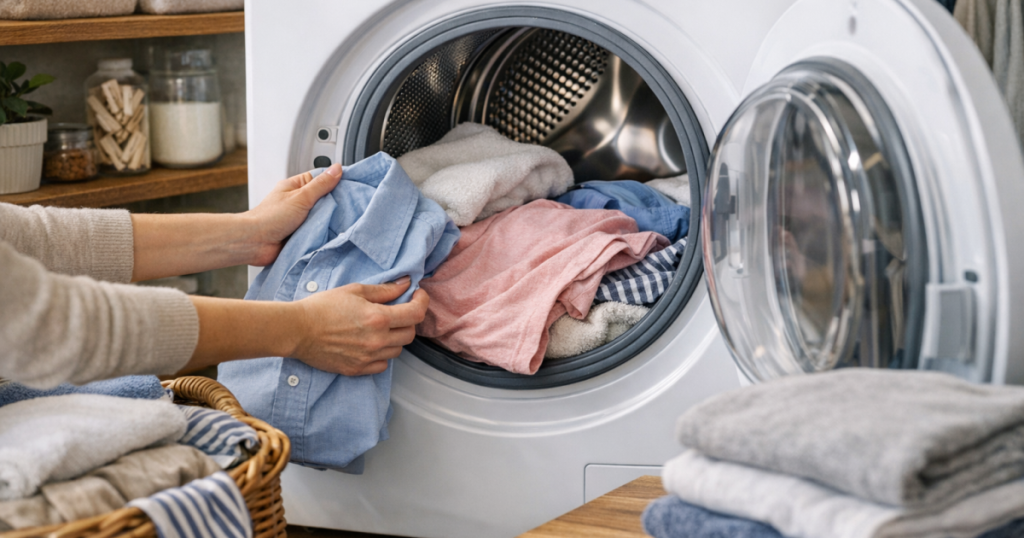
The load should not be pressed tightly against the door. As a simple check, the drum should still have visible space for items to lift and fall. If you have to push the washing in to close the door, the load is too full for crease-free drying.
Capacity labels can be misleading in everyday use because they refer to weight, not how awkwardly the items move together. A few bulky hoodies may need more space than a larger number of thin T-shirts. If you are drying clothes you want to wear without heavy ironing, aim for a looser load than you would for towels.
For crease-prone clothing, it is usually better to run two lighter loads than one overfilled cycle. A crowded drum may take longer, dry unevenly and leave deep folds in cotton, linen blends and viscose.
Step 4: Fasten, open and position items sensibly
Small adjustments reduce tangling and pressure marks. Zip up jeans and hoodies so metal teeth do not catch on lighter fabrics. Fasten duvet covers or pillowcase openings if they tend to swallow smaller items. Leave shirt buttons mostly undone so the garment can move naturally rather than pulling across the chest.
Do not put one large item in as a tight ball. Loosely feed it into the drum so it is not already folded into itself. With fitted sheets, shake them out and avoid stuffing corners into the centre. If bedding repeatedly balls up in your dryer, it may be better to dry sheets separately or use an indoor airing arrangement that keeps fabric spread out; the same airflow principles apply when drying bedding indoors without blocking airflow.
Step 5: Choose a cycle that does not overdry
Creases become harder to remove when fabric is dried past the point it needs. Very dry cotton can feel crisp and wrinkled, while synthetics can emerge with folds that look pressed in. Use the care label first, then choose the lowest suitable heat or a programme designed for the fabric type.
- Use cotton settings for sturdy cottons that are safe to tumble dry.
- Use synthetics or low-heat settings for polyester blends, gym tops and many everyday shirts.
- Use a reduced load for easy-iron or anti-crease programmes so the drum movement can actually work.
- Remove items that are slightly damp if you plan to hang them to finish drying.
If your dryer has a sensor programme, clean the lint filter regularly and keep the drum free from residue so the machine can judge dryness more reliably. Always follow the appliance manual for filter care, and never dry items contaminated with cooking oil, solvents or flammable substances.
Step 6: Remove clothes as soon as the cycle ends
The end of the cycle is where many creases are created. Warm fibres are more pliable, and a damp-warm heap in the drum can set folds quickly. Empty the dryer promptly, especially for shirts, dresses, lightweight trousers and cotton tops.
Handle the load in order of crease risk. Hang shirts, blouses and dresses first. Smooth collars, cuffs, plackets and hems with your hands while the fabric is still warm. Fold T-shirts flat rather than dropping them into a basket. If an item is still slightly damp at the seams, hang it with space around it rather than packing it into a wardrobe.
Many dryers have a post-cycle anti-crease tumble, but it is not a substitute for unloading. It can help if you are a few minutes late, yet clothes still look better when dealt with quickly.
What to do if clothes still come out creased
If creasing continues, look for the pattern. Deep folds in every item usually mean the drum is overloaded. Creases in shirts but not towels usually mean the load is too mixed. Wrinkled hems and collars often point to twisted garments going in, or clothes sitting in the drum after finishing.
For light creasing, hang the item straight away and smooth it by hand. A quick steam can also help relax fibres before wearing, particularly on linen blends, viscose, shirts and dresses. If you regularly use steam as part of your laundry routine, it is worth understanding how to choose a clothes steamer for linen and shirts.
If creases are stubborn, mist the garment very lightly with water, tumble it for a short refresh cycle if the care label allows, then remove and hang immediately. Avoid repeatedly blasting delicate fabrics with high heat; it can weaken elastane, flatten textured finishes and make some trims lose shape.
Common loading mistakes to avoid
- Drying a full washing machine load without checking whether it is too bulky for the dryer.
- Putting shirts in with towels, bath mats or heavy jeans.
- Leaving sleeves, legs and bedding corners twisted from the spin cycle.
- Using the hottest setting to save time on fabrics that crease or shrink easily.
- Letting clean, warm laundry sit in the drum while you do something else.
- Throwing dried clothes into a basket instead of hanging or folding them straight away.
Questions people ask
Is it better to put fewer clothes in the tumble dryer?
For crease-prone clothing, yes. A looser load gives garments room to tumble, separate and dry evenly. Towels can usually cope with fuller loads than shirts or dresses.
Should clothes be fully dry before taking them out?
Not always. Shirts, linen blends and cotton tops often look smoother if removed very slightly damp, shaken out and hung to finish drying.
Do dryer balls stop clothes creasing?
They can help separate some loads, but they will not fix overloading, poor sorting or late unloading. Treat them as a small aid, not the main solution.
Why do my sheets twist around everything?
Large sheets and duvet covers can trap smaller items as the drum turns. Dry bedding separately, fasten openings where practical and shake sheets out before loading.
Can I load a tumble dryer with shirts and towels together?
It is better not to if you want smooth shirts. Towels dry more slowly and can crush lighter garments, leaving shirts with deeper folds and damp patches.
Main lessons
Crease-free tumble drying is mostly about space, sorting and timing. Shake items out, avoid mixing heavy and lightweight fabrics, keep the drum loose and unload while everything is still warm. Those habits make everyday laundry easier to fold, reduce the need for ironing and help clothes keep their shape for longer.