
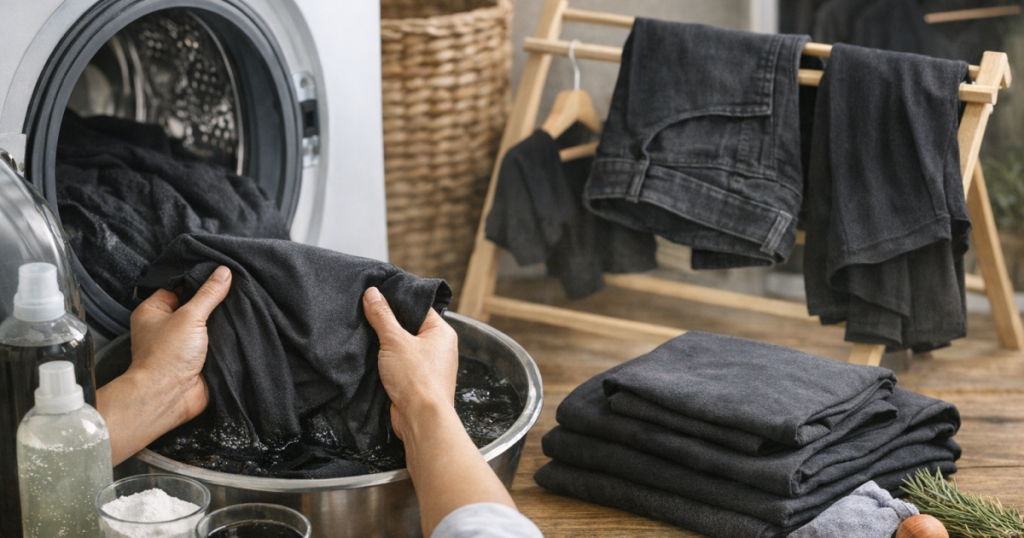
Black jeans, T-shirts and workwear often look tired long before they wear out, usually because dye loss, detergent residue and heat build up wash after wash. The simplest way to prevent black clothes fading is to wash them inside out, use a cool short cycle, avoid over-dosing detergent and dry them away from direct heat or strong sun. Small changes matter most when they become routine, especially for cotton jersey, denim, viscose blends and dark uniforms that go through the machine every week.
What to know first
Black fabric does not fade for one single reason. Some garments lose dye because the colour was not very well fixed in the first place. Others look grey because detergent, deodorant, hard water minerals or fabric conditioner have built up on the fibres. Heat, friction and long wash cycles then make the problem worse.
The aim is not to make black clothing impossible to fade, but to slow the process and avoid the avoidable causes. Think in four areas: sorting, washing, drying and aftercare.
- Wash dark items with other dark colours, not with towels, whites or pale synthetics.
- Turn garments inside out before washing to reduce surface abrasion.
- Use a cool wash, usually 30°C, unless the care label or hygiene need says otherwise.
- Use the right amount of detergent rather than adding extra for reassurance.
- Dry away from strong sunlight, radiators and high tumble dryer heat.
Step 1: Sort black laundry properly
Black clothes should be separated from whites and pale colours, but that is only the start. Lint transfer can make black fabric look faded even when the dye has not changed much. Towels, fleece blankets, fluffy socks and some brushed cotton items shed fibres that cling to dark clothing and create a dusty, grey cast.
For best results, group black and very dark garments together by fabric type and soil level. Wash black cotton T-shirts with similar jersey items, dark jeans with denim or sturdy cotton, and delicate black blouses separately on a gentler cycle. Heavily soiled sportswear, uniforms or workwear should not be packed into the same load as lightly worn tops because they usually need more agitation and rinsing.
Check pockets as well. Tissues are obvious offenders, but receipts, paper labels and cardboard packaging fragments can also leave pale debris across black fabric.
Step 2: Turn everything inside out
Most visible fading happens on the outer surface of the garment. Turning clothes inside out reduces direct rubbing between the face of the fabric, the drum and other garments. This is especially useful for black jeans, printed black T-shirts, hoodies, leggings and school uniform trousers.
Fasten zips, close hook-and-loop tabs and secure buttons before washing. Exposed hardware can scrape fabric and leave lighter worn patches, particularly on cotton-rich black items. If a garment has a printed design, embroidery or delicate trim, turning it inside out also helps protect the surface detail.
A mesh laundry bag can help with fine knits, lace-trimmed black tops or lightweight viscose garments, but do not cram several items into one bag. The clothes still need room for water and detergent to move through the fabric.
Step 3: Choose a cooler, shorter cycle
For everyday black clothing, a 30°C wash is usually a sensible starting point. Cooler water reduces dye loss and is gentler on elastic fibres, prints and garment finishes. A short or easy-care cycle is often enough for clothes that are worn once and not heavily soiled.
Use the care label as the limit, not a challenge. If the label says 30°C, do not use 40°C because the item “feels sturdy”. Cotton denim may tolerate more than a delicate viscose blouse, but repeated warm washing still encourages fading over time. If you are unsure how to interpret the care symbols, the guide to steam settings, heat levels and fabric labels is useful because the same heat logic affects washing, drying and finishing.
There are times when a warmer wash may be appropriate, such as some workwear, bedding, illness-related laundry or items that need stronger hygiene control. For ordinary black daywear, however, cooler and shorter is kinder.
Step 4: Use detergent carefully
Too much detergent is a common reason black clothes look dull. Extra detergent does not automatically mean cleaner clothes; it can leave residue that traps lint, stiffens fibres and creates a chalky grey finish. This is more likely in hard water areas, in overloaded machines, and on quick cycles that do not rinse as thoroughly.
Check the dosage instructions for your detergent and adjust for load size, soil level and water hardness. Liquid detergents often dissolve readily on cooler cycles, while powders can be effective when fully dissolved and correctly dosed. The key is not the format alone, but how well it rinses from the fabric.
Avoid using fabric conditioner as a default on black clothes. It can coat fibres and contribute to a dull surface, especially on sportswear, stretch denim and synthetic blends. It may also reduce absorbency on some fabrics. If you like the feel of conditioner, use it sparingly and stop for a few washes if your black items start looking cloudy.
Step 5: Do not overload the drum
A packed drum increases friction and reduces rinsing. Both are bad for dark fabrics. Clothes need space to lift, fall and move through the wash water. When they are wedged tightly together, detergent may sit in folds, soil may redeposit, and the outer surfaces rub harder against each other.
As a practical check, you should be able to place a hand at the top of the loaded drum without forcing it. For denim, hoodies and thick cotton garments, leave more space than you would for lightweight shirts. Heavy dark loads hold water and can be harder for the machine to rinse and spin evenly.
Step 6: Treat stains without scrubbing the colour away
Spot-treat stains before washing, but be gentle. Harsh rubbing can lift dye and leave a lighter patch that looks worse than the original mark. Work from the reverse side where possible, blot rather than scrub, and test stain removers on an inside seam if the garment is valuable or prone to dye loss.
Deodorant marks are especially noticeable on black T-shirts because they combine sweat, aluminium salts and product residue. If that is the main issue, follow a more targeted method for removing deodorant build-up from black T-shirts rather than repeatedly washing hotter or adding more detergent.
If a black garment has picked up dye from another item, treat it quickly and avoid tumble drying until the stain is resolved. Heat can help set unwanted colour. For mixed loads that have gone wrong, use the step-by-step advice on removing colour run stains from mixed laundry.
Step 7: Dry black clothes away from harsh heat
Drying can fade black clothing almost as much as washing. Direct summer sun may be useful for whites, but it can bleach dark dyes and leave uneven lighter areas, particularly where fabric is folded over a line. If drying outside, choose shade or turn items inside out before hanging.
Indoors, avoid draping black clothes directly over radiators. High localised heat can stress fibres, set creases and contribute to a faded or shiny surface. Use an airer with space between items so air can circulate. Shake garments out before hanging to reduce creases and speed up drying.
Tumble drying should be used cautiously. If the care label allows it, choose a low heat setting and remove clothes while slightly damp rather than baking them until bone dry. For stretch fabrics, printed T-shirts and black denim, air drying is usually the safer long-term habit.
Step 8: Refresh between washes
One of the most effective ways to keep black clothes looking newer is to wash them less often when hygiene and odour allow. Not every worn-once garment needs a full machine cycle. Airing, brushing, steaming and spot cleaning can reduce the number of washes a garment goes through.
Hang black jeans or jumpers somewhere airy after wear rather than dropping them straight into the laundry basket. Brush off lint before it settles. For lightly creased garments, steaming can refresh the shape without soaking the fabric, but keep the steamer moving and follow the care label for heat-sensitive fibres.
Storage matters too. Keep black clothes out of direct sunlight, even indoors. A rail beside a bright window can fade shoulders and sleeves over time. Fold heavy black knitwear to prevent stretching, and make sure garments are fully dry before putting them away to avoid musty odours.
Common mistakes that make black clothes look grey
- Washing black clothes with towels or fluffy pale items.
- Using a long hot cotton cycle for lightly worn dark clothing.
- Adding extra detergent to “boost” cleaning without improving rinsing.
- Using fabric conditioner every wash when residue is already a problem.
- Drying black clothes in strong sunlight or on direct radiator heat.
- Scrubbing stains aggressively on the visible side of the fabric.
- Leaving wet black laundry sitting in the machine, which can cause odour and heavy creasing.
When fading is actually wear
Some colour change is not just dye loss. On black jeans, knees, seams, pocket edges and inner thighs often fade because the fabric is physically wearing down. On T-shirts, underarms and collars may lighten because sweat, deodorant and friction affect the fibres. On black uniforms, high-contact areas such as cuffs and elbows can polish, thin or become shiny.
Once the fibre surface is worn, washing changes can slow further damage but cannot fully restore the original depth of black. Dark laundry detergents and colour-refresh products may improve appearance on some items, but they should not be treated as a fix for damaged fibres. Always check whether a product is suitable for the garment’s fabric and trims before use.
FAQ
Should black clothes be washed in cold water?
A cool wash is usually best. In the UK, 30°C is a practical choice for everyday black clothing because it cleans lightly soiled garments while reducing heat-related fading. Use the care label and hygiene needs to decide when warmer washing is necessary.
Is liquid or powder detergent better for black clothes?
Either can work if it is dosed correctly and rinses well. Liquid detergent often disperses easily in cooler water, while powder should be fully dissolved and not overused. Residue is the bigger problem than the format itself.
Can vinegar stop black clothes fading?
Vinegar is sometimes suggested for laundry, but it is not a reliable cure for fading and can be unsuitable for some machine parts if used repeatedly. Focus first on cooler cycles, correct detergent dosing, gentle drying and better sorting.
Why do my black clothes still look dusty after washing?
The usual causes are lint transfer, detergent residue or an overloaded drum. Wash black clothing away from towels and fleecy items, reduce detergent if needed, and leave enough space in the machine for proper rinsing.
Can faded black clothes be restored?
Light dullness from residue may improve after better rinsing and gentler washing. True dye loss or fibre wear is harder to reverse. Fabric dye may work on some plain cotton garments, but it must be compatible with the fabric, stitching and trims.
Why it matters
To prevent black clothes fading over time, build a repeatable routine: sort dark fabrics carefully, wash inside out at a lower temperature, use measured detergent, avoid overcrowding and dry away from harsh heat. These habits protect colour, reduce waste and help everyday clothes stay wearable for longer.
The biggest gains come from consistency. One cooler wash will not transform a tired black T-shirt, but months of gentler laundry habits can keep new black jeans, uniforms, dresses and basics looking sharper for far longer.