
Chef jackets and aprons earn their stains quickly: oil, sauce, steam, flour, coffee and perspiration all show up on white fabric. The best way to keep chef whites bright is not to reach for chlorine bleach every week, but to control stains early, wash whites separately and dry them so residues do not bake into the fibres.
Most chef whites are cotton or polycotton, so they can usually cope with a more robust routine than delicate garments. The important part is matching the wash to the care label, your workplace hygiene rules and the type of staining you are dealing with.
In brief
- Separate chef whites from coloured clothing, tea towels and dark workwear every time.
- Pre-treat grease, tomato, curry and sweat marks before the main wash.
- Use the warmest wash temperature allowed by the care label, especially for heavily soiled workwear.
- Choose a suitable detergent and, where appropriate, an oxygen-based laundry booster rather than routine chlorine bleach.
- Dry promptly and avoid ironing over stains, as heat can make marks harder to remove.
Why chlorine bleach is not the everyday answer
Chlorine bleach can make some whites look brighter at first, but repeated use is hard on many uniform fabrics. It can weaken cotton fibres, cause yellowing on some blends, damage trims and make embroidered logos look tired before the rest of the garment is worn out.
There is also a practical kitchen-uniform issue: bleach does not solve every stain. Grease needs detergent action, protein stains need early rinsing, and spice or tomato marks often respond better to targeted pre-treatment plus a proper wash. If bleach is used on dirty fabric rather than clean, well-rinsed fabric, residues and uneven whitening can leave the garment looking patchy.
Never mix bleach with vinegar, descalers, ammonia-based cleaners or other cleaning chemicals. For routine home laundering, it is safer and more fabric-conscious to reserve chlorine bleach for rare, label-approved situations and build a better white-wash routine instead.
Step 1: Sort chef whites before stains transfer
Greying often starts before the machine is switched on. White jackets, aprons and trousers should be kept away from dark clothes, coloured uniforms and heavily dyed items. Even a small amount of dye transfer or lint can dull white cotton and polycotton over repeated washes.
- Wash whites together: Keep chef whites in a separate laundry load, particularly if they are worn daily.
- Separate by soil level: A lightly worn jacket does not need to share a wash with an apron covered in oil and sauce.
- Empty pockets: Pens, receipts and food wrappers can create avoidable stains.
- Close fastenings: Studs, buttons and zips are less likely to snag when secured.
If your employer has a laundering policy, follow it first. Some workplaces require commercial laundering or specific hygiene procedures, especially where uniforms are used in regulated food environments.
Step 2: Deal with kitchen stains before the wash
Chef whites rarely fail because of one dramatic stain; they usually lose brightness through layers of small residues. Pre-treatment makes the biggest difference when it is done soon after wear.
Grease and cooking oil
Blot excess oil with kitchen paper rather than rubbing it across the fabric. Apply a small amount of liquid laundry detergent directly to the mark, work it in gently with your fingers, then leave it for 10–15 minutes before washing. Avoid hot tumble drying until the grease has gone, as heat can fix oily shadows.
Tomato, wine, coffee and tea
Rinse from the back of the stain under cool running water where possible. Pre-treat with detergent or an oxygen-based stain remover if the care label allows it. Do not iron these stains, even if they look faint, because heat can make the remaining colour harder to shift.
Curry and spice marks
Turmeric and paprika stains are stubborn on white fabric. Rinse quickly, pre-treat, and wash promptly. Sunlight can help reduce some yellow staining on white cotton, but do not rely on it for every fabric blend and avoid leaving garments outside so long that they become stiff or weathered.
Sweat and collar marks
Collars, cuffs and underarms need regular attention. A soft laundry brush or old clean toothbrush can help work detergent into these areas without scouring the cloth. If the fabric is thinning or the stitching is worn, use fingers instead of a brush.
Step 3: Choose the right wash temperature and detergent
The care label should set the upper limit for temperature. Many cotton and polycotton chef whites tolerate 40°C or 60°C, but labels vary, and decorative details can change what is safe. A hotter wash can help with hygiene and grease removal, but it is not a substitute for pre-treatment or correct dosing.
For more hygiene-focused workwear advice, the principles in our guide to washing healthcare scrubs hygienically at home are also useful for understanding temperature, separation and routine handling of uniforms.
A mainstream biological powder such as Ariel Original Washing Powder can be suitable for many white cotton or polycotton loads, provided the garment label and detergent instructions agree. Biological detergents contain enzymes designed for common food and body soils, but they are not right for everyone’s skin or every workplace preference.
If you prefer non-bio, a product such as Fairy Non-Bio Laundry Detergent is a familiar UK option, though stubborn kitchen staining may need more careful pre-treatment. The key is not simply using more detergent; overdosing can leave residue that dulls fabric and attracts more soil.
Step 4: Use oxygen-based whitening carefully
Oxygen-based laundry boosters are often a better fit for regular white-uniform care than harsh chlorine bleach. They are still active stain-removal products, so the pack instructions and garment label matter, but they are generally used to lift stains and reduce dullness without the same fibre damage associated with frequent chlorine bleaching.
For example, Vanish Oxi Action Crystal White is one widely available oxygen-based whitening booster to compare against your garment label and workplace laundry rules. Use the recommended amount, avoid soaking garments with metal trims for longer than directed, and rinse thoroughly.
Do not use oxygen boosters on every item automatically. If a chef jacket has coloured piping, embroidery or contrast panels, test cautiously and follow the care label. White aprons and plain cotton jackets usually give you more room for stain treatment than branded or decorated uniform pieces.
Step 5: Load the machine so whites actually rinse clean
Overloading is one of the quickest ways to make chef whites look grey. Fabric needs space to move so detergent can reach stained areas and rinse away properly. A drum packed tight with jackets and aprons can leave detergent, grease and lint trapped in the weave.
- Leave enough room for the load to tumble freely.
- Use the correct detergent dose for soil level and local water hardness.
- Choose a longer cotton or hygiene-suitable cycle for heavily soiled whites rather than a very short wash.
- Run an extra rinse if garments feel slippery, stiff or powdery after washing.
A clean washing machine helps too. If the door seal, drawer or drum smells musty, that residue can transfer to white uniforms. Regular maintenance washes, wiping the seal and leaving the door ajar after use all help reduce dulling build-up.
Drying matters more than it looks
Check chef whites before they go into the dryer. If a stain remains, repeat the pre-treatment and wash rather than drying it in. Heat makes many food and grease stains harder to remove later.
Line drying can help whites look fresh, particularly in bright outdoor conditions, but avoid leaving garments exposed to damp weather or heavy pollution. Indoors, use good airflow and space garments out so seams and collars dry properly. If you use a tumble dryer, do not cram the drum; our guide to loading a tumble dryer without creasing clothes explains how spacing affects both drying and finish.
Remove whites while they are just dry rather than baking them for extra time. Over-drying can make cotton feel harsh and can set in faint marks you may not have noticed when the garment was wet.
Finishing: press clean fabric, not hidden stains
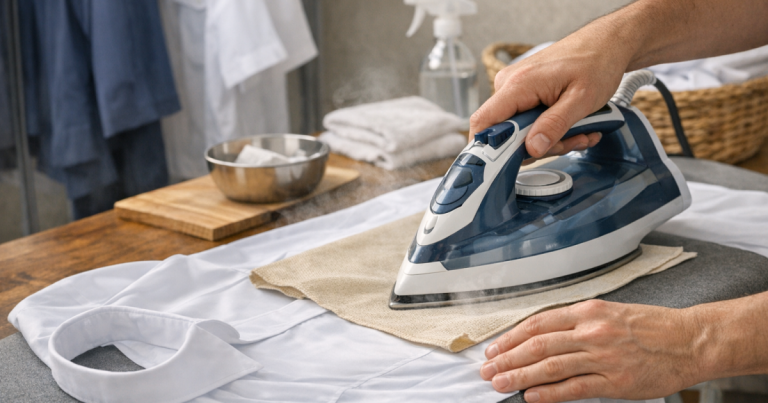
Ironing gives chef whites their crisp, professional look, but only iron garments you have checked in good light. Collars, cuffs, button bands and apron fronts are the areas most likely to hide pale yellow or greasy marks.
Use the heat setting recommended on the care label. Cotton can usually take more heat than synthetic blends, but polycotton may shine or scorch if the iron is too hot. Steam can help relax creasing, while a press cloth is useful over logos, embroidery or textured trim. For choosing between steaming and pressing, see our guide to steamers and irons for different garments.
When whites still look grey
If chef whites remain dull after a careful wash, work through the likely causes before escalating to stronger products.
- Residue: Too much detergent, fabric conditioner or poor rinsing can leave a grey film. Rewash without conditioner and use an extra rinse.
- Dye transfer: Even one mixed load with dark clothing can dull whites. Keep future loads strictly separate.
- Hard water: Mineral deposits can make white fabric look flat. Dose detergent according to the pack guidance for your water hardness.
- Old oil build-up: Repeated grease exposure may need several targeted washes rather than one harsh treatment.
- Worn fabric: Thin, abraded cotton reflects light poorly and may never look box-fresh again.
Common questions
Can I wash chef whites at 60°C every time?
Only if the care label allows it and the garment has no trims that could be damaged. A 60°C wash can be useful for heavily soiled workwear, but pre-treatment and correct sorting still matter.
Should I use fabric conditioner on chef jackets?
It is usually better to skip it. Fabric conditioner can leave coatings that reduce absorbency, hold odours and dull whites over time, especially on workwear washed frequently.
How do I remove yellow underarm marks from chef whites?
Pre-treat with liquid detergent or a suitable oxygen-based product, gently work it into the area, then wash at the warmest label-safe temperature. Avoid ironing until the yellowing has lifted.
Is oxygen bleach the same as chlorine bleach?
No. Oxygen-based laundry boosters work differently and are commonly used for stain lifting and whitening. They still need careful dosing and label checks, particularly on decorated uniforms.
How often should I treat chef whites to keep chef whites bright?
Treat visible stains after each wear and use whitening boosters only when needed. A consistent separate white wash is more effective than occasional aggressive bleaching.
Main lessons
Bright chef whites come from routine, not force. Sort them properly, treat stains early, use a suitable detergent, give the drum enough space and avoid drying or ironing marks into the fabric. Chlorine bleach should not be the default; careful washing and measured oxygen-based treatment will usually protect both whiteness and garment life more effectively.