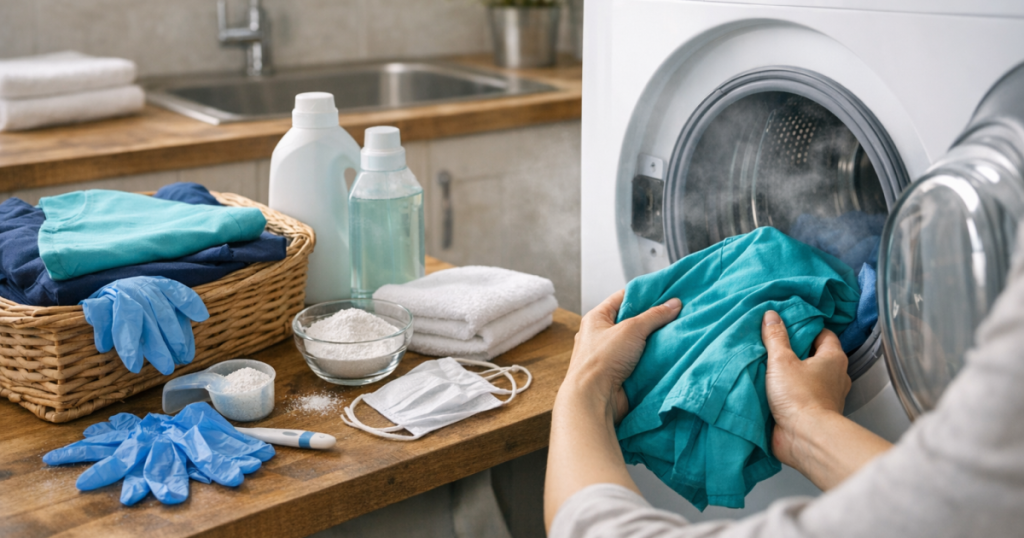
Healthcare scrubs can carry sweat, skin oils, body-fluid splashes and everyday ward grime, so the aim is not just to make them look clean. If you wash healthcare scrubs at home, treat them as a separate workwear load, follow your employer’s policy, and use the warmest safe programme the fabric label allows.
Professional guidance: Handling scrubs with known infectious contamination, heavy body-fluid soiling or isolation-related exposure is an infection-control task and is typically handled through workplace-approved laundry processes by trained staff to meet UK infection-prevention requirements.
The short version
- Keep worn scrubs separate from household laundry from the moment you take them off.
- Check your employer’s uniform policy before taking scrubs home, especially after high-risk clinical exposure.
- Wash as a dedicated load, not mixed with towels, bedding or children’s clothing.
- Use the care label’s warmest permitted temperature and a full-length cottons or synthetics cycle rather than a short quick wash.
- Dry completely before storing, because damp fabric encourages odour and bacterial growth.
- Do not rely on steamers, fragrance boosters or fabric sprays as a substitute for laundering.
Start before the scrubs reach the washing machine
Good hygiene starts with handling. Put worn scrubs into a separate washable laundry bag or a bag that can be emptied directly into the drum. Avoid shaking them out, as this can spread dust, hair and dried debris into the air or onto nearby surfaces.
Empty pockets carefully before washing. Pens, tape, gloves, tissues, badge clips and small clinical items can stain fabric, damage the machine or leave residues on the next load. If there is any chance that a sharp or clinical item has been left in a pocket, follow your workplace procedure rather than handling it casually at home.
Keep scrubs away from kitchen worktops, sofas, beds and general washing baskets. A lidded laundry bin or dedicated hook near the washing machine is usually enough for home use, provided the garments are washed promptly and not left damp in a heap.
Sort scrubs as a separate workwear load
Scrubs should be washed separately from normal family laundry. This is partly for hygiene, but it also protects the fabric. Healthcare uniforms are often washed more frequently and at warmer temperatures than everyday clothes, so mixing them with delicate fabrics can cause unnecessary wear.
Sort by colour where possible. Dark navy, black, bottle green and burgundy scrubs can release dye, particularly when new or washed warm. Pale blue, grey and white scrubs are more likely to show colour transfer. If a mixed load has already gone wrong, use the advice in removing colour run stains from mixed laundry before drying the garments, because heat can make transferred dye harder to shift.
If your scrubs have printed logos, embroidered names or contrast panels, turn them inside out. This reduces abrasion during the wash and helps keep darker uniforms looking professional for longer.
Choose the right wash temperature and cycle
The safest starting point is the garment care label and your workplace policy. Many scrub fabrics are durable cotton-polyester blends, but not all tolerate the same heat. Some stretch scrubs, softer fashion-style scrubs and embroidered garments may have lower temperature limits.
For hygienic laundering at home, use the warmest temperature permitted by the care label. A 60°C wash is commonly used for workwear hygiene where the garment allows it, but it is not suitable for every fabric or colour. If the label specifies a lower maximum, do not ignore it; instead, use a proper full-length cycle, enough detergent and complete drying.
Avoid quick washes for worn clinical clothing. Short programmes may be useful for lightly worn everyday items, but they generally reduce wash time, rinse time or mechanical action. Scrubs need enough time in water and detergent to lift sweat, skin oils, creams, deodorant, biological residues and ward grime from seams, cuffs and pocket edges.
Do not overload the drum. Scrubs need space to move, rinse and release soil. A packed machine can leave detergent trapped in fabric folds and may leave uniforms smelling stale even after washing.
Use detergent sensibly, not aggressively
Use a normal laundry detergent at the dose recommended for your load size, water hardness and soil level. In many UK homes, hard water means under-dosing can leave residues and odour behind, while over-dosing can make scrubs stiff, itchy or difficult to rinse.
Biological detergent can be effective on protein-based marks such as sweat and some food soils, but check whether your skin, workplace policy or garment care label calls for non-bio. For staff with sensitive skin, fragrance-heavy products and strong scent boosters can be irritating when uniforms are worn for long shifts.
Use disinfectant laundry additives only if your employer permits them and the product instructions match the fabric. Never mix bleach, disinfectant or stain removers together in the drum or sink. Chlorine bleach can weaken fibres, fade colours and damage logos, so it should not be used on coloured scrubs unless the garment label and product instructions clearly allow it.
Deal with stains without spreading contamination
Visible stains are easier to remove before they go through a hot dry, but healthcare scrubs need careful handling. For ordinary food, ink or deodorant marks, treat only the affected area and wash promptly. Avoid vigorous scrubbing on embroidered logos or stretch panels, as this can distort the fabric surface.
For body-fluid soiling, follow workplace infection-control instructions rather than soaking garments in a household basin. Soaking contaminated scrubs in the bathroom or kitchen can spread residues to surfaces that are harder to clean properly. A machine pre-wash or rinse programme may be more appropriate when your employer’s policy allows home laundering.
After loading the machine, wash your hands and wipe down any surface the worn scrubs touched. If you used a reusable laundry bag, wash it with the scrubs or clean it according to its care label.
Dry scrubs fully before wearing or storing
Drying is part of hygienic care, not just a convenience step. Scrubs left damp in a basket or folded too soon can develop sour odours and may need washing again before they are safe and pleasant to wear.
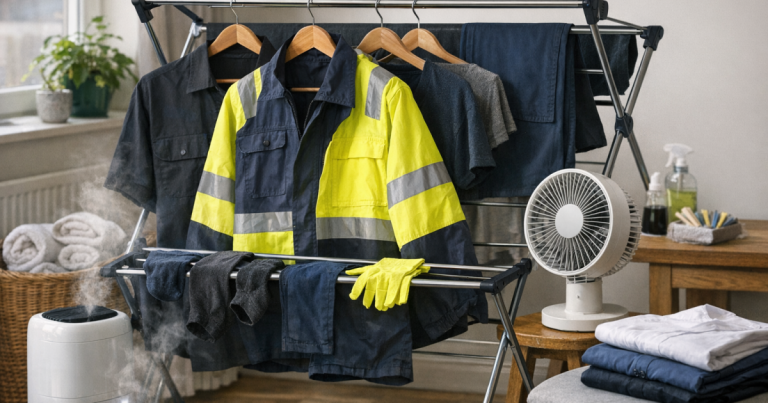
Tumble dry only if the care label allows it, and use a suitable heat setting. High heat can shrink cotton-rich scrubs, set creases and shorten the life of elastic or stretch fibres. If air drying indoors, give each garment space on an airer so air can move through sleeves, underarms, waistbands and pockets.
Do not dry scrubs on a radiator if it leaves thick areas damp or creates harsh heat marks on logos and synthetic trims. A well-spaced airer in a ventilated room is usually better for fabric condition than bunching several garments together in a warm corner.
Ironing, steaming and finishing
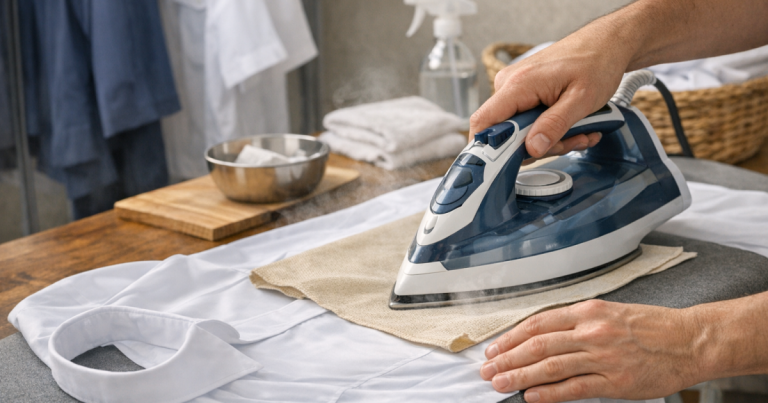
Ironing can make scrubs look sharper, especially for reception, clinic and ward-facing roles, but it should not be treated as the hygiene step. The wash and complete dry matter more. If you iron, use the temperature shown on the garment label and avoid pressing directly over printed logos, name embroidery or heat-applied details.
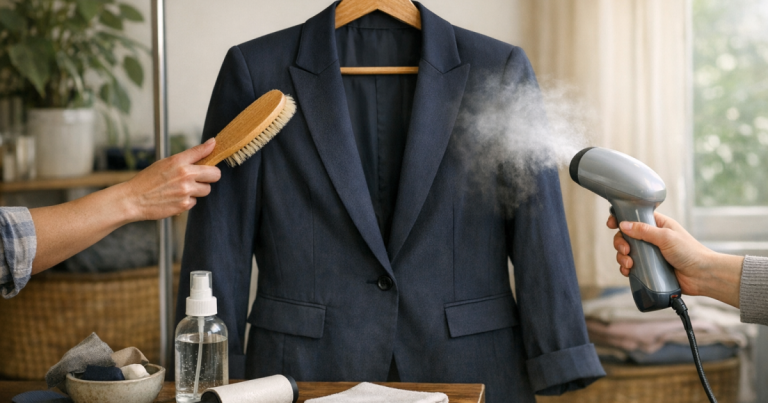
A garment steamer can help relax creases on some scrub fabrics, but steam exposure at home is variable and should not be relied on to disinfect uniforms. If you need a refresher on care symbols and safe heat levels, the guide to steam settings, heat levels and fabric labels explains how to read the label before applying heat.
Store clean scrubs so they stay clean
Once dry, fold or hang scrubs in a clean, dry place away from worn workwear. Do not store clean uniforms in the same gym bag, car boot or locker pocket used for worn clothing unless it has been cleaned first.
If you travel to work in ordinary clothes and change on site, use a clean bag for fresh scrubs and a separate washable bag for worn ones. This simple separation prevents clean garments picking up odour and residues before your shift even starts.
Some healthcare roles involve layers beyond scrubs, such as fleeces, tabards or hi-vis outerwear for community, ambulance or facilities work. These items may need a different routine, especially if reflective tape is present; see how to wash hi-vis workwear without damaging reflective tape before putting them through the same cycle as scrubs.
Common mistakes that make scrubs less hygienic
- Leaving worn scrubs in a sealed plastic bag for days, which traps moisture and odour.
- Using a cold quick wash for visibly soiled uniforms because it saves time.
- Mixing scrubs with bedding, towels or baby clothes.
- Overfilling the machine, reducing agitation and rinsing.
- Using too much fabric conditioner, which can leave residues and reduce absorbency.
- Folding scrubs while seams, pockets or waistbands are still damp.
- Using fragrance sprays to mask odour instead of rewashing properly.
Questions people ask
Can I wash healthcare scrubs with other clothes?
No. Wash them as a separate workwear load. This reduces cross-contamination risk and lets you use a longer, warmer programme without damaging delicate household garments.
Is 40°C enough for scrubs?
It depends on your employer’s policy, the level of soiling and the fabric label. Use the warmest permitted setting and a full-length cycle. If policy requires a higher-temperature process, follow that rather than defaulting to 40°C.
Should I use fabric conditioner on scrubs?
Use it sparingly, or avoid it if your scrubs feel coated, less absorbent or irritating against the skin. Detergent choice, correct dosing and thorough rinsing matter more than softness.
Can I wear scrubs again if they look clean?
For healthcare work, appearance is not enough. Scrubs should be washed after each shift or according to your workplace policy, even if there are no visible marks.
What should I do with heavily contaminated scrubs?
Follow your employer’s infection-control procedure. Known infectious contamination or heavy body-fluid soiling should be managed through approved workplace laundry or disposal processes, not improvised at home.
Key takeaways
Hygienic scrub care at home is about separation, suitable heat, enough wash time and complete drying. Keep worn uniforms away from household laundry, follow the care label and workplace policy, and avoid shortcuts that only make scrubs smell fresher without properly cleaning the fabric.
When in doubt, treat scrubs as workwear first and clothing second: protect your household, protect the garment, and keep clean uniforms stored separately until your next shift.