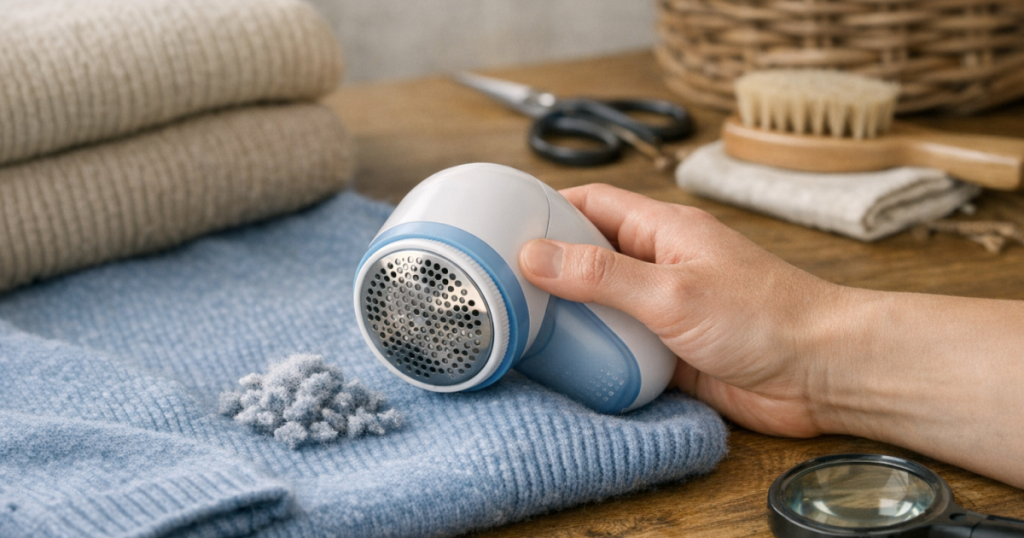
Bobbles make otherwise good jumpers, cardigans, sweatshirts and coats look tired long before the fabric is truly worn out. This Philips Bobble Off Fabric Shaver review looks at whether a small handheld de-piller is a sensible buy for everyday UK wardrobes, particularly if you are trying to stretch the life of knitwear rather than replace it.
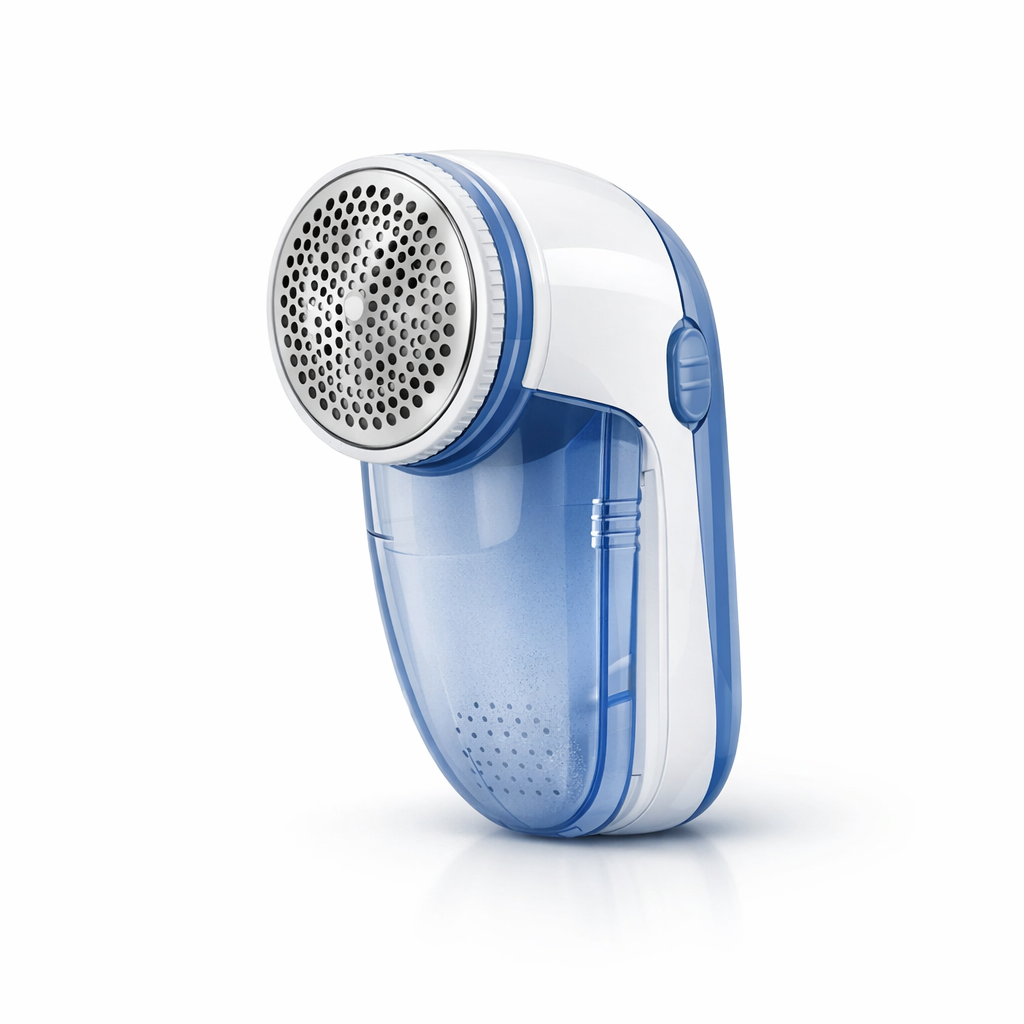
Bobble Off Fabric Shaver
It is less compelling if your wardrobe issues are mainly lint, pet hair or fabric damage rather than surface pills.
The short verdict: the Philips Bobble Off Fabric Shaver is a useful, low-fuss tool for visible pilling on robust garments, but it rewards patience. It is not a miracle repair device, and it should not be used aggressively on fragile, loose or already-thinning fabrics.
Before buying, compare the current retailer listing carefully: model code, included accessories, batteries, returns policy and warranty terms can vary between sellers and bundles.
Product overview
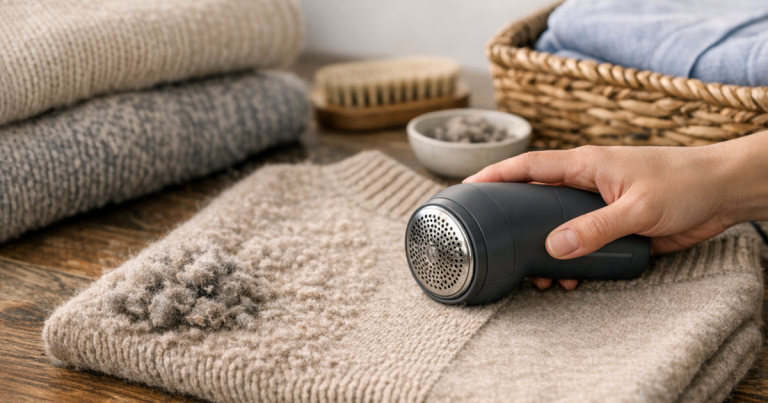
The Philips Bobble Off Fabric Shaver is a handheld fabric shaver designed to trim raised pills from the surface of clothing and soft textiles. It sits in the same care category as de-pillers, fabric combs and lint tools, but its role is more specific: it cuts off bobbles rather than simply brushing away surface fluff.
That distinction matters. A sticky roller or lint brush is useful for pet hair, lint and dust on dark clothing. A fabric shaver is for the rounded, fuzzy pills that form when fibres rub together, often under arms, along cuffs, at side seams, on trouser thighs and across well-worn knitwear. Used carefully, it can make a garment look cleaner and better maintained without washing it again.
The Philips Bobble Off Fabric Shaver is best judged as a maintenance tool, not a restoration tool. If a jumper is structurally sound but bobbly, it can improve the surface appearance. If the yarn has thinned, snagged or felted badly, shaving will not rebuild the fabric and could make weak areas more obvious.
Key specs
- Product type: handheld fabric shaver and de-piller.
- Main purpose: trimming raised bobbles and pilling from fabric surfaces.
- Power: commonly sold as a battery-operated tool; check the current UK listing for the exact battery requirement and whether batteries are included.
- Collection: designed to collect removed fibres in a detachable compartment that should be emptied during use.
- Fabric approach: suitable use depends on the garment, weave, fibre condition and care label, so test on a hidden area first.
- Accessories: verify the current packaging for any cleaning brush, guard, cap or other included parts before ordering.
- Not a stain or hair remover: it will not replace washing, stain treatment, steaming or lint rolling.
Pros and cons
Pros
- Helps make bobbled clothing look neater without putting it through another wash cycle.
- Useful for common high-friction areas such as cuffs, sleeves, hems and side seams.
- Small enough to store with laundry tools rather than needing a dedicated setup.
- Can be more controlled than pulling bobbles off by hand, which risks stretching fibres.
- Particularly handy for households with school jumpers, work cardigans, casual sweatshirts and winter knitwear in regular rotation.
Cons
- Requires a careful, slow technique; rushing increases the chance of uneven results.
- Not suitable for every fabric, especially loose knits, lace, embroidery, beading or weakened areas.
- Only addresses surface pilling, not thinning, felting, holes or distortion.
- The collection compartment needs emptying, especially on heavily bobbled garments.
- Battery and accessory details should be checked before purchase because retailer listings may differ.
Performance in real use
Bobble removal and finish
On stable, bobbled fabrics, the Philips Bobble Off Fabric Shaver makes the most sense when used in short, light passes rather than pressed hard into the garment. The goal is to skim the raised pills, not shave the garment flat. Work with the item laid smoothly on a firm surface, keep the fabric slightly taut without stretching it, and stop to check progress often.
The most satisfying results are likely to be on garments where pilling is the main problem: cotton-rich sweatshirts, acrylic or wool-blend jumpers, everyday cardigans and jersey items that have developed fuzzy high-wear patches. On textured or loosely spun yarns, results are less predictable because the tool may catch raised loops or remove fibres that are part of the intended texture.
Fabric care and risk control
Technique matters more than pressure. If you push too firmly, keep going over the same area or use the tool on a fabric that is already weak, you may thin the surface or create a flatter patch. Start on the lowest-risk area you can find, such as an inside hem or an inconspicuous seam allowance, then decide whether the finish is acceptable before moving to the front of the garment.
For wool and knitwear, de-pilling is only one part of keeping shape and surface quality. After washing, avoid hanging heavy damp knits over a rail, because stretching can make a freshly tidied jumper look misshapen. For better aftercare, see our advice on how to dry knitwear flat without stretching it.
Ease of use around cuffs, seams and panels
The Philips Bobble Off Fabric Shaver is most useful on flat panels and accessible areas. Sleeves, cuffs and underarm sections need more care because seams and folds can lift towards the cutting surface. Lay each section flat, smooth it with your hand, and use small circular or straight passes depending on the fabric surface. Avoid crossing over raised stitching, labels, zips, buttons or decorative trims.
A practical workflow is to treat one garment at a time rather than attempting a whole seasonal pile in one sitting. Empty the lint compartment regularly, brush away loose fibres from the shaver head as directed by the manufacturer, and reassess the garment in natural light. Artificial light can hide uneven patches, while daylight makes it easier to see whether the surface is actually improved.
Maintenance and value
For the price bracket fabric shavers usually occupy, value comes from how often you will use it and how many garments it saves from the donation bag. If you own several pilling-prone jumpers, children’s uniform cardigans or work layers that need to look presentable, the Philips Bobble Off Fabric Shaver can earn its place in a laundry cupboard. If you mainly deal with lint, pet hair or dust, it is the wrong tool for the job.
Maintenance is simple but important: empty the compartment, clean the head as instructed, keep the protective parts together, and avoid using it when the blade area is clogged. A clogged shaver is more likely to drag, leave uneven results or tempt you to use too much pressure.
Who it’s best for / who should skip it
Best for
- People who own bobble-prone knitwear but want to avoid replacing otherwise wearable garments.
- Households refreshing school jumpers, cardigans, casual sweatshirts and winter layers.
- Anyone who prefers targeted garment maintenance over repeated washing to improve appearance.
- Wardrobes with stable fabrics that can be laid flat and treated carefully.
Skip it if
- Your main issue is pet hair, lint, fluff or dust rather than actual fabric pills.
- You mostly wear delicate lace, loose open knits, heavily embellished clothing or fragile vintage pieces.
- You expect it to fix holes, thinning, felting, shine, dye loss or stretched-out knitwear.
- You know you are likely to rush the job, press hard or use it without testing first.
Alternatives
If you are dealing with loose fluff rather than bobbles, a lint brush or roller is the more appropriate option. Sticky rollers lift hairs and dust quickly, while reusable velvet lint brushes can be neater for coats, tailoring and dark clothes if you do not want disposable sheets. For the trade-offs, read our comparison of reusable velvet lint brushes versus sticky rollers.
A manual fabric comb is another alternative for some woollens, though it can feel slower and needs careful handling on soft yarns. It may suit people who want more tactile control and do not mind working gradually. For expensive, sentimental or very delicate garments, professional alteration or specialist knitwear repair may be more sensible than repeated surface shaving.
Helpful questions
Can the Philips Bobble Off Fabric Shaver be used on wool jumpers?
It can be considered for some stable wool or wool-blend jumpers, but always check the care label and test a hidden area first. Avoid loose, fluffy or delicate knits where the fibres are part of the texture.
Does it remove pet hair?
No, not in the way a lint roller or lint brush does. It is designed for bobbles and pilling, so use a lint tool first if the garment is covered in hair or surface fluff.
Can it damage clothes?
Any fabric shaver can damage clothing if used with too much pressure, on unsuitable fabrics or over weak areas. Keep the garment flat, use light passes, and stop once the surface looks improved.
Should clothes be washed before using it?
They do not always need washing first, but the fabric should be dry, clean enough to handle and free from grit or debris. Treat stains separately rather than shaving over them.
Verdict + score
The Philips Bobble Off Fabric Shaver is a worthwhile buy for people who regularly see good clothing made scruffy by pilling. It is simple, targeted and more fabric-aware than picking bobbles by hand, provided you use it slowly and respect the limits of the garment. It is less compelling if your wardrobe issues are mainly lint, pet hair or fabric damage rather than surface pills. For everyday knitwear maintenance in a UK laundry routine, I’d give it 8.2/10.
Bobble Off Fabric Shaver
It is less compelling if your wardrobe issues are mainly lint, pet hair or fabric damage rather than surface pills.
You might also like: How to Remove Sun Cream Stains from White Shirts.