Damp-smelling stored clothes usually come from slow air movement, crowded rails and moisture trapped after washing or wet weather. The best wardrobe dehumidifiers are the ones that match the space: a hanging absorber for a small cupboard, a refillable tub for a fitted wardrobe, or a room dehumidifier when the whole bedroom feels clammy.
The short answer for stored clothes
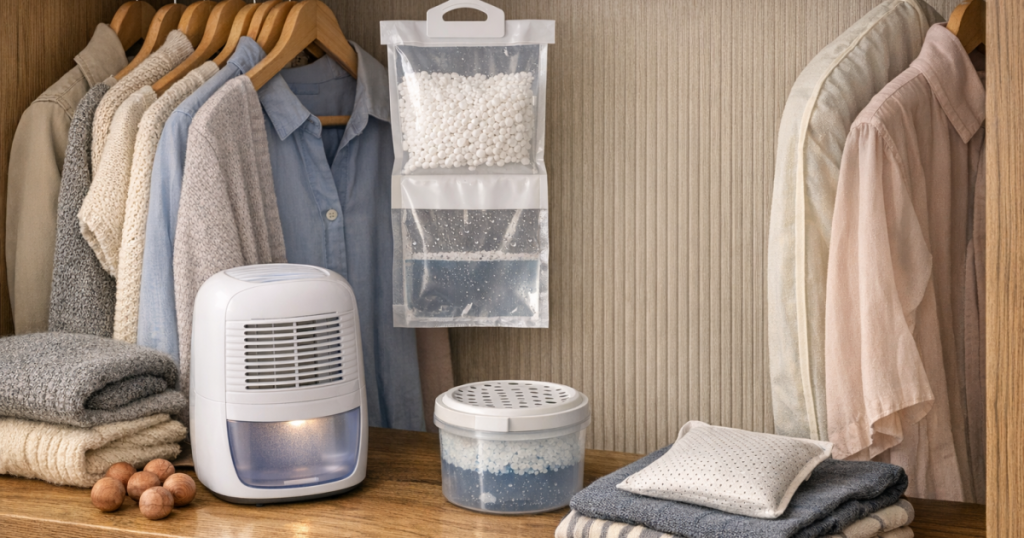
For most UK wardrobes, a non-electric moisture absorber is enough if the problem is mild: a slight musty smell, condensation on an outside wall, or clothes stored tightly through winter. Choose the format by where the damp gathers.
- Hanging moisture absorber: best for narrow cupboards, coat wardrobes and spaces where floor tubs get knocked over.
- Refillable moisture trap: useful at the bottom of a fitted wardrobe, under shelves or near shoes, provided it cannot tip onto fabric.
- Silica gel packs: helpful inside storage bags, drawers and boxes, but usually too small for a whole wardrobe.
- Electric room dehumidifier: the better answer when walls, windows or the whole room feel damp, not just the wardrobe interior.
Why clothes smell musty in storage
Moisture absorbers help, but they work best when you understand what they are correcting. Clothes can smell damp even when they are technically clean because fibres hold residual moisture, body oils and detergent traces. When garments are packed closely, air cannot move through collars, cuffs, waistbands and thick seams. Wool, fleece, denim, cotton uniforms and lined jackets are particularly prone because they retain moisture longer than thin synthetics.
A wardrobe on an external wall is also more likely to feel cold. Warm indoor air meets that colder surface, moisture settles, and stored clothes absorb the smell. Before adding any absorber, pull garments forward slightly, check the back panel and skirting area, and make sure nothing is pressed flat against a cold wall. For a fuller system, organise clothes by use, weight and fabric rather than simply squeezing everything onto one rail; this wardrobe organisation guide gives a sensible fabric-first approach.
Best wardrobe dehumidifiers by storage problem
For a small cupboard with mild mustiness
A hanging absorber is the simplest starting point. It sits among the clothes without taking shelf space and is easy to see when it needs replacing. Look for a sealed design with a clear collection area, sturdy hook and obvious disposal instructions. Keep it away from delicate hems and never let the collection pouch press directly against silk, suede, leather or knitwear.
One familiar option is Kilrock Damp Clear Hanging Moisture Trap. It is the sort of product to consider for a coat cupboard, airing-cupboard overflow space or a narrow wardrobe where a tub would be awkward. Check the pack instructions for where it can be hung, how long it is intended to last and how to dispose of the collected liquid.
For fitted wardrobes or deeper storage spaces
A refillable tub is usually more practical where there is a stable shelf or floor area. These products often use moisture-absorbing crystals or tablets, with liquid collecting underneath. They can suit deep fitted wardrobes, spare-room storage and cupboards where bedding, uniforms or out-of-season coats are kept for weeks at a time.
UniBond Aero 360 Moisture Absorber is a recognisable UK high-street example of this format. It is worth checking the refill type, the manufacturer’s guidance on room or cupboard suitability, and whether the shape will stay stable in your wardrobe. Do not place any tub directly above folded clothes, shoes with suede uppers or boxes of occasionwear; leaks or spills can mark fabric quickly.
For seasonal clothes in bags, drawers and boxes
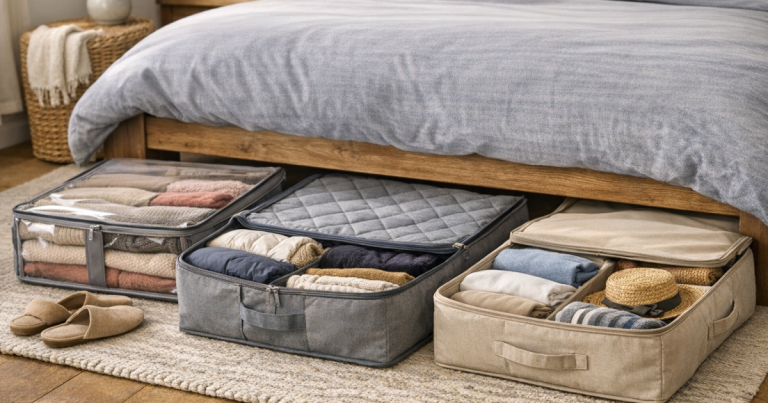
Silica gel packs and small desiccant sachets are better thought of as local protection rather than whole-wardrobe moisture control. They are useful in garment bags, drawer dividers, shoe boxes and lidded storage boxes, especially for accessories, scarves, gloves and folded knitwear.
They are not a cure for a damp room. If a storage bag feels clammy inside, the garment probably went in too soon after washing, steaming or wearing. Let clothes air fully first, then pack loosely. For breathable seasonal storage, the notes in this Lifewit canvas wardrobe storage bag review are useful when deciding whether a fabric bag suits your wardrobe conditions.
For wardrobes on cold external walls
If condensation forms on nearby windows, the wardrobe back feels cold, or shoes smell damp at floor level, a small absorber inside the cupboard may only mask the problem. In that situation, use a room-level dehumidifier or improve ventilation around the wardrobe. Leave a gap behind freestanding furniture where possible, avoid stacking boxes tight against the back panel, and keep the wardrobe door open for short periods after laundry days or wet commutes.
A room dehumidifier does not need to sit inside the wardrobe to help stored clothes. Used in the same bedroom or box room, it can reduce the overall moisture load so cupboards dry more evenly. Verify tank size, noise level, laundry mode claims and running costs from the current product information rather than assuming every compact model will suit continuous use.
Moisture absorbers worth considering
These are not ranked as universal winners because the right choice depends on the wardrobe, fabric mix and severity of damp. They are useful reference points when judging the type of product that may fit your space.
- Kontrol Krystals Moisture Trap: a crystal-style moisture trap to compare for cupboards, sheds or storage areas where you have a stable surface and can keep it away from garments.
- Absodry Duo Family Moisture Absorber: a larger refillable-style absorber to consider for spaces that need more than a small sachet, subject to the maker’s placement and refill guidance.
- Reusable silica gel canisters: useful for drawers and storage boxes, especially where you want a small, contained absorber close to accessories or folded items.
- Hanging disposable absorbers: practical for coat wardrobes and narrow cupboards, but they must be replaced before the collection pouch becomes overfull.
Fabric-aware placement checks
Placement matters as much as the product. A moisture absorber that falls over or touches fabric can create a worse problem than the musty smell you were trying to prevent.
- Keep absorbers below or beside clothes, not above them. Collected liquid can stain, bleach or mark fabrics if it spills.
- Protect delicate surfaces. Suede, leather, silk, satin and embellished garments should not sit close to moisture traps or damp collection pouches.
- Leave breathing space. A few centimetres between garments helps air circulate and reduces stale odours.
- Use shaped hangers for heavy garments. Crowded rails trap moisture and distort shoulders; this guide to choosing hangers that stop shoulder bumps explains what helps knitwear, coats and uniforms keep their shape.
- Separate worn-once items. Do not put rain-damp coats, gym layers or commuting trousers straight back among clean stored clothes.
- Check monthly in winter. Look for swelling sachets, full reservoirs, water marks, mildew spots and stale smells around seams.
When a moisture absorber is not enough
If clothes repeatedly smell musty within days, the source is probably larger than the wardrobe. Check for blocked air vents, persistent window condensation, leaks, damp patches, drying laundry in an unventilated room, or furniture pushed hard against an external wall. Mould on walls, skirting boards or the wardrobe structure should be dealt with as a room or building issue, not hidden behind fragrance, cedar blocks or extra desiccants.
Also review your laundry routine. Heavy cotton, work fleeces, school uniforms and thick hoodies can feel dry on the outside while seams and waistbands remain slightly damp. Storing them too early is one of the quickest ways to make a clean wardrobe smell stale. Air garments fully before folding or hanging them for longer-term storage.
Simple setup routine
- Empty the dampest section first. Remove clothes, shoes and boxes so you can smell and inspect the actual cupboard.
- Dry the space. Wipe condensation from hard surfaces and leave the door open until the wardrobe feels aired.
- Sort by fabric and frequency of use. Put thick coats, wool, fleece and denim where they are not compressed.
- Add the right absorber. Use a hanging absorber for cramped rails, a tub for stable floor or shelf space, and silica gel for boxes or bags.
- Record replacement dates. Write a small note on the calendar or wardrobe shelf so the absorber is changed before it stops working effectively.
- Recheck after wet weather. UK homes often show moisture problems after storms, cold snaps or heavy indoor drying periods.
Things readers ask
Can I put a moisture absorber inside a clothes storage bag?
Yes, but use a small, sealed sachet or canister rather than a liquid-collecting tub. Keep it away from direct contact with delicate fabrics and check it regularly.
Will a wardrobe absorber remove existing musty smells from clothes?
It can reduce the conditions that cause the smell to return, but clothes that already smell musty usually need airing, washing, steaming or brushing before storage.
Are moisture absorbers safe near wool and cashmere?
They can be used in the same wardrobe if they are securely positioned and not touching the garments. For fine knitwear, use breathable bags and avoid any product that could leak onto fibres.
How often should I replace a wardrobe moisture absorber?
Follow the pack guidance and check more often in winter or in rooms where laundry dries indoors. Replace it when the crystals are spent, the reservoir is full, or the product looks swollen.
Do scented absorbers protect clothes better?
No. Fragrance may mask odour, but it does not fix trapped moisture. For stored clothes, moisture control, airflow and fully dry garments matter more than scent.
The big picture
For stored clothes, moisture control works best as a small system: dry garments properly, reduce rail crowding, create airflow and choose an absorber that suits the exact storage space. Hanging absorbers are useful for narrow wardrobes, refillable tubs suit stable fitted spaces, silica gel helps inside boxes and bags, and a room dehumidifier is the better tool when the whole room feels damp. Check placement carefully, especially around delicate fabrics, and treat recurring mould or condensation as a wider home moisture issue rather than a wardrobe problem alone.