Merino pills easily in high-friction areas, especially under the arms, across the sides and where a coat or bag rubs. The question with sweater stones for merino is not whether they remove bobbles, but whether they remove too much of the good fibre at the same time.
The short answer: they can be too abrasive for fine merino, but not every garment reacts in the same way. A dense, sturdy merino blend may tolerate a very light pass, while superfine, open-knit or brushed merino is usually better treated with gentler tools.
The short version
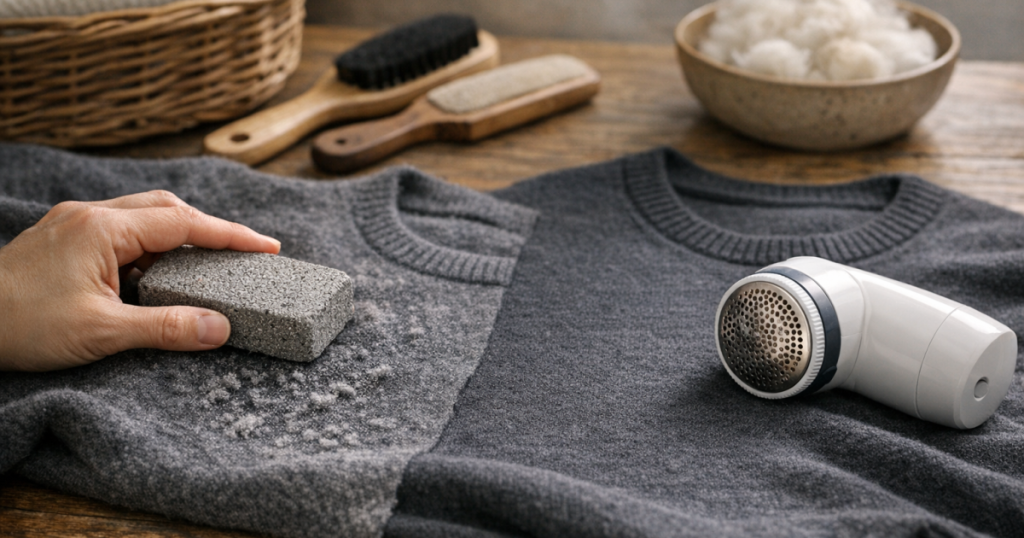
A sweater stone is an abrasive block, often pumice-like in feel, that catches raised fibres and pills as you move it over the fabric. That makes it effective on robust woollens and some heavy knits, but merino is naturally fine, soft and more vulnerable to surface disturbance than coarse wool.
Use a sweater stone on merino only after a hidden patch test, and only with feather-light pressure. If the fabric starts to look hazy, flattened, pale, roughened or dusty, stop. The damage is not always dramatic at first, but repeated abrasion can make the surface fuzzier, thinner and more prone to future pilling.
- Usually avoid: superfine merino, merino base layers, lightweight cardigans, open knits, brushed finishes and luxury merino blends.
- Use with caution: dense medium-weight merino jumpers with visible, compact pills.
- Prefer gentler methods: a wool comb, careful hand removal, small scissors for isolated pills or a guarded fabric shaver used slowly.
Why merino reacts differently from hardier wool
Merino wool is prized because its fibres are fine and flexible. That softness is also why it needs careful depilling. Pilling happens when loose fibres work their way to the surface, twist together and form small bobbles. On a rugged work fleece or thick lambswool jumper, there is often more surface bulk to tolerate controlled removal. On fine merino, the margin for error is smaller.
A sweater stone does not cut pills cleanly in the way sharp scissors do. It grips and abrades. On the right fabric, that can shear away the bobbled surface. On the wrong fabric, it can tug live fibres out of the yarn, scuff the nap or create a wider halo of fuzz around the treated area.
The risk is highest where the knit is loose or elastic. If the stone catches a loop, it may pull the stitch rather than release the pill. This is why merino T-shirts, fine roll-necks and lightweight cardigans often look worse after aggressive rubbing, even if the first few bobbles disappear.
How to test before using a sweater stone
Testing is not a formality with merino; it is the step that tells you whether the garment can cope. Choose a discreet area such as the inside hem, inner cuff or a small section near a side seam. The test area should be clean, dry and flat, because damp wool is easier to distort.
Step 1: Support the fabric
Lay the garment on a firm, smooth surface and place one hand flat behind or beside the test area to keep the knit still. Do not stretch the fabric tight. Merino can distort if you pull it out of shape while rubbing.
Step 2: Make two or three light strokes
Move the stone in one direction with barely any pressure. Think of brushing crumbs from a table, not sanding wood. Avoid circular scrubbing, as it increases friction and can disturb a larger patch than necessary.
Step 3: Inspect in good light
Lift away any debris and look across the surface from different angles. Stop immediately if you see a lighter patch, a rougher texture, loose fibres lifting, flattened stitches or a fuzzy bloom around the area.
Step 4: Wait before treating a visible area
If the test looks acceptable, leave it for a little while and handle the fabric gently. Some surface disturbance is more obvious once the fibres settle. If the test patch still looks even, you can decide whether the visible bobbles are worth treating.
When a sweater stone is the wrong tool
Skip the stone if the merino is described as superfine, extra-fine, lightweight, brushed, bouclé, loosely knitted or blended with silk or cashmere. These fabrics are more likely to show scuffing, pulled stitches or uneven texture.
Also avoid using a stone on areas where the fabric is already thin. Elbows, cuffs, underarms and hems can look bobbly because they have had the most wear, but they are also the easiest places to overwork. If you remove pills from a weakened patch, you may reveal thinning rather than restore the surface.
Do not use a sweater stone on damp merino. Wet wool fibres swell and become easier to stretch, and rubbing can alter the fabric surface. If you have just washed the garment, dry it properly first. For drying technique, especially if the jumper has become heavy with water, see our guide to drying knitwear flat without stretching it.
If you do use one, keep the method gentle
For a sturdy merino jumper that passes the patch test, work in small zones rather than attacking the whole garment. Place the knit flat, smooth the area with your hand and use short, light strokes in the direction that creates the least drag. Let the tool skim the surface instead of pressing into the yarn.
- Work slowly: treat one palm-sized area, then reassess before moving on.
- Avoid edges and seams: stones can catch raised stitching, ribs and decorative texture.
- Do not chase every tiny fibre: a perfectly bare surface can mean you have removed more wool than necessary.
- Clear residue often: loose grit and fibre dust can make the next pass harsher.
- Stop before it looks finished: merino often looks better after a light tidy than after a full surface strip.
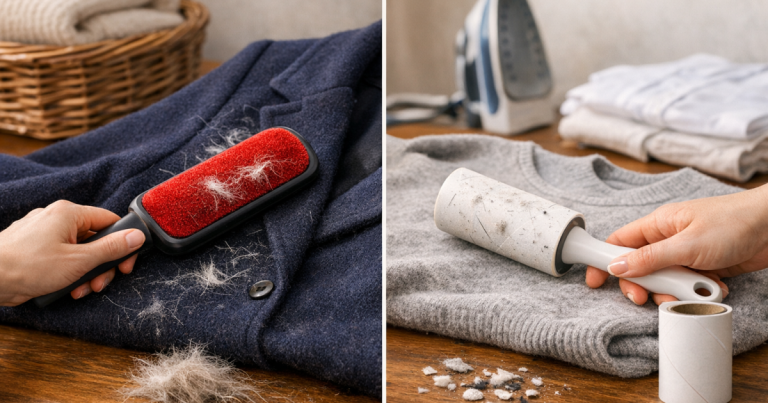
After depilling, shake the garment gently and use a soft clothes brush or clean hand to remove residue. Do not follow with aggressive lint rolling, as sticky sheets can pull at already loosened fibres. Let the garment rest flat before wearing so the knit can relax back into shape.
Gentler ways to remove bobbles from merino
A sweater stone is not the only option, and it is rarely the first one to try on fine wool. The right alternative depends on the size of the pills and how firmly they are attached.
Use fingers for loose surface pills
If the bobbles are large and barely attached, pinch them off gently one at a time. Do not yank. If a pill resists, leave it for another method rather than pulling fibres out of the yarn.
Try small scissors for isolated bobbles
For a few obvious pills, sharp embroidery scissors can be very controlled. Hold the bobble away from the fabric and snip the neck of the pill, keeping the blade parallel to the surface. This is slow, but it reduces broad abrasion.
Use a wool comb with care
A fine wool or cashmere comb can tidy compact pilling on flatter knits, but it is still a friction tool. Use it lightly, keep the fabric supported and avoid ribbed cuffs or open stitches. If the comb drags, it is not suitable for that garment.
Consider a guarded fabric shaver for even pilling
A fabric shaver can be useful when pilling is widespread and uniform, but it must have a protective head and be used without pressing into the knit. Never use one on a creased, stretched or bunched-up jumper. If you are weighing up powered depilling for woollens, our Philips Bobble Off fabric shaver review explains the sort of care results and handling checks to think about.
Preventing merino bobbles from coming back quickly
Depilling helps appearance, but prevention matters more if you want merino to last. Most bobbles form from rubbing, so look at the way the garment is worn, washed, dried and stored.
- Reduce friction during wear: rough backpack straps, seatbelts, cross-body bags and coarse coat linings can all encourage pilling.
- Wash gently: use the care label as the starting point, turn the garment inside out and avoid overcrowding the machine if machine washing is allowed.
- Keep heat low: excessive heat can affect shape and finish, particularly on fine wool.
- Dry flat: hanging wet merino can stretch the shoulders and body.
- Store with support: fold heavier knits, and only hang lighter pieces on suitable hangers if the garment can hold its shape.
Storage makes a bigger difference than many people expect. Shoulder points, hanger pressure and cramped rails can stress knitwear between wears. For garments that can be hung safely, choose a shape that supports the shoulder rather than leaving a hard peak; our advice on hangers that stop shoulder bumps is a useful next step.
Main points
Sweater stones are effective because they are abrasive, and that is exactly why they can be risky on merino. They are most suitable for robust, dense knitwear with compact pills, not for fine, open, brushed or already-thinning garments.
If you want the safest route, start with the least aggressive method: fingers for loose pills, scissors for isolated bobbles, then a wool comb or guarded fabric shaver only if the knit can tolerate it. Reserve a sweater stone for garments that have passed a hidden patch test and still look even after a few light strokes.
For most wardrobes, sweater stones for merino should be treated as an occasional rescue tool rather than routine maintenance. The aim is not to make the jumper look brand new in one session; it is to remove the distracting bobbles while preserving as much fibre, softness and shape as possible.
Common questions
Will a sweater stone ruin merino immediately?
Not always. A dense merino jumper may tolerate a very gentle pass, but a fine merino top can show roughening quickly. The risk increases with pressure, repeated strokes and loose or delicate knits.
Is pilling a sign of poor-quality merino?
Not necessarily. Merino can pill because it is soft and because loose fibres migrate to the surface with wear. Heavy friction, washing habits and storage can all influence how quickly bobbles appear.
Can I use the same depilling method on all wool jumpers?
No. Wool varies widely. A thick, tightly knitted jumper may cope with a tool that would damage fine merino. Always judge the individual fabric, not just the fibre name on the care label.
How often should I depill merino knitwear?
Only when the bobbles are noticeable enough to bother you. Frequent depilling removes surface fibre each time, so it is better to reduce friction and tidy lightly rather than repeatedly stripping the fabric.