A wool jumper with tiny holes is frustrating because the damage usually starts long before you notice it. The short answer on cedar blocks for moths is that they can help make a wardrobe less attractive, but they are not a complete moth-control method on their own.
The short answer
Cedar blocks are a useful supporting tool for wool storage, not a guaranteed barrier. Their scent comes from natural aromatic oils in cedar wood. Those oils may discourage adult clothes moths from settling in an area, but they do not reliably kill larvae already feeding on wool, cashmere, alpaca or other animal fibres.
That distinction matters. The holes in wool clothes are usually caused by larvae, not the fluttering adult moths you might spot near a wardrobe. If eggs or larvae are already in a jumper, placing a cedar block nearby is unlikely to solve the problem. If clean wool is stored in a sealed container with refreshed cedar, however, the cedar can be part of a sensible prevention routine.
How cedar works in real wardrobes
Cedar is often used because it smells pleasant and is easy to place in drawers, storage boxes and garment areas. Fresh cedar has a stronger aroma than old, dry blocks. Over time, the surface oils fade, which is why an old cedar block that barely smells of anything is doing very little.
For garment care, think of cedar as a scent-based deterrent rather than a treatment. It works best in a small enclosed space where the fragrance can build slightly, such as a drawer, lidded storage box or zipped garment bag. In a large open wardrobe, a few blocks dotted around the rail will have a much weaker effect.
Cedar also has limits. It cannot clean food traces, body oils or sweat from fibres. It cannot seal gaps in a wardrobe. It cannot undo an infestation. It also should not be placed directly against delicate fabric, because cedar oils and rough edges can mark or snag some garments. Put blocks in corners, on shelves, or inside a small breathable sachet rather than pressing them against knitwear.
What moths are actually looking for
Clothes moth larvae prefer fibres that contain keratin, which is why wool, cashmere, mohair, alpaca, silk and fur trims are more vulnerable than cotton or polyester. They are also drawn to the soiling that can sit invisibly on clothes: skin flakes, perspiration, food splashes, drink residue and natural body oils.
This is why a jumper worn once and put away for months can be more at risk than a clean item stored properly. Moths also prefer quiet, dark, undisturbed areas. The back of a wardrobe, a rarely opened chest, under-bed storage and loft bags can all become comfortable places for larvae if clothes go in uncleaned and unchecked.
In UK homes, seasonal storage is a common weak point. Wool coats, school uniform layers, scarves and winter jumpers may sit untouched through warmer months. Cedar can help create a less inviting environment, but only if the clothes are clean, dry and contained.
A better way to use cedar with wool clothes
Step 1: Clean wool before storing it
Do not store worn wool just because it looks clean. Brush off surface debris, air the garment, and wash or dry clean according to the care label before long storage. Pay extra attention to collars, cuffs, underarms and waistbands, where body oils collect.
If an item is washable, make sure it is fully dry before it goes away. Any trapped moisture can create musty smells and encourage poor storage conditions. For mixed laundry that needs to dry efficiently before being returned to the wardrobe, the principles in arranging clothes on an airer for faster drying are a useful starting point, although heavy wool should still be dried according to its care label.
Step 2: Inspect seams, folds and hidden areas
Before storage, check vulnerable places: under collars, inside cuffs, around pockets, at shoulder seams and deep folds. Look for small holes, loose fibres, gritty residue, webbing, pale larvae or fine shed casings. One damaged garment can put nearby wool at risk if it is stored with the rest.
If you find active signs, isolate the garment immediately. Cedar is not the right first response at that stage. The priority is separating affected items, cleaning them properly, vacuuming the storage area and monitoring nearby clothes.
Step 3: Use sealed storage for out-of-season wool
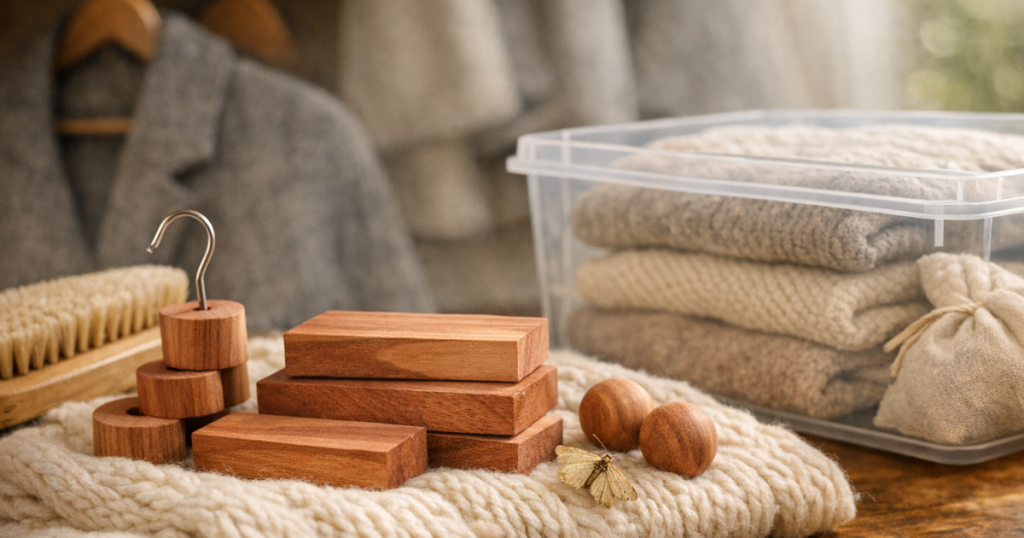
For jumpers, scarves and accessories that will not be worn for a while, a lidded plastic storage box or well-closing garment bag gives better protection than an open shelf. Cedar works more effectively in this kind of contained space because the scent is less diluted.
Avoid overpacking. Crammed knitwear traps creases, makes inspection harder and can hide early damage. Fold knitwear neatly, place heavier pieces at the bottom and leave enough room for air to circulate inside the container. If your wardrobe is hard to manage, zoning a wardrobe for safer clothes storage can make it easier to separate everyday wear, occasion pieces and vulnerable wool.
Step 4: Place cedar correctly
Use cedar blocks, balls or rings around the storage area rather than buried deep inside delicate folds. Put them near corners, drawer edges and garment bag openings. For hanging wool coats, cedar rings on hangers can be convenient, but they should not be relied on as the only protection for a crowded rail.
Keep cedar from direct, prolonged contact with pale wool, silk linings and delicate embellishment. If the block feels rough, lightly smooth any splintery areas before use, or place it in a small cotton pouch.
Step 5: Refresh the cedar regularly
Cedar becomes weaker as the surface dries. If the block no longer smells woody when held close, refresh it by lightly sanding the surface outdoors or over newspaper, then wiping away dust before returning it to storage. Do not overdo cedar oil drops on blocks near clothing; excess oil can transfer and stain fabric.
Refreshing is not a substitute for cleaning and checking clothes. Treat it as part of a seasonal wardrobe routine: inspect, clean, dry, store, refresh and repeat.
Examples: when cedar is helpful and when it is not
- Helpful: clean cashmere jumpers folded in a lidded box with a couple of refreshed cedar blocks and checked every few weeks during storage.
- Helpful: wool scarves stored in a drawer that is vacuumed, not overcrowded, and opened regularly.
- Less helpful: cedar blocks placed in an open wardrobe full of worn coats, unwashed knitwear and dust at the bottom.
- Not enough: a cedar ring on a hanger after you have already found larvae, webbing or fresh holes in nearby wool.
- Potentially risky: cedar blocks pushed directly into pale cashmere or against silk linings, where oil or roughness could mark the fabric.
Key checks before trusting cedar with valuable wool
Before you rely on cedar, run through these checks:
- Is the garment clean? Invisible soiling is one of the main reasons wool becomes attractive to larvae.
- Is it completely dry? Never seal away damp wool or recently steamed garments.
- Is the storage space enclosed? Cedar is more useful in drawers, boxes and garment bags than in open rails.
- Can you still smell the cedar? If not, refresh or replace it.
- Are clothes checked often? Early signs are easier to handle than widespread damage.
- Are delicates protected during cleaning? Washable small items may benefit from a suitable laundry bag; here is how to choose mesh wash bags for delicates without causing extra abrasion.
What to do if you already have moth damage
If you find holes, do not assume the problem has passed. Remove nearby animal-fibre garments from the same area and inspect them in bright light. Vacuum the wardrobe, drawer or storage box thoroughly, including cracks, corners and shelf edges. Empty the vacuum promptly so debris does not sit indoors.
Clean affected garments according to their care labels. Some wool items can be washed carefully; others need professional dry cleaning because of structure, linings, dyes or embellishment. Keep cleaned items separate until you are confident there is no continuing activity.
Do not use cedar as the only follow-up. It can sit in the cleaned storage area afterwards, but the essential work is removing the food source, cleaning the space and preventing larvae from remaining undisturbed.
Key questions answered
Do cedar blocks kill clothes moth larvae?
Not reliably. Cedar is mainly used as a deterrent. If larvae are already feeding, you need to isolate, clean and inspect affected garments rather than simply adding more cedar.
How many cedar blocks should you use?
There is no single reliable number because wardrobes, drawers and boxes vary. A small drawer or sealed box needs fewer pieces than a large wardrobe. The more important point is whether the space is enclosed, the cedar is fresh, and the garments are clean.
Are cedar balls better than blocks?
The shape matters less than freshness, placement and storage conditions. Balls are easy to scatter in drawers, blocks sit neatly in boxes, and hanger rings are convenient for rails. None of them replaces cleaning and sealed storage.
Can cedar damage clothes?
It can mark or snag fabric if used carelessly. Keep cedar away from direct contact with delicate wool, pale fibres, silk linings and embellishment. Use a small cotton pouch if you want a buffer.
The big picture
Cedar blocks are worth using if you treat them as one layer of protection. They make most sense with clean wool, enclosed storage, regular inspection and a tidy wardrobe. They are much less useful when placed into a dusty, overcrowded wardrobe or used after moth activity has already started.
For wool clothes you care about, the dependable routine is simple: clean before storage, dry fully, seal where possible, refresh cedar when the scent fades, and check garments before damage spreads. Cedar can support that routine, but it should never be the whole plan.