Most wardrobe damage starts with a small storage mismatch: heavy knitwear left on a narrow hanger, silk crushed in a drawer, or seasonal coats squeezed into a damp cupboard. Sorting clothes to hang, fold or box by fabric, weight and use helps garments keep their shape and makes getting dressed easier. The aim is not a showroom wardrobe; it is a storage system that stops shoulder bumps, deep creases, colour transfer, mustiness and unnecessary rewashing.
In brief
Hang garments that need structure, airflow or crease prevention. Fold anything heavy, stretchy, knitted or likely to distort on a hanger. Box items that are clean, fully dry and out of rotation, such as seasonal clothing, occasionwear and keepsakes.
- Hang: shirts, blouses, tailored jackets, suits, coats, crease-prone dresses, skirts and trousers that hold their shape better vertically.
- Fold: jumpers, cardigans, T-shirts, jeans, joggers, activewear, heavy embellished pieces and most stretch fabrics.
- Box: clean seasonal clothes, spare uniforms, sentimental garments and items you will not need for several weeks or months.
- Avoid boxing: anything damp, recently worn but unwashed, stained, perfumed, covered in lint or stored in a non-breathable bag for long periods.
Why the storage method matters
Fabric reacts to gravity, pressure and moisture. A wool jumper can lengthen under its own weight if it hangs for weeks. A cotton shirt can crease sharply if it is overpacked in a drawer. A synthetic dress may survive hanging well, but can develop static and wrinkles if crushed inside a storage tub.
The best method depends on three things: the garment’s weight, the fabric’s recovery and the amount of structure built into the piece. Structured garments, such as blazers and coats, usually benefit from hanging because seams, linings and shoulder shaping need support. Soft garments, such as knitwear and jersey, usually prefer folding because their shape comes from the fabric rather than internal construction.
Storage also affects how often you wash and iron. Clothes that are easy to see and retrieve are less likely to be dragged from a crowded rail, dropped on the floor or refreshed unnecessarily. For UK homes with limited wardrobe depth, airing cupboard overflow and indoor drying in winter, a simple hanging, folding and boxing system can make a noticeable difference.
Garments that are usually better hung
Use hangers for clothes that crease easily, need airflow or rely on shape. Choose hangers wide enough to support the shoulder line without pushing into the sleeve head. A narrow wire-style hanger may be fine for a very light camisole in the short term, but it is rarely kind to tailored or delicate garments.
Shirts and blouses
Cotton shirts, linen shirts and most blouses are easier to keep wearable when hung. Button the top button or at least every other button so the garment does not twist on the hanger. Leave a little space between shirts, especially after steaming or ironing, so moisture and heat can disperse before the fabric is crowded against another item.
Tailored jackets, suits and blazers
Tailored pieces should be hung on broad, shaped hangers that support the shoulders. This helps the jacket keep its line and reduces stress on the collar and lapels. Suit trousers can be hung over a trouser bar or clipped from the waistband if the clips are padded and do not leave marks.
Coats and structured outerwear
Wool coats, trench coats and structured jackets need stronger hangers than everyday shirts. Empty heavy pockets before storage, as keys, coins and gloves can distort the fabric over time. If the coat is going away for the season, clean it first and let it air fully before using a breathable garment cover.
Dresses, skirts and crease-prone occasionwear
Hang woven dresses, skirts and occasionwear unless the fabric is heavily beaded or noticeably weighty. Use hanging loops where provided, but do not rely on them alone if they pull awkwardly. For slippery fabrics, a hanger with a textured or covered surface helps prevent garments sliding into a heap at the bottom of the wardrobe.
If shoulder bumps are a recurring problem, hanger shape matters as much as the decision to hang. Our guide to whether padded hangers prevent shoulder bumps in knitwear explains when soft hangers help and when folding is still the safer choice.
Garments that should usually be folded
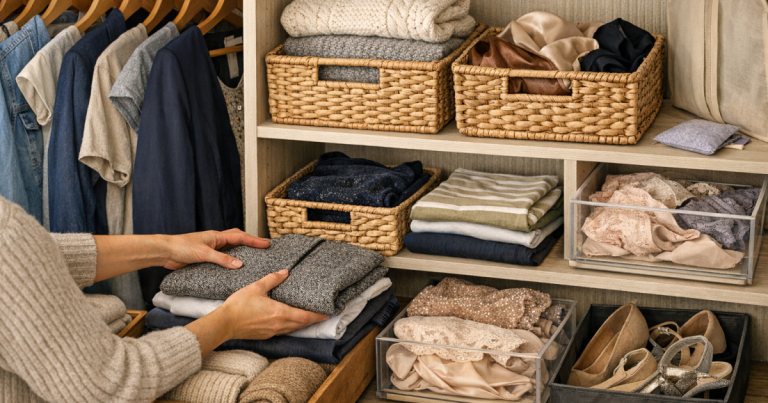
Fold garments that stretch, sag or become misshapen when suspended. Drawers, shelves and fabric storage cubes all work, provided the clothes are dry, clean and not packed so tightly that fibres are compressed for long periods.
Knitwear and woollens
Jumpers, cardigans, knitted dresses and wool vests are best folded. The heavier the knit, the more important this becomes. Fold along natural seams, avoid sharp over-compression, and stack heavier items at the bottom. If you store woollens for more than a few weeks, make sure they are freshly cleaned first, as body oils and food traces can attract pests.
T-shirts, sweatshirts and casual layers
T-shirts and sweatshirts are practical folded items because they are usually resilient and easy to rotate. File-folding can help if drawers are deep, as it lets you see each garment rather than disturbing the whole pile. For printed tops, avoid folding repeatedly through thick transfers or embellishment, as repeated pressure can create cracking or permanent creases.
Jeans, joggers and activewear
Denim and casual trousers are often better folded unless wardrobe rail space is generous. Jeans are heavy and do not usually need hanger support. Joggers, leggings and gym tops should be folded once fully dry, because elasticated and stretch fabrics can distort if left hanging for long periods.
Underwear, tights and delicates
Small garments need separation more than space. Bras should not be flattened under heavier items; stack moulded cups inside one another without inverting them. Tights and stockings are best stored away from rough zips, hooks and Velcro-style fastenings. For a neater drawer, see our guide to the best drawer organisers for delicates, tights and underwear.
When boxing makes sense
Boxing is for clothes that are not in active rotation. It is not a shortcut for hiding laundry that needs attention. Clothes should be washed or cleaned, fully dry and checked for stains before they go into a box. Stains that look faint now can oxidise and become much harder to remove after months in storage.
Seasonal clothing
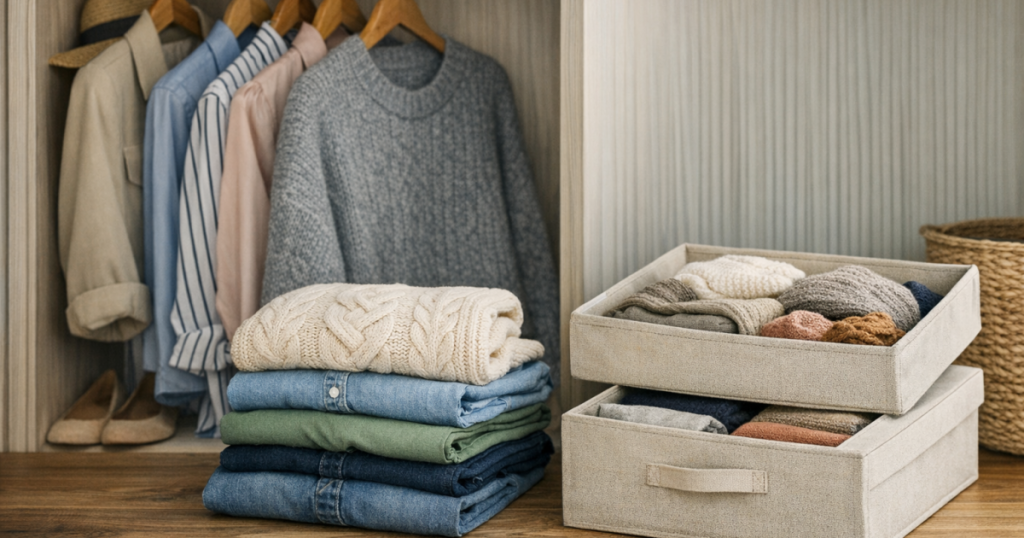
Winter jumpers, thermal layers, scarves and summer linen can be boxed when out of season. Use breathable fabric bags or boxes where possible, and avoid trapping residual moisture. If you use plastic storage tubs, choose a dry indoor location and air the contents periodically rather than leaving them sealed and forgotten.
Occasionwear and sentimental garments
Wedding guest outfits, formal dresses, christening clothes and keepsake garments can be boxed if they are not needed often. Use acid-free tissue for delicate folds where possible, and avoid storing heavy embellishment on top of fragile fabric. Do not store dyed leather, dark denim or heavily coloured accessories pressed directly against pale garments, as colour transfer can happen under pressure and humidity.
Uniforms and spare workwear
Spare shirts, trousers and base layers can be boxed if they are clean and labelled by type or season. Workwear that has been exposed to oil, strong odours or heavy soil should be dealt with separately before it goes anywhere near normal wardrobe storage. Boxing contaminated clothing can transfer residue to nearby fabrics and make odours harder to remove.
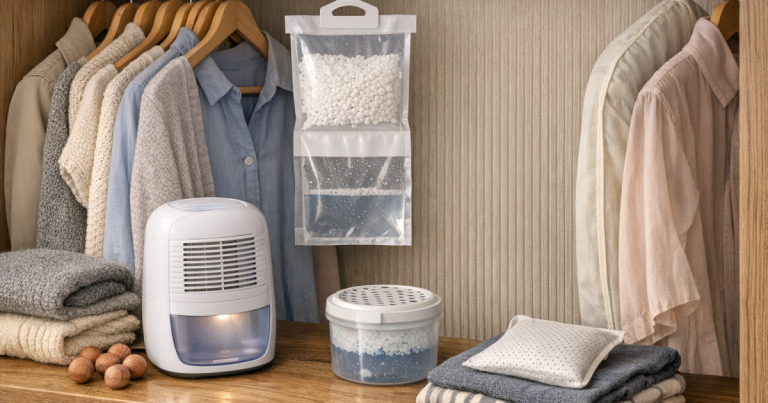
Moisture control is especially important in UK homes where laundry often dries indoors during colder months. If stored clothes ever smell musty, feel cool to the touch or sit near drying racks, the guidance on stopping indoor laundry causing window condensation is a useful next step for reducing excess moisture around wardrobes and storage boxes.
A fabric-first way to decide
When a garment could go either way, use these quick checks rather than guessing.
- The weight test: if the garment feels heavy in your hands and stretches when lifted by the shoulders, fold it.
- The crease test: if a firm fold leaves an obvious line after a few minutes, hanging may be kinder.
- The shoulder test: if the hanger edge sits beyond or inside the natural shoulder point, change hanger or fold the item.
- The surface test: if the fabric has pile, beading, sequins, raised embroidery or delicate texture, avoid pressure from tight stacks.
- The colour test: keep dark, strongly dyed or damp-prone items away from pale garments in boxes and drawers.
- The access test: if you wear it weekly, keep it visible. If you have to unpack half a box to reach it, it is in the wrong place.
These checks are particularly helpful for blends. A cotton jumper with synthetic stretch may behave differently from a pure wool jumper. A lightweight viscose dress may hang beautifully, while a similar-looking knitted dress may grow longer on a hanger. Storage should follow the garment’s behaviour, not just its label.
Common storage mistakes that damage clothes
Overcrowding is the most common wardrobe problem. Clothes need enough space to hang in their natural shape. If you have to force a hanger back onto the rail, fabrics are being crushed and airflow is poor. This can cause creasing, trapped odours and mildew risk in damp rooms.
Another mistake is storing clothes before they are completely dry. Even slight dampness from indoor drying, steaming or ironing can become mustiness when trapped in a drawer or box. Let garments cool and air before putting them away, particularly thick waistbands, cuffs, collars and layered seams.
Clear plastic dry-cleaning covers should not be used as long-term garment covers. They can trap moisture and static, and they are not designed for extended storage. Use breathable covers for special pieces, and leave enough room for the garment to hang without being bent at the hem.
Do not mix laundry categories in storage. Clean everyday clothes, oily workwear, sports kit and outdoor gear should not all be pushed into the same basket or box. Odours and residues transfer easily, and one neglected item can make a whole storage area smell stale.
Simple wardrobe zones that work
A practical wardrobe layout does not need to be elaborate. Divide storage by how the fabric behaves and how often you use it.
- Daily rail: shirts, blouses, trousers, work dresses, jackets and anything you want ready with minimal creasing.
- Folded shelf: knitwear, sweatshirts, denim and heavier casual layers.
- Drawer section: underwear, socks, tights, base layers, sleepwear and folded T-shirts.
- Protected hanging area: suits, coats, delicate dresses and occasionwear in breathable covers.
- Boxed storage: out-of-season clothing, spare uniforms, sentimental garments and items you deliberately rotate.
Label boxes by contents rather than season alone. “Wool jumpers and scarves” is more useful than “winter”, especially when UK weather refuses to follow neat seasonal rules. Keep the heaviest boxes low and avoid storing clothing boxes directly against cold external walls if condensation is a problem.
Questions people ask
Should hoodies be hung or folded?
Most hoodies are better folded because they are bulky and can stretch at the shoulders. Hang only lightweight hoodies that hold their shape well and are worn frequently.
Is it better to hang jeans?
Jeans can be hung, but folding is usually more efficient. Denim is heavy, resilient and not very crease-sensitive, so it rarely needs rail space unless you prefer to see every pair at once.
Can I box clothes in plastic tubs?
Yes, if the clothes are clean, completely dry and stored in a dry indoor area. For delicate or long-term storage, breathable materials and acid-free tissue are kinder than sealed plastic.
How do I stop folded clothes smelling stale?
Store only fully dry clothes, avoid overfilling drawers, and air stored items occasionally. If the room has condensation or poor ventilation, fix the moisture issue rather than masking odours.
Should knitwear ever be hung?
Lightweight knits can be hung briefly on well-shaped or padded hangers, but medium and heavy knitwear should be folded for long-term storage to prevent stretching and shoulder marks.
Final thoughts
The right storage method is the one that protects the garment’s shape, surface and freshness. Hang structured and crease-prone clothes, fold heavy or stretchy pieces, and box only clean, dry items that are genuinely out of rotation. Once your wardrobe follows the fabric rather than the available gap, clothes last better, look neater and need less rescue work before you wear them.