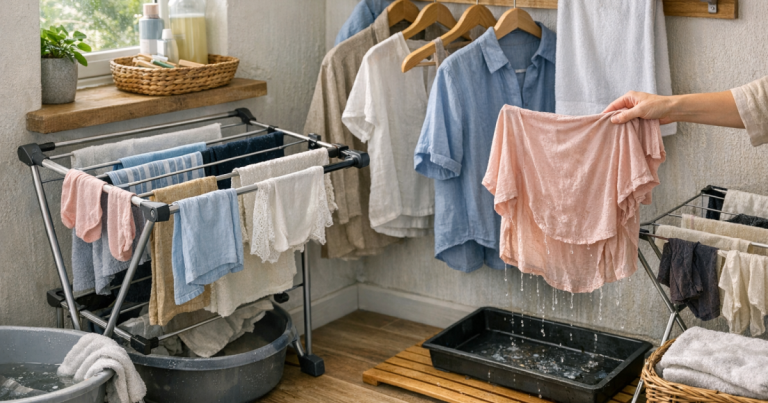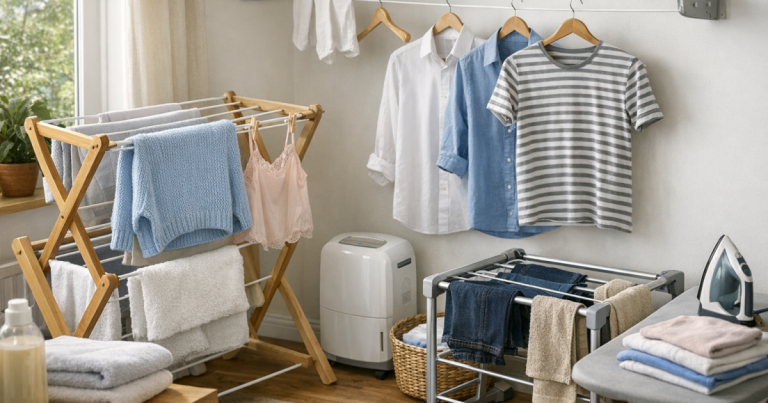
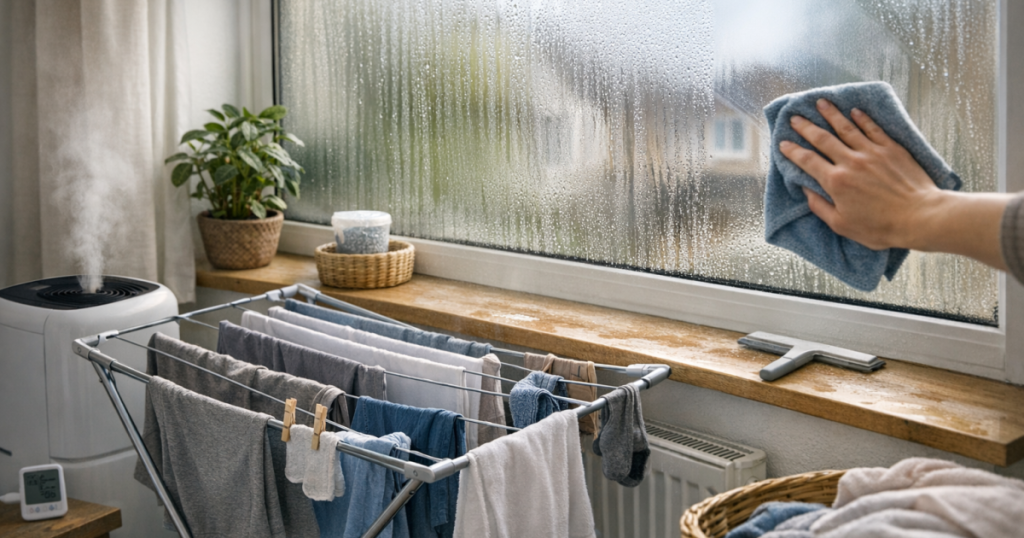
Drying clothes indoors is sometimes unavoidable in the UK, especially through wet weeks when outdoor lines and balconies are not realistic. The aim is not to stop drying laundry at home altogether, but to manage indoor laundry condensation before it settles on glass, frames and cold corners. With a better drying position, steadier airflow and sensible moisture control, you can protect fabrics and keep rooms fresher.
Condensation is a room-management problem as much as a laundry problem. The same load that dries harmlessly in a ventilated space can mist up windows, dampen curtains and leave clothes smelling stale in a closed, cold room.
What to know first
- Spin clothes as dry as the care label allows before they go on the airer.
- Dry in one controlled room rather than letting moisture drift around the home.
- Use airflow and moisture removal together; heat alone can move damp air onto cold windows.
- Keep wet laundry away from cold glass, outside walls, curtains and packed wardrobes.
- Do not put delicate fibres directly on high heat to solve a condensation problem quickly.
Why wet laundry makes windows mist up
Freshly washed clothes hold moisture. As they dry, that moisture moves into the room air. Warm air can hold more vapour than cold air, so the problem often appears when moist air reaches a cold surface such as window glass, metal frames, tiled reveals or an uninsulated outside wall.
That is why condensation can look worse first thing in the morning. A room may feel only mildly damp in the evening, but overnight temperatures drop and the moisture has fewer places to go. Windows show the evidence first because they are usually among the coldest surfaces in the room.
Indoor drying also becomes harder when laundry is crowded, the room is closed, or damp clothes are left near soft furnishings. Curtains, rugs, upholstery and stored clothing can absorb moisture before the windows are even visibly wet.
Step 1: start with less water in the load
The simplest improvement happens before the airer comes out. If the garment care label allows it, use an effective spin cycle so clothes are not going up wet enough to drip. Heavy cottons, towels, denim and bedding are the main offenders because they can hold a lot of water and dry slowly when folded over rails.
- Separate very heavy items from lighter clothing so the whole load is not held back by one damp towel.
- Shake garments out before hanging; twisted sleeves, bunched hems and folded waistbands trap moisture.
- Use hangers for shirts and blouses where suitable, leaving space around the fabric.
- Avoid hanging soaked items over radiators, as this can push moisture rapidly into the room while risking fabric distortion.
For wool, silk, lingerie and structured garments, do not chase the driest possible spin if the care label warns against it. Pressing moisture out with a clean towel is often kinder than aggressive spinning or direct heat.
Step 2: choose the right drying room
A good drying room is not always the warmest room. It is the room where you can contain moisture, create airflow and keep laundry away from vulnerable surfaces. A spare room, utility space or bathroom with suitable ventilation is often easier to manage than a bedroom used overnight.
- Keep the airer at least a little way from windows and outside walls so damp fabric is not cooling the air immediately around it.
- Avoid drying behind closed curtains or blinds, where glass stays cold and air movement is poor.
- Do not dry laundry inside wardrobes, cupboards or packed alcoves.
- If the room has a trickle vent, keep it open while clothes are drying unless outdoor conditions make the room noticeably damp.
Bedrooms are a poor choice for large loads because people add moisture through breathing overnight and the door is often closed for warmth. If you must use a bedroom, keep the load small, use daytime ventilation and clear it as soon as the clothes are dry.
Step 3: move air without chilling the whole home
Ventilation does not have to mean leaving windows wide open for hours. Short, deliberate bursts of fresh air can remove moist air while limiting heat loss. Opening a window slightly on opposite sides of the home for a few minutes can be more effective than leaving one window barely open all day, provided it is safe and practical for your home.
If you are drying in one room, close the door to stop moisture spreading, then ventilate that room in controlled periods. After cooking, showering or mopping floors, avoid adding a full laundry load to the same unventilated space straight away; the room is already carrying extra moisture.
A small circulating fan can help air pass through fabric layers, but it should be positioned safely and used to move air, not blast garments with heat. Air movement reduces stale pockets around wet sleeves, waistbands and towel folds, helping clothes dry more evenly.
Step 4: remove moisture rather than just adding heat
Heating speeds evaporation, but evaporated water still has to go somewhere. If a warm room has poor ventilation, moisture often ends up on windows as soon as the glass cools. A dehumidifier can be useful in a dedicated drying room because it removes moisture from the air instead of simply pushing it around the home.
Use a dehumidifier according to the manufacturer’s instructions, keep the room door closed while it runs, and empty or drain it as directed. Leave space around both the appliance and the airer so air can circulate properly. Do not let wet garments hang against electrical appliances, plugs or extension leads.
Heated airers can also help reduce drying time, but they still need moisture management. A covered heated airer in a closed room may dry clothes faster yet still leave damp air behind if there is no ventilation or dehumidification. If you are weighing up this type of setup, read the guide to what to look for in a heated clothes airer before assuming heat alone will solve condensation.
Step 5: load the airer so fabric can breathe
An overcrowded airer creates slow-drying folds and damp pockets. That increases the time moisture is being released into the room and raises the chance of musty odours. The layout matters more than many people realise.
- Put heavier items on outer rails where air reaches them more easily.
- Leave a gap between thick garments instead of filling every rail.
- Hang T-shirts from the hem or shoulder area so the body is open rather than doubled over.
- Turn jeans, hoodies and sweatshirts part-way through drying so seams and cuffs are not left damp.
- Move nearly dry items off the airer to create space for slower pieces.
Small changes like these shorten the damp phase without adding unnecessary heat. They also reduce the risk of mildew smells, which are much harder to fix once they settle into thick cotton or synthetic sportswear.
Keep delicates away from condensation shortcuts
Silk, wool, lace, viscose blends and some elasticated garments need a gentler approach. Direct heat, radiator drying and aggressive wringing can cause stretching, shine, shrinkage or weakened fibres. A condensation problem should not be solved by treating delicate fabrics like towels.
For fragile items, remove excess water with a towel, reshape them while damp and dry them flat or on a suitable rack in a ventilated room. Keep them away from hot rails and sunny window glass. For more fabric-specific steps, use the advice on drying delicates indoors without heat damage.
A simple daily window routine
If windows are already wet after a drying session, remove the water rather than letting it sit. Use a clean squeegee or absorbent cloth on the glass, then dry the sill and frame. Pay attention to corners, silicone edges and the bottom of the window where moisture collects.
- Ventilate briefly after wiping so the remaining moist air can escape.
- Pull curtains clear of damp glass until the window area is dry.
- Check behind blinds, as condensation can hide there and mark fabric or paint.
- Wash and dry cloths used for wiping condensation so they do not become another damp item in the room.
This routine does not replace fixing the drying setup, but it prevents moisture sitting long enough to encourage mould or musty smells.
Do not move slightly damp clothes into storage
Clothes can feel dry on the outside while seams, pockets, waistbands and thick hems are still holding moisture. Putting them into drawers or wardrobes too soon can transfer damp into enclosed spaces, where it may cause stale odours and encourage moth-friendly neglect in natural fibres.
Before storing laundry, check thick areas by touch and let garments cool to room temperature. Warm fabric fresh from a heated room can feel dry, then reveal hidden damp once folded. For a broader setup that protects clothing after drying, see wardrobe storage planning for space, garment types and damage prevention.
When laundry is not the only cause
If windows stream with water even when you have not dried clothes indoors, laundry may be making an existing damp issue more visible. Persistent black mould, peeling paint, damp patches, a strong musty smell or condensation trapped between double-glazed panes points to a wider building or ventilation problem.
In rented homes, keep a dated record of persistent damp, photos of affected areas and notes on ventilation and heating habits. That makes it easier to explain that you are managing laundry sensibly but the property may still need attention.
Things readers ask
Is a dehumidifier better than opening the window?
In cold or wet weather, a dehumidifier in a closed drying room can be more consistent. Window ventilation is still useful in short bursts, especially after the wettest part of drying or when the room feels stale.
Should I dry clothes on radiators?
Radiator drying can increase moisture in the air very quickly and may distort some fabrics. If you use radiators occasionally, keep the room ventilated and avoid placing delicate or elasticated garments directly on hot surfaces.
Will a heated airer stop window condensation?
Not by itself. It may help clothes dry faster, but the released moisture still needs ventilation or removal. Pairing controlled heat with airflow or dehumidification is usually more effective.
Can I dry laundry overnight?
Small loads can be manageable overnight in a ventilated, contained room, but large damp loads in bedrooms are more likely to cause morning condensation. Daytime drying is easier to monitor and adjust.
How dry should clothes be before folding?
They should feel dry at seams, cuffs, pockets and waistbands, not just across the main fabric panels. If in doubt, leave thick items aired for longer before putting them away.
Main lessons
Stopping indoor laundry condensation is mostly about controlling where moisture goes. Start with a good spin, give fabrics space, dry in one manageable room, and combine airflow with moisture removal rather than relying on heat alone.
The best setup is the one that dries clothes fully without turning windows, curtains or wardrobes into moisture traps. Once the room is managed properly, laundry dries fresher, fabrics are treated more gently and the home feels less damp after every wash day.