Suede is forgiving in one way: much everyday dirt sits on the raised nap rather than sinking straight through. The risk is that a quick wet wipe can leave a darker ring, so the safest way to clean suede jackets is to work dry first, add moisture only in tiny, controlled amounts, and let the fibres dry slowly before judging the result.
Before you start, check the care label and the jacket construction. A structured, lined, dyed or expensive suede jacket is easier to spoil than a pair of casual suede shoes, so deep stains, dye transfer and greasy marks are often better handled by a specialist suede and leather cleaner.
The short version
- Let suede dry completely before brushing or treating marks.
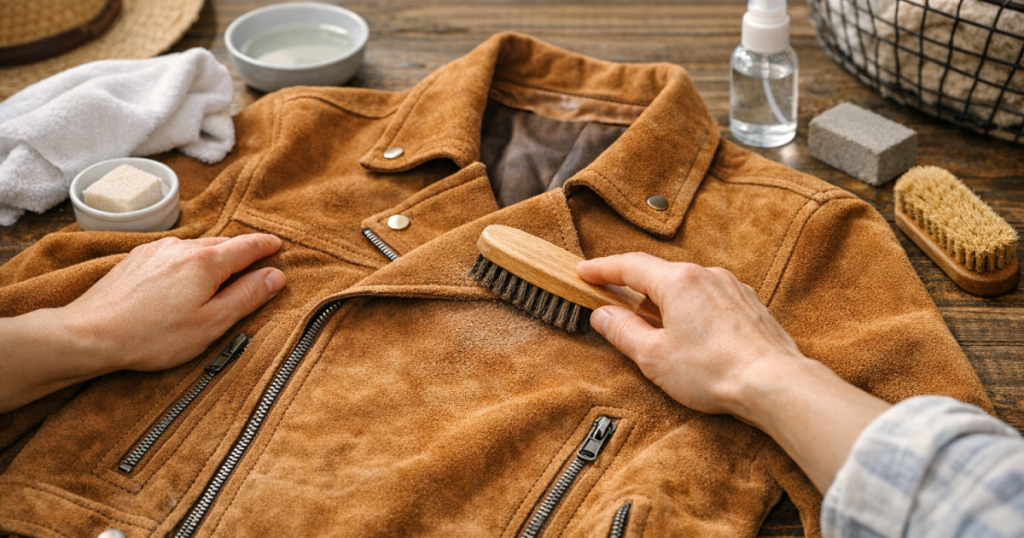
- Use a suede brush or soft clothes brush to lift surface dirt in the direction of the nap.
- Try a suede eraser or clean white rubber for dry scuffs before using any liquid.
- For water marks, lightly blend the edge with barely damp cloth strokes rather than wetting one small patch heavily.
- Dry at room temperature, away from radiators, direct sun and hairdryers.
- Brush again when dry to restore the nap and soften any flattened areas.
Why suede shows water marks so easily
Suede is made from the underside of leather, with a soft, raised surface called the nap. That nap changes colour depending on direction, pressure and moisture. When water lands on one small area, it can darken the fibres, flatten the pile, carry dissolved dirt to the edge of the wet patch, and leave a visible ring once dry.
This is why suede cleaning is less about scrubbing and more about controlling how moisture enters and leaves the fabric. A damp cloth can help with a mark, but a wet cloth can create a larger problem. The aim is to lift dirt, soften sharp edges and restore the nap without saturating the leather beneath.
Check the jacket before you treat it
Spend two minutes inspecting the jacket before you reach for a brush. It helps you choose the gentlest method and avoid spreading a mark across a visible panel.
- Read the care label: suede jackets may specify specialist leather cleaning rather than normal dry cleaning or washing.
- Identify the mark: dry mud, dust and scuffs are usually easier than oil, ink, dye transfer or old rain marks.
- Test in a hidden area: use the inside hem, underarm edge or a concealed seam to check for colour lift or texture change.
- Check the nap direction: brush lightly in different directions and note which way looks smoothest and most even.
- Look at the lining: if the lining is stained or scented, avoid soaking it from inside because moisture can travel into the suede outer.
What to use for a careful clean
You do not need an aggressive kit for routine suede jacket care. In most cases, gentle tools are more useful than stronger liquids.
- A suede brush, crepe brush or very soft clothes brush.
- A suede eraser, suede cleaning block or plain clean white rubber for dry scuffs.
- Clean white microfibre cloths or lint-free cotton cloths.
- Kitchen paper for blotting fresh moisture, used with light pressure only.
- A small bowl of clean cool water for controlled dampening, not soaking.
- Plain cornflour for fresh oily marks, used sparingly and brushed away once it has absorbed residue.
Avoid coloured cloths, dyed sponges and old towels that shed lint. They can transfer colour or fibres into the nap, especially on pale tan, stone, cream and light grey suede.
Step-by-step: cleaning a suede jacket without leaving rings
1. Let any damp areas dry first
If the jacket has been caught in rain, hang it on a broad, well-shaped hanger and let it dry naturally at room temperature. Do not put it over a radiator, in an airing cupboard, in direct sun or under a hairdryer. Fast heat can stiffen suede, shrink panels unevenly and make water marks more obvious.
Keep the jacket shape supported while it dries. A hanger that is too narrow can create shoulder peaks, particularly on heavier suede. If jacket shape is a recurring issue in your wardrobe, our guide to hangers that stop shoulder bumps explains what to use for heavier garments.
2. Brush away loose dirt
When the suede is fully dry, brush the whole affected panel lightly. Use short strokes and avoid grinding dirt into the nap. Start with the smoothest direction, then lift flattened areas with a slightly different angle if needed.
For dried mud, resist the urge to wipe it while wet. Let it harden, crack off the surface gently with your fingers, then brush the remaining dust away. Wet mud dragged across suede can become a broad smear.
3. Use an eraser on dry scuffs and shiny patches
Rub a suede eraser or clean white rubber gently over scuffed areas. Work in small passes rather than pressing hard. The point is to loosen compacted dirt and lift the nap, not to sand the surface.
After erasing, brush away crumbs and check the area in daylight. Suede often looks patchier under warm indoor bulbs, so wait before deciding it needs another treatment.
4. Soften the edge of a water mark
For a clear water ring, dampen a white cloth with cool water and wring it out until it feels barely damp. Do not drip water onto the jacket. Lightly stroke from the outside of the mark towards the centre, using feathered movements that soften the edge rather than creating a new wet circle.
If the mark covers a broad panel, it can be safer to very lightly even out the whole panel edge-to-edge rather than treating one coin-sized area. This does not mean soaking the jacket. It means using a barely damp cloth so the moisture transition is gradual, then allowing the suede to dry completely before brushing.
5. Blot fresh spills instead of rubbing
For fresh water or drink spills, blot straight away with plain white kitchen paper or a clean white cloth. Press and lift; do not rub. Rubbing pushes liquid across the nap and can create a larger flattened patch.
Once the surface feels dry, leave the jacket to air dry fully. Then brush gently. If the spill contains sugar, milk, alcohol, perfume, make-up or colour, do not keep adding water at home. These marks can set, spread or alter the dye.
6. Treat fresh grease with dry absorbent powder
For a recent oily mark, sprinkle a small amount of plain cornflour over the stain and leave it to sit. The powder can absorb some oil from the surface without adding moisture. Brush it away gently once it has done its job, then repeat only if the suede still looks oily.
Do not use washing-up liquid, laundry detergent or stain remover on suede jacket panels. Products designed for washable fabric can leave tide marks, strip colour or stiffen the leather backing.
7. Dry, brush and reassess
After any damp treatment, hang the jacket in a ventilated room and leave it alone until fully dry. Suede can look worse while damp, so avoid chasing the mark every few minutes. Once dry, brush the area gently to lift the nap and blend the panel.
If the mark is still visible but lighter, stop for the day. Repeated damp treatments in one sitting increase the chance of rings and texture change. Suede responds better to patient, minimal cleaning than to aggressive rescue attempts.
What not to do to suede jackets
- Do not machine wash: agitation and soaking can distort suede and damage linings, seams and interfacings.
- Do not steam the outer suede: steam is moisture, and concentrated steam can flatten the nap or cause rings.
- Do not iron suede: pressure and heat can create shiny, permanent-looking patches.
- Do not use coloured cloths: dye transfer can be very hard to remove from pale suede.
- Do not scrub with a nail brush: stiff bristles can roughen one area more than the rest of the jacket.
- Do not use bleach or whitening powders: suede colour is part of the leather finish and can be permanently altered.
Different delicate fabrics need different approaches. A method that is suitable for a satin dress, for example, is not automatically safe for suede; if you care for occasionwear as well as jackets, see how to clean satin dresses without dulling the sheen.
Dealing with collars, cuffs and lining odours
Collars and cuffs collect body oils, hair products and dust. Start dry: brush the nap, then use a suede eraser lightly along the edge. If the area is greasy or darkened, avoid wetting it repeatedly. Body oil marks are among the easiest to spread and may need specialist cleaning.
For lining odours, hang the jacket inside out if the construction allows and air it in a dry room. You can wipe a washable lining very lightly with a barely damp white cloth, but keep moisture away from the seam where lining meets suede. Never spray fragrance, fabric freshener or deodorising mist directly onto suede, as droplets can mark the surface.
Storing suede so marks are less likely
Good storage reduces cleaning. Brush suede before putting it away, let it air after wear, and avoid cramming it tightly between textured garments. Pressure can flatten the nap, while dark denim, leather belts and dyed bags can transfer colour onto lighter suede.
Use a breathable garment cover rather than plastic for longer storage. Plastic can trap humidity and encourage musty smells. Keep the jacket away from damp external walls, overfilled coat hooks and direct sunlight. For a broader system that separates delicate, seasonal and everyday garments sensibly, use the wardrobe organisation guide for sorting clothes by use and fabric.
When home cleaning is not worth the risk
Home care is most suitable for dust, light scuffs, faint rain marks and very recent minor spills. A specialist suede and leather cleaner is the better route for ink, dye transfer, large greasy patches, mould, heavy rain damage, old set-in stains, strong odours or jackets with sentimental or high replacement value.
It is also sensible to stop if your test patch lifts colour onto the cloth, leaves a bald-looking area, or changes the surface from soft to shiny. Continuing after a failed patch test usually makes the repair harder.
Common questions
Can I clean suede jackets with just water?
Use water only in tiny, controlled amounts and only after dry brushing or erasing. Plain water can still leave rings if one small area becomes much wetter than the surrounding suede.
Will a suede brush remove water marks?
A brush can improve the look once the suede is fully dry, especially if the mark is mainly flattened nap. It will not remove all staining if dirt, dye or residue has dried into the ring.
Can I use vinegar on a suede jacket?
Some people use diluted white vinegar on suede shoes, but jackets are larger, softer and often more visibly dyed. On a jacket, test first and avoid vinegar on pale, delicate or expensive suede unless a specialist cleaner recommends it.
How do I stop rain leaving marks next time?
Check the care label for whether a suede protector is suitable, apply only as directed, and let it dry fully before wearing. Even protected suede should not be treated as waterproof.
Why does my suede look patchy after cleaning?
Patchiness often comes from uneven nap direction or uneven drying. Let the jacket dry completely, brush the panel in one direction, then view it in natural light before doing anything else.
Main lessons
Suede jacket care is about restraint. Start dry, treat the smallest area possible, use barely damp cloths only when needed, and give the fibres time to dry before brushing them back into shape.
If a mark involves grease, dye, ink or a valuable jacket, stop before repeated home treatments create a larger water mark. Careful handling preserves the softness, colour and drape that make suede worth protecting in the first place.