The safest way to wash viscose dresses is to treat them as shape-sensitive delicates, even when the care label allows machine washing. Viscose becomes weaker and more elastic when wet, so heat, spin speed, rubbing and hanging weight are the main reasons dresses shrink, twist or lose their original drape.
Most washable viscose dresses do best with cool water, mild detergent, minimal agitation and careful drying while supported. The aim is not just to get the fabric clean, but to help the seams, hem and neckline return to the right shape as the fibres dry.
What to know first
- Always check the care label before washing. Some viscose garments are marked dry clean only because of dyes, linings, trims or garment construction.
- Use cool water rather than warm or hot water. Heat increases the chance of shrinkage and texture change.
- Do not wring viscose. Twisting can distort the fabric and leave rope-like creases that are difficult to relax.
- Support the dress when wet. A soaked viscose dress can stretch under its own weight if it is lifted or hung carelessly.
- Reshape before drying. Straighten side seams, sleeves, waist ties and the hem while the fabric is damp.
Why viscose changes shape so easily
Viscose, sometimes labelled rayon, is made from cellulose fibres. It is loved for its fluid drape, soft handle and breathable feel, but it does not behave like cotton in the wash. When viscose is wet, the fibres lose strength and can swell. That is why a dress may feel heavier, longer or slightly strange straight after washing.
The problem is rarely one single mistake. Shrinking and warping usually come from a combination of water temperature, agitation, detergent residue, spin speed and drying position. A dress with a bias cut, loose weave, gathered waist or fine seams needs even more care because the garment structure is already designed to move.
Colour and finish matter too. Printed viscose, dark viscose and garment-dyed styles can release dye or develop pale stress marks if rubbed. If your dress has embroidery, buttons, a lining, a pleated skirt or mixed-fibre trims, follow the most cautious part of the care label rather than treating it as plain viscose.
Step 1: Read the care label and test the fabric
Start with the label inside the side seam or neckline. Look for the washing symbol, maximum temperature, drying instructions and whether the dress says viscose, rayon, viscose blend or modal blend. A blend with polyester may be more stable, but it can still warp if the viscose content is high or the dress is loosely constructed.
If the label allows washing, do a quick colour check on an inside seam or hidden hem allowance. Dab with a clean white cloth dampened in cool water. If noticeable dye transfers, hand wash separately or consider professional cleaning for a valuable dress. This is especially important for navy, black, red, green and strongly printed viscose.
Fasten buttons, close zips and loosen belts or waist ties. Turn the dress inside out to reduce surface abrasion. For lightweight dresses, a mesh bag can reduce snagging and tangling in the machine; if you are not sure what size or weave to use, see our guide to choosing mesh wash bags for delicates.
Step 2: Choose between hand washing and machine washing
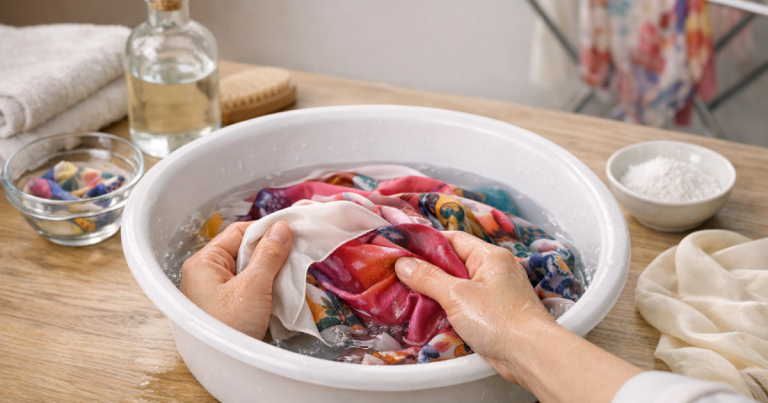
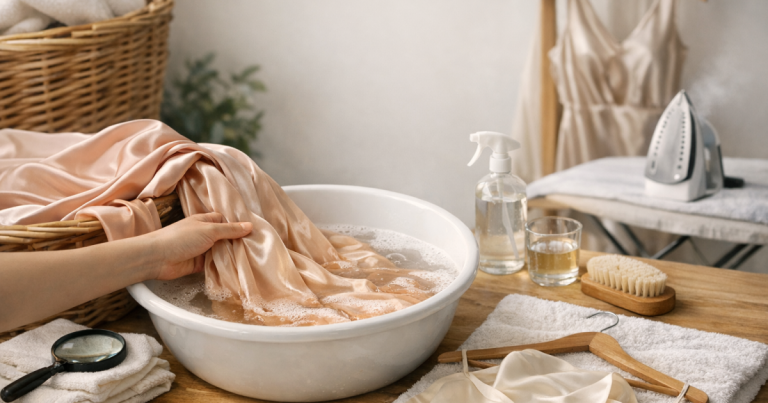
Hand washing gives you the most control, so it is usually the better choice for a favourite viscose dress, a loose summer dress, a bias-cut style or anything with delicate seams. Use a clean basin or bowl filled with cool water. Add a small amount of mild liquid detergent and mix it through the water before adding the dress.
Lower the dress into the water and press it gently so it becomes evenly wet. Avoid scrubbing the fabric against itself. Leave it for a few minutes only, then move it through the water with slow pressing motions. Focus on underarms, neckline and cuffs by gently squeezing the fabric rather than rubbing it.
If the care label permits machine washing, use a delicate or hand-wash cycle with cool water and a low spin. Put the dress in a mesh bag, wash it with similar lightweight items, and avoid heavy towels, denim or bedding that can pull the dress out of shape. Use less detergent than you would for a full cotton load; residue can make viscose feel stiff and encourage extra rinsing, which means more movement for the fabric.
Step 3: Rinse without stretching the dress
Drain the wash water and refill with cool clean water. Press the dress gently to release detergent. You may need a second rinse if the water feels slippery, but do not keep lifting the dress in and out by the shoulders. Instead, gather it in both hands from underneath so the wet weight is supported.
When rinsing by hand, imagine handling a wet fine-knit jumper rather than a cotton T-shirt. The less the dress is pulled, twisted or dangled, the better its chance of keeping the intended length and seam alignment.
Step 4: Remove water the safe way
Never wring viscose. After rinsing, press the dress gently against the side of the basin to remove excess water. Then lay it flat on a clean, dry towel. Roll the towel with the dress inside and press along the roll with your hands. This draws out moisture without twisting the fibres.
Unroll the towel and check the shape. If the dress is still dripping heavily, repeat with another dry towel. The dress should be damp, not soaking, before you move it to its drying position. This step is one of the biggest differences between a dress that dries smoothly and one that ends up stretched at the shoulders or wavy at the hem.
Step 5: Dry it in shape
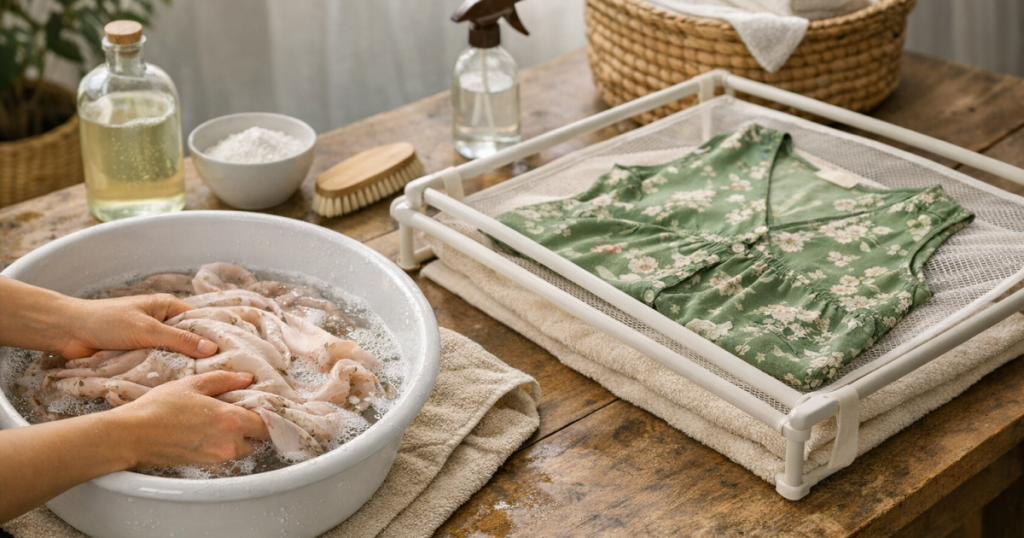
Lay the dress flat on a drying rack covered with a towel, or drape it evenly over several bars so no single point carries the full wet weight. Smooth the front and back panels with your hands. Align the side seams, straighten the hem, arrange sleeves naturally and flatten any ties or plackets.
Avoid direct heat from radiators, heated airers and strong sunshine through a window. Heat can set creases, alter texture and increase shrinkage risk. Good airflow is more useful than heat. If you regularly hand wash delicate garments, it is worth setting up a place where water can drip or evaporate safely; our guide to creating a drip-drying area for hand-washed clothes explains practical options for UK homes with limited space.
Do not put a wet viscose dress on a hanger unless the label specifically allows it and the dress is already only slightly damp. Shoulder points can stretch, straps can lengthen and the skirt can drop unevenly. Once the dress is almost dry, you can place it on a padded or broad hanger for the final stage if that helps air circulate.
How to correct minor shrinkage or warping
If a washable viscose dress dries slightly smaller or twisted, do not panic straight away. Light shrinkage is sometimes the fabric tightening as it dries, and it may relax again with careful steaming or damp reshaping.
Lightly mist the affected area with cool water or hang the dress in a steamy bathroom for a short time. While the fabric is damp, ease it back into shape with your hands. Work gradually along the seams and hem rather than pulling hard from one point. For a skirt that has twisted, line up the side seams and smooth the panels from waist to hem.
If you iron, use the care label temperature and press on the reverse. A pressing cloth helps protect the surface, particularly on dark viscose that can show shine. Use gentle steam and lift the iron rather than dragging it across the fabric. For a broader home setup check, including when steaming is safer than pressing, see what you really need for home ironing and steaming.
Common mistakes that cause shrinking or distortion
- Using a normal cotton cycle: too much agitation and spinning can twist seams and stretch wet fabric.
- Washing in warm water: viscose is more likely to shrink or change texture when exposed to heat.
- Leaving it soaking for a long time: prolonged soaking can weaken fibres and encourage dye movement.
- Wringing by hand: twisting can permanently distort hems, straps and waist seams.
- Hanging while soaked: the weight of water can lengthen the dress unevenly.
- Drying on a radiator: direct heat can set creases and make shrinkage worse.
- Rubbing stains aggressively: friction can cause pale marks or a fuzzy surface on delicate viscose.
When not to wash it at home
Some viscose dresses are technically washable as fabric but risky as garments. Be cautious with structured dresses, lined dresses, pleats, tailoring, beading, velvet-like viscose pile, viscose crepe with a strong texture, or dresses with contrasting dark and light panels. The fabric might survive water, while the shape, lining or trim may not.
A dress marked dry clean only should not be treated as a routine hand-wash item, particularly if it is expensive, sentimental or part of an outfit you need for a specific event. Spot test results, colour bleed, shrinkage history and garment construction should all influence your decision.
Questions people ask
Can viscose go in the washing machine?
Only if the care label allows it. Use a cool delicate cycle, low spin, a mesh bag and a small load of lightweight items. Hand washing is safer for fine, loose, lined or favourite dresses.
Why did my viscose dress shrink even in cold water?
Cold water reduces risk but does not remove it. Agitation, spinning, long soaking, garment construction and drying under tension can all cause a viscose dress to tighten or distort.
Can I tumble dry a viscose dress?
It is usually best to avoid tumble drying unless the label clearly allows it. Heat and tumbling can shrink viscose, roughen the surface and alter the drape.
How often should I wash a viscose dress?
Wash only when it needs it. Airing between wears, treating small marks carefully and wearing a washable slip under delicate styles can reduce unnecessary laundering.
Can I stretch viscose back after washing?
Sometimes, if the change is minor. Damp reshaping and gentle steaming can help relax the fibres, but heavy shrinkage or distorted construction may not fully recover.
Key takeaways
Viscose needs a slower, cooler and more supported wash routine than tougher everyday fabrics. Check the label, keep water cool, minimise movement, avoid wringing and dry the dress flat or fully supported. The most important moment is after rinsing: remove water with towels, reshape while damp and keep the garment away from direct heat.
If you want to wash viscose dresses with less risk, think in terms of preserving shape rather than simply cleaning fabric. Gentle handling before, during and after washing is what keeps the dress looking fluid rather than shrunken, twisted or tired.