Getting laundry dry inside is a normal part of UK home life, but it is easy to trade convenience for stiff towels, stretched jumpers or a musty smell. The aim when you dry clothes indoors is to move moisture away steadily while keeping fibres supported, ventilated and away from harsh heat.
Most fabric damage comes from three avoidable issues: overloading the airer, drying too close to direct heat, and putting clothes away before seams and waistbands are fully dry.
In brief
- Use the fastest suitable spin speed before drying, unless the care label warns against it.
- Leave space between garments so air can reach both sides of the fabric.
- Keep wool, heavy knits and delicate stretch fabrics flat or well supported.
- Avoid drying clothes directly on radiators, electric heaters or in stagnant, humid rooms.
- Check thick seams, pockets, cuffs and waistbands before storing anything away.
Start before the clothes reach the airer
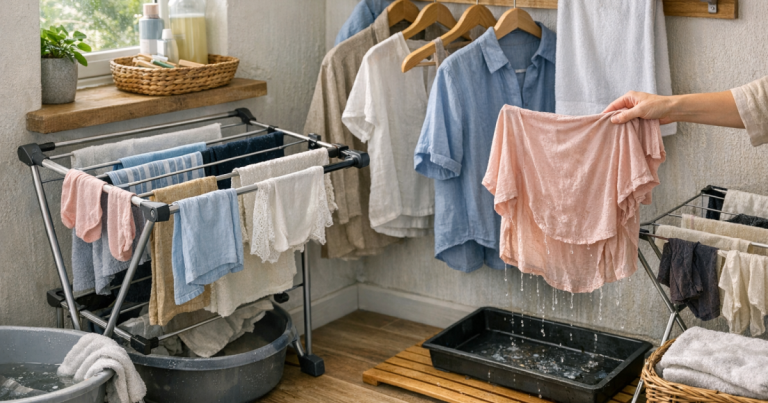
Indoor drying works best when the washing machine has already removed as much water as the fabric can safely tolerate. A good spin reduces drying time, lowers indoor humidity and means garments spend less time heavy with water. That matters because wet fabric is more prone to stretching, creasing and dye transfer.
Use the garment care label as the limit. Cotton bedding, towels and everyday T-shirts usually cope with a stronger spin than wool, viscose, silk blends, embellished garments or structured workwear. If a delicate item comes out very wet, press it gently in a clean towel rather than twisting it. Wringing can distort seams, damage elastic and leave permanent creases in fine fibres.
It is also worth knowing how your machine behaves with mixed loads. Some washers leave heavier items wetter when the drum is unbalanced, which can make indoor drying slower and less even. For a fabric-care angle on wash programmes and model differences, see our notes on a washing machine’s spin and fabric-care behaviour.
Give every garment enough air
A crowded airer is the main reason clothes dry slowly indoors. When garments touch, moisture is trapped between layers and the centre of the load can stay damp long after the outer edges feel dry. That is when towels begin to smell stale, cotton shirts feel rigid, and synthetic sportswear holds odour around seams.
Leave small gaps wherever possible. As a rule of thumb, aim for several centimetres between heavier items, and avoid folding thick garments over narrow rails more than necessary. If space is limited, prioritise airflow for the slowest-drying pieces: jeans, hoodies, towels, sweatshirts and anything with a waistband or lining.
Shirts and blouses often dry better on hangers, provided the shoulders are supported and the fabric is not dragged out of shape. Button the top button or close the front enough to keep the garment aligned. For trousers, hang them from the waistband or fold them once over a wide rail, then rotate them part-way through drying so the fold does not remain damp.
Match the drying method to the fabric
Different fibres behave differently when wet. Cotton is generally robust, but it can become stiff if it dries slowly in a cold room. Wool can stretch under its own weight. Viscose and some rayon fabrics can feel unexpectedly heavy and vulnerable when damp. Elastane-rich clothing can lose shape if it is hung from narrow points while wet.
Cotton, linen and everyday T-shirts
Shake each item out before hanging. This opens seams, reduces hard creases and helps hems dry more evenly. For T-shirts, place them across a rail at the underarm area rather than hanging them from the neck, which can distort the collar.
Towels, bedding and heavier cottons
These need the most space. Spread towels over two rails if you can, or rotate them after a few hours. Bedding dries more evenly when it is folded loosely and repositioned, rather than left as a thick layered block.
Wool, cashmere and heavy knitwear
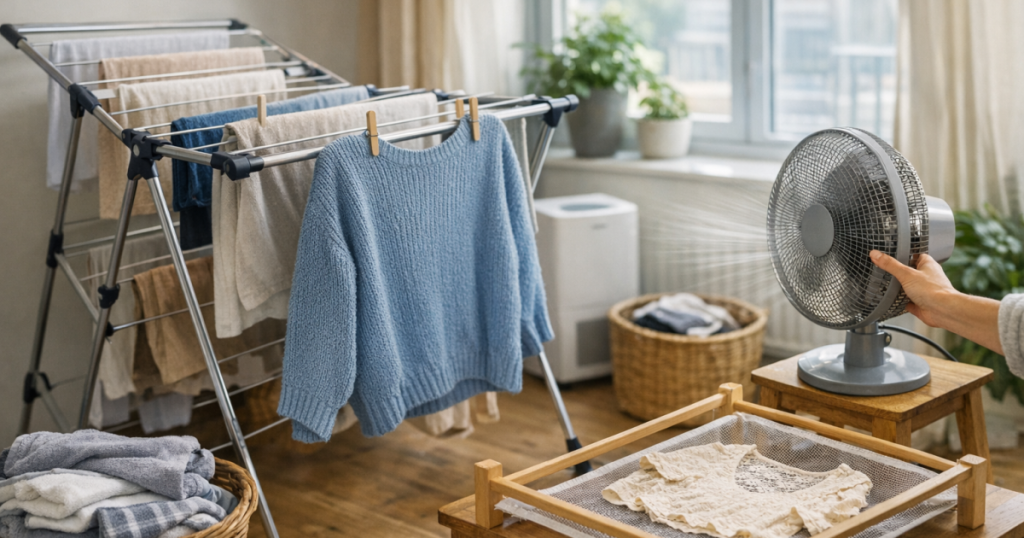
Lay knitwear flat on a clean towel or mesh drying surface. Reshape the shoulders, hem and cuffs while damp, then leave it somewhere ventilated away from direct heat. Hanging a wet jumper from a hanger or a narrow rail can stretch the shoulders and lengthen the body.
Synthetics and sportswear
Lightweight synthetics often dry quickly, but trapped moisture in seams, waistbands and padded areas can linger. Turn garments part-way through drying and avoid leaving damp sportswear in a heap before it reaches the airer.
Delicates, lingerie and embellished garments
Support delicate pieces from multiple points or dry them flat. Avoid pegs on fragile lace, silk trims or fine straps, as they can leave marks or pull the fabric. Embellished items should dry away from direct heat, with the decorated area protected from pressure and friction.
Heat helps only when moisture can escape
Warm air can speed drying, but heat alone does not solve the problem. If a room is warm and sealed, moisture still has nowhere to go. The result can be condensation on windows, a damp smell in the room and garments that feel dry on the outside but clammy at seams.
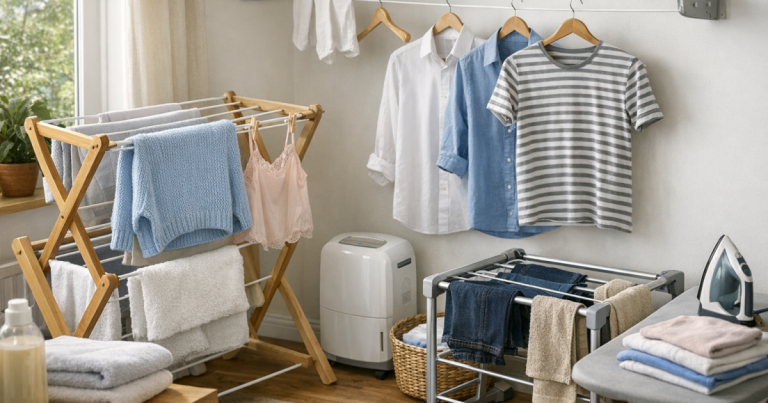
Use gentle warmth with airflow. A dehumidifier can be useful in many UK homes, especially during wet weather, because it removes moisture from the air rather than simply warming it. An open internal door can also help air move, provided the rest of the home is not already humid. When outdoor conditions allow, a slightly open window or extractor fan can reduce moisture build-up.
Avoid draping clothes directly over radiators. It can create localised high heat, stiffen fibres, set creases and encourage condensation elsewhere in the room. It can also leave garments drying unevenly, with the radiator side drying too quickly while folds stay damp. Do not cover electric heaters or heated appliances with laundry unless the appliance is specifically designed for that use and the manufacturer’s instructions allow it.
Set up the room, not just the airer
The best indoor drying spot is not always the warmest room. Look for a place with space around the airer, a surface that can tolerate the occasional drip, and ventilation that prevents moisture lingering. A utility room, spare room, bathroom with an extractor, or kitchen area can work well if the air can circulate.
Keep the airer away from wardrobes, curtains and soft furnishings where moisture can be absorbed. Leave clearance around walls if possible, as garments pressed against cold surfaces dry slowly and may pick up a stale smell. If you regularly dry clothes indoors, watch for signs that the room is struggling: persistent window condensation, damp patches, musty odour, or clothes taking more than a day or two to dry in normal conditions.
Small workflow changes help. Put the heaviest pieces on the outer rails, where they get the most air. Keep lighter synthetics and thin cottons towards the centre. Turn thick garments inside out once the outer surface feels dry, so pockets, seams and linings get exposed to air.
Prevent creasing, stiffness and musty smells
Creases become harder to remove when clothes dry bunched up or folded tightly over rails. Before hanging, shake garments firmly, smooth plackets and cuffs with your hands, and align seams. For shirts, close a few buttons to keep the front straight. For trousers, pull pocket bags flat so they do not dry twisted inside the garment.
Stiffness is often a sign of slow drying, detergent residue or hard water rather than a fault with the airer itself. Avoid overloading the washing machine, measure detergent carefully, and give towels enough space to dry with movement of air. If clothes regularly feel rough indoors, check whether you are using more detergent than the load needs.
Musty odour means drying has taken too long or the fabric was left damp before hanging. Rewashing may be needed if the smell remains after drying. Do not hide it with fragrance sprays; odour trapped in seams usually returns when the garment warms up during wear.
Finishing clothes once they are nearly dry
Some garments benefit from being finished while they are still very slightly damp. Cotton shirts, linen pieces and school uniforms often press more easily at this stage than when bone dry. Use the care label and the fabric type to choose the right heat and moisture level; our guide to safe steamer and iron settings explains how to avoid shine, scorching and water marks.
Do not iron or steam clothes that are still wet at seams or waistbands. Heat can make the surface feel dry while deeper layers remain damp, which is a poor starting point for storage. Let the garment finish drying fully before it goes into a drawer, wardrobe or vacuum storage bag.
What not to do with indoor laundry
- Do not pile wet washing on a chair or bed while waiting for airer space; odour can develop quickly.
- Do not hang wet knitwear from the shoulders unless the care label and garment structure clearly support it.
- Do not dry dark and light items pressed together, especially when one is new or heavily dyed.
- Do not store clothes because they feel dry on the surface; check seams, cuffs, pockets and waistbands.
- Do not rely on heat without ventilation, as the moisture still remains in the room.
Before clothes go back in the wardrobe
Indoor-dried clothes need a final check before storage. Feel the thickest parts of the garment with the back of your hand: waistbands, collars, underarms, pocket corners and hems. If any area feels cool or clammy, leave it out longer.
Once fully dry, let garments rest for a short while before packing a wardrobe tightly. This helps any remaining warmth or trace moisture disperse. For seasonal clothing, make sure everything is clean and completely dry before using boxes, bags or covers. The wardrobe storage guide covers how to organise, protect and refresh clothing after laundering.
FAQ
Can I dry clothes indoors overnight?
Yes, provided the room is ventilated and the airer is not overloaded. Avoid leaving thick items folded tightly overnight, as seams and hidden layers may still be damp in the morning.
Is it bad to dry clothes on radiators?
It is not ideal for fabric care. Direct radiator heat can dry areas unevenly, set creases, stiffen fibres and increase condensation elsewhere, especially in smaller UK homes.
How do I stop indoor-dried clothes smelling musty?
Hang laundry promptly, leave gaps between garments, improve airflow and make sure heavy seams dry fully. If the smell remains after drying, the item usually needs washing again.
Should jumpers be dried flat indoors?
Heavy knitwear, wool and many delicate jumpers should be dried flat and reshaped while damp. Hanging them wet can stretch shoulders, hems and sleeves.
Is a dehumidifier better than opening a window?
It depends on the weather and the room. Opening a window helps when outdoor air is drier, while a dehumidifier can be more useful during wet or cold spells when ventilation alone is limited.
Key takeaways
Good indoor drying is about balance: remove enough water in the wash, give garments space, support vulnerable fabrics and let moisture leave the room. Harsh heat and crowded airers may seem quicker, but they often create the fabric problems people are trying to avoid.
If you build the routine around airflow, gentle handling and a final dampness check, indoor drying can be safe for everyday clothing, uniforms, towels, bedding and many delicates throughout the year.