A wet jumper on a Sunday night is familiar in many UK homes, but panic-drying with high heat is what usually causes trouble. When you need to dry school uniforms overnight, the aim is not maximum heat; it is removing excess water, increasing airflow and keeping each garment in its correct shape while it dries.
The safest routine depends on the fabric: cotton-rich polos behave differently from acrylic jumpers, polyester trousers, pleated skirts and structured blazers. Use the care label first, then adapt the method below to get uniform pieces dry enough for the morning without shrinking, warping or leaving them musty.
In brief
- Use the fastest safe spin cycle after washing so garments start damp, not dripping.
- Reshape jumpers, sweatshirts and polos while damp, before the fibres set in a distorted shape.
- Use airflow rather than direct heat: an open rack, a ventilated room and, where available, a dehumidifier work better than a hot radiator.
- Keep knitwear flat or well-supported; hanging a wet school jumper from the shoulders can stretch it.
- Do not tumble dry unless the care label clearly allows it, and still use a low-heat or delicate setting where possible.
Why school uniforms shrink during rushed drying
Shrinkage is usually caused by a combination of moisture, heat and movement. Cotton fibres can contract when exposed to hot drying, while wool blends, viscose trims and some acrylic knits can lose their shape when they are heated or stretched while wet. Even polyester-heavy uniform items can pucker if waistbands, linings or stitched seams react differently from the outer fabric.
The biggest overnight mistakes are putting jumpers on hot radiators, using a high tumble-dryer setting, hanging heavy wet garments by the shoulders, or trying to iron clothes fully dry. These methods may feel quick, but they can shorten sleeves, tighten collars, distort pleats or leave shiny pressure marks on synthetic fabrics.
Care labels are not decorative. Before washing or drying a new uniform item, check the wash tub, tumble-dry square and iron symbols. If you are not confident with the icons, use this guide to read the laundry symbols before you commit to heat.
The overnight drying routine that protects fit
1. Start with the right spin
The first drying decision happens in the washing machine. A garment that comes out soaking wet will be much harder to dry gently before morning. Use the highest spin speed that is suitable for the garment according to the label and your machine programme. For delicate knits, pleated skirts or anything with embellishment, choose a gentler spin and remove water with towels instead.
If the uniform has only been worn briefly and is not visibly dirty, a quick rinse-and-spin may be enough for light freshening, but avoid over-washing jumpers and blazers. Repeated full washes can increase pilling, fading and seam stress.
2. Shake, smooth and reshape immediately
As soon as the wash finishes, remove the uniform from the drum. Leaving damp clothes crumpled for an hour can create deep creases and a stale smell, which then tempts you to use more heat later. Give each item a firm shake, smooth collars and plackets, align side seams and gently pull sleeves and hems back to their normal length.
For polo shirts, button the top button only if it helps the collar sit neatly. For trousers and skirts, flatten waistbands, pockets and hems with your hands. For sweatshirts, check that ribbed cuffs and waistbands are not folded under, as thick doubled areas take far longer to dry.
3. Press water out with a towel
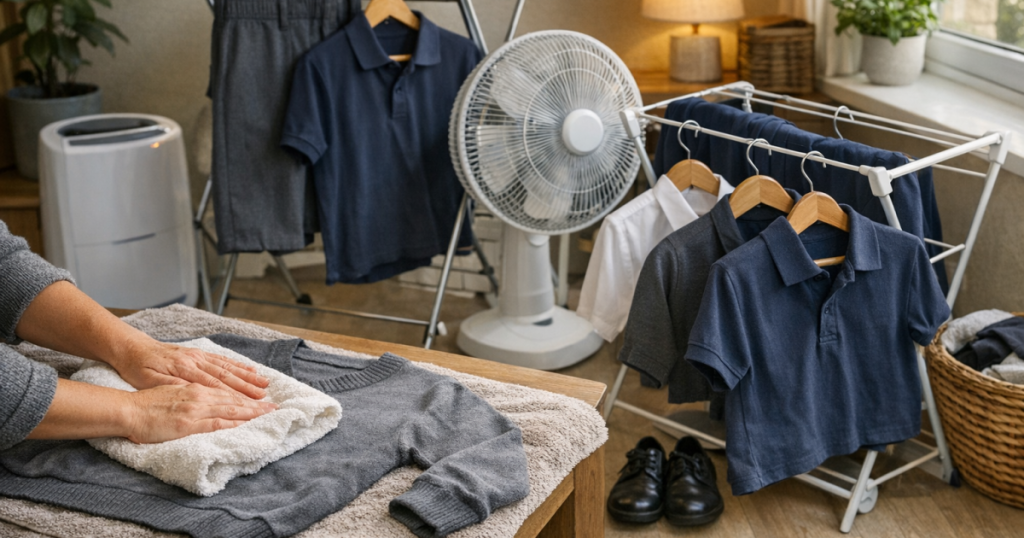
A clean bath towel is one of the most useful tools for overnight drying. Lay the damp item flat on the towel, roll it up firmly, then press along the roll with your hands. Do not twist the garment, because wringing can stretch seams and distort cuffs.
This is particularly helpful for school jumpers, cardigans, sweatshirts and PE tops. After pressing, unroll the towel, reshape the garment again and move it to the drying setup. If the towel becomes very wet, swap to a dry one rather than putting that moisture back into the room.
4. Set up airflow, not intense heat
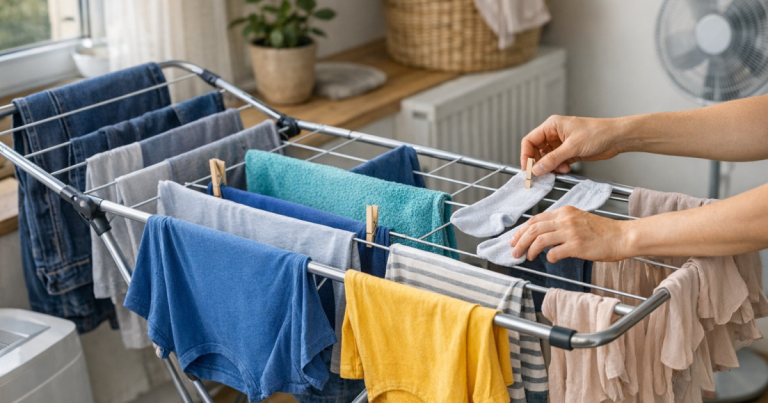
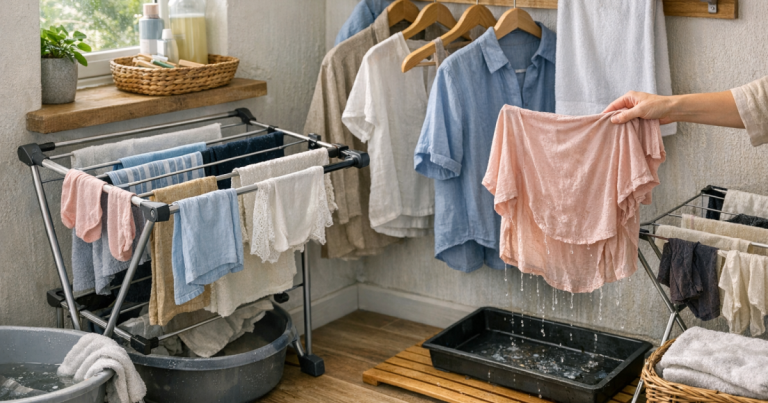
Place garments on an airer with space between each item. Air needs to reach both sides, so avoid stacking polo shirts over trousers or folding thick jumpers over multiple bars. If possible, put the airer in a room with gentle ventilation and keep the door slightly open to reduce condensation.
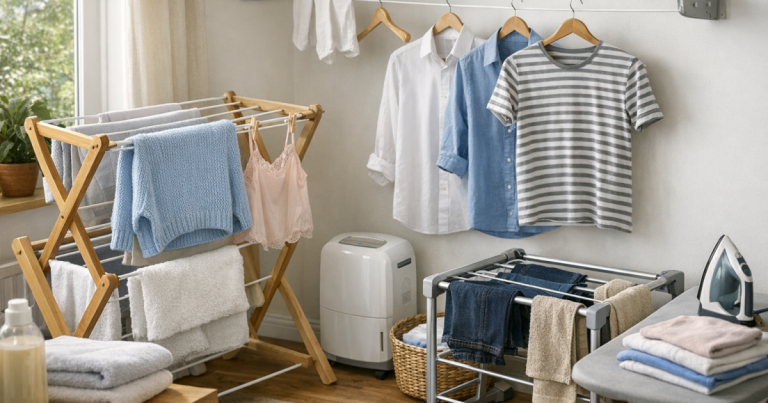
A dehumidifier can help in damp British weather because it removes moisture from the air rather than forcing heat into the fabric. A fan can also help if it moves air across the room, not directly blasting one small patch of garment. If you use a heated airer, treat it as gentle background warmth and keep delicate pieces away from prolonged direct contact with the hottest bars.
5. Choose the right position for each uniform item
Different uniform pieces need different support. The goal is to expose as much surface area as possible without pulling the garment out of shape.
- Polo shirts: Hang on an airer bar through the body rather than from the shoulders, or place on a hanger only once they are no longer heavy with water. Smooth the collar flat so it dries neatly.
- School shirts: Hang on a broad hanger after shaking out creases. Fasten the top button and align the button band to reduce morning ironing.
- Trousers: Hang from the waistband or fold once over a thick airer rail. Pull legs straight and open pockets so hidden damp patches can dry.
- Pleated skirts: Smooth pleats by hand and hang from the waistband with clips if the label allows. Avoid heavy heat, which can disturb pressed pleats or linings.
- Jumpers and cardigans: Dry flat on a mesh rack or over several airer bars so the weight is supported. Avoid hanging wet knitwear from shoulder points.
- Blazers: Do not tumble dry structured blazers unless the care label explicitly says it is allowed. Blot damp areas, reshape lapels and hang on a sturdy, broad hanger in moving air.
Fabric-specific checks before bedtime
Cotton-rich polo shirts and shirts
Cotton-rich school polos can shrink if they are dried too hot, but they respond well to a strong spin, shaking and spaced air-drying. If the polo is dark navy or black, heat can also accelerate fading, particularly at collars and seams. For more detailed colour-care habits, the principles in washing dark polo shirts without fading apply well to school uniform polos too.
Before bed, feel the collar, underarms and button placket. These areas dry last. Turn the shirt once during the evening if you can, or place those thicker areas towards the best airflow.
Acrylic, cotton and wool-blend jumpers
School knitwear is the item most likely to change shape when rushed. Acrylic can stretch when wet, cotton knit can become baggy, and wool blends can felt or tighten if exposed to heat and agitation. Press out water with a towel, reshape the hem and sleeves, then dry flat or broadly supported.
If shoulder shape matters, avoid narrow hangers until the jumper is only slightly damp. The same careful support used to air-dry knitwear without stretching the shoulders is useful for school cardigans and V-neck jumpers.
Polyester trousers, skirts and PE kit
Polyester uniform trousers, skirts and sports kit often dry faster than cotton, but seams, elastic waistbands and linings can stay damp. Open waistbands on the airer and avoid trapping elastic against a radiator. Polyester can also pick up shiny marks from hot ironing, so it is better to dry it properly overnight than to attack it with a hot iron in the morning.
For PE kit, separate shorts, tops and socks rather than bundling them together. Synthetic sports fabrics can smell musty if they dry too slowly in a cold, closed room, so prioritise airflow.
What not to do when you are short on time
- Do not put wet uniform directly on a hot radiator. It can cause uneven shrinkage, stiff patches and condensation on walls.
- Do not tumble dry on high heat unless the label permits it. Even then, remove items while slightly damp and finish on an airer to protect shape.
- Do not hang heavy jumpers from thin hangers. This creates shoulder points and can lengthen sleeves.
- Do not dry stained clothing with heat. Heat can set ink, food and mud marks, making them harder to remove later.
- Do not cram everything onto one rail. Close contact slows drying and can leave hidden damp areas by morning.
A simple evening timetable
If the uniform comes out of the wash at around 7 pm, aim to do the hands-on work early rather than leaving everything to the morning. By 7:10 pm, remove items from the machine, shake and reshape them. By 7:20 pm, towel-press the wettest pieces. By 7:30 pm, arrange everything on the airer with the thickest areas facing airflow.
Before you go to bed, turn trousers, polos and PE tops once if they still feel damp on the underside. Move nearly dry shirts onto hangers to finish, but keep knitwear supported. In the morning, check cuffs, collars, waistbands and underarms first. If a small area is still slightly damp, use a cool or low iron only if the care label allows, placing a clean cloth between the iron and synthetic fabrics.
How to prevent the same rush next week
The easiest way to dry school uniforms overnight without stress is to reduce how often you need an emergency rescue. Keep one spare polo or shirt in rotation if your laundry space allows, wash heavier jumpers earlier in the weekend, and dry uniform pieces in separate loads from towels. Towels hold a lot of water and slow the whole load down.
It also helps to create a dedicated drying routine: one airer for school uniform, one set of spare towels for pressing water out, and a regular spot with reliable airflow. In winter, check for condensation on windows and walls. If the room feels damp, clothes will dry slowly no matter how neatly they are arranged.
Helpful questions
Can I tumble dry school uniform if I use a low setting?
Only if the care label allows tumble drying. Use the lowest suitable heat, avoid over-drying, and remove items while slightly damp so you can reshape them on an airer.
Is it better to dry uniform on hangers or an airer?
Shirts and nearly dry polos are usually fine on hangers. Wet jumpers, cardigans and sweatshirts need broader support on an airer or flat rack to prevent stretching.
How do I dry a school blazer after rain?
Blot wet areas with a towel, reshape the lapels and shoulders, then hang it on a broad hanger in moving air. Avoid tumble drying unless the label clearly permits it.
Why does uniform still smell damp in the morning?
It has probably dried too slowly in still, humid air. Increase spacing, improve ventilation, remove wet towels from the room and avoid overloading the airer.
Can I iron a damp school shirt dry?
You can lightly press a slightly damp shirt if the care label allows, but do not use the iron as the main drying method. Too much heat can shrink cotton and mark synthetics.
What to remember
Fast uniform drying is mostly about preparation: spin well, towel-press, reshape and create airflow. Direct heat may seem quicker, but it is the main reason polos tighten, jumpers stretch oddly and waistbands pucker. With a better evening routine and enough space around each garment, most everyday school uniform pieces can be dry, wearable and still the right size by morning.