A silk blouse can look tired after one careless wash: muted shine, water marks, softened shape or a slightly rough feel. The safest way to hand wash silk blouses is to keep the wash short, cool, low-friction and detergent-light, then dry them without twisting or strong heat. The aim is not just to get the blouse clean, but to preserve the smooth surface that gives silk its lustre.
Always start with the care label. If the blouse is marked dry clean only, has heavy beading, pleating, shoulder structure, contrasting trims, or a lining that may shrink differently, home washing is a risk rather than a routine care choice.
The short version
- Use cool to lukewarm water, ideally below 30°C.
- Choose a small amount of detergent suitable for silk or wool, not a strong alkaline laundry powder.
- Test for dye movement before washing the whole blouse.
- Soak briefly, move the blouse gently, and avoid rubbing the surface.
- Rinse until the water is clear and the fabric no longer feels slippery with detergent.
- Press water out in a clean towel; never wring silk.
- Dry flat or on a padded hanger away from radiators, direct sun and strong heat.
- Press inside out while slightly damp, using a low setting and a pressing cloth.
Why silk loses its sheen in the wash
Silk sheen comes from the smooth, fine structure of the fibres and the way light reflects from the fabric surface. When that surface is roughed up, coated with residue or exposed to heat, the blouse can lose its clean gleam even if it is not technically damaged.
The most common causes are too much detergent, warm water, rubbing cuffs and collars aggressively, leaving the blouse soaking for too long, and drying it with creases pressed into the fabric. A very alkaline detergent can also leave silk feeling harsh, while enzymes and brighteners designed for robust everyday laundry are not the right match for protein fibres such as silk.
Water quality matters too. In hard-water areas, detergent residue can be more noticeable on dark or jewel-toned silk. A careful rinse is often what makes the difference between a blouse that dries luminous and one that looks flat.
Step 1: Check the blouse before it touches water
Inspect the blouse in natural light. Look at the underarms, neckline, cuffs, button band and any areas where perfume, deodorant or make-up may have settled. These spots may need gentle attention, but they should not be scrubbed.
Do a colour test on an inside seam or hidden hem. Dampen a white cloth with cool water and press it against the fabric for several seconds. If colour transfers, keep the wash very short or use a specialist cleaner, especially for bright, dark or printed silk. The same cautious approach applies to scarves and other vivid silk accessories; for more detail on dye testing, see our guide to hand washing silk scarves without colour bleed.
Fasten buttons and undo tight knots or ties. This helps the blouse move evenly in the water without pulling one section out of shape.
Step 2: Prepare a gentle wash bath
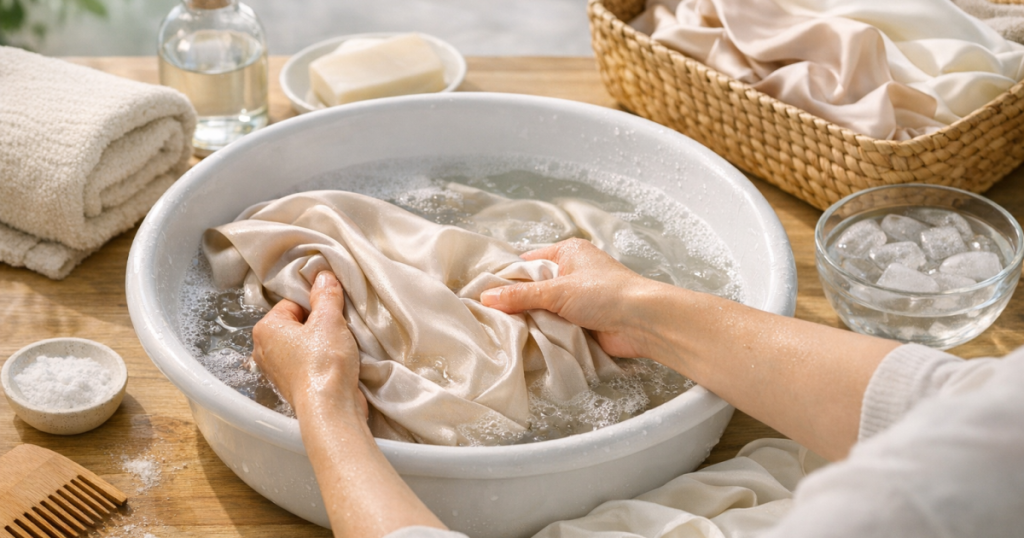
Use a clean basin, sink or washing-up bowl with no traces of bleach, bathroom cleaner or washing-up liquid. Fill it with cool to lukewarm water. The water should feel barely warm to your hand, not hot.
Add a very small amount of silk-safe or wool-safe liquid detergent and stir it through the water before adding the blouse. More detergent does not mean a cleaner blouse; with silk, it usually means more rinsing and a higher risk of dull residue. Avoid bleach, stain-removing powders, oxygen boosters, fabric softener and standard strong laundry powder.
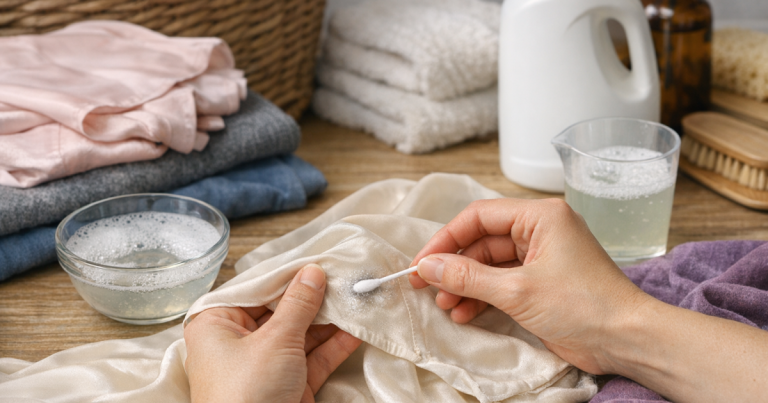
If there is a small mark, treat it with restraint. Dab the area with diluted detergent solution using your fingertips or a soft white cloth. Do not use a brush on silk, and do not rub two parts of the blouse together as you might with cotton.
Step 3: Wash with movement, not friction
Lower the blouse into the water and let it become fully wet. Support the fabric with both hands rather than pushing it down by the collar or cuffs. Gently swish it through the water, lifting and lowering it so the detergent can pass through the fibres.
Keep the wash brief. A few minutes is usually enough for a lightly worn blouse. Silk does not benefit from a long soak, and prolonged soaking can increase the chance of dye movement, creasing and texture change.
Pay attention to high-contact areas by pressing them softly between your fingers under the water. For example, squeeze the cuff fabric gently rather than rubbing the cuff edge. Around buttons, support the placket so the wet fabric does not sag.
Step 4: Rinse until the fabric feels clean, not slippery
Drain the wash water and refill the basin with fresh cool water. Lift the blouse carefully as the water drains so it is not dragged down by its own weight. Swish gently, then drain and repeat.
Do not rinse under a powerful running tap unless you can fully support the blouse. A direct stream can stretch wet silk and create splash marks. Two or three changes of clean water are usually more controlled than holding the garment under the tap.
The rinse is finished when the water stays clear and the blouse no longer feels slick with detergent. If the silk dries dull, leftover detergent is one of the first things to suspect.
Step 5: Remove water without crushing the surface
Lift the blouse from underneath and let excess water fall away naturally for a moment. Do not twist, wring or squeeze it into a rope. Wet silk is more vulnerable to distortion, and wringing can leave set-in creases that are difficult to remove without over-pressing.
Lay the blouse flat on a clean, white or colourfast towel. Smooth it gently into shape, roll the towel with the blouse inside, and press along the roll with your hands. The towel should absorb water without roughening the silk. If the towel becomes saturated, repeat with a dry one.
Step 6: Dry slowly and evenly
Silk should dry away from direct sunshine, radiators, heated airers and strong draughts. Heat can make creases sharper and may affect the handle of the fabric. Direct sun can also fade colour, especially on darker blouses.
For a soft blouse, drying flat on a clean towel or mesh rack is safest at first. Once it is damp rather than wet, you can move it to a padded hanger to help the shoulders settle naturally. Avoid thin wire hangers, which can leave points at the shoulders.
If you regularly wash delicates, it is worth setting up a dedicated low-drip drying spot with airflow and absorbent protection underneath. Our guide to creating a drip-drying area for hand-washed clothes explains how to make this work in a typical UK home without leaving wet garments over doors or radiators.
Step 7: Restore smoothness with careful pressing
The best time to press silk is usually when it is slightly damp, not bone dry. Turn the blouse inside out, use a low silk setting if your iron has one, and place a clean pressing cloth between the iron and the fabric.
Press rather than drag. Lift the iron and move it to the next area instead of sliding it across the blouse. Sliding can distort seams and create shine patches in the wrong places, particularly on satin-weave silk.
Use steam cautiously. A short burst held above the fabric can help relax creases, but spitting, dripping or over-wetting can leave marks. If your iron tends to release water unevenly, press dry with a cloth instead. For a deeper explanation of how cloth barriers protect delicate and tailored garments, see our article on whether pressing cloths prevent shine on wool trousers; the same principle of protecting the surface is useful for silk.
Common mistakes that dull silk
- Using too much detergent: residue can flatten the sheen and make the blouse feel slightly tacky or stiff.
- Soaking for too long: silk usually needs a short wash, not a prolonged bath.
- Scrubbing stains: abrasion can permanently roughen a shiny surface.
- Drying on a radiator: concentrated heat can set creases and affect the drape.
- Ironing the right side directly: this can leave scorch, pressure marks or uneven shine.
- Hanging while soaking wet: the weight of water can stretch shoulders, sleeves and button bands.
What to do if the blouse dries dull
First, check whether the dullness looks like an overall film or actual fibre damage. If the blouse feels coated or slightly soapy, rinse it again in cool water, using the same careful handling as before. Residue-related dullness can often be improved.
If the dull patches are on rubbed areas such as cuffs, underarms or the front where a bag strap sits, the surface may be abraded. Washing cannot rebuild the original smoothness, so the aim becomes preventing further wear: wash less aggressively, press with a cloth and avoid friction when wearing.
For water marks, lightly re-wetting the whole panel and drying it evenly can sometimes reduce a tideline. Do not spot-soak one small area unless you are prepared to wash the full section, as isolated wetting can create a new mark.
Questions people ask
How often should I hand wash silk blouses rather than air them?
Wash only when the blouse is genuinely soiled or has absorbed body odour. If it has been worn briefly over a base layer, airing it on a padded hanger away from sunlight may be enough.
Can I use normal laundry detergent on silk?
It is better to use a detergent intended for silk or wool. Standard laundry detergents can be too strong, and some contain enzymes, brighteners or alkaline ingredients that are not ideal for silk.
Is a washing machine hand-wash cycle safe?
Only consider it if the care label allows machine washing. Even then, use a mesh bag, cool water and minimal spin. For delicate, glossy or expensive blouses, hand washing gives more control.
Can I dry a silk blouse on a hanger?
Yes, but preferably once it is damp rather than dripping wet. Start by removing water in a towel, then use a padded hanger so the shoulders do not stretch or form points.
Can lost sheen come back?
If dullness is caused by detergent residue, a careful cool rinse may help. If the fibres have been abraded by rubbing, heat or rough handling, the loss of sheen is usually permanent.
Key takeaways
Silk rewards a light touch. Keep water cool, detergent minimal, washing brief and drying gentle. The blouse should be supported whenever it is wet, and any pressing should protect the surface rather than chase every crease with heat.
The simplest rule is this: clean the blouse without disturbing the fibre surface. Once that becomes the focus, each step becomes easier to judge, from testing colour to rinsing properly and drying without stress on the seams.