A wired bra can survive regular washing, but only if you control movement, temperature and pressure. The safest way to wash bras without bending underwire is to reduce tumbling, stop the cups being crushed and avoid heat that can weaken elastic.
Hand washing is usually the gentlest method, but machine washing can work for everyday bras if you use a structured routine. The aim is simple: clean away sweat, body oils and detergent residue without letting the wire channel twist, buckle or rub against heavier laundry.
What to know first
- Fasten the hooks before washing so they do not catch on lace, mesh or other garments.
- Use cool or lukewarm water rather than a hot wash, unless the care label says otherwise.
- Keep wired bras away from heavy items such as towels, jeans, bedding and sweatshirts.
- Do not wring, twist or fold the cups in half to remove water.
- Air dry bras flat or supported by the centre gore, not by stretching the straps.
Why underwires bend in the wash
Underwires are shaped to sit neatly beneath the breast and inside a stitched fabric channel. They can distort when the bra is forced into a tight spin, trapped under heavier laundry, pulled by tangled straps or exposed to repeated heat. Once the wire changes shape, the bra may dig in, sit unevenly or poke through the channel.
The main problem is not water itself. It is mechanical stress. A bra that is allowed to roll around with bath towels or cotton bedding can be pressed, twisted and stretched from several directions at once. That is why delicate cycles, small loads and laundry bags matter more than simply choosing a lower temperature.
A fine wash bag is useful because it limits snagging and keeps straps contained, but it is not a complete shield against crushing. If you are deciding when to use one, this guide to whether mesh laundry bags actually protect delicates explains what they can and cannot prevent.
Best method: hand wash wired bras
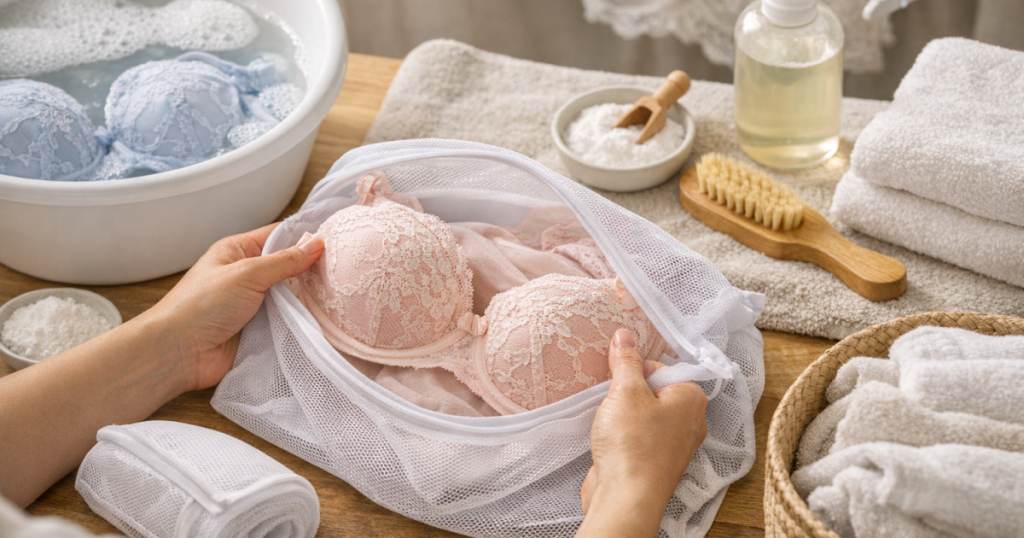
Hand washing gives you the most control over cup shape and wire position. It is the best option for lace bras, embroidered bras, moulded cup bras, plunge styles, longline bras and any bra that already feels slightly misshapen.
Step 1: Check the care label and separate colours
Read the care label before doing anything else. Some bras are labelled hand wash only; others allow a machine wash at a low temperature. Separate pale, dark and bright colours, especially if the bra is new or has deep dye.
Step 2: Fasten the hooks
Close the back fastening before washing. This stops hooks catching on lace panels, cup edges or the elastic of another bra. If the bra has removable pads, take them out and wash them separately so they do not fold inside the cup.
Step 3: Use cool water and a small amount of mild detergent
Fill a clean basin with cool or lukewarm water. Add a small amount of mild detergent and swirl it through the water before adding the bras. Too much detergent can leave residue in foam cups and elastic, making the bra feel stiff or irritating against the skin.
Liquid detergents tend to dissolve more readily in a small hand-wash basin than powders. If you use a powder, dissolve it fully before adding the bra so granules do not sit in seams or lace.
Step 4: Soak briefly, then press gently
Place the bra in the water and let it soak for about 10 to 15 minutes. Press the cups and band gently with your hands. Do not scrub the wire channel, rub lace hard, pull the straps or twist the cups against each other.
Pay attention to the underband, centre gore and areas that sit against the skin. These usually hold the most sweat and body oils. Gentle pressing is enough for normal wear; heavy scrubbing can weaken stitching around the wire.
Step 5: Rinse without stretching
Drain the soapy water and refill the basin with clean cool water. Press the bra through the water until the detergent is removed. Repeat if the water still feels slippery or foamy. Support the cups as you lift the bra rather than dangling it by one strap.
Step 6: Remove water with a towel
Lay the bra flat on a clean towel, reshape the cups with your hands and roll the towel gently to absorb moisture. Avoid wringing the bra. Wringing is one of the quickest ways to bend underwires and crease moulded cups.
If you machine wash, do it this way
Machine washing is more convenient for everyday bras, but it needs a controlled load. Use it for sturdy wired bras in good condition, not for delicate lace, silk blends, heavily structured lingerie or bras with loose stitching around the wire casing.
Step 1: Fasten and bag each bra
Fasten the hooks and place bras in a laundry bag. A fine mesh bag with enough room for the bra to sit naturally is better than one that forces the cups flat. For moulded cups, avoid folding one cup into the other unless the bra was designed to pack that way.
Step 2: Choose the right load
Wash bras with lightweight items such as knickers, camisoles, thin T-shirts or other small delicates. Do not add towels, bedding, jeans, hoodies or heavy cotton joggers. Heavy items create pressure during the wash and spin, which can distort the wire and crush foam cups.
Step 3: Select a gentle cycle
Choose a delicate or hand-wash cycle with cool water. Use a lower spin speed if your washing machine allows it. A hard spin removes more water, but it also increases twisting and pressure inside the drum.
Step 4: Use less detergent than usual
Bras are small garments and do not need a full dose of detergent. Too much product can build up in elastic and padding, making the fabric feel less flexible. Use the detergent label as a starting point, then reduce the amount for a small delicates load.
Step 5: Remove bras as soon as the cycle ends
Do not leave bras crumpled in the drum. Take them out promptly, check that the cups are not inverted, and smooth the wire channel with your fingers. If a cup has been pressed inwards, reshape it while damp rather than waiting until it dries.
Drying without warping the wire
Never tumble dry wired bras unless the care label explicitly allows it, and even then it is rarely the kindest option. Heat can weaken elastic, affect foam cup shape and make wire channels more vulnerable over time.
Dry bras flat on a towel or over an airer with the centre gore supported. If you hang a bra by the straps while it is wet, the weight of the cups can stretch the straps and alter the fit. Avoid placing bras directly on a radiator, heated rail or in strong direct sunlight for long periods.
Good airflow matters more than aggressive heat. If you are drying several laundry items indoors, keep space around garments rather than covering every rail; the same principle used for drying bedding indoors without blocking airflow also helps delicates dry more evenly.
If you use a tumble dryer for the rest of the load, take bras out first and dry them separately on an airer. For everyday clothes that can go in the dryer, careful loading also helps reduce fabric stress; these tips on loading a tumble dryer without creasing clothes are useful for keeping heavier laundry away from items that need gentler handling.
Common mistakes that bend underwires
- Washing bras loose in a full drum: Straps tangle, hooks snag and cups can be crushed under heavier garments.
- Using a hot wash by default: Heat can shorten the life of elastic and alter the feel of synthetic fabrics.
- Folding moulded cups inside out: This can leave a permanent crease or make the cup sit unevenly.
- Wringing after rinsing: Twisting pressure can distort the wire and strain the stitched channel.
- Drying by the straps: Wet cups are heavier than dry cups, so straps can stretch and lose recovery.
- Ignoring early wire movement: If a wire starts to poke or shift, washing can make the damage worse unless the channel is repaired.
How often should you wash bras?
For everyday wear, many bras need washing after two to three wears, but this depends on heat, activity level, perspiration and skin sensitivity. Sports bras and bras worn on hot days usually need washing after each wear. A bra worn briefly in cool weather may not need washing immediately, but it should be aired before returning to storage.
Rotating between bras helps them last longer. Elastic benefits from rest between wears, and you reduce the temptation to wash one favourite bra aggressively because it is needed again the next day.
Quick checks before and after washing
- Check that the wire ends are not pressing through the fabric channel.
- Look for loose stitching along the underwire casing.
- Make sure hooks are not bent before fastening them.
- After washing, smooth each cup back into its natural shape.
- Lay the bra on a flat surface and check that both wires still sit evenly.
- Do not store the bra until it is fully dry, especially in drawers with limited airflow.
FAQ
Can I wash underwired bras in the washing machine?
Yes, for sturdy everyday bras if the care label allows it. Fasten the hooks, use a mesh bag, choose a gentle cool cycle and keep the load light.
Is hand washing always better for bras?
Hand washing is gentler because it avoids drum pressure and high spin speeds. It is the safer choice for lace, moulded cups, expensive lingerie and bras that already feel delicate.
What should I do if the underwire is already bent?
Stop machine washing that bra. Gently reshape the wire by hand only if it moves easily, and do not force it. If it digs in or pokes through, the bra may need repair or replacement.
Can I put bras on a radiator to dry?
It is better not to. Direct radiator heat can affect elastic and padding. Use an airer in a ventilated room and reshape the cups while damp.
Should I wash bras with normal clothes?
Only with lightweight, smooth items. Avoid towels, jeans, bedding and anything with zips or rough fastenings because they can crush cups and pull at lace or elastic.
Key takeaways
The best way to protect an underwired bra is to limit movement and pressure at every stage: fasten the hooks, use cool water, avoid heavy laundry, skip the tumble dryer and reshape the cups while damp. Hand washing gives the most control, but a careful machine wash can be suitable for stronger everyday bras when the care label allows it.
Treat the wire channel as the fragile part of the garment. If you stop it twisting, rubbing and being compressed, the bra is far more likely to keep its shape, support and comfort through repeated washes.