Good storage is less about squeezing more hangers onto a rail and more about giving each fabric the conditions it needs to rest safely. Effective wardrobe storage planning starts with three questions: how much space you genuinely have, which garments need hanging or folding, and what kind of damage you are trying to prevent. In many UK homes, the answer has to work around shallow fitted wardrobes, damp-prone exterior walls, shared rooms and seasonal clothing that moves in and out of use.
The goal is not a showroom-perfect wardrobe. It is a system that keeps everyday clothes accessible, protects better pieces from avoidable wear, and stops hidden problems such as shoulder distortion, moth activity, mildew smells and permanent creasing.
The big picture
A well-planned wardrobe gives different fabrics different treatment. Shirts, tailoring and dresses usually need air and structure. Knitwear needs support from below. Occasionwear needs protection from dust without being sealed into a damp microclimate. Workwear needs a place to dry, air and rotate without spreading grit or odour to cleaner garments.
Think of the wardrobe as three zones rather than one cupboard: active clothing you wear weekly, resting clothing you want to keep in shape, and stored clothing that is out of season or worn rarely. Problems usually start when all three are forced onto the same crowded rail.
Start with the space you actually have
Before reorganising, empty one section at a time and look at the limits of the space. A wardrobe on an outside wall behaves differently from a freestanding rail in a warm bedroom. A deep drawer suits jumpers better than blouses. A high shelf may be useful for boxed seasonal clothing, but poor for garments you need every morning.
Check for four practical constraints:
- Airflow: clothes packed tightly together hold moisture and odour for longer, especially after commuting, cooking or wearing layers under coats.
- Access: if you cannot see a garment, it is more likely to be crushed, forgotten or stored dirty.
- Weight: heavy coats, denim, thick knitwear and uniforms can distort flimsy hangers and overloaded rails.
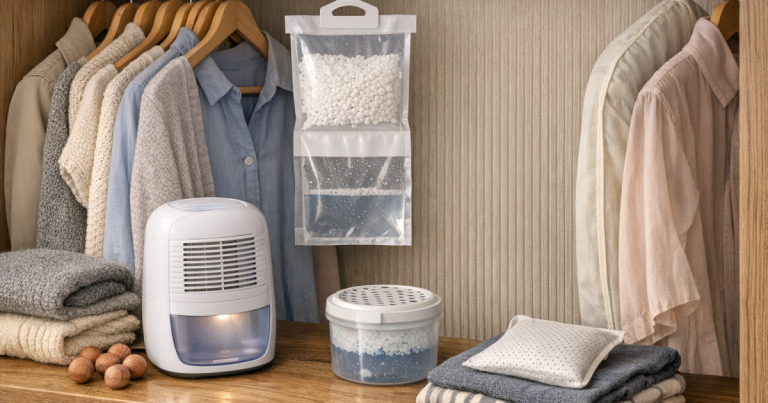
- Moisture risk: wardrobes near exterior walls, unheated rooms or windows can trap condensation and leave clothes smelling stale.
If the space is small, reduce rail pressure first. Crowding creates more fabric damage than a lack of matching storage boxes. A partly empty rail with properly chosen hangers is often kinder to clothes than a full rail with everything pressed flat.
Match storage to garment type
Most storage mistakes happen when every garment is treated as either “hang it” or “fold it”. Fabric behaviour matters more than habit.
Shirts, blouses and uniforms
Cotton shirts, office blouses and uniform tops usually do best on hangers with enough width to support the shoulder seam. Fasten the top button or one upper button to help the collar sit properly. Leave newly ironed shirts to cool before putting them into a crowded wardrobe, as warm fabric creases more readily when compressed.
Separate clean office shirts from recently worn but not yet washed garments. Pens, deodorant build-up and collar soil can transfer when items are packed together. If ink marks are a recurring problem, keep a small stain station near the laundry area and use the steps in removing ink stains from office uniform shirts before the shirt goes back into rotation.
Knitwear and wool jumpers
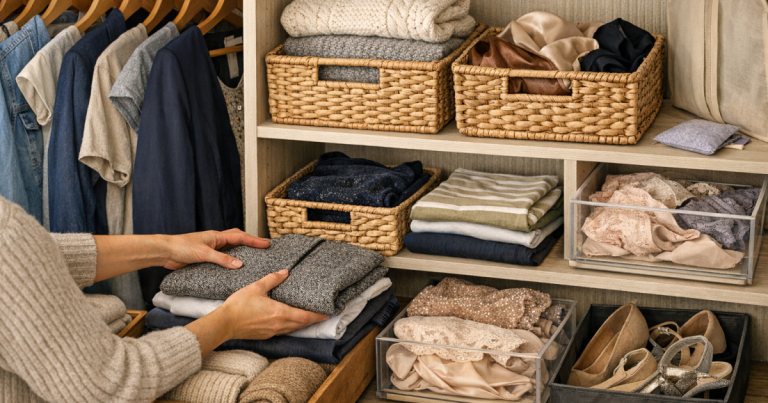
Wool, cashmere-style blends and heavy cotton knits should generally be folded, not hung. Hanging can pull weight through the shoulders and leave bumps or stretched seams. Store jumpers in shallow stacks so the bottom garment is not crushed under a heavy pile. If space allows, divide by thickness rather than colour: bulky winter knits in one area, lightweight cardigans in another.
Never put a damp jumper into a drawer because it feels “almost dry”. Trapped moisture encourages odour and can attract pests. For shape-sensitive pieces, it helps to follow a careful drying routine before storage; see this guide to drying wool jumpers flat without stretching them.
Tailoring, coats and structured garments
Blazers, suits, wool coats and structured dresses need support across the shoulders. Use shaped hangers where the garment weight warrants it, and allow enough room for the sleeve head and lapels to sit naturally. Avoid thin wire hangers for heavier pieces, as they concentrate pressure into narrow points.
Give coats time to air before returning them to the wardrobe after rain, public transport or long wear. A coat that feels dry on the outside can still hold moisture in seams, linings and cuffs. Returning it too quickly to a closed space increases the chance of mustiness.
Delicates, silk-like fabrics and occasionwear
Chiffon, satin, silk and embellished garments need gentle handling and low friction. Avoid rough baskets, exposed zip edges and overfilled drawers. Hang delicate dresses in breathable garment covers if they are rarely worn, but do not seal natural fibres in plastic for long periods if the room is prone to condensation.
For slippery blouses, choose storage that prevents them sliding to the floor and being stepped on or creased. Fold very fragile items with acid-free tissue if they have beading, fine straps or areas likely to snag.
Workwear, schoolwear and sports layers
Clothes that pick up grit, dust, sweat or outdoor smells should not be pushed straight into the main wardrobe. Give them a separate hook, basket or airing space until they are ready to wash or rewear. This is particularly useful in flats and smaller homes where one wardrobe may hold both smart clothing and practical everyday layers.
Plan around damage, not just neatness
A tidy wardrobe can still damage clothes if the system hides the wrong risks. The main threats are pressure, moisture, pests, light and abrasion.
- Pressure damage: overcrowded rails cause crushed collars, flattened sleeves and deep creases that need more steaming or ironing later.
- Stretching: heavy knits and jersey dresses can lengthen when hung for months.
- Moth damage: animal fibres such as wool, cashmere, alpaca and some blends are more vulnerable, especially when stored with skin oils or food traces.
- Mildew and stale smells: damp corners, sealed bags and unventilated wardrobes are common triggers in UK homes.
- Abrasion: sequins, hooks, Velcro-style fastenings and rough denim can rub against finer fabrics.
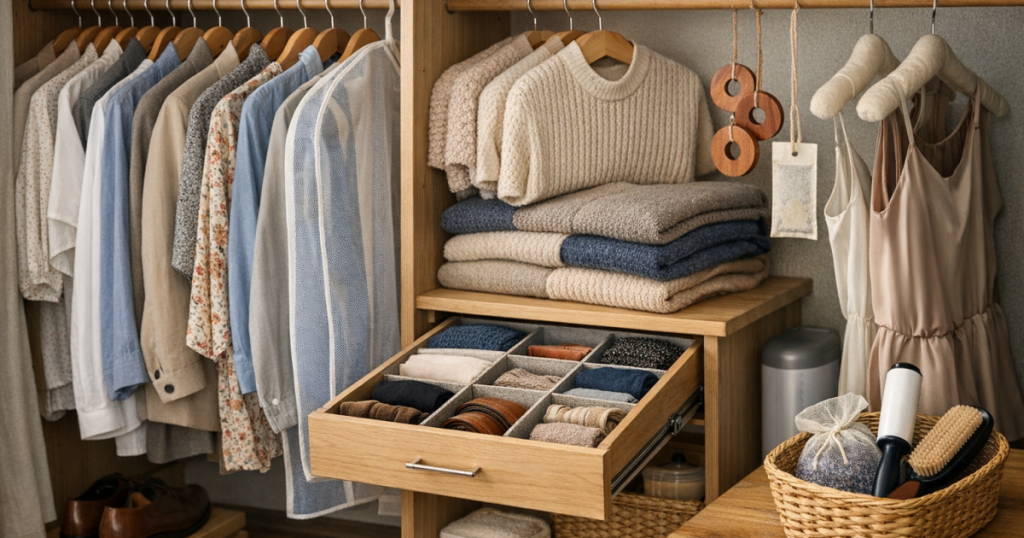
Moth prevention is not just about adding a scent. Clean storage, regular disturbance and checking quiet corners matter more. Cedar can be part of that routine, but it needs to be used thoughtfully and refreshed when the scent fades. For a deeper look at this, read about cedar blocks and moth repellents for wardrobes.
Seasonal storage without creating new problems
Seasonal changes are when wardrobes often become overfull. Winter coats, scarves and jumpers take up far more room than summer dresses and shirts, so simply swapping front-to-back is rarely enough.
Before storing seasonal clothing, make sure each item is genuinely clean and dry. Body oils, perfume, food residue and invisible marks can become more noticeable after months in storage. Fold knits loosely, avoid compressing down-filled garments for long periods, and keep leather, suede and embellished clothing away from airtight plastic if the storage area is cool or damp.
Under-bed bags can be useful for washable cottons and casual layers, but they are not ideal for everything. If using them, do not overpack them until garments are hard and flat. Compression saves space but can set creases and flatten loft in padded items. For wardrobes in spare rooms, open the doors occasionally to refresh the air rather than leaving the space untouched for months.
Hanger, shelf and drawer choices that matter
You do not need a complicated storage system, but the basic components should match the clothes. Hangers should support the garment without stretching it. Shelves should allow stacks to stay shallow. Drawers should open fully enough that clothes are not dragged out from the middle of a pile.
Use these simple rules:
- Wide or shaped hangers: better for coats, blazers and structured jackets.
- Slim flocked hangers: useful for lighter garments that slip, provided they do not pinch the shoulder line.
- Clip hangers: suitable for skirts and trousers when clips are padded or placed over sturdy seams.
- Shelf dividers: helpful for knitwear stacks that slump sideways.
- Breathable garment covers: useful for occasionwear, tailoring and pieces that need dust protection.
- Clear or labelled boxes: better for seasonal accessories than opaque bags that hide forgotten items.
Avoid hanging everything simply because rail space looks available. Drawers and shelves protect some fabrics better than hangers, while rails protect other garments from hard fold lines. Good wardrobe storage planning is about using each space for the fibres and shapes it protects best.
The competing view: should you declutter first?
Decluttering helps, but it is not the whole answer. A small wardrobe with fewer clothes can still cause damage if wool jumpers are hung, damp coats are shut away, or delicate blouses are squeezed beside zips and hooks. Equally, a larger wardrobe can work poorly if it becomes a holding area for half-worn, unwashed and out-of-season garments.
A better sequence is to remove what you do not wear, then assign space according to fabric risk. Keep frequently worn, washable basics within easy reach. Give higher-maintenance garments room to breathe. Store rare-use items where they are protected but still visible enough to be checked.
A simple weekly reset
Wardrobe storage works best when it is maintained in small habits rather than occasional overhauls. Once a week, take two minutes to return stray hangers, remove laundry, air worn jackets and check whether anything has been pushed out of shape. This prevents the slow build-up that leads to crushed rails and forgotten damp clothing.
Dry-clean-only garments also need a pause between wears. Do not trap them immediately under covers after a long day; give them time to air, brush away surface lint and check for marks. If you rely on tailoring, coats or occasionwear, the advice on keeping dry-clean-only clothes fresh between wears is a useful next step.
Questions people ask
Is it better to hang or fold T-shirts?
Most T-shirts are fine folded, especially cotton and jersey styles. Hanging can save drawer space, but it may leave shoulder points on softer fabrics if the hanger is too narrow.
Can clothes be stored in plastic boxes?
Plastic boxes can work for clean, fully dry washable clothing in a dry room. Avoid sealing delicate natural fibres in plastic if the area is prone to condensation or temperature swings.
How much space should be left on a wardrobe rail?
Leave enough room for garments to move slightly when you push them along the rail. If you have to force hangers apart, the rail is too full for good fabric care.
Why do clothes smell musty in the wardrobe?
Common causes include trapped moisture, poor airflow, storing worn clothes with clean ones, or placing wardrobes against cold exterior walls. Air the space and remove anything not fully dry.
Should seasonal clothes be washed before storage?
Yes, where the care label allows. Clean clothing is less attractive to pests and less likely to develop set-in odours or stains while stored.
What stands out
The best wardrobe systems are fabric-aware rather than storage-led. Rails, shelves, drawers and covers all have a role, but they should be assigned according to garment weight, fibre type, frequency of wear and damage risk. If your wardrobe is crowded, musty or hard to use, start by separating hanging from folding needs, then remove moisture traps and give vulnerable fabrics more breathing room.
Once those basics are in place, the wardrobe becomes easier to maintain. Clothes last better, morning dressing is quicker, and delicate or expensive garments are less likely to suffer avoidable damage while doing nothing more than sitting in storage.