Mechanic overalls pick up engine oil, grease, road dirt and sometimes fuel smells that ordinary laundry can spread rather than remove. The aim when you wash mechanic overalls is to lift contamination before it reaches towels, shirts or the drum seals of your washing machine.
A good routine is not complicated, but it does need separation, pre-treatment and a check of the machine afterwards. The most important rule is simple: never treat oily overalls as just another dark wash.
Professional guidance: Heavily contaminated workplace PPE, garments carrying fuel or solvent odours, and clothing exposed to hazardous substances should be handled by a qualified industrial laundry or workplace safety provider to support compliance with UK COSHH, PPE and environmental requirements.
What to know first
- Wash them separately. Oil residue transfers easily to cotton towels, school shirts, underwear and tea towels.
- Pre-treat before the machine. The washing machine should finish the job, not be the first place oil is loosened.
- Check the care label. Cotton, polycotton, hi-vis trims and flame-resistant finishes may have different limits.
- Avoid fabric conditioner. It can leave a coating that traps odour and residue in workwear fibres.
- Do not tumble dry anything that smells of fuel, solvent or oil. Drying heat can set residue and increase fire risk with contaminated fabrics.
How oil residue spreads in the wash
Oil behaves differently from mud or ordinary food stains. It clings to fibres, loosens slowly in warm water and can redeposit onto other fabrics if there is not enough detergent, water movement or rinse time. Once it coats the inside of the drum, door seal or detergent drawer, the next wash can come out smelling faintly greasy even if it looked clean going in.
Mechanic overalls are also usually heavy garments. If the machine is packed tightly, dirty seams, pockets, hems and knees do not get enough movement. That leaves oil trapped in folds, then the rinse water carries a thin film around the load.
Step 1: separate and assess the overalls
Start by keeping garage workwear in its own laundry basket or washable tub. Do not place oily overalls on carpet, upholstered chairs or bedding while waiting to wash them.
Before laundering, check three things:
- Smell: if the garment smells strongly of petrol, diesel, brake cleaner or solvent, do not put it straight into a domestic machine.
- Wet oil: if oil is still liquid on the surface, blot it with disposable paper before washing.
- Fabric type: check whether the overalls are cotton, polycotton, hi-vis, flame-resistant or employer-issued PPE.
Empty every pocket. Screws, cable ties, receipts, oily rags and pens can all make the wash worse. Close zips and hook-and-loop fastenings so they do not abrade the fabric or trap grease inside folds.
Step 2: remove loose dirt before water touches the fabric
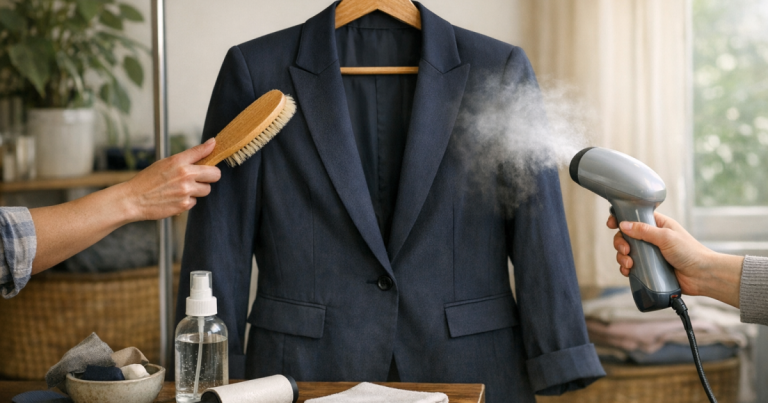
Shake off dry grit outdoors or over a bin. Brush dried mud from hems, knees and cuffs with a clothes brush or old soft nail brush. This reduces the amount of contaminated debris that enters the machine and helps detergent work on oil rather than soil.
Do not scrub aggressively at this stage. Hard brushing can drive oily particles deeper into cotton twill or polycotton weave, especially around knees and elbows where the fabric is already worn.
Step 3: blot heavy oil and pre-rinse separately
If there are glossy oil patches, blot them first with kitchen roll or a clean absorbent cloth you are prepared to discard or wash separately. Press; do not rub. Rubbing spreads the stain sideways and makes the contaminated area larger.
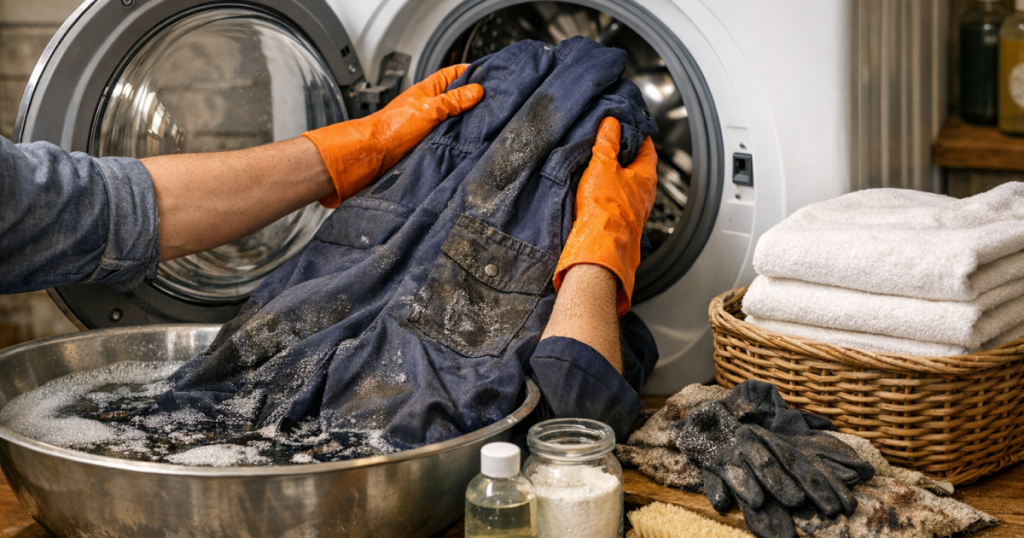
For washable overalls, a separate pre-rinse can help. Use a bucket, utility sink or bowl with warm water if the care label allows it. Agitate the garment by hand, then pour the dirty water away responsibly through the household wastewater system, not onto soil, drains outside or a driveway. Repeat if the water turns visibly grey or oily.
Wear household gloves if the garment is unpleasantly oily. This is not about making the process fussy; it simply stops residue transferring to your hands, taps, door handles and laundry basket.
Step 4: pre-treat grease before the main wash
Apply laundry detergent or a suitable grease-focused stain treatment directly to oily areas such as knees, thighs, cuffs, chest panels and pocket openings. Work it in gently with your fingers or a soft brush, then leave it for the time suggested on the product label. If you need more detail on choosing the right type of treatment, our guide to stain removers for greasy workwear explains the main differences.
For robust, colourfast cotton or polycotton overalls, a mainstream detergent such as Ariel Original Washing Powder is one everyday example of the sort of laundry product people may already have at home. Always check the garment label first, particularly with hi-vis panels, reflective strips or treated workwear.
A small amount of washing-up liquid can be useful for hand pre-treatment on greasy marks, but it should be rinsed out before machine washing. Do not pour washing-up liquid into the washing machine drawer; it can foam excessively and leave residue behind.
Step 5: use the washing machine without contaminating the next load
Wash overalls on their own or with similarly contaminated workwear only. Leave enough space for the garment to move freely; one bulky pair of overalls may be enough for a domestic drum, especially if the fabric is heavy.
Use the warmest temperature allowed by the care label. Many workwear garments tolerate a 40°C wash, while some plain cotton items may allow hotter washing, but do not guess. Hi-vis materials, reflective tape, flame-resistant finishes and logos can be damaged by the wrong temperature or harsh chemicals.
Choose a longer cottons or workwear-style programme rather than a short quick wash. Quick cycles are convenient for lightly worn clothing, but they rarely provide enough time, water movement or rinsing for oily seams and thick fabric. Add an extra rinse if your machine offers one.
Avoid over-dosing detergent. Too little may leave grease behind, but too much can fail to rinse properly and create a sticky film that holds odour. Follow the detergent pack for load size, water hardness and soil level, then adjust cautiously if your machine repeatedly leaves suds.
Step 6: deal with mixed stains sensibly
Mechanic overalls rarely carry oil alone. You may see biro from job sheets, marker pen, rust marks, mud, sweat, coolant marks or adhesive residue. Treating everything as a grease stain can make some marks harder to remove.
- Ink or biro: handle separately before a hot wash, as heat can set it. The same principles used for ink stains on office uniform shirts can help with pocket leaks on workwear.
- Mud: let it dry, brush it off, then wash. Wet scrubbing often spreads clay through the weave.
- Sweat odour: focus on cuffs, underarms and collars with detergent pre-treatment, not fabric conditioner.
- Unknown chemicals: follow workplace instructions rather than experimenting at home.
Step 7: clean the machine after oily workwear
Once the load is finished, do not immediately put in towels, bedding or children’s clothes. First, inspect the drum, door glass and rubber seal. Wipe any visible grime with a damp cloth and a small amount of washing machine-safe cleaner if needed.
Leave the door and detergent drawer open so moisture can escape. If the machine smells oily, run an empty maintenance wash according to the appliance manual. Many machines have a drum clean cycle; if yours does, use the cycle recommended by the manufacturer rather than improvising with harsh chemicals.
Check the detergent drawer too. Oily detergent sludge can sit behind the drawer front and re-enter the next load. Remove and rinse the drawer if your machine manual says it is designed to come out.
Step 8: dry without setting residue
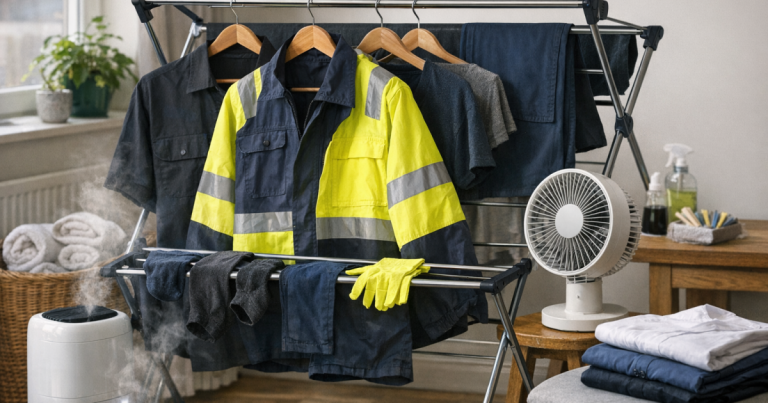
Air drying is the safest default for freshly washed overalls, particularly if there was any fuel or solvent smell before washing. Hang them outside when weather allows, or indoors in a ventilated space on a sturdy airer. Keep them away from direct radiator heat, open flames and enclosed cupboards while damp.
Before using a tumble dryer, smell the garment carefully. If there is any remaining oily, petrol-like or solvent smell, do not tumble dry it. Rewash, rinse again or use a professional workwear laundry route for contaminated PPE.
For general indoor drying principles, the same focus on airflow rather than harsh direct heat applies to many garments; our advice on drying delicates indoors without heat damage is useful when you need to manage damp clothes without relying on high heat.
Checks before the overalls go back to work
Clean overalls should not feel slick, waxy or stiff with detergent. Check high-contact areas: knees, cuffs, pocket edges, waistbands and zip guards. If these areas still feel greasy, repeat pre-treatment and wash again before wearing or storing.
Look for fading, weakened seams and fraying around stress points. Oil and repeated heavy washing can shorten the life of workwear, and damaged overalls may no longer protect clothing underneath properly. For employer-issued kit, report damage rather than repeatedly washing a garment that is no longer fit for use.
Finally, keep the storage separate. Clean workwear should not go back into the same oily bag or boot liner used for dirty overalls. Wipe the laundry basket or use a washable liner so the next clean load is not contaminated before it is worn.
Questions people ask
Can I wash mechanic overalls with other work clothes?
Only if the other items are similarly dirty and can tolerate the same wash. Do not mix oily overalls with towels, underwear, school uniform, office shirts or delicate fabrics.
Why do my clothes smell oily after washing overalls?
The machine may have oily residue in the drum, seal or drawer, or the overalls may have been overloaded and poorly rinsed. Wipe the seal, clean the drawer and run a maintenance wash before laundering normal clothes.
Can I use bleach on greasy overalls?
Chlorine bleach is not a good default for workwear. It can damage colours, trims, reflective details and some treated fabrics. Use a grease-suitable laundry treatment and follow the care label instead.
Should I wash oily overalls hot?
Use the warmest temperature the garment label allows, but do not assume hotter is always better. Heat can set some mixed stains and may damage hi-vis or treated workwear.
What if the overalls still smell of fuel after washing?
Do not tumble dry or store them in a warm cupboard. Rewash separately, increase rinsing, and use a professional workwear laundry route if the fuel or solvent smell remains.
Why it matters
Washing oily overalls properly protects more than the garment itself. It keeps residue away from household laundry, reduces lingering machine odour and helps workwear stay presentable for longer. The reliable routine is separation, pre-treatment, a full wash with enough rinsing, air drying and a quick machine check afterwards.
If the garment is ordinary washable workwear, this routine is usually enough. If it is contaminated PPE, fuel-soaked clothing or workwear exposed to hazardous substances, treat it as a workplace safety issue rather than a domestic laundry challenge.