A dehumidifier can make drying laundry indoors less of a damp, slow process, but only if the room, airer and settings work together. The aim is not to blast clothes with heat; it is to pull moisture out of the air so fabrics can release water more steadily. Used well, it helps reduce condensation, stale smells and the temptation to drape clothes over radiators.
What to know first
- Use a small, enclosed room if you can. A spare room, utility area or box room usually works better than an open-plan living space.
- Keep wet laundry spaced out. A dehumidifier cannot compensate for tightly packed clothes with no airflow between them.
- Close windows and doors while it runs. Otherwise the appliance is trying to dry incoming outdoor air as well as your laundry.
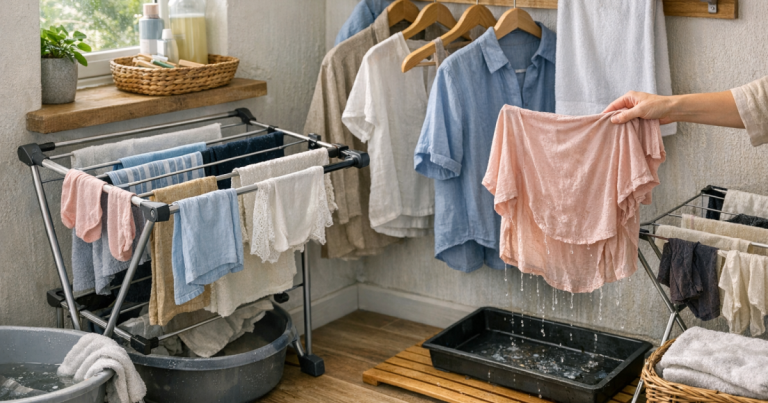
- Spin laundry well before hanging. Less retained water means shorter drying time and less strain on the room.
- Protect fabric shape. Heavy knitwear, wool and delicate garments still need the right drying position, not just drier air.
How a dehumidifier helps laundry dry
Wet clothes dry when moisture moves from the fabric into the surrounding air. If the air is already humid, that movement slows down. A dehumidifier lowers the room humidity, so the air can keep accepting moisture from the garments.
This is different from heating the clothes directly. Warmth can help water evaporate, but indoor drying often fails because the room becomes saturated with moisture. That is why laundry can feel cold, clammy or stale even after several hours on an airer.
When drying laundry indoors with a dehumidifier, think of the appliance as part of a drying system: the washing machine spin, the airer layout, the room size, the airflow and the fabric type all matter. If one part is poor, the results will be slower.
Step 1: Choose the right room
Pick the smallest practical room where you can place the airer without blocking walkways or trapping clothes against walls. A door you can close is useful because the dehumidifier can work on a defined volume of air rather than the whole home.
Avoid putting the airer tight against an external wall, as this can encourage condensation behind garments. Leave space around both the airer and the dehumidifier, and follow the clearance guidance in your appliance manual so vents are not blocked.
Do not run a standard dehumidifier in a bathroom or shower room unless the manufacturer states that the model is suitable for that environment. Keep the appliance on a stable, level surface, away from dripping garments, sinks and splashes.
Step 2: Prepare the laundry before it reaches the airer
The drier the clothes are when they come out of the machine, the easier the job becomes. Use the highest spin speed that is suitable for the garment care label. Towels, cotton bedding and everyday cottons often tolerate a stronger spin than wool, viscose, embellished clothing or delicate synthetics.
Give each item a shake before hanging. This separates layers, opens seams and reduces hard creases. Shirts, school uniform, workwear and cotton T-shirts usually dry better if cuffs, hems and collars are opened rather than folded over the rail.
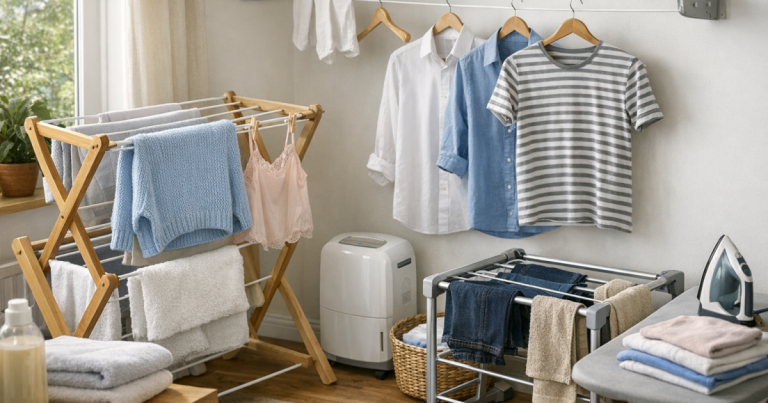
For items that must not be stretched, do not hang them heavily from a narrow rail. Wool jumpers and weighty knits are better dried flat on a mesh rack or towel-covered surface, with the dehumidifier working in the same room to manage moisture. For fabric-by-fabric decisions, the guide to choosing the right drying method for each fabric is a useful next step.
Step 3: Set up the airer for airflow
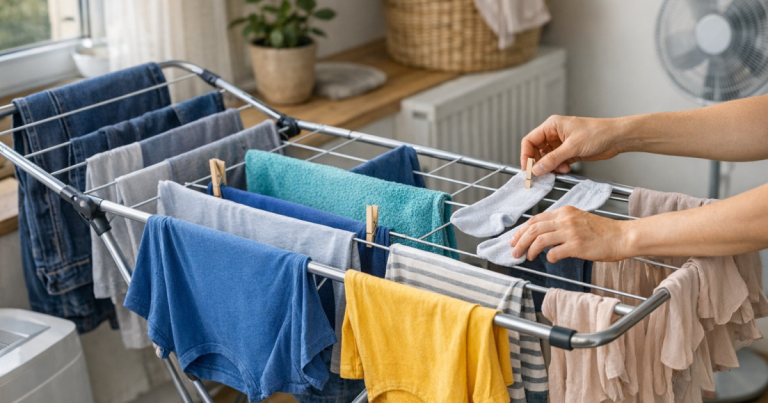
A crowded airer is one of the biggest reasons indoor laundry smells damp. Leave a gap between garments where possible, and put thicker items on the outside rails where air movement is easier. If you have several small items, avoid layering them over each other.
- Towels and jeans: Hang over two rails where possible so the fabric is not folded into one dense strip.
- Shirts and blouses: Use hangers if space allows, with buttons undone and sleeves hanging freely.
- Socks and underwear: Use a small peg hanger or upper rail rather than filling the main drying bars.
- Delicates: Keep them away from rough zips, hooks and Velcro on other garments.
- Heavy knitwear: Dry flat to reduce stretching, reshaping gently while damp.
If your clothes regularly develop a musty smell before they dry, the problem is usually a combination of slow drying, poor airflow and retained detergent or soil. The troubleshooting advice on stopping clothes smelling damp on an airer covers the laundry causes as well as the room setup.
Step 4: Position the dehumidifier properly
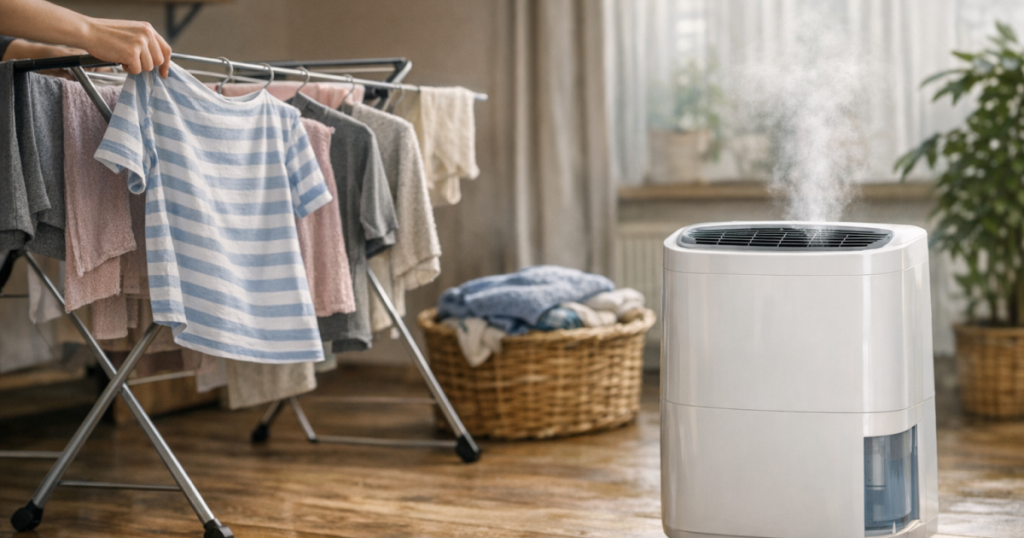
Place the dehumidifier in the same room as the airer, not hidden behind furniture or tucked under hanging clothes. It does not need to touch the airer; it needs access to the damp air around it. Keep fabric clear of the appliance, including long dresses, bedding and towels that might hang down.
If your dehumidifier blows out dry air, angle the appliance so that airflow can circulate around the room rather than hitting one small patch of fabric. Direct airflow can help, but very close, concentrated airflow is not ideal for delicate fibres that need gentle drying.
For a tall winged airer, a position slightly to one side often works better than directly underneath the laundry. For a low rack or flat-drying knitwear, keep the appliance nearby but not so close that loose fibres, labels or lightweight garments are drawn towards the vents.
Step 5: Choose settings that suit the load
Many dehumidifiers include a laundry mode, continuous mode or humidity target. The names vary by model, so check your manual rather than assuming all settings behave the same way. A laundry mode usually prioritises moisture removal for a period of time, while a humidistat setting aims to maintain a chosen room humidity.
For a normal airer load, start the appliance soon after hanging the clothes rather than waiting until the windows steam up. If the model has a timer, use it to run during the wettest early stage, then check progress. Empty the tank before it reaches its automatic cut-off, or use a continuous drain only if it can be routed safely according to the manual.
A separate room thermometer or hygrometer can be helpful, but it is not essential. The practical signs matter too: windows should stay clearer, fabrics should feel progressively lighter and seams should not remain cold and wet long after the rest of the garment is dry.
Step 6: Check fabrics as they dry
Do not treat every garment as finished just because the front panels feel dry. Thick waistbands, pockets, collars, underarms, cuffs and hems hold moisture longer. Turn garments part way through drying if one side is clearly drying faster than the other.
Remove lighter items once dry instead of leaving them in the damp room until everything else is finished. This reduces creasing and stops dry fabrics absorbing moisture from wetter towels or bedding. Fold or hang clean items promptly so they do not develop stale room odours.
For delicate fabrics, handle garments while slightly damp if they need reshaping, then allow them to finish drying gently. Silk, wool, viscose and fine knits can distort if they are left hanging under their own wet weight for too long.
Common mistakes that slow everything down
- Opening a window at the same time: Ventilation can help in some drying situations, but when a dehumidifier is running it usually works best in a closed room.
- Using the largest room available: A bigger space gives the appliance more air to treat, which can slow progress.
- Putting clothes over radiators: This can push moisture into the room quickly, create condensation and risk uneven drying or heat damage.
- Ignoring the washing stage: Overloaded washes, too much detergent and poor rinsing can all contribute to stiff or stale laundry.
- Letting the tank fill: Once the appliance stops, the room humidity can rise again while the laundry is still wet.
How long should you run it?
There is no single correct running time because the load size, spin speed, room temperature, fabric thickness and appliance capacity all change the result. A half load of synthetics will behave very differently from bath towels, denim or cotton bedding.
As a rule of thumb, run the dehumidifier during the first stretch after hanging, when the laundry is releasing the most moisture. Check the load at intervals and remove dry pieces as you go. If seams and waistbands are still damp, keep the room closed and continue until the remaining moisture has cleared.
Do not rely on surface feel alone for items going into drawers. Slightly damp clothes stored in a closed space can lead to musty smells and may encourage mildew on susceptible fabrics.
What about creases?
A dehumidifier can help clothes dry more evenly, but it will not replace good hanging technique. Shake garments out, align seams, smooth collars and avoid letting wet items dry in sharp folds. Shirts and uniforms often need less finishing if they are hung neatly from the start.
If clothes still come off the airer creased, the finishing method matters. Some fabrics respond better to steam, while crisp cotton may need ironing. The ironing and steaming equipment guide explains when each approach is useful for better fabric care.
Helpful questions
Should the dehumidifier face the laundry?
It can face the airer if the airflow is gentle and unobstructed, but it does not need to be extremely close. The priority is circulating dry air around the whole room, not blasting one garment.
Can I leave it running overnight?
Use the appliance only in line with the manufacturer’s instructions. Place it on a stable surface, keep vents clear, empty the tank if needed and avoid running it near dripping clothes or splashes.
Is a heated airer better than a dehumidifier?
They solve different problems. A heated airer adds warmth to the clothes, while a dehumidifier removes moisture from the room. In many UK homes, moisture control is the missing piece.
Why do clothes still smell damp when I use one?
The airer may be too crowded, the washing machine may be overloaded, or items may be going away before seams are fully dry. Check detergent dosing, spin speed and spacing.
Can I dry wool with a dehumidifier?
Yes, but the garment still needs wool-safe handling. Dry it flat, reshape it while damp and avoid hanging heavy wet knitwear from narrow rails.
Main lessons
A dehumidifier works best when the whole laundry setup supports it: a closed room, well-spun clothes, open spacing on the airer and careful handling of slower-drying fabrics. It is not just about switching the appliance on; it is about giving moisture a clear route out of the fabric and out of the room air.
For regular indoor drying, build a simple routine: spin appropriately, hang with gaps, close the room, start the dehumidifier early, check the tank and remove dry items promptly. That small amount of structure can make indoor laundry feel less like a damp-weather compromise and more like a controlled fabric-care process.