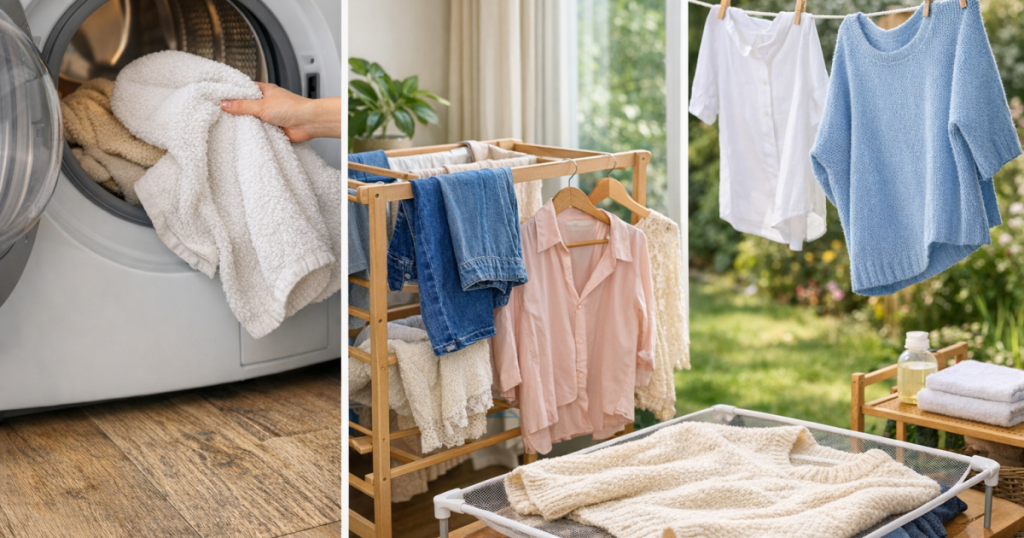
A garment can survive the wash and still be damaged while it dries. Choosing the right drying method for each fabric helps prevent shrinkage, stretching, shine, stiffness and lingering damp smells, especially in UK homes where outdoor drying is not always reliable. The label matters, but fibre type, garment shape and room conditions matter too.
The short version
- Use low heat or no heat when a fabric is delicate, stretchy, structured, embellished or prone to shrinkage.
- Dry heavy knits flat so the weight of the water does not pull them out of shape.
- Air-dry silk, wool, cashmere, viscose and most tailored garments away from direct heat and strong sunlight.
- Tumble-dry only when the care label allows it, and choose the gentlest effective programme.
- Prioritise airflow indoors: damp rooms, crowded airers and closed windows can leave clothes musty and fibres stressed.
Start with the label, then read the garment itself
The care label is the safest starting point because it reflects the fabric, dyes, trims and construction chosen by the manufacturer. A cotton T-shirt and a cotton-lined blazer may contain the same natural fibre, but they should not be dried in the same way. The T-shirt may tolerate a gentle tumble or line dry; the blazer may lose shape if soaked, spun hard or hung while too wet.
Look for three clues before deciding how to dry anything: fibre content, garment shape and finish. Fibre content tells you how heat, weight and moisture are likely to behave. Shape tells you whether hanging will stretch the garment. Finish tells you whether the surface might mark, shine, flatten or crease heavily. That is why a drying method for each fabric should still be adjusted for the actual item in front of you.
Cotton and linen: strong fibres, but not immune to shrinkage
Cotton and linen are often treated as easy-care fabrics, and for everyday towels, bedding, pyjamas and basic T-shirts that is usually fair. They can often handle line drying, airer drying and, where the label permits, tumble drying. The risk is not that these fibres are fragile; it is that heat and over-drying can shrink them, harden them or make creasing worse.
For cotton jersey, shake garments out after washing and reshape seams before drying. This helps stop twisted side seams and stiff hems. A line or airer is usually kinder than a hot tumble cycle. If using a tumble dryer, remove cotton garments when slightly damp rather than bone dry, then finish them on a hanger or airer.
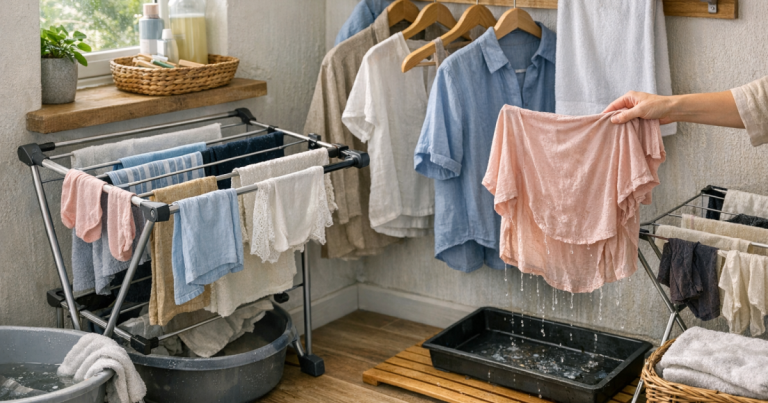
Linen prefers space. Crowding it on an airer can create deep creases that are harder to remove later. Hang shirts and dresses on broad hangers while damp if the structure allows, or drape larger pieces smoothly over a rail. Avoid placing linen directly over a radiator, as fast localised heat can make fibres feel harsh and may set creases.
Wool, cashmere and knitted fabrics: dry flat whenever shape matters
Wool and cashmere need the most shape-aware drying. Wet woollen fibres are vulnerable to felting, stretching and distortion, especially after agitation or heat. A tumble dryer is usually unsuitable unless the care label clearly states otherwise and the appliance has a wool-specific programme that matches the label instructions.
After washing, press water out gently rather than wringing. Roll the item in a clean towel to remove excess moisture, then lay it flat on a dry towel or mesh drying rack. Reshape the shoulders, cuffs, hem and neckline while damp. This is particularly important for jumpers, cardigans, knitted dresses and scarves, where hanging can turn the garment longer and narrower.
Drying flat does take more room, so plan around it. If you regularly wash knitwear at home, keep a dedicated flat drying surface available rather than improvising with narrow chair backs or radiator rails. Once fully dry, storage matters too: the same shape issues continue in the wardrobe, so use hanging versus folding guidance to keep heavier knits from stretching between wears.
Silk, satin and delicate synthetics: avoid heat, pressure and harsh sunlight
Silk is light, strong for its weight, and surprisingly easy to damage when wet. High heat, pegging marks, strong sun and rough surfaces can all spoil the finish. The safest approach is usually to blot excess water with a towel and hang or lay the garment to air-dry away from direct sunlight and radiators.
For silk blouses, camisoles and dresses, use a smooth hanger that does not leave shoulder points. Fasten buttons or closures so the garment sits naturally. Avoid tumble drying unless the label specifically allows it, which is uncommon for many silk items.
Satin describes a weave rather than a fibre, so check whether it is silk, polyester, acetate or a blend. The shiny surface can mark if pressed against pegs, rough airers or crowded laundry. Drape satin garments smoothly and give them enough room for air to move. Lightweight synthetic delicates often dry quickly, so heat rarely gives a meaningful benefit.
Viscose, modal and bamboo blends: treat wet garments as vulnerable
Viscose, modal, lyocell and many bamboo-labelled fabrics can feel soft and fluid, but they often become weaker and heavier when wet. That combination makes them prone to stretching if hung carelessly. Dresses, wide-leg trousers and long tops are the main risk because the damp fabric pulls downwards.
Reshape these garments immediately after washing. For light tops, a hanger may be fine if the shoulders are supported and the label allows it. For heavier or longer pieces, dry flat at first or drape across several bars of an airer so the weight is spread. Avoid twisting to remove water, as it can leave permanent-looking distortions or rope-like creases.
Heat can also encourage shrinkage or texture changes in viscose-rich garments. If a care label permits tumble drying, use caution and choose a low setting, but air drying is often the safer routine for keeping drape and length consistent.
Denim, canvas and heavy cotton: manage weight and stiffness
Jeans, chore jackets, canvas trousers and heavyweight overshirts can take a long time to dry. Their thickness makes them vulnerable to trapped moisture, particularly around waistbands, pockets, seams and hems. Hanging them in a cold, still room may leave them damp for too long, while high tumble heat can increase shrinkage, fading and stiffness.
Turn dark denim inside out to protect colour from sun and abrasion. Shake garments well, smooth the legs or sleeves, and hang from the waistband or over a sturdy rail. If drying indoors, separate heavy items from lighter laundry so they do not block airflow. A short, label-approved low-heat tumble to remove excess moisture can be useful for robust cottons, followed by air drying to finish.
Do not fold heavy damp denim over a narrow airer bar for days. The folded area dries slowly and can develop a musty smell. Spread the fabric over multiple bars or rotate it during drying so seams and pockets are exposed to air.
Sportswear, swimwear and elastane blends: protect stretch and recovery
Elastane, Lycra and similar stretch fibres dislike high heat. The fabric may not fail instantly, but repeated hot drying can reduce recovery, leaving waistbands, leggings, base layers and swimwear feeling baggy or tired. Air drying is usually the safest option.
After washing sportswear, remove it promptly, shake it out and hang it where air can circulate. Avoid radiators, heated towel rails and hot tumble cycles. For padded sports bras or structured activewear, reshape cups and panels before drying. Swimwear should be rinsed after use, gently pressed in a towel and dried away from direct sun to help protect elasticity and colour.
Technical fabrics can also hold odour if they dry too slowly. The solution is not more heat; it is better airflow, prompt washing and avoiding overcrowded drying spaces.
Coats, tailoring and lined garments: dry for structure, not just speed
Tailored jackets, lined skirts, wool coats, blazers and structured trousers are not just pieces of fabric. They contain linings, interfacings, shoulder shaping, padding, seams and sometimes bonded layers. Even when the outer fabric seems washable, drying the garment badly can cause puckering, bubbling, sagging or distorted shoulders.
For washable lined garments, support the shape as they dry. Use a broad hanger, smooth the lining into place and keep the garment away from direct heat. Heavy coats should not be hung soaking wet on a weak hanger, as the shoulders may stretch and the lining may pull. Remove as much water as the label allows during the wash programme, then dry slowly with good ventilation.
If a coat or tailored item is dry-clean only, do not try to solve drying at home after a full wash. Spot cleaning, airing and brushing may be safer between professional cleans.
Indoor drying without musty smells or fabric stress
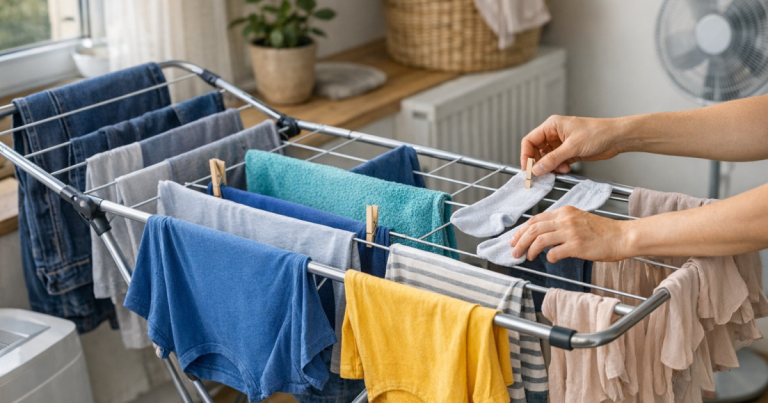
UK weather often makes indoor drying unavoidable, but the room setup affects fabric care as much as the airer itself. Clothes need moving air, space between garments and a route for moisture to leave the room. A tightly packed airer in a cold bedroom can keep fabrics damp for too long, increasing odour and encouraging deep creasing.
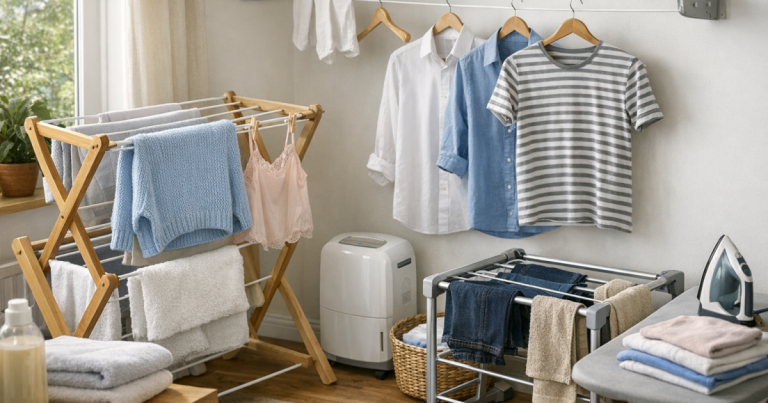
Open a window for short periods when practical, use an extractor fan in suitable rooms, and position the airer away from walls so air can circulate. A dehumidifier can help in damp homes, but the main principle is simple: dry steadily, not aggressively. For a fuller routine, see this guide to drying clothes indoors without damaging fabrics.
Keep laundry loads realistic. One overloaded wash may look efficient, but it often creates a slow, cramped drying session where shirts crease, towels stay damp and delicates get buried. Smaller loads can be kinder to clothes and easier to manage in flats, shared houses and homes without outdoor space.
Matching fabric to drying choice
- Cotton T-shirts: reshape, air-dry or use a low tumble setting if the label allows; avoid over-drying.
- Linen shirts: hang damp with space around them; smooth seams and collars before they dry.
- Wool jumpers: press water out, roll in a towel and dry flat in shape.
- Cashmere scarves and knitwear: dry flat away from radiators and direct sun.
- Silk blouses: blot gently and air-dry on a smooth hanger or flat towel, depending on shape.
- Viscose dresses: support the weight while damp; dry flat or draped over several bars.
- Jeans: turn inside out, hang with pockets exposed and avoid excessive heat.
- Sportswear: air-dry promptly away from direct heat to protect stretch fibres.
- Tailored jackets: support structure on a broad hanger and avoid soaking or direct heat unless the label clearly permits washing.
Build a drying routine that suits your home
The best method is easier to follow when your laundry area is set up for it. Keep hangers, a towel for rolling knitwear, enough pegs, a sturdy airer and a clear flat-drying space within reach. If everything is improvised, delicate items are more likely to end up stretched over a radiator or left in the drum too long.
Separate laundry by drying behaviour as well as colour. Heavy cottons, delicates, knitwear and synthetics all dry at different speeds. Grouping similar items together makes it easier to choose the right airer space, hanger support or tumble setting. For a more organised home workflow, it is worth reviewing how to set up a laundry area that protects clothes.
Questions people ask
Is air drying always better than tumble drying?
Not always. Air drying is gentler for many fabrics, but slow drying in a cold, damp room can cause musty smells and heavy creasing. If the care label permits tumble drying, a low or gentle setting can be useful for robust items, especially when finished with short air drying.
Can I dry clothes on radiators?
It is usually not the kindest method. Direct heat can stiffen cotton, distort synthetics, damage elastic and create uneven drying. It can also increase indoor moisture if the room is poorly ventilated. Use an airer with good airflow instead.
Why do some clothes shrink even when washed correctly?
Drying heat is a common cause. Cotton, wool, viscose and blends can change size or texture when exposed to high heat or over-drying. The wash may be gentle, but a hot tumble cycle can still cause damage.
Should shirts be dried on hangers or an airer?
Many shirts dry well on hangers if the fabric is not too heavy and the hanger supports the shoulders. Smooth the collar, placket and cuffs while damp. For stretchy or very fluid fabrics, draping over an airer may prevent shoulder marks.
How do I stop towels making everything else dry slowly?
Dry towels separately where possible. They hold a lot of moisture and block airflow when packed among lighter garments. Give them more space, shake them out well and avoid wrapping them around delicate or quick-drying fabrics.
Main lessons
Good drying is not just about getting clothes dry quickly. It is about controlling heat, weight, airflow and support so fibres keep their size, shape and feel. Cotton and linen need space and moderate heat, wool and cashmere need flat drying, silk needs gentle air drying, viscose needs support while wet, and elastane blends need protection from heat.
Once you understand how each fibre behaves, choosing the safest drying method becomes much more predictable. The right drying method for each fabric will protect colour, stretch, drape and structure, while making laundry day easier to manage in a typical UK home.