Jumpers can lose their shape quickly when they are wet, especially if they are wool, cashmere, alpaca or a loose cotton knit. The safest way to dry jumpers flat is to support the whole garment, remove excess water first, and reshape it before the fibres set. A good flat-drying routine prevents sagging shoulders, stretched hems and sleeve length changes without needing harsh heat.
The short version
- Never hang a wet jumper from a hanger, line or clothes horse rail, as the weight of the water can stretch the shoulders and body.
- Press water out gently with a towel rather than wringing or twisting the knit.
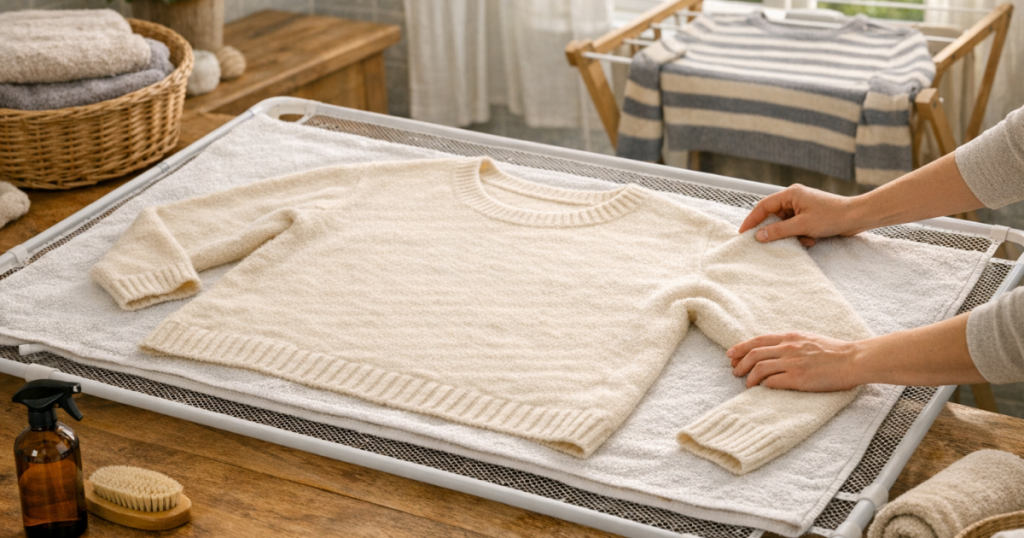
- Lay the jumper on a dry towel or mesh drying surface with the shoulders, hem and sleeves supported.
- Reshape the jumper while damp, checking the cuffs, neckline, side seams and ribbing.
- Use airflow and room ventilation rather than direct heat from a radiator or tumble dryer.
Why jumpers stretch when drying
Knitwear behaves differently from woven shirts or denim. Knitted loops can expand under water weight, and natural fibres such as wool and cashmere become more vulnerable when saturated. A jumper that feels only mildly heavy in your hands can pull down significantly if it is hung from two narrow points on a clothes airer.
Stretching usually appears in a few predictable places: hanger bumps at the shoulders, a longer body, loose cuffs, a wavy hem or sleeves that suddenly cover the hands. Fine-gauge merino and cashmere can distort subtly, while chunky jumpers may stretch more dramatically because they hold more water.
Heat adds another problem. Direct heat can dry one area faster than another, encouraging uneven tension. With wool, excessive heat and agitation can also contribute to felting or shrinkage. Flat drying is not about being fussy; it is about letting the garment dry in its intended shape with as little strain as possible.
Step 1: Remove water without twisting the fibres
Start as soon as the jumper has finished washing or hand rinsing. Support it with both hands when lifting it from the basin or machine, rather than grabbing it by the shoulders. If it is hand-washed, let water drain through the knit for a moment over the basin before moving it.
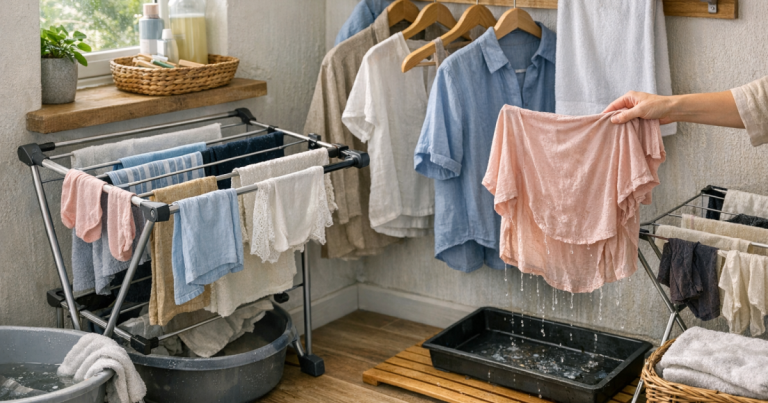
Lay a large clean towel on a table, worktop or floor. Place the jumper on the towel, smooth it roughly into shape, then roll the towel and jumper together from one end to the other. Press down along the roll with your hands to transfer moisture into the towel. Do not twist the roll as though wringing out a cloth; the aim is pressure, not torque.
If the jumper is still very wet, repeat with a second dry towel. This extra towel step often cuts drying time noticeably and makes the garment much easier to handle without stretching. It is especially useful for thick lambswool, fisherman-style knits, cotton jumpers and ribbed cardigans.
Step 2: Choose a flat drying surface that supports the whole jumper
The best surface is flat, clean and well ventilated. A mesh drying rack is ideal because air can reach the underside, but a dry towel on top of a clothes airer, table or spare bed can also work. If using a towel, replace it when it becomes damp so the jumper is not sitting in trapped moisture for hours.
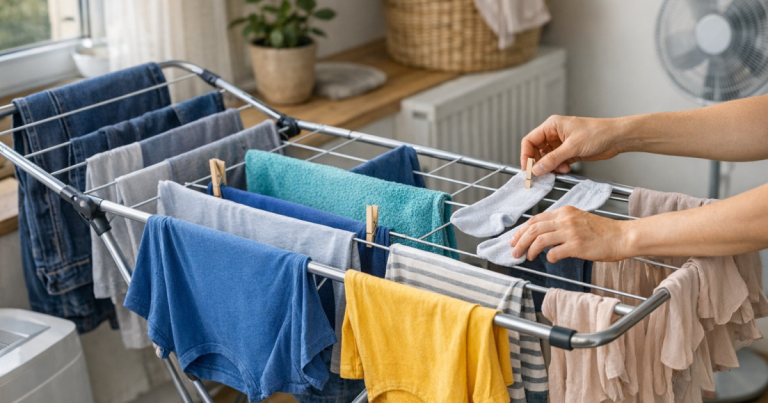
Avoid narrow rails pressing across the wet knit. If you only have a standard airer, spread a towel across several rails to create a wider platform, then lay the jumper on top. The towel prevents rail marks and spreads the garment weight more evenly.
Do not dry a jumper directly on a radiator, heated towel rail or sunny windowsill. These can create hot spots, stiff patches, fading or uneven drying. A warm room with moving air is much safer than a hot surface. If indoor humidity is high, the advice in using a dehumidifier when drying laundry indoors is a useful next step for speeding drying without cooking the fabric.
Step 3: Reshape the jumper while it is damp
Once the jumper is lying flat, take a minute to shape it properly. This is the part many people skip, but it makes the biggest difference to the final fit.
- Shoulders: Align the shoulder seams so they sit naturally, not pulled outwards or bunched up.
- Sleeves: Lay sleeves straight or slightly angled down, matching the original sleeve shape. Do not let cuffs dangle over the edge.
- Body: Smooth from the centre outwards, keeping side seams straight and the hem level.
- Neckline: Gently pat the neckline into shape. Do not tug a crew neck wider to make it look neat.
- Ribbing: Nudge cuffs and hems back into a compact shape if they have relaxed during washing.
If you know the jumper tends to grow, use another similar jumper that still fits well as a visual reference. Lay the damp jumper to match the general outline, without pulling aggressively. For valuable wool or cashmere pieces, you can also take a quick measurement before washing, such as body length and sleeve length, then reshape to those measurements while damp.
Step 4: Improve airflow without disturbing the shape
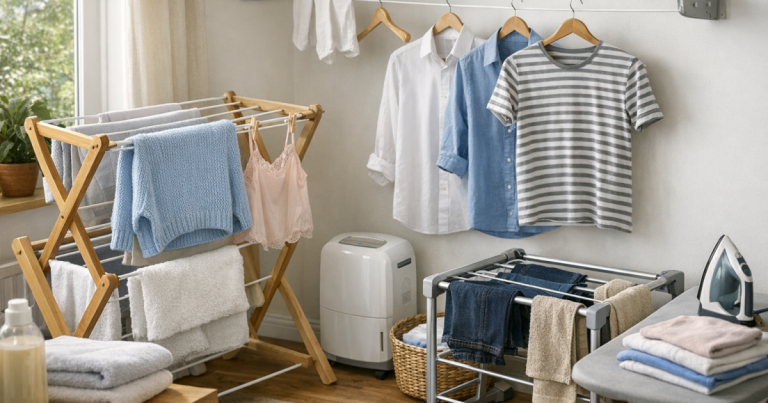
Flat drying is slower than hanging, so airflow matters. Leave space around the drying surface and keep the room reasonably ventilated. Open a window briefly when weather allows, run an extractor fan nearby, or use a dehumidifier in the same room. Avoid pointing a strong fan directly at one small area of the jumper, as this can dry patches unevenly.
After several hours, check the towel underneath. If it feels wet, swap it for a dry one. When the top feels mostly dry but the underside is still cool and damp, carefully turn the jumper over. Support the whole garment as you lift it, rather than picking it up by the shoulders. Reshape it again after turning.
If clothes often take too long to dry indoors, damp odours can develop before the fibres are fully dry. The causes are usually trapped moisture, low airflow, overcrowded airers or laundry being left too wet after washing. For a wider troubleshooting routine, see how to stop clothes smelling damp on an airer.
Fabric-by-fabric checks
Wool and merino
Wool should be handled gently when wet. Use cool water, avoid agitation, and dry flat away from direct heat. Merino can look deceptively light, but fine fibres can still stretch at the shoulders and hem if hung. Reshape ribbed cuffs and necklines while damp.
Cashmere
Cashmere benefits from slow, supported drying. Roll it carefully in a towel and avoid rough surfaces that could encourage pilling. Do not peg or clip it, even at the hem. Once dry, fold it rather than hanging it in the wardrobe.
Cotton knitwear
Cotton can become very heavy when wet and may grow in length. It can often tolerate washing better than fine wool, but it still should not be hung while saturated. A second towel roll is helpful because cotton holds a lot of water.
Acrylic and synthetic blends
Synthetic jumpers may dry faster, but they can still take on rail marks or shoulder distortion. Keep them flat until they are at least mostly dry. Avoid high heat, which can affect texture and elasticity.
Common mistakes that stretch jumpers
- Hanging from a hanger: This concentrates weight at the shoulders and often causes visible bumps.
- Drying over one rail: Folding a wet jumper over a single airer rail can create a crease and pull the body out of shape.
- Wringing after washing: Twisting can distort knitted loops and damage delicate fibres.
- Using direct radiator heat: Fast heat can dry unevenly and may make wool feel harsher.
- Leaving cuffs unsupported: Dangling cuffs can stretch sleeves, especially on chunky knits.
- Putting away slightly damp knitwear: Even a small amount of remaining moisture can lead to musty smells or moth-friendly storage conditions.
How to tell when a jumper is fully dry
Touch alone can be misleading because wool and cotton may feel cool even when nearly dry. Check thicker areas such as seams, cuffs, collars and underarms. Press a clean dry hand or tissue against these spots; if there is a cool damp feel or any moisture transfer, leave the jumper out longer.
Turn the jumper over at least once during drying. The underside can remain damp if it has been sitting on a towel, even when the top looks finished. Thick ribbing and roll necks often need extra time. Only fold and store the jumper when every part feels dry, including the dense seams.
Good storage matters after drying, too. Fold knitwear along natural lines and store it in a drawer, shelf or breathable bag rather than hanging it. If your wardrobe tends to get crowded, organising a wardrobe by fabric, wear and season can help keep freshly dried jumpers from being crushed or misshapen.
Common questions
Can I dry jumpers flat on a normal towel?
Yes, a normal clean bath towel works well, provided you change it when it becomes damp. For faster drying, place the towel over an airer or rack so some air can circulate underneath.
How long does a jumper take to dry flat indoors?
Drying time depends on fibre, thickness, spin speed, room temperature and humidity. Fine merino may dry within a day, while thick cotton or chunky wool can take longer, especially in a cool UK home in winter.
Should I button or zip a cardigan before drying it flat?
Fasten a few buttons or the zip loosely if it helps the front edges sit evenly, but do not pull the cardigan tight. Align the placket, hem and side seams before leaving it to dry.
Can I use pegs on a wet jumper?
Pegs are best avoided on wet knitwear. They can leave marks and create small stretched points where the damp fabric hangs from the clip.
What if my jumper has already stretched?
Rewash or dampen it gently, roll out excess water, then reshape it flat to the intended outline. This can improve mild stretching, although severe distortion may not fully reverse.
What stands out
The safest routine is simple: remove water with towels, support the whole jumper, reshape it while damp, and dry it with airflow rather than heat. Once you build this into your laundry setup, flat drying becomes less of a special treatment and more of a normal step for keeping knitwear wearable, neat and comfortable for longer.