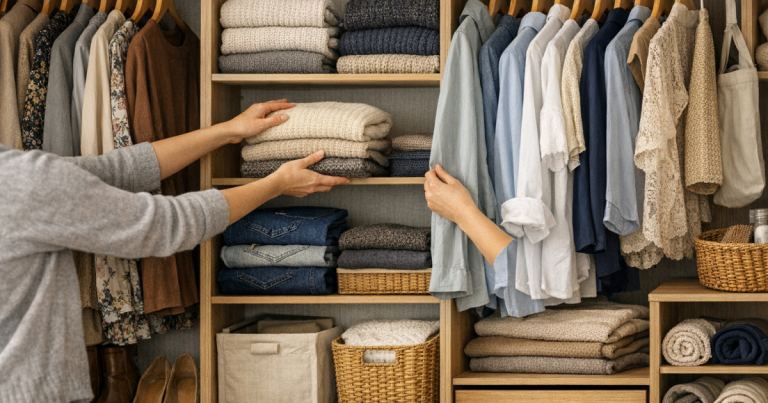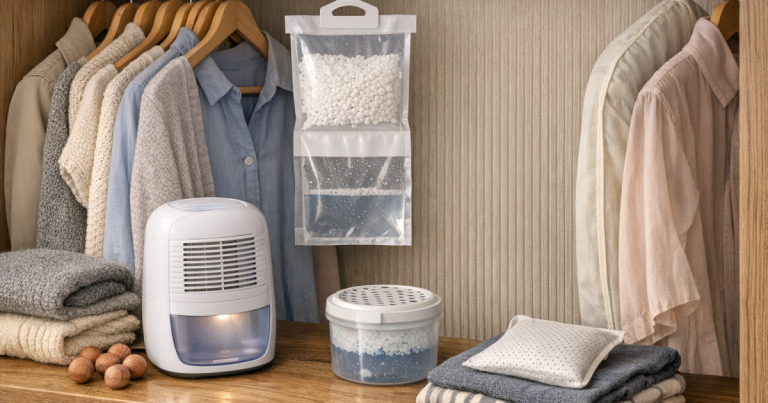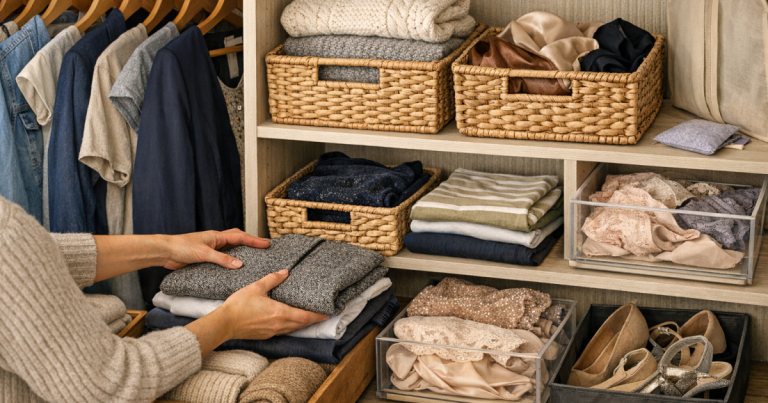
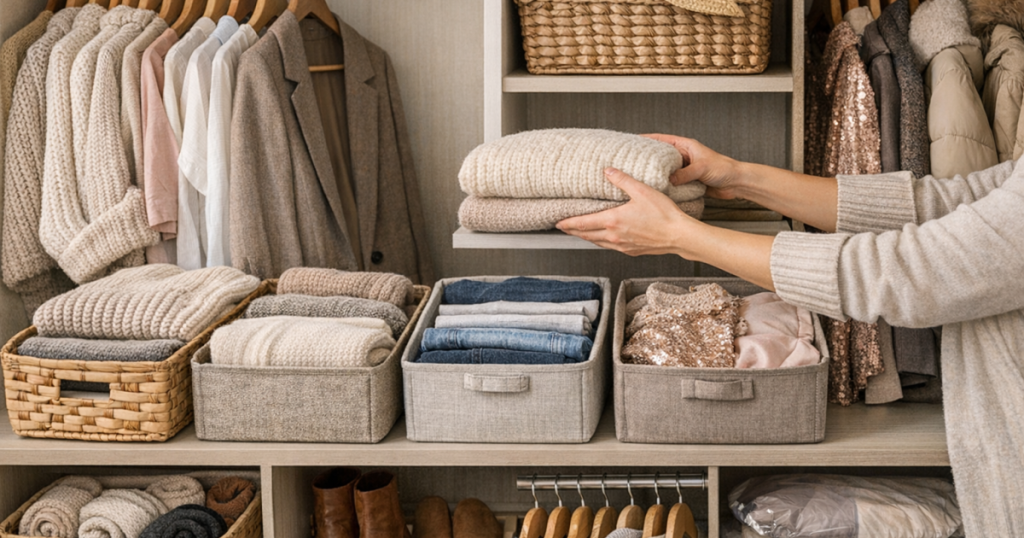
A wardrobe works better when it reflects how clothes behave, not just where they fit. The most reliable way to organise a wardrobe is to sort by fabric first, then by how often you wear each item and the season it belongs to. That gives delicate fibres enough space, keeps everyday outfits easy to reach and stops long-term storage becoming a hidden source of creases, odours or moth damage.
Main points
- Group clothes by fabric type before colour or outfit style, because wool, silk, denim and synthetics all need different handling.
- Keep high-wear items at eye level or in the easiest drawers, with occasional and formal pieces placed further back or higher up.
- Rotate seasonal clothes rather than cramming everything into one rail all year.
- Fold heavy knitwear, hang structured garments, and give delicate fabrics breathable protection.
- Review the system every few months so it stays useful rather than becoming another cluttered space.
Start with fabric, not colour
Colour-ordering looks tidy, but it is not always the best starting point for garment care. A silk blouse, a wool jumper and a cotton shirt may all be navy, yet they need different storage. Sorting by fabric helps prevent stretching, crushing, shine marks, snagging and stale smells.
A useful first pass is to divide clothes into broad fabric families:
- Knitwear and wool: fold rather than hang, especially jumpers, cardigans and heavier merino or lambswool pieces. Hanging can stretch shoulders and distort the shape.
- Silk, satin, lace and fine viscose: keep away from rough zips, hook-and-eye fastenings and heavy seams. These fabrics benefit from smooth hangers or breathable garment bags.
- Cotton shirts, workwear and uniforms: hang if they crease easily, or fold if they are casual T-shirts and jersey tops.
- Denim and heavy twill: fold or hang on sturdy hangers, but avoid pressing heavy jeans against delicate items.
- Outerwear and structured tailoring: allow room around shoulders and use broad hangers where possible, so jackets do not collapse or crease.
- Sportswear and synthetics: keep clean and completely dry before storing, as trapped perspiration and moisture can lead to lingering odours.
If you have limited space, do not try to create perfect categories. Even three zones — delicate, everyday and bulky — will make the wardrobe easier to maintain.
Build the daily-use zone first
The best storage system is the one you can repeat on a tired weekday morning. Put your most-worn clothes where your hands naturally go: eye-level rail space, the top drawer, or the most accessible shelf. This usually includes work shirts, school uniform, everyday trousers, favourite knitwear, base layers and clothes you reach for several times a week.
Keep the daily-use zone deliberately simple. If you wear something constantly, it should not live behind a garment cover, in a vacuum bag or under a stack of occasionwear. Hard-to-reach storage is better reserved for out-of-season or rarely worn pieces.
For a typical UK household wardrobe, a practical layout might look like this:
- Eye-level rail: shirts, blouses, dresses, jackets and trousers worn weekly.
- Accessible drawer or shelf: folded T-shirts, jumpers, leggings, pyjamas and base layers.
- Lower rail or side section: less frequent items, such as formalwear, spare workwear or smart coats.
- Top shelf: seasonal storage bags, spare bedding textiles if needed, or occasion pieces in breathable covers.
Try not to make the easiest space the place where “everything currently clean” gets pushed. When high-wear clothes have a fixed place, laundry is quicker to put away and outfits are easier to find.
Match the storage method to the fabric
Hangers, shelves and bags all protect garments differently. The right choice depends on weight, structure and surface texture.
Fold heavy or stretchy pieces
Jumpers, knitted dresses, sweatshirts and some jersey garments are usually safer folded. Use shallow stacks so the bottom item is not permanently crushed. If a pile is taller than about 20 cm, it tends to become awkward to use and the clothes underneath are more likely to be forgotten.
Hang clothes that need shape
Shirts, blazers, coats, pleated skirts and tailored trousers often benefit from hanging. Avoid wire-thin hangers for structured garments, as they can leave shoulder points. For delicate tops, smooth hangers reduce friction and help prevent snags.
Cover selectively, not automatically
Garment covers are useful for silk dresses, eveningwear, suits, wool coats and special-occasion outfits, but covering everything can make daily dressing slower. Breathable cotton or non-woven covers are usually better for longer storage than fully sealed plastic covers, which can trap moisture if the garment is not completely dry.
For longer storage, it is worth understanding the differences between breathable garment bags, zip storage cases and sealed compression styles. Our guide to wardrobe storage bags for wool, knitwear and delicates explains which formats suit different fabric types.
Use season as a rotation, not a dumping ground
Seasonal sorting should make your active wardrobe smaller and easier to use. It should not become a hidden pile of creased clothes that are unpleasant to unpack later.
At the start of each season, remove garments you are unlikely to wear for several months. In spring, that might mean heavy wool coats, thick scarves and thermal layers. In autumn, it might mean linen shirts, light cotton dresses and holiday clothing. Clean items before storing them, because body oils, food marks and deodorant residue can attract pests or become harder to remove over time.
A simple seasonal rotation can follow this order:
- Wash or air garments before storing, following the care label.
- Check pockets, fasten zips and close buttons to reduce catching.
- Fold knitwear and place heavier items at the bottom of a storage bag or box.
- Keep delicate trims, sequins and embroidery away from rough fabrics.
- Label storage bags by season and fabric type, such as “winter wool” or “summer linen”.
If you want a deeper routine for garments that spend months out of use, the guide to seasonal clothes storage covers cleaning, airing and protection between wears.
Separate clean, worn-once and laundry-bound clothes
Many wardrobes become messy because there is no clear place for clothes that are not dirty enough to wash but not fresh enough to put back with clean garments. This is especially common with jeans, wool jumpers, overshirts, school jumpers and work trousers.
Create a small “worn once” area outside the main clean section. This could be a single hook, a rail end, a valet stand or one labelled basket. The point is to stop lightly worn clothes being dropped on a chair or mixed into freshly washed stacks.
Keep the rules simple:
- Anything with sweat, food marks, dampness or strong odour goes to the laundry basket.
- Wool and denim that are still fresh can be aired before returning to their proper place.
- Delicates should not be left crumpled, even for a day, as fine fibres crease and distort more readily.
- Uniforms and workwear should have a reliable reset point so mornings are not spent searching for missing pieces.
Give wool and natural fibres extra protection
Wool, cashmere, silk and other animal-based fibres deserve a little more attention because moth larvae are attracted to protein fibres, especially when garments contain traces of perspiration or food. Storage will not solve an existing infestation on its own, but clean, well-spaced garments are easier to inspect and protect.
Keep wool folded in breathable bags or drawers, not squeezed into damp corners. Avoid storing wool directly next to dirty footwear, damp coats or laundry baskets. If you use cedar, remember it is part of a wider routine rather than a complete solution; we explain this in more detail in our piece on whether cedar balls protect wool clothes from moths.
Every few weeks, disturb wool stacks gently, check seams and folds, and air pieces that have been stored for a while. Moths prefer dark, undisturbed areas, so regular movement helps you spot problems earlier.
Make the layout visible and repeatable
A good wardrobe arrangement should reduce decisions. If you need to open three bags to find one cardigan, the system is too complicated. Visibility matters because clothes that cannot be seen are less likely to be worn and more likely to emerge creased, musty or out of shape.
Use labels where they genuinely help: “work shirts”, “winter wool”, “occasionwear” and “sports layers” are more useful than vague labels such as “miscellaneous”. Clear-front boxes can help with sturdy folded items, but breathable storage is better for many natural fibres. Drawer dividers are useful for small pieces such as scarves, tights, belts and camisoles, particularly when these items would otherwise snag on zips or hooks.
Leave a little breathing room on the rail. Clothes packed tightly together crease faster and dry more slowly if they have been returned slightly cool from ironing or airing. If hangers cannot move from side to side, remove something or rotate a seasonal section out.
A simple order that works in real wardrobes
If you want to reorganise without emptying the entire room, work in passes rather than attempting a perfect overhaul in one afternoon.
- Pass one: remove anything that is clearly laundry, repair, donation or out of season.
- Pass two: group remaining clothes by fabric family: wool and knitwear, delicates, cotton basics, denim, tailoring, sportswear and outerwear.
- Pass three: move weekly wear into the easiest spaces and occasional wear into less accessible areas.
- Pass four: fold, hang or cover each group according to fabric behaviour.
- Pass five: label seasonal storage and set a reminder to review it when the weather changes.
This is also the point to organise a wardrobe around the life you actually have, not an idealised version of it. If you wear a uniform five days a week, uniform pieces need prime space. If you work from home, smart tailoring might not need the centre rail. If you have delicate occasionwear, it may need fewer items around it rather than more hangers.
Common questions
Should I organise by colour at all?
Colour sorting can be useful within each fabric or wear category, but it should not be the first priority. Fabric type and frequency of use do more to prevent damage and keep the wardrobe functional.
Is it better to hang or fold dresses?
Structured cotton, linen and tailored dresses are usually fine on hangers. Heavy knitted dresses are better folded, and delicate embellished dresses may need breathable covers with enough space around them.
How often should I rotate seasonal clothes?
Twice a year works for many UK wardrobes, usually around spring and autumn. Add a smaller mid-season check if your wardrobe is compact or your workwear changes with the weather.
Can I store clean clothes in plastic boxes?
Plastic boxes can work for sturdy, fully dry garments kept in a dry area, but they are not ideal for every fabric. Natural fibres and long-term storage often benefit from breathable bags or covers.
What should not go back into the wardrobe?
Do not put away damp clothes, items with food marks, strong odours, moth damage, loose dye transfer or garments needing repair. Deal with those separately before they affect nearby fabrics.
What to remember
The most useful wardrobe is not the neatest-looking one for a single afternoon; it is the one that protects fabric and makes daily dressing easier. Start with fabric behaviour, give high-wear clothes the easiest access, and rotate seasonal pieces before the rail becomes overloaded. Small decisions — folding knitwear, separating worn-once clothes, airing wool and covering delicates selectively — make a noticeable difference to how clothes look, smell and last.