Down jackets lose warmth when the filling sticks together, so the washing stage matters, but the drying stage matters even more. The safest way to wash a down jacket is to use a gentle cycle, a down-suitable cleaner and a long, patient drying process that restores loft rather than flattening it. Check the care label first, because some fashion jackets, waxed finishes, leather trims or bonded details may need a different approach.
Clumping is usually caused by trapped water, leftover detergent, too much agitation or drying that stops before the down is fully aired through. The aim is not just to get the outer fabric clean, but to separate the feather clusters again so the jacket keeps its insulation.
What to know first
- Use a cleaner made for down where possible, rather than ordinary laundry detergent.
- Avoid fabric conditioner, stain-removal scrubbing and heavy spin cycles unless the label specifically allows them.
- Wash one down jacket at a time so it can move freely in the drum.
- Rinse thoroughly, because residue can make down feel flat or greasy.
- Dry slowly on low heat, pausing regularly to shake and separate the filling by hand.
- Do not store the jacket until every baffle feels dry, light and springy.
Before washing: check whether it should be washed at home
Start with the care label, not the outside fabric. Many outdoor-style down jackets can be machine washed, but not every padded coat is built the same way. Look for instructions on temperature, tumble drying, bleaching, dry cleaning and whether the garment has removable trims.
If the label says dry clean only, do not treat it like a standard washable jacket. A dry cleaner is better placed to assess construction, trims and finishes. For garments that only need odour control or a light refresh, use lower-risk methods between professional cleans; our guide to keeping dry-clean-only clothes fresh between wears explains safer options.
Also inspect the jacket before it goes near water. Repair loose stitching, open seams or leaking down first. Washing can make weak seams worse, and a small tear can quickly become a feather trail inside the machine. Empty pockets, remove detachable faux fur or leather trims if the label allows, fasten zips, close hook-and-loop tabs and loosen drawcords so they do not snag.
Choose the right cleaner
Down needs a cleaner that rinses cleanly and does not leave the filling coated. Specialist products such as Nikwax Down Wash Direct or Grangers Down Wash are common choices for down-filled jackets, but you should still read both the garment label and the product instructions before use. Use the amount recommended for your machine and water hardness rather than guessing.
Avoid fabric conditioner. It can leave residue on the filling and outer fabric, reducing loft and affecting how the jacket feels. Avoid bleach, optical brighteners and strong stain removers unless the care label permits them. Even a familiar household detergent may be too harsh or too residue-heavy for a technical down garment.
Pre-treat marks without flattening the fabric
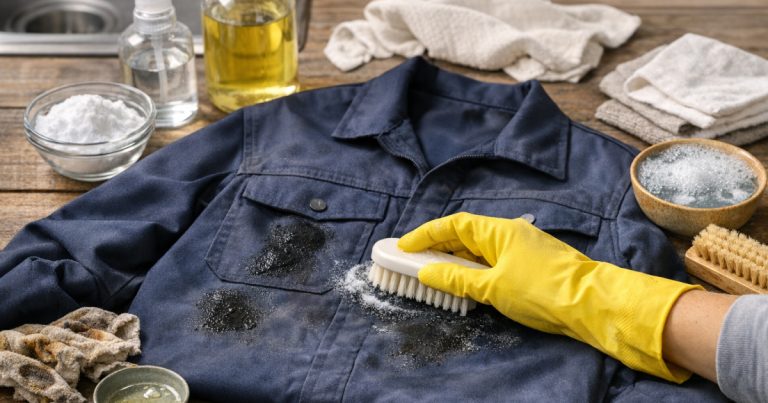
Most down jackets pick up grime around cuffs, collars, pocket edges and chin guards. Treat those areas gently before the main wash rather than scrubbing after the stain has been set by heat.
- Lay the jacket flat and dampen only the marked area with cool water.
- Apply a small amount of down wash or label-approved cleaner with your fingers or a soft cloth.
- Work from the outside of the mark towards the centre to avoid spreading grease.
- Do not use a stiff brush on lightweight shell fabric, as it can abrade the surface or catch stitching.
- Leave the cleaner to sit for a few minutes, then wash the whole garment as directed.
If the jacket is muddy, let the mud dry first and brush off loose dirt lightly. Wet mud can smear deep into seams and zip tapes. For sports kit and heavier dirt, the same principle applies: remove loose soil before washing so it does not redeposit elsewhere in the drum.
Machine washing step by step
1. Clean the detergent drawer
Old detergent and fabric conditioner residue can end up in the wash even when you do everything else correctly. Rinse the drawer and check the compartment is clear before adding down wash.
2. Load the jacket on its own
Do not pack it in with towels, jeans or other coats. A single jacket has room to circulate, rinse and re-loft more evenly. If the drum is very small and the jacket is bulky, a larger machine may give a better result than forcing it into a tight load.
3. Select a gentle programme
Use the care-label temperature, commonly a cool or low-temperature wash for washable down garments. Choose a delicate, wool, outdoor or down cycle if your machine has one. The key is controlled agitation and enough water movement to rinse the filling without twisting the baffles harshly.
4. Add an extra rinse
An extra rinse helps remove cleaner from the filling. If the jacket still feels slippery, soapy or heavy after washing, run another rinse rather than moving straight to drying. Residue is one of the main reasons down clumps.
5. Spin carefully
Use the spin setting allowed by the care label. A moderate spin removes water without over-stressing seams. When the cycle finishes, support the jacket with both hands as you lift it out; wet down is heavy, and pulling by one sleeve or shoulder can strain stitching.
How to dry it without clumping
Drying is where most down jacket problems happen. A jacket can look dry on the outside while the inner filling is still damp, and that hidden moisture is what causes dense, cold, lumpy patches.
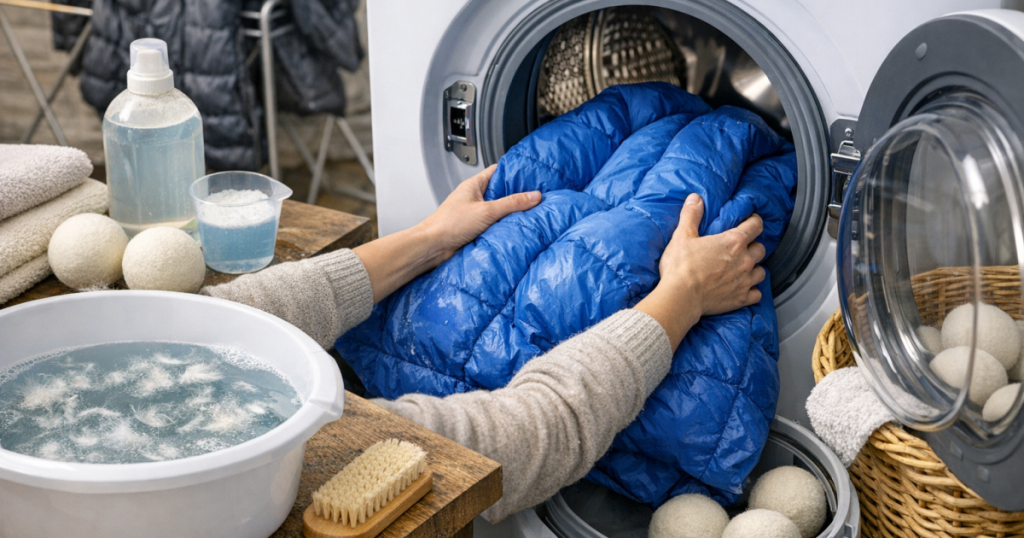
If the care label allows tumble drying, use low heat and expect it to take time. Put the jacket in the dryer with two or three clean dryer balls or clean tennis balls to help break up wet clusters as the drum turns. If you are concerned about abrasion on lightweight shells, our explainer on whether dryer balls reduce fabric wear or cause pilling covers the fabric trade-offs in more detail.
Pause the dryer every 20 to 30 minutes. Take the jacket out, shake it firmly, then use your fingers to tease apart any flat baffles. Do not yank seams or rub the shell fabric aggressively. The aim is to loosen the down inside each compartment, not to force it through the stitching.
Continue until the whole jacket feels light, even and springy. This can take several cycles on low heat. High heat may seem quicker, but it can damage shell fabrics, trims or coatings if the care label does not allow it. Patience is safer than heat.
If you do not have a tumble dryer
Air drying a down jacket is possible, but it is slower and more likely to clump in a cool, damp UK home. The jacket must be spread out with airflow around it, not left bunched on a hanger or draped over a radiator. Direct radiator heat can create hot spots, flatten areas of filling and leave other sections damp.
Lay the jacket over a wide drying rack in a warm, ventilated room. Turn it often, shake it regularly and separate clumps by hand as they soften. A dehumidifier can help in a damp room, but airflow still matters. If you are drying laundry indoors, use the ventilation principles in our guide to ventilating a room when drying laundry indoors to reduce condensation and musty smells.
Do not rush storage. A down jacket that feels slightly cool or heavy may still contain moisture. Keep drying until each panel feels evenly puffed and there is no damp smell when you press the baffles.
How to fix clumps after washing
If the filling has clumped, do not assume the jacket is ruined. In many cases it simply needs more drying and more manual separation.
- Return it to the tumble dryer on low heat if the care label allows.
- Add clean dryer balls or tennis balls to help knock the clusters apart.
- Stop regularly and massage each baffle between your fingers.
- Focus on cold, dense or heavy areas, especially around the hem and sleeves.
- Keep going until the filling feels dry rather than merely warm.
If the jacket has dried into hard lumps after being left wet for too long, re-washing with a proper rinse and then drying correctly can sometimes improve it. However, damaged stitching, degraded down or non-washable construction may not fully recover.
Common mistakes that make down go flat
- Using too much cleaner: extra product does not mean extra cleaning. It makes rinsing harder and can leave residue in the filling.
- Skipping the extra rinse: down needs to be clean, but it also needs to be free from detergent.
- Drying on high heat: heat damage can affect shell fabric, trims, coatings and elastic details.
- Stopping too soon: the outside dries before the filling. Hidden damp causes clumps and odour.
- Hanging it while wet: heavy wet down can slump to the bottom of each baffle.
- Storing it compressed: long-term compression reduces loft. Store clean, dry down loosely where possible.
When washing is not the best answer
Not every jacket needs a full wash after light wear. If it is not stained or sweaty, airing it after use can preserve the filling and reduce unnecessary laundering. Hang it uncompressed in a dry, airy space, away from cooking smells and damp walls.
Spot clean small marks where the label allows, especially on cuffs and collars. Full washing is most useful when the jacket has body oils, odour, visible dirt or reduced loft from grime. Over-washing can shorten the life of delicate shell fabrics and trims, even when the down itself is washable.
Common questions
Can I wash a down jacket with normal detergent?
It is better to use a down-suitable cleaner unless the care label says ordinary detergent is acceptable. Standard detergents can leave residue or strip natural oils from the filling, making loft harder to restore.
Why does my jacket still smell after drying?
A damp or musty smell usually means the filling is not fully dry. Keep drying on low heat if allowed, shaking and separating the baffles until the jacket feels light and evenly puffed.
Can I put a down jacket on a radiator?
It is not a good idea. Radiators can heat unevenly, flatten wet filling and leave damp patches inside the baffles. Use low tumble drying if permitted, or a drying rack with good airflow.
How often should I wash a down jacket?
Wash it only when it is genuinely dirty, smelly or losing loft from grime. For normal winter wear, airing and occasional spot cleaning can reduce the need for frequent full washes.
Are tennis balls safe in the dryer?
Clean tennis balls are commonly used to help break up down clumps, but check the jacket label and use low heat. Dryer balls are another option, though very delicate shells still need gentle handling.
What stands out
The biggest secret is that washing is only half the job. A gentle wash, thorough rinse and long low-heat dry will protect the filling far better than a quick hot cycle. If the jacket feels heavy, cool, lumpy or uneven, it is not finished yet. Keep drying, shaking and loosening the baffles until the down is fully dry and springy again.