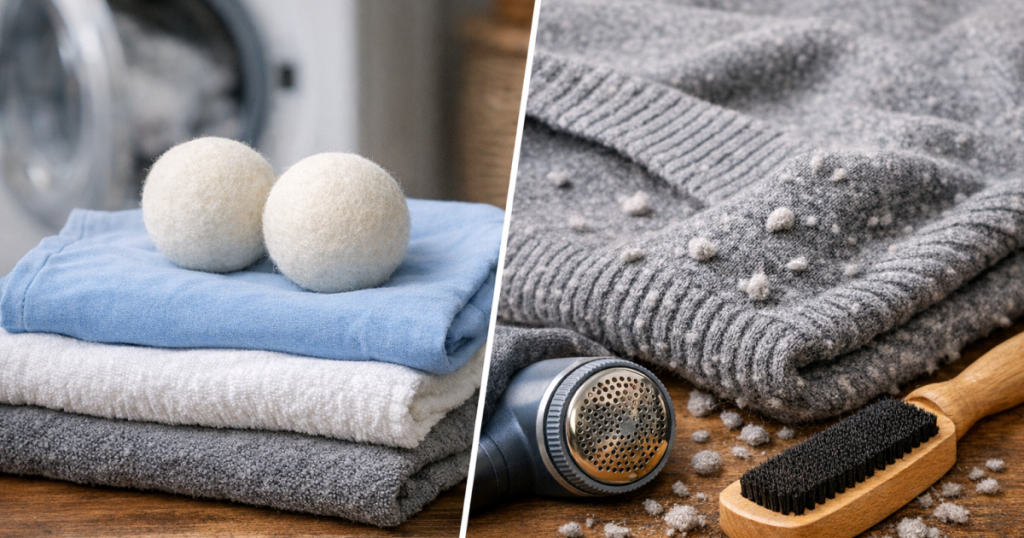
The worry with dryer balls and pilling is understandable: you add hard or woollen balls to a drum, then hope they make clothes softer rather than rougher. The honest answer is that dryer balls are not automatically damaging, but they can worsen bobbling on fabrics already prone to friction.
Used well, they can help separate bulky laundry, reduce clumping and make a tumble dryer load dry more evenly. Used on the wrong fabrics, or in an overfilled drum, they can add repeated rubbing that shows up as fuzz, pills or a rougher hand-feel.
At a glance
- Dryer balls can be useful for towels, bedding, cotton basics and heavier everyday loads that tangle or clump.
- They are not a cure for fabric wear; they simply change how items move inside the drum.
- Pilling is more likely on soft knits, brushed fleece, acrylic, wool blends, viscose jersey and already worn areas such as underarms and cuffs.
- Smooth wool dryer balls are usually the kinder choice for mixed clothing loads than very textured plastic balls, though the garment label matters more than the tool.
- The biggest avoidable causes of dryer-related wear are over-drying, high heat, rough fabric mixing and leaving delicate items in the drum too long.
The short answer: they can reduce one type of wear but add another
Dryer balls work by moving between garments as the drum turns. This can help items separate, so warm air reaches damp folds more easily. In a bulky load, that may mean less time spent tumbling, fewer damp patches and less need to restart the dryer because the middle of a duvet cover is still wet.
That is the helpful side. The trade-off is contact. Every extra object in the drum bumps against fabric. On sturdy cotton towels, that is rarely a problem. On a soft jumper, brushed sweatshirt or loose jersey top, repeated contact can lift fibres from the surface. Once those fibres twist together, they form pills.
So the question is not simply whether dryer balls are good or bad. The better question is whether they suit the fabric, the load size, the dryer programme and the condition of the clothes you are drying.
How pilling actually happens in the dryer
Pilling is caused by surface fibres working loose, tangling and staying attached to the fabric. Some pills fall away; others remain because the fibre is strong enough to cling on. This is why synthetic blends can pill stubbornly: the loose fibres may be fine, but they are also resilient.
A tumble dryer can encourage pilling through movement, heat and friction. Dryer balls may reduce the overall drying time in some loads, but they also increase movement within the drum. If the garment is already prone to bobbling, that extra movement can be enough to make wear appear faster.
Look closely at where pilling appears. Underarms, side seams, cuffs, waistbands and the front of jumpers often bobble first because those areas rub during wear. If those same garments then tumble with towels, jeans or textured dryer balls, the surface has very little chance to settle.
Step 1: sort the load by fabric behaviour, not just colour
Colour sorting matters, but texture sorting is just as important when dryer balls are involved. A mixed dark load might contain cotton socks, a hoodie, gym leggings, a viscose top and a wool-blend cardigan. They may be similar in colour, but they do not tolerate friction in the same way.
Keep robust items together: towels with towels, bedding with bedding, heavier cotton casualwear with similar cotton items. Keep soft, brushed, stretchy and fine fabrics out of those rougher loads. This one habit does more to prevent pilling than changing the number of dryer balls.
Very delicate woven fabrics need separate care. Fine chiffon, for example, is vulnerable to snagging and thread pulls, so it is better handled with gentle washing and careful drying rather than extra drum movement. For that kind of garment, follow fabric-specific advice such as washing chiffon blouses without pulling threads.
Step 2: check the garment label before adding anything to the drum
The care label comes first. If the label says not to tumble dry, dryer balls do not make tumble drying safe. If the label allows low-temperature tumble drying, use the gentlest suitable programme and remove the garment as soon as it is dry enough.
Before drying, turn pill-prone items inside out. This protects the visible surface from direct rubbing. Fasten zips, close hook-and-loop fasteners, empty pockets and tie loose drawcords. A metal zip or rough fastening can cause more localised damage than a dryer ball.
Also check for existing fuzz. If a jumper already looks fluffy on the surface, the dryer is unlikely to improve it. Air drying will usually be kinder, especially if the garment is knitted, brushed, loosely spun or labelled for flat drying.
Step 3: match the dryer balls to the load
Wool dryer balls are popular because they are firm enough to move laundry around but softer than many plastic designs. Plastic or rubber dryer balls can still be useful for sturdy laundry, but raised nodules or rigid surfaces may be too much for soft clothing. The more textured the ball, the more cautious you should be with knits and fine jerseys.
Use the smallest effective number for the load, following the pack instructions rather than assuming more is better. Too many balls in a small load can make the drum action harsher. Too few in a very bulky load may do little because they cannot move freely between items.
Do not add neat essential oils to dryer balls unless both the dryer and dryer-ball instructions allow it. Oils can mark fabric, leave residue and create unwanted odour build-up in laundry. If your aim is softer-feeling clothes, dryness level and fabric sorting matter more than scent.
Step 4: avoid over-drying, because that is where wear builds up
Over-drying makes fibres feel harsher and more brittle. It can also make cotton towels stiff, synthetic clothing clingy and jersey tops rougher to the touch. Dryer balls may help a load dry more evenly, but they cannot undo the effect of a cycle that runs long after clothes are dry.
Use sensor drying where your machine offers it, and choose cupboard dry or a similar moderate setting rather than the hottest, driest option for everyday clothing. For items you plan to iron or hang straight away, taking them out slightly damp can reduce creasing and friction.
Machine design and programme behaviour also matter. Heat pump tumble dryers tend to dry at lower temperatures than many traditional vented or condenser machines, which can be useful for households trying to reduce harsh drying. If you are weighing up dryer behaviour for fabric care, the Bosch Series 4 Heat Pump Tumble Dryer review explains the kind of fabric-friendly drying features worth understanding.
Loads where dryer balls usually make sense
- Towels: They often clump and hold moisture. Dryer balls can help separate them, though towels should still be dried with similar towels rather than delicate clothing.
- Bedding: Sheets and duvet covers twist into damp ropes. Dryer balls can help break up folds if the drum is not overloaded.
- Cotton sweatshirts and joggers: Sturdy cotton-rich leisurewear can benefit from better movement, but turn printed or brushed items inside out.
- Everyday socks and underwear: Robust basics usually tolerate dryer balls, provided elasticated items are not over-dried on high heat.
Loads where they can make pilling worse
- Acrylic and synthetic knitwear: These fabrics can form persistent pills because loose fibres remain attached.
- Wool blends and cashmere blends: Many are better dried flat, away from tumble action.
- Brushed fleece: The raised surface is designed to feel soft, but that surface can roughen under repeated friction.
- Viscose or modal jersey: These fabrics can distort, crease and abrade when wet or warm, so gentle air drying is often kinder.
- Embellished, printed or textured garments: Raised decoration, flocking, sequins and cracked prints can suffer from rubbing.
- Dry-clean-only clothing: Dryer balls are not a shortcut for garments that should not be washed or tumble dried at home.
A simple home check before using them on favourite clothes
If you are unsure how your laundry responds, test dryer balls on a low-risk load first. Choose items you already tumble dry, such as towels or older cotton basics. Check the fabric surface before and after drying, paying attention to seams, cuffs and any brushed areas.
Clean the lint filter as usual, but do not rely on lint alone as proof of damage. Some lint is normal in tumble drying, especially with towels. More useful signs are a rougher feel, visible fuzz, new bobbles or areas that look dull compared with air-dried versions of similar garments.
For clothing, compare one normal load dried with balls against a similar load dried without them. Keep the programme and load size similar. If the ball-dried load feels rougher or shows more fuzz, reserve dryer balls for towels and bedding instead.
When air drying is the kinder answer
Some fabrics simply do better away from the tumble dryer. Fine knits, delicate blouses, lightweight synthetics, embellished tops and garments with uncertain care labels should be shaped and dried carefully rather than agitated in a drum.
Indoor drying needs airflow, not just warmth. Trapping damp laundry in a closed room can leave clothes smelling stale and may slow drying enough to make fibres feel limp or musty. For a better setup, use the guidance on ventilating a room when drying laundry indoors, especially in cooler UK weather when windows stay shut for longer.
Straight answers
Do wool dryer balls cause less pilling than plastic ones?
Often, wool balls are the gentler option because their surface is softer. That does not make them suitable for every garment. A wool dryer ball can still rub a delicate knit if the load is too small, too dry or too long in the drum.
Can dryer balls replace fabric conditioner?
Not exactly. Dryer balls can help reduce stiffness by improving movement and separating laundry, but they do not coat fibres in the way fabric conditioner does. For towels and sportswear, avoiding heavy conditioner is often better for absorbency and performance, but softness will depend on water hardness, detergent dose and drying method.
Should you use dryer balls with every tumble dryer load?
No. Use them selectively. They are most useful for bulky, robust laundry and least useful for fine, stretchy, brushed or knitted garments. If a load contains items you would be disappointed to see bobble, leave the balls out and choose a gentler drying method.
What stands out
Dryer balls are a useful fabric care tool, but they are not automatically fabric-friendly. They can reduce wear linked to long, uneven drying by helping sturdy loads move better. They can also increase surface rubbing on garments that already pill easily.
The safest routine is simple: use dryer balls for towels, bedding and robust cotton loads; skip them for soft knits, brushed fabrics and delicate clothing; avoid over-drying; and sort by texture as well as colour. That approach gives you the practical benefit of dryer balls without asking fragile fabrics to cope with unnecessary friction.