Grease from machine oil, kitchen fat, lubricants or workshop grime behaves differently from mud or sweat. A good stain remover for greasy workwear needs to break down oil without weakening tough cotton, polyester blends, hi-vis panels or reflective tape. The right choice depends on the stain source, garment finish and how much pre-treatment time you can realistically build into the wash.
For most UK households, the best approach is not the strongest product on the shelf. It is a cleaner matched to the fabric, used before the main wash, with enough contact time to loosen oily residue without over-soaking or scrubbing the garment harshly.
The short version
- For fresh food grease or light workshop oil: choose a laundry pre-treatment gel, spray or liquid designed for oily marks, then wash promptly.
- For embedded black grease: use a targeted grease remover first, then a robust main wash detergent if the care label allows.
- For hi-vis, flame-resistant or coated workwear: avoid chlorine bleach, harsh solvents and aggressive scrubbing unless the garment label clearly permits them.
- For mixed stains: remove loose dust or particles before adding liquid cleaner, otherwise you can grind residue further into the fibres.
- For repeat workwear washing: prioritise fabric-safe routine products over one-off heavy-duty treatments that may fade colour or damage finishes.
Step 1: Identify what kind of grease you are dealing with
Greasy workwear stains are not all the same. Kitchen oil, butter and sauces usually respond well to surfactant-based laundry pre-treaters. Motor oil, chain grease, hydraulic fluid and industrial lubricants tend to be darker, stickier and more persistent. Grease mixed with cement dust, metal filings or workshop dirt needs a gentler first step because rubbing can abrade the fabric.
Before choosing a product, shake or brush off dry debris outdoors. If the garment has site dust as well as grease, read the method for getting cement dust out of work clothes before adding stain remover, as water and alkaline dust can make the clean-up harder if handled in the wrong order.
Also separate grease from other common work stains. Ink, marker and pen leaks need a different approach from oily residue, so treat those separately rather than covering everything with degreaser. Office and uniform shirts affected by pens are better handled with an ink-specific process, such as this guide to removing ink stains from office uniform shirts.
Step 2: Check the workwear fabric and finish
The same stain remover can behave differently on cotton drill trousers, polyester polo shirts, softshell jackets and hi-vis vests. Workwear often includes finishes that are easy to overlook: reflective tape, water-resistant coatings, colour panels, reinforced knees or flame-resistant treatments. These finishes can be more vulnerable than the base fabric.
Use the care label as your filter
- Cotton and cotton-rich trousers: often tolerate stronger washing than delicate fabrics, but repeated harsh treatment can still fade colour and weaken seams.
- Polyester and polycotton uniforms: can hold oily marks because synthetic fibres attract oil; pre-treatment usually matters more than hotter washing.
- Hi-vis garments: need care around fluorescent panels and reflective tape. Avoid products that warn against use on coated, reflective or specialist finishes.
- Flame-resistant workwear: should only be cleaned with products permitted by the garment label or employer instructions, because residues and unsuitable additives can affect performance.
- Water-resistant outer layers: avoid heavy degreasers unless the care label allows them, as they may strip or reduce the finish.
If a cleaner requires very hot water but your garment label allows only a lower temperature, choose a different pre-treatment rather than forcing the wash hotter. Heat can set some stains and may distort trims, transfers or reflective strips.
Step 3: Match the product type to the stain
Stain removers vary in how they work. The label will not always explain the chemistry in detail, but the format and usage instructions tell you a lot about suitability.
Pre-treatment sprays and gels
Sprays and gels are useful when grease is concentrated in specific areas, such as cuffs, knees, aprons, tool-pocket edges and front panels. They let you target the mark without soaking the whole garment. Look for wording around grease, oil, collars, cuffs or food stains, and check whether the product is suitable for colours.
Dr. Beckmann Stain Devils Fat and Sauces is one recognisable example to compare for smaller greasy marks, particularly when you want a targeted treatment rather than adding a booster to the whole wash. As with any specialist remover, check the fabric list, colourfastness advice and contact time before using it on workwear.
Laundry boosters and oxygen-based powders
Powder boosters can help with overall dinginess, food grease and mixed everyday staining, but they are not always the best first step for thick black grease. They work best when the garment can be soaked or washed for the recommended time and temperature. Avoid assuming that more powder means better cleaning; excess product can leave residue and may need extra rinsing.
Vanish Oxi Action Stain Remover Powder is a familiar laundry booster in UK supermarkets, but suitability depends on the garment. Read the label carefully for coloured workwear, hi-vis fabrics and any instruction against use on specialist finishes.
Main wash detergents
A detergent is not a substitute for a grease-specific pre-treatment when the mark is heavy, but it is still important. A stronger biological or powder detergent may suit robust cotton or polycotton workwear if the care label permits it. For sensitive skin or employer-supplied uniforms worn for long shifts, a non-bio option may be preferred, though it may need help from a pre-treatment on oily marks.
Ariel Original Washing Powder is an example of a mainstream powder detergent some households use for heavily soiled laundry. Do not use any detergent as a licence to overfill the machine: greasy workwear needs movement, water and rinsing space to release residue properly.
Step 4: Choose the right format for your routine
The best cleaner is the one you will actually use correctly. If workwear comes home late in the evening, a product that needs a long soak may be less realistic than a quick pre-treatment before the wash. If several garments are washed together after a week of shifts, a booster may help with general soil but targeted marks still need individual attention.
- Spray: quick for cuffs, knees and small patches, but easy to miss deep grease in seams.
- Gel: clings well to thicker marks and vertical areas, though it needs careful rinsing if used heavily.
- Bar or stick: useful for rubbing lightly into durable fabric, but avoid hard scrubbing on printed, reflective or coated areas.
- Powder booster: better for a whole-load refresh than precision treatment.
- Soak product: useful for multiple garments, but only when the fabric and trims can tolerate soaking.
Step 5: Read these label details before buying
Grease-removal claims are useful, but the small print matters more. Before putting a bottle or tub in your basket, check these points:
- Fabric suitability: does it mention cotton, polyester, colours, whites, delicates or specialist clothing?
- Stain type: does it clearly include grease, oil, fat, collar grime or work stains?
- Colourfastness instructions: does it require testing on a hidden area first?
- Maximum contact time: leaving stain remover on too long can cause fading or rings.
- Temperature range: make sure it works at the wash temperature your garment allows.
- Bleach type: avoid chlorine bleach on coloured workwear and specialist finishes unless the label explicitly says it is safe.
- Fragrance and residue: strong scent is not cleaning power; residue can irritate skin during long shifts.
For employer-issued protective clothing, follow the garment or workplace laundering instructions over general household advice. If the clothing has a safety function, preserving that function is more important than making the fabric look new.
How to use your chosen remover without damaging fabric
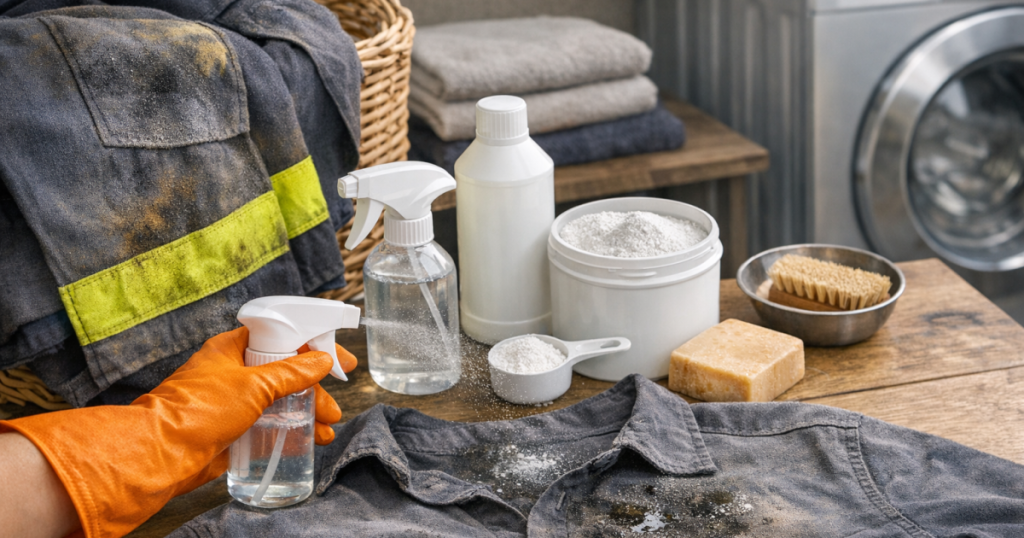
Start with a small amount and work from the outside of the stain towards the centre. Use your fingers or a soft laundry brush on robust fabric, but avoid stiff brushing on reflective tape, logos, transfers and coated panels. Let the product sit only for the stated time, then wash with a suitable detergent and avoid overloading the drum.
After washing, check the garment before drying. Heat from a tumble dryer or radiator can make oily residue harder to remove next time. If you do tumble dry robust workwear, make sure the stain is gone first and avoid adding friction unnecessarily; this piece on whether dryer balls reduce fabric wear or cause pilling explains the trade-off for different fabrics.
What to avoid with greasy workwear
- Do not pour washing-up liquid into the washing machine. It can foam excessively and is not designed as a machine laundry product.
- Do not use neat solvent casually. Some solvents can damage fibres, affect finishes, leave odour or create flammability concerns.
- Do not scrub reflective tape hard. Abrasion can reduce reflectivity and make the garment look tired quickly.
- Do not wash greasy workwear with towels or everyday clothes. Oil and odour can transfer across the load.
- Do not dry until you have checked the stain. Repeat the treatment while the fabric is still damp if residue remains.
Helpful questions
Can I use a kitchen degreaser on work trousers?
Only if the product label says it is suitable for fabrics and laundry use. Many kitchen degreasers are designed for hard surfaces, not dyed textiles, reflective trims or coated workwear.
Is bio or non-bio better for greasy uniforms?
Grease usually needs surfactants and pre-treatment more than enzymes alone. Bio detergent may help with food and sweat residues, while non-bio may suit sensitive skin; choose based on the garment label and wearer needs.
Should I wash greasy workwear hot?
Use the warmest temperature allowed by the care label, but do not rely on heat alone. Pre-treating the oily area before washing is usually more effective and less risky for trims and colour.
Why does the stain look gone when wet but return when dry?
Oil can become less visible on damp fabric, then reappear as the garment dries. Check under good light before tumble drying and repeat a gentle pre-treatment if a shadow remains.
Can I soak hi-vis workwear overnight?
Usually, long soaking is a poor choice unless the care label permits it. Fluorescent fabric and reflective tape can be affected by prolonged contact with some detergents or stain removers.
Key takeaways
Choose by stain type first, then fabric and finish. A targeted grease pre-treatment is usually the most useful buy for oily cuffs, knees and apron fronts, while a laundry booster is better for whole-load dullness and lighter staining. For hi-vis, coated or protective workwear, the safest product is the one that removes grease within the care-label limits, not the one with the strongest wording on the front of the pack.