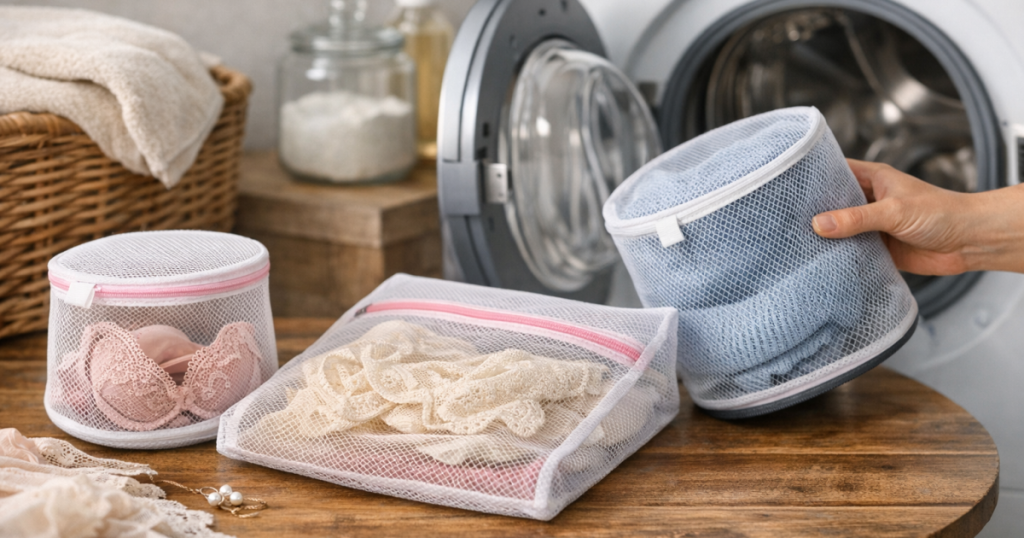
Delicates rarely fail in the wash because they are too fragile for normal life; they fail because friction, twisting and snagging are too harsh for the fabric. The right mesh wash bags reduce that damage while still letting water and detergent move through, making them useful for bras, lace, tights, silk-look blouses, knitwear and uniform details.
At a glance
Buy the bag for the garment, not just for the washing machine. A good laundry bag should give the item room to move, stop fastenings catching, and survive repeated washing without a rough zip or split seam.
- Use fine mesh for lace, hosiery, embroidery and delicate trims.
- Use a structured or shaped bag for bras so cups are not crushed flat.
- Choose medium or large bags for blouses and fine knits rather than stuffing them into a small pouch.
- Check that the zip has a cover or tuck-in tab so it cannot scrape fabric or the drum.
- Do not treat a wash bag as permission to ignore the care label.
What a laundry bag can and cannot do
A laundry bag creates a softer wash environment. It reduces direct rubbing against zips, buttons, drum holes and heavier garments, which is why it helps with snag-prone fabrics and trims. It can also keep small items together, so tights, trainer socks, removable pads and fabric belts are less likely to disappear inside sleeves or duvet covers.
It does not make a garment machine-washable if the care label says dry clean only, nor will it stop shrinkage caused by heat, agitation or the wrong cycle. For silk, viscose, wool, bras with delicate elastics and embellished items, the bag is only one part of the decision. The wash cycle, detergent, load size and drying method still matter.
Choose mesh wash bags by fabric and garment type
The best choice depends on what you wash most often. A bag that works well for cotton socks may be too coarse for lace, while a tiny bra pouch will crease a blouse badly if it is packed in too tightly.
Bras and lingerie
For wired or moulded bras, look for a shaped or semi-structured bag that helps stop hooks, sliders and underwires catching on other items. Fasten the hooks before washing, and avoid overfilling the bag. One or two bras in a suitable bag is usually kinder than forcing several into a small space.
Soft bralettes, camisoles and lace knickers usually suit a fine mesh zip bag. The key checks are smooth internal seams, a covered zip end and enough room for the fabric to open slightly in the wash rather than knotting into a tight bundle.
Silk, satin and sheen-sensitive blouses
For silk and silk-look garments, choose a fine, smooth mesh and use the gentlest suitable wash method. If the blouse is real silk, heavily dyed, embellished or precious, hand washing may be safer than machine washing. Our guide to hand washing silk blouses explains how to protect sheen and reduce handling damage.
If you do machine wash a washable delicate blouse, use a bag large enough for the garment to lie loosely folded. A cramped pouch can set creases into cuffs, collars and plackets, particularly on fabrics that mark easily when wet.
Tights, hosiery and fine socks
Hosiery needs fine mesh because laddering often starts from tiny snags. A small or medium bag is enough, but do not mix tights with bras, hooked lingerie or garments with rough fastenings. Keeping hosiery separate is one of the simplest ways to extend its wearable life.
Knitwear and wool blends
A wash bag can reduce surface abrasion on washable fine knits, but it will not prevent felting if the cycle is too warm or too energetic. Choose a larger bag so the jumper or cardigan is not compressed. For wool, use the wool or hand-wash programme only when the label allows it, and dry flat rather than hanging.
Mesh density: fine, medium or coarse?
Fine mesh gives the most protection against snagging because trims, hooks and fibres are less likely to poke through. It is the safer default for lace, silk, hosiery, embroidery and delicate synthetics. The trade-off is that very dense fabric may slow water flow slightly, so avoid overloading and use an appropriate amount of detergent.
Medium mesh is useful for everyday delicates such as washable blouses, slips, lightweight gym tops and children’s uniform items with small trims. It offers a balance between movement and protection.
Coarse mesh suits sturdier items that mainly need containing rather than cushioning, such as trainer socks or small accessories. It is not the best choice for lace, loose threads, sequins or anything with fine yarns that could catch.
Size matters more than most people think
A bag should be around half to two-thirds full once the garment is inside. That leaves enough space for water and detergent to circulate. If the item is wedged tightly into the corners, the middle of the fabric may not clean or rinse properly.
- Small bags suit knickers, socks, detachable pads, baby socks and fine hosiery.
- Medium bags suit bras, camisoles, slips, scarves and lightweight tops.
- Large bags suit blouses, fine knits, delicate uniform items and garments that need loose folding.
- Extra-large bags can help with washable cardigans or multiple lightweight items, but they should not be used to overload the machine.
For comparison, a simple multipack such as Lakeland Mesh Laundry Bags is the sort of standard zip-up option to assess for everyday delicates. If you regularly wash synthetic activewear and want to check microfibre-capturing claims as well as fabric protection, a specialist option such as the Guppyfriend Washing Bag is worth comparing against ordinary laundry bags.
Check the closure before you buy
The zip is often where cheaper bags disappoint. A rough metal pull, exposed zip end or weak stitching can scratch fabrics, catch lace or open mid-wash. Look for a zip that tucks under a fabric tab, sometimes described as a zip guard or zip cover. Run a finger along the inside edge before first use; if it feels sharp to your skin, it may be too rough for delicate cloth.
Drawstring bags can be useful for storage, but they are not always ideal in the machine because loose cords can knot around garments. For delicates, a smooth zip is usually more secure.
How to use a wash bag properly
Even a well-chosen bag needs the right washing routine. These steps keep the protection practical rather than cosmetic.
- Read the care label first and separate anything that needs hand washing, dry cleaning or a specialist cycle.
- Fasten hooks, zips and buttons so they cannot scrape nearby fabric.
- Turn delicate garments inside out if the outer face is prone to rubbing, pilling or print wear.
- Place similar fabrics together; do not put lace lingerie in the same bag as heavy socks.
- Leave space inside the bag and inside the drum. A packed machine increases friction.
- Use a gentle cycle, cool temperature and suitable detergent for the garment.
- Remove items promptly after washing to reduce creasing and colour transfer risk.
Drying delicates after washing
Most laundry bags are not designed to protect delicate clothing in a hot tumble dryer. Heat can damage elastics, distort cups, shrink knits and dull some finishes. After washing, reshape garments gently and dry according to the care label.
Bras often keep their shape better when dried flat or hung from the centre gore rather than by the straps. Silk and viscose garments should not be wrung out; press water out with a towel and dry away from strong direct heat. If your bathroom or utility space gets crowded after hand washing, setting up a drip-drying area can make delicate-care days far less awkward.
Common buying mistakes
- Buying only tiny bags: they are useful for socks and lingerie, but too small for blouses and knitwear.
- Choosing the cheapest coarse mesh for everything: lace, tights and embroidery need finer protection.
- Ignoring the zip: a bad closure can cause the very snags the bag is meant to prevent.
- Overfilling bags: a stuffed pouch reduces cleaning and increases creasing.
- Using one bag for mixed items: hooks, rough trims and heavy fabrics should be separated from finer pieces.
Helpful questions
Can I put silk in a laundry bag and machine wash it?
Only if the care label allows machine washing. A bag reduces friction, but it does not protect silk from unsuitable detergent, heat, colour bleed or agitation.
Are white or black bags better?
The colour of the bag matters less than the mesh, zip and stitching. For pale delicates, use a clean pale bag if you are concerned about dye transfer from a new dark bag.
How many bags does a household need?
Most households manage well with a mixed set: small for hosiery, medium for bras and lingerie, and large for blouses or fine knits. Buy around your actual laundry habits rather than a huge bundle you will not use.
Should delicates go in a bag on every wash?
Use one whenever the item can snag, stretch, tangle or rub. Robust cotton T-shirts do not usually need one, but lace, bras, tights, embellished pieces and fine knits often do.
Can wash bags stop pilling?
They can reduce abrasion, which may slow pilling on some fabrics. They cannot prevent pilling completely if the fabric is prone to fibre shedding or is washed with rougher garments.
Why it matters
A good laundry bag is a small purchase, but it can change how confidently you wash vulnerable garments. Choose fine mesh for snag-prone fabrics, the right size for movement, and a smooth protected zip. Pair it with the correct cycle, gentle handling and careful drying, and your delicates are far less likely to come out twisted, marked or misshapen.
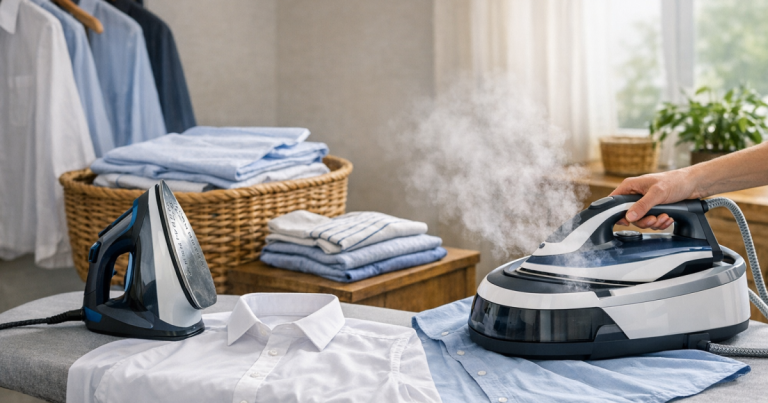
Once garments are dry, finishing matters too. For blouses, scarves and uniform details that crease easily, a sensible home ironing and steaming setup helps you refresh fabric without undoing the care you took in the wash.