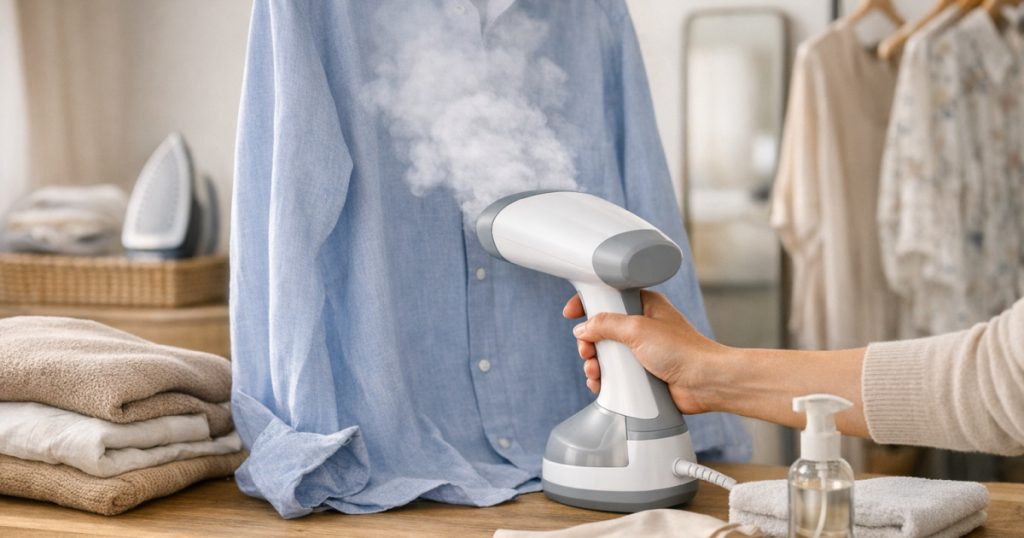
A handheld steamer earns its keep when a shirt, dress or work top looks tired but does not need a full wash-and-iron session. This Philips Handheld Garment Steamer 3000 Series STH3020/16 review looks at whether this compact Philips model is a sensible buy for everyday UK garment care, from quick weekday refreshes to last-minute crease control.
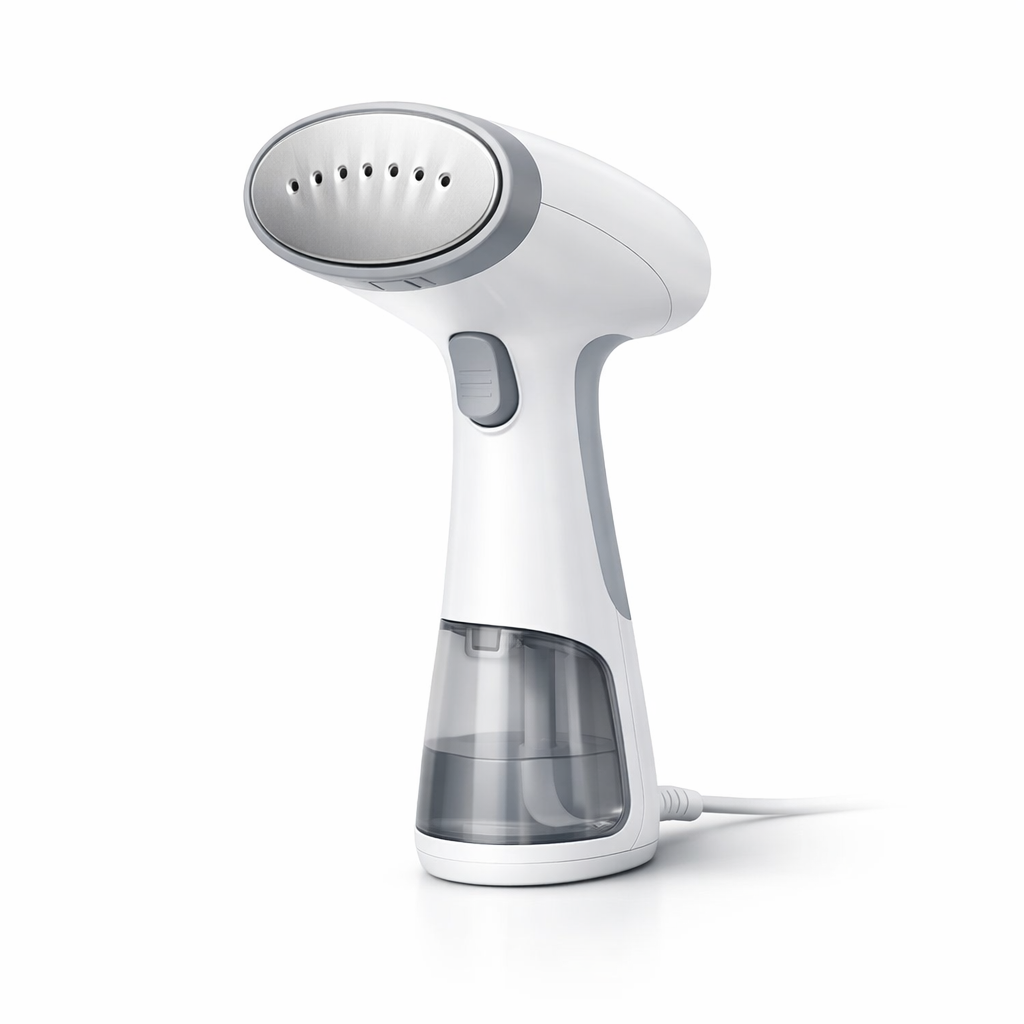
Handheld Garment Steamer 3000 Series STH3020/16
Buy it for convenience and fabric-friendly touch-ups, not for replacing a proper iron.
Quick verdict: the Philips Handheld Garment Steamer 3000 Series STH3020/16 is best treated as a convenience steamer rather than a replacement for a proper steam iron. It suits lighter creases, soft garments and travel-style storage needs, but buyers should check the retailer listing carefully for water capacity, steam output, accessories and plug details before ordering.
If you already know you want a handheld steamer rather than an iron, compare the product listing against your actual wardrobe: shirts, linen, dresses, uniforms, delicate synthetics and knitwear all behave differently under steam.
Product overview
The Philips Handheld Garment Steamer 3000 Series STH3020/16 is a handheld garment steamer from Philips’ 3000 Series. It is designed for steaming garments while they are hanging, helping fibres relax so creases soften without setting up an ironing board.
That positioning matters. A handheld steamer is not the same tool as a full-size steam iron. It does not press collars, cuffs and trouser creases with the same authority, and it will not give cotton shirts the sharp, flattened finish many people expect from a traditional iron. Its value is speed, convenience and gentler fabric handling when a garment only needs freshening or light crease removal.
For households where the ironing board only comes out reluctantly, this model makes most sense as a midweek helper. Think school shirts that have been folded in a drawer, office tops that have creased on a hanger, dresses with storage marks, or linen-blend garments that look better slightly relaxed than heavily pressed.
If you are still deciding whether a handheld model is the right format, our guide to choosing a clothes steamer for linen and shirts explains the trade-offs between handheld steamers, upright steamers and traditional ironing.
Key specs
- Brand: Philips.
- Full product name: Philips Handheld Garment Steamer 3000 Series STH3020/16.
- Product type: handheld garment steamer.
- Product family: clothes steamers.
- Main use: refreshing garments and relaxing light to moderate creasing while clothes are hanging.
- Best verified before purchase: water tank capacity, steam output, heat-up time, included accessories, cable length, warranty terms and whether the retailer supplies the expected UK plug.
- Fabric check: use only where the garment care label allows steaming or ironing-style heat and moisture. Be cautious with trims, bonded prints, pleats, sequins, coated fabrics and specialist workwear.
Pros and cons
Pros
- Compact handheld format is easier to store than an upright steamer.
- Useful for last-minute refreshing when a garment is clean but visibly creased.
- Less setup than using an ironing board, which helps for weekday routines.
- Gentler in feel than pressing delicate fabrics flat with an iron, provided the care label allows steam.
- Good fit for wardrobes with shirts, blouses, dresses, soft trousers and linen-blend pieces.
Cons
- Not a true substitute for crisp ironing on collars, cuffs, pleats or formal cotton shirts.
- Handheld steamers usually need refilling sooner than upright models, so check the tank capacity before buying.
- Results depend heavily on fabric type, weave, garment weight and how long the creases have been set.
- Needs sensible handling around hot steam, buttons, trims and fabric finishes.
- Retailer listings can vary in the detail they show, so buyers should verify the included accessories rather than assuming.
Performance in real use
Ease of setup
The main appeal is convenience. A handheld steamer is the kind of tool you can use when a garment is already on a hanger and you do not want to unfold an ironing board. For small flats, shared houses and busy family homes, that reduced setup is a genuine benefit.
It still needs a little space to work well. Hang the garment where air can circulate, keep the fabric lightly tensioned with your free hand, and steam in slow vertical passes rather than waving the steamer quickly across the surface. Rushing tends to leave creases softened but not properly released.
Crease removal and finish
The Philips Handheld Garment Steamer 3000 Series STH3020/16 is most convincing on lighter creasing: storage marks, soft wrinkles after wearing, and the crushed look that appears when garments are packed tightly in a wardrobe. It should be judged on that basis.
On crisp cotton shirts, a steamer can improve appearance but will not create the same flattened finish as a steam iron such as the Philips Azur Elite Steam Iron. A steamer relaxes; an iron presses. If you want sharp office shirt fronts, neat cuffs or trouser creases, you will still want an iron and a stable board.
On linen, the result depends on your taste. Many linen garments look best with a softened, lived-in finish rather than a hard press. For that style, a handheld steamer can be a good match. For heavyweight linen tablecloths or very creased bedding, it is the wrong tool.
Fabric compatibility
Steam can be kinder than direct pressure, but it is not automatically safe for every garment. Always check the care label first, especially on viscose, silk blends, wool blends, acetate, embellished garments and anything with glue-bonded details. Test on a hidden area where the fabric is valuable or unfamiliar.
Avoid assuming that steam is suitable for technical garments. Reflective tape, heat-applied logos, waterproof coatings and specialist finishes can react badly to heat or moisture. For these items, follow the garment label rather than the steamer’s general category claims.
Portability and storage
Compared with an upright steamer, the compact handheld format is easier to justify in a small utility cupboard or bedroom drawer. That makes it attractive for occasional use: wedding outfits, travel creases, workwear refreshes and garments that are awkward to iron because of drape or shape.
The limitation is scale. If you steam several shirts in one session, a handheld model can feel slower than expected because you may need to refill the tank and keep repositioning garments. It is better for one to three items than for clearing a full laundry basket.
Maintenance and day-to-day value
As with any steamer, maintenance is about keeping water pathways clear and following the manual. UK hard-water areas can be demanding on steam appliances, so check Philips’ guidance for water type, descaling and storage. Emptying the tank after use and allowing the unit to cool before putting it away are sensible habits.
Value depends on whether it changes your routine. If it stops you rewashing clean-but-creased garments, it can save time, water and fabric wear. If you mainly iron formal shirts and cotton bedding, it may sit unused because it does not deliver the finish you actually want.
Who it’s best for / who should skip it
Best for
- People who want quick crease softening without setting up an ironing board.
- Small homes where storage space is limited.
- Wardrobes with blouses, dresses, soft shirts, linen blends and lightweight layers.
- Anyone who refreshes clean garments between washes and wants to reduce unnecessary laundering.
- Occasional users who need a compact steamer for events, travel creases or weekday touch-ups.
Skip it if
- You expect a crisp, pressed finish on formal shirts and trousers.
- You regularly handle large loads of bedding, table linen or heavy cotton.
- You prefer one tool for all garment finishing jobs; a steam iron remains more versatile for pressing.
- Your wardrobe includes many heat-sensitive trims, coatings, pleats or embellished fabrics.
- You do not want to check fabric labels before steaming.
FAQ
Can this Philips handheld steamer replace an iron?
Not for most households. It can refresh and soften creases, but an iron is still better for sharp collars, cuffs, pleats, cotton shirts and formal trouser lines.
Is it suitable for linen?
It can suit linen garments where you want a relaxed finish. For heavily creased linen or large linen items, an iron or larger steamer is usually more effective.
Can I use it on wool coats?
Use caution. Many wool garments respond well to careful steaming, but coats can include linings, structure and finishes. Check the care label and avoid soaking the fabric with steam.
Will steaming remove odours?
Steaming can freshen a clean garment, but it is not a substitute for washing when fabric is soiled, sweaty or holding strong odours.
What should I check before buying in the UK?
Confirm the exact model code, plug type, warranty route, water tank details, accessories and retailer returns policy. These details affect day-to-day convenience more than marketing images.
Alternatives
If you like the idea of steaming but want stronger pressing ability, a hybrid iron-steamer may be worth comparing. Our Steamery Cirrus No.3 Iron Steamer review covers a different approach: more styling-focused, with a design that tries to bridge steaming and light ironing.
The simpler alternative is to keep a traditional steam iron for structured garments and use the Philips Handheld Garment Steamer 3000 Series STH3020/16 only for quick refreshes. That two-tool setup is often more realistic than expecting one compact handheld steamer to handle every fabric, finish and crease level.
Verdict + score
The Philips Handheld Garment Steamer 3000 Series STH3020/16 is a useful compact steamer for people who want fast garment refreshing, lighter crease control and less reliance on the ironing board. Its limits are equally clear: it is not the best choice for crisp tailoring, heavy fabrics or large laundry sessions. Buy it for convenience and fabric-friendly touch-ups, not for replacing a proper iron. Score: 8.1/10.
Handheld Garment Steamer 3000 Series STH3020/16
Buy it for convenience and fabric-friendly touch-ups, not for replacing a proper iron.
You might also like: How to Remove Deodorant Build-Up from Black T-Shirts Without Fading Them.