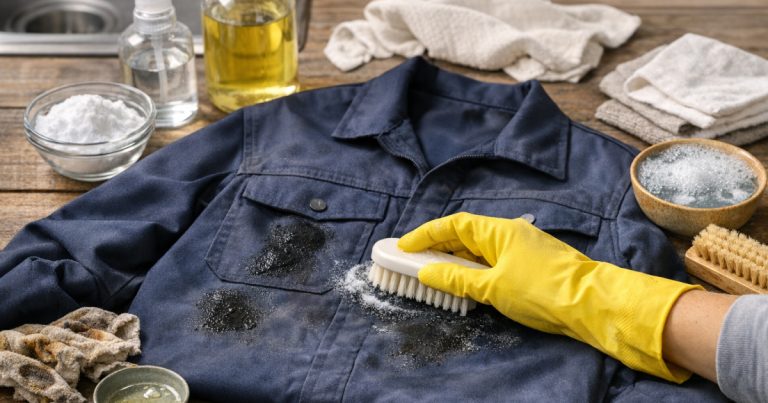
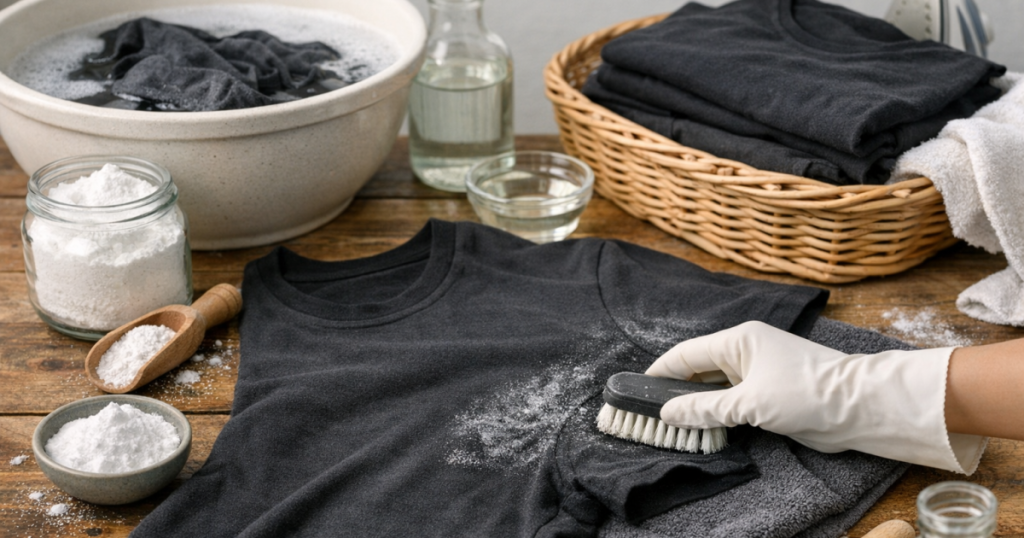
White, waxy underarm patches can make an otherwise good black tee look tired, even when it has just been washed. The safest way to tackle deodorant build-up on black T-shirts is to break down the residue before the main wash, using cool water, a mild pre-treatment and gentle agitation rather than harsh bleaching or hot ironing. Work slowly: black cotton and cotton blends can fade, crease or polish if you scrub too hard.
The aim is not just to hide the white marks. You want to remove the film of deodorant, body oils, sweat salts and detergent residue that has bonded into the underarm fibres.
The short version
- Turn the T-shirt inside out so you are treating the underside of the underarm area directly.
- Brush or shake off dry residue first; do not start by rubbing a wet stain aggressively.
- Soak in cool water with a small amount of liquid laundry detergent or a colour-safe stain treatment.
- Use a soft brush, cloth or your fingers to gently work the treatment into the fabric from the inside.
- Wash at the temperature shown on the care label, usually 30°C or 40°C for everyday black cotton T-shirts.
- Air dry and check the marks before using a tumble dryer or iron, as heat can set remaining residue.
Why black T-shirts show deodorant build-up so clearly
Many deodorants and antiperspirants contain powders, waxes, oils or aluminium-based ingredients that help control moisture and odour. On pale clothing, the residue may be barely visible. On black fabric, it can appear as chalky grey patches, shiny underarm films or stiff, slightly greasy areas that resist a normal wash.
The problem usually builds gradually. A quick wash may remove surface sweat, but the waxier residue can remain in the fibres. If detergent is overused, or the load is crowded, rinse water may not carry everything away. Over time, the underarm area feels thicker than the rest of the shirt and the mark returns as soon as the fabric dries.
Heat makes the job harder. Hot tumble drying, ironing over the mark, or using a very warm wash before loosening the build-up can bake residue into the fabric. Before using heat on a marked garment, check the care label and temperature advice; this guide to care label and heat guidance is useful when you are deciding whether a fabric can handle steam, warm washing or ironing.
What you need before you start
You do not need a harsh chemical routine for most black T-shirts. A careful pre-treatment is usually more effective than throwing in extra powder and hoping for the best.
- A bowl, basin or clean sink for soaking.
- Cool or lukewarm water, not hot water.
- Liquid laundry detergent, ideally one that rinses well from dark clothing.
- A soft toothbrush, nail brush, laundry brush or microfibre cloth.
- White vinegar or bicarbonate of soda for selected cases, used carefully and not mixed together in the same treatment step.
- A colour-safe oxygen stain remover only if the care label allows it and the fabric has been patch-tested.
Avoid chlorine bleach on black T-shirts. It can cause orange, brown or pale patches that are permanent. Also avoid abrasive scouring pads, stiff wire brushes and heavy scrubbing, which can roughen cotton jersey and leave the underarm area looking fuzzy or grey.
Step-by-step: removing waxy underarm residue
1. Let the shirt dry, then loosen the surface film
If the T-shirt is damp with sweat or fresh deodorant, let it dry before you start. Once dry, turn it inside out and gently flex the underarm area. If you can see loose white powder, shake it off or brush lightly with a soft, dry brush. This prevents you from smearing dry residue deeper into the fabric when water is added.
2. Rinse from the inside of the fabric
Hold the underarm area under cool running water from the inside of the shirt. This pushes residue back out the way it entered, rather than driving it further through the fibres. Keep the water pressure moderate and support the fabric with your hand so the jersey does not stretch.
3. Apply a small amount of liquid detergent
Put a pea-sized amount of liquid laundry detergent directly onto each marked underarm area. Massage it in with your fingertips, using small circular motions. If the fabric is sturdy cotton, you can use a very soft brush, but keep the pressure light. The detergent needs time to break down oily and waxy residue; force is less useful than patience.
Leave it for 15 to 30 minutes. Do not let the detergent dry hard on the fabric. If the room is warm, place the shirt in a bowl or cover the treated area with a damp cloth while it rests.
4. Soak briefly, then agitate gently
Fill a basin with cool water and add a small amount of liquid detergent. Submerge the T-shirt and squeeze the underarm areas repeatedly under the water. Avoid twisting the shirt tightly, as black cotton can crease and distort. After 20 to 30 minutes, rub the fabric against itself gently: underarm to underarm, inside surface to inside surface.
If the water turns cloudy or grey, that is a good sign. Drain it and rinse thoroughly before deciding whether another treatment is needed.
5. Wash with enough room in the drum
Wash the T-shirt with similar dark garments, following the care label. For most everyday black cotton or cotton-blend tees, 30°C or 40°C is common, but the label should lead. Do not overfill the machine; marked underarm areas need water movement to rinse clean.
Use the recommended detergent amount for your water hardness and load size. More detergent is not automatically better. Too much can leave a dull film on black clothing, particularly in a crowded wash. If you are washing mixed darks and there is any risk of dye transfer, it is worth knowing the basics of removing colour run from mixed laundry before trying repeated washes.
6. Air dry and inspect before adding heat
After washing, air dry the shirt away from direct strong sunlight, which can fade black fabric. Once dry, check the underarms in natural light. If the area still feels stiff or looks grey, repeat the pre-treatment before tumble drying or ironing. Heat can make remaining residue more stubborn.
If the marks are still there
Older build-up often needs more than one round. Repeating a gentle method is safer for black fabric than jumping straight to aggressive stain removers.
For chalky white marks
Mix a paste of bicarbonate of soda with a little water and apply it to the inside of the underarm area. Leave it for around 15 minutes, then massage gently and rinse well. This can help lift powdery residue, but it should not be left to dry into a hard crust on dark fabric.
For greasy or waxy patches
Use liquid detergent again, giving it a longer dwell time of up to 30 minutes while keeping the fabric damp. A detergent designed for laundry is usually better than washing-up liquid for garments, because it is made to rinse from fabric in a washing machine. If you do use a tiny amount of washing-up liquid in an emergency, rinse extremely thoroughly before machine washing to avoid excess foam.
For stiff underarm fabric
Soak the inside of the underarm area in a solution of cool water and white vinegar for 20 to 30 minutes, using roughly one part vinegar to four parts water. Rinse well, then wash as normal. Use this occasionally rather than as a routine treatment, especially on garments with elastane, printed details or delicate trims.
For persistent grey shadowing
A colour-safe oxygen stain remover may help, but only after a patch test on an inside seam. Follow the product instructions and avoid extending the contact time beyond the label directions. Some black dyes are more vulnerable than others, and a product that is safe on one T-shirt may dull another.
What not to do to black T-shirts
- Do not use chlorine bleach, even diluted, on black cotton.
- Do not iron directly over underarm marks to “dry them out”. This can set residue and create shine.
- Do not scrub with a stiff brush; it can break surface fibres and leave a faded-looking patch.
- Do not keep adding more detergent to every wash. Poor rinsing can make black clothes look dusty.
- Do not mix vinegar and oxygen stain remover in the same soaking step. Use one approach, rinse, then reassess.
- Do not tumble dry until you are happy the residue has gone.
How to stop the build-up coming back
The easiest stains to remove are the ones that never get a chance to set. Small changes to your getting-ready and laundry routine can make a big difference to black T-shirts.
- Let deodorant dry fully before dressing. This is especially important with roll-ons, creams and heavy antiperspirants.
- Use less product if you regularly see white transfer. Over-application is a common cause of stiff underarm patches.
- Wash black tees promptly after heavy wear rather than leaving them in a laundry basket for several days.
- Turn T-shirts inside out before washing so water and detergent reach the underarm area directly.
- Keep wash loads loose enough for proper rinsing.
- Run an extra rinse occasionally if your dark laundry feels coated or looks dull after washing.
Storage matters too. If a T-shirt is put away while slightly damp or still holding deodorant residue, the underarm area can develop a stale smell as well as visible marks. Fold everyday jersey tees once fully dry, and avoid cramming them tightly into drawers. For wider wardrobe decisions, this guide to whether a garment should be hung, folded or boxed explains why some fabrics cope better folded than hung.
Fabric-specific checks
Not all black T-shirts behave the same way. A heavyweight cotton gym tee can usually tolerate more gentle brushing than a fine modal blend or a T-shirt with stretch. Before treating the whole underarm area, test your chosen method on an inside seam or hem.
For cotton, liquid detergent pre-treatment and a cool soak are usually the safest starting point. For cotton with elastane, avoid repeated long vinegar soaks and high heat. For viscose, modal or bamboo blends, keep handling gentle because wet fibres can be more prone to distortion. For printed band tees, avoid soaking the printed panel unnecessarily and do not let stain treatment sit on the print.
If the shirt has sentimental value, go slowly and repeat mild treatments. A faint improvement after the first wash is still progress, and it is better than trading a deodorant mark for a permanent pale patch.
Things readers ask
Can I use white vinegar directly on black fabric?
Use it diluted, not neat. A short soak in one part white vinegar to four parts cool water can help with residue and odour, but always rinse well and patch-test first.
Why do the marks come back after washing?
The wash may be removing surface residue while leaving waxy build-up inside the fibres. Pre-treating the underarm area before the main wash usually works better than simply washing again.
Will a hotter wash remove deodorant residue faster?
Not always. Heat can set oily or waxy marks and may fade black fabric. Start cool or lukewarm, then wash at the care-label temperature once the residue has been loosened.
Can I use stain remover on every black T-shirt?
No. Some black dyes and prints are sensitive. Use a colour-safe product only when the label allows it, and test on a hidden area before treating visible fabric.
Is the T-shirt ruined if the underarms feel stiff?
Usually not. Stiffness often means layered residue rather than permanent damage. Several gentle detergent treatments and thorough rinsing can soften the area again.
Main points
Black T-shirts need a residue-first approach: loosen the dry film, pre-treat from the inside, soak briefly, wash with enough room to rinse, then air dry before checking the result. Avoid bleach, hard scrubbing and premature heat. Once the underarm area is clean, prevention is simple: let deodorant dry before dressing, wash tees inside out, avoid overloading the machine and treat early when marks first appear.