Drying laundry indoors is rarely just about speed: it is about keeping rooms comfortable, avoiding damp smells and not roughing up fabrics that dislike high heat. This Lakeland DrySoon 3-Tier Heated Airer review looks at whether Lakeland’s tiered heated airer is a sensible upgrade from a standard clothes horse for UK homes that regularly dry shirts, school uniform, jumpers and everyday wash loads inside.
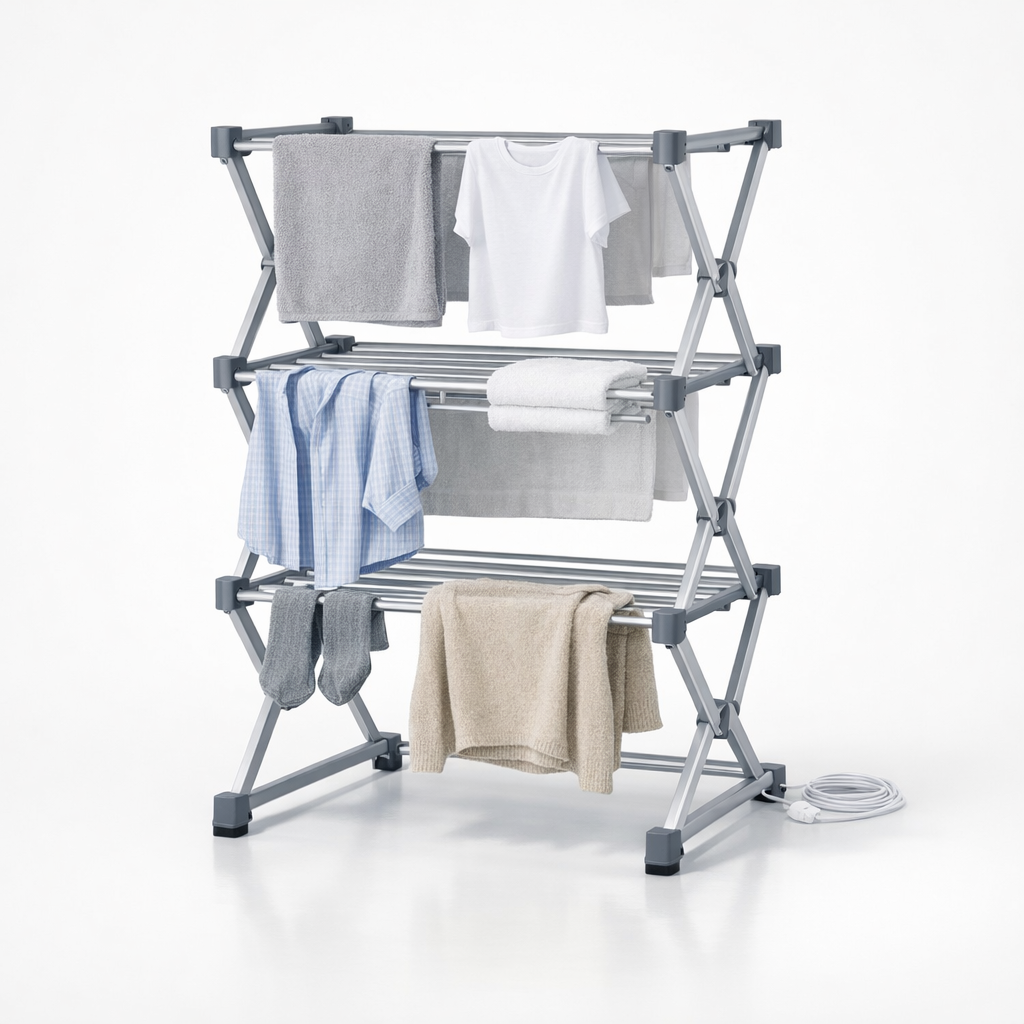
DrySoon 3-Tier Heated Airer
Trus
Quick verdict: the DrySoon is most convincing for households that dry laundry indoors often and want a warmer, more organised drying station. It is not a magic moisture remover, and it still needs airflow, sensible loading and enough floor space to work well.
Product overview
The Lakeland DrySoon 3-Tier Heated Airer is a mains-powered heated clothes airer designed for indoor laundry drying. Instead of blowing hot air like a tumble dryer, it uses heated rails to add gentle warmth where garments touch the frame. That makes it particularly relevant for UK homes where outdoor drying is unreliable for much of the year and radiators are not an ideal place for damp clothes.
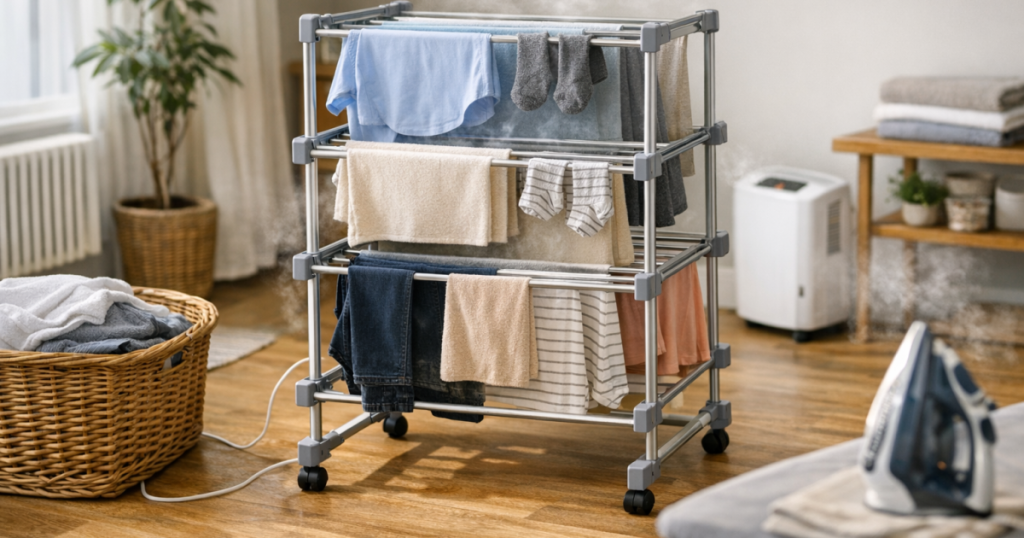
Its three-tier format is the main appeal. You get vertical drying space rather than a wide single-level rack, so it can handle a mixed wash more neatly than a basic small airer. Shirts, pyjama tops, socks, underwear, children’s uniform pieces, tea towels and lighter everyday garments are the sort of items that make sense here. Bulky towels, heavy jeans and large bedding need more thought, because they can block airflow and may need repositioning.
For fabric care, the key benefit is control. A heated airer can be gentler than repeated tumble drying for many everyday fabrics, provided garments are spun properly first, spaced out and removed once dry. It is not the right place to hang dripping wet laundry, and delicate knits still need their care labels respected rather than being stretched over narrow rails.
If you are considering one, compare the current retailer listing carefully before buying: Lakeland has sold DrySoon airers with accessories and compatible covers in different ways, so check exactly what is included in the bundle you are looking at.
Key specs
- Brand: Lakeland.
- Product name: Lakeland DrySoon 3-Tier Heated Airer.
- Product type: mains-powered heated airer for drying laundry indoors.
- Drying format: three-tier rail layout for hanging or draping garments across heated bars.
- Best suited to: machine-spun laundry, everyday clothing, school items, small household textiles and lighter layers.
- Important checks before purchase: current dimensions, folded storage size, cable position, rated power, running-cost guidance, warranty terms and whether a cover is included.
- Accessories to verify: Lakeland has offered DrySoon covers and related accessories, but inclusion varies by listing and bundle.
Pros and cons
What works well
- Useful vertical capacity: the tiered layout helps organise a full mix of smaller garments without spreading laundry across several rooms.
- Gentler than blasting heat: the rail warmth is more fabric-conscious than high-heat drying methods when used correctly.
- Good for routine indoor drying: it suits households that regularly dry laundry inside rather than only needing emergency drying space once in a while.
- Neater than radiator drying: clothes sit on a dedicated frame, which helps avoid damp fabric sitting against painted radiators or walls.
- Can work well with better room management: paired with ventilation or a dehumidifier, it becomes part of a more controlled indoor drying setup.
Where it has limits
- It does not remove moisture from the room: the water still has to go somewhere, so condensation control matters.
- Drying is contact-led: fabric touching the warm rails tends to benefit most, so garments may need turning or rearranging.
- Bulky items need space: thick towels, hoodies and bedding can crowd the frame and slow drying if packed tightly.
- It takes floor space while open: check where it will stand before buying, especially in flats, utility corners and narrow kitchens.
- Accessories affect performance: a compatible cover may improve warmth retention, but you need to confirm it is included or budget for it separately.
Performance in real use
The DrySoon’s real strength is consistency. A standard airer depends entirely on room warmth and airflow; this one adds a gentle heat source directly at the rails. That makes drying feel more predictable in colder months, particularly for lightweight items that can be spread evenly across the tiers.
Loading matters more than many buyers expect. If every rail is packed tightly, trapped damp air will slow the process and can leave seams, waistbands and underarms feeling clammy. The best approach is to prioritise spacing: hang shirts with room around them, drape thicker items across more than one rail, and move garments once the areas touching the rails have dried.
For school uniform and workwear, the tiered shape is genuinely useful. Shirts, polo tops, PE kit, socks and smaller garments can be divided across the levels instead of being layered on top of each other. For structured pieces such as blazers, however, a heated airer is not a shortcut for proper garment care; heavier tailored items usually need shape support and careful drying rather than being folded over narrow rails.
For delicate fabrics, think of it as controlled drying space, not as a universal solution. Fine knits, wool and cashmere should not be stretched by their own wet weight. Use a high spin only where the care label allows, reshape garments while damp and avoid hanging heavy wet knitwear from the rails. Lightweight delicates can benefit from warm-room drying nearby, but direct rail contact is not always the best choice for fragile fibres or embellishments.
Moisture management is the biggest practical issue. A heated airer warms laundry; it does not extract water from the air. In a small room with closed windows, several wet loads can still create condensation on glass, cold walls or poorly ventilated corners. If you dry indoors often, it is worth pairing the airer with sensible room setup, and our guide to positioning a dehumidifier when drying laundry indoors explains how to place one so airflow works with the laundry rather than against it.
Running cost is another area to check rather than guess. Look at the current wattage information on the product listing or manual, then compare it with your electricity tariff. The simple calculation is rated power in kilowatts multiplied by the number of hours used and your unit rate. That gives a more reliable figure than broad claims, because households use heated airers very differently.
Storage is manageable if you have a utility area, cupboard gap or spare corner, but it is not invisible. Before ordering, measure both the open footprint and the folded size against the room where you actually dry laundry. A product can be excellent in theory and irritating in practice if it blocks a walkway every evening.
Maintenance is simple but still worth doing. Let the frame cool, unplug it and wipe rails as needed so detergent residue, lint or dye transfer does not build up. Avoid overloading the frame beyond the manufacturer’s guidance, keep the cable clear of wet fabric, and follow Lakeland’s current instructions for covers, timers or accessories supplied with your version.
Who it’s best for / who should skip it
The DrySoon is best for households that dry laundry indoors several times a week and want a more dependable setup than a cold clothes horse. It makes particular sense for families with regular uniform loads, renters without outdoor drying space, flats where a tumble dryer is not practical, and anyone trying to reduce routine tumble-dryer use for fabric-care reasons.
It also suits people who already think about laundry workflow: spinning clothes properly, separating heavy and light items, leaving air gaps and managing room humidity. Used that way, the heated rails support the drying process rather than trying to do everything alone.
You should skip it if you only dry occasional small loads, have no safe floor space near a suitable socket, or mostly need to dry large bedding and heavy towels quickly. It is also less compelling if your main issue is damp air rather than slow drying; in that case, ventilation or dehumidification may be the more important first purchase.
Common questions
Can it dry a full washing-machine load?
It can handle a mixed load more comfortably than many small airers, but results depend on drum size, spin speed and fabric weight. A tightly packed heavy load will dry more slowly than spaced-out shirts, socks and lighter garments.
Does it replace a tumble dryer?
Not exactly. It is better viewed as a gentler indoor drying aid. A tumble dryer is faster for many suitable fabrics, while a heated airer is more about controlled drying and lower fabric agitation.
Is a cover worth having?
A compatible cover can help retain warmth around the laundry and reduce heat loss into the room. Check whether the cover is included in the bundle, and only use accessories that are intended for the DrySoon model you own.
Can wool jumpers go on it?
Be cautious. Wool jumpers should usually be reshaped and dried flat to reduce stretching. If you use the airer nearby, prioritise airflow and gentle room warmth rather than hanging a heavy damp jumper over rails.
Will it stop condensation?
No. It helps laundry dry, but the moisture still enters the room air. Ventilation, spacing and, in many UK homes, a dehumidifier are what help control condensation.
Alternatives
If you mainly need extra hanging space and do not need heat, a traditional winged airer remains cheaper to run because it uses no electricity. Our Minky Winged Airer 20m review is a useful comparison point if you are deciding whether heated rails are necessary for your home.
The other alternative is a combined setup: a non-heated airer with a dehumidifier in a closed room. That can be a strong choice where condensation is the main problem, though it requires enough room for both items and a sensible drying routine.
Verdict + score
The Lakeland DrySoon 3-Tier Heated Airer is a strong choice for frequent indoor drying, particularly when you treat it as part of a wider laundry setup rather than a standalone miracle dryer. Its tiered frame is practical for everyday clothing, uniforms and smaller household textiles, and the gentle rail heat is fabric-friendlier than relying on radiators or repeatedly tumble drying items that do not need it.
Its limitations are real: crowded rails, bulky loads and poorly ventilated rooms will reduce the benefit. Buyers should check dimensions, current power details, accessory inclusion and storage space before committing. For UK homes that regularly battle wet-weather laundry, though, it is a sensible, well-targeted upgrade.
Overall score: 8.3/10.
DrySoon 3-Tier Heated Airer
Trus
You might also like: How to Wash Wool Jumpers Without Shrinking or Felting.