Seasonal wardrobes are easier to manage when winter knits, spare school uniform, occasionwear and summer linen are clean, dry and easy to reach. The best under-bed clothes storage bags protect fabric from dust and snagging without trapping damp air or crushing garments so tightly that creases become permanent.
The short answer
For most UK homes, the most useful under-bed storage is a breathable zipped fabric bag with a firm enough base to slide in and out, soft sides that will not scrape bed frames, and handles that are stitched into the body rather than tacked onto the edge. Clear windows are helpful for identification, but they are not essential if you label each bag properly.
Avoid treating every seasonal garment the same. Wool jumpers need airflow and moth awareness. Summer cottons and linen can tolerate firmer folding. Padded coats need more space than T-shirts. Sequinned, beaded or structured pieces usually need gentler storage than everyday basics.
How under-bed storage affects clothes
The space beneath a bed is convenient, but it is not automatically fabric-friendly. Dust gathers there, airflow can be limited, and cold external walls or poorly ventilated rooms can make stored textiles smell stale. A good storage bag creates a barrier against fluff and abrasion while still allowing garments to remain dry and uncompressed.
The biggest mistake is packing clothes straight from wear into a bag and forgetting them for months. Skin oils, perfume, food marks and deodorant residue can attract pests or set into fibres. Wash or refresh garments first, let them dry fully, then fold them with a little breathing room. If you are storing knitwear, follow a gentle process first; our guide to washing wool jumpers without shrinking or felting is a useful starting point before anything goes under the bed.
Best under-bed clothes storage bags by wardrobe need
For wool jumpers and knitted layers
Choose a breathable fabric bag rather than a fully airtight plastic sack. Wool benefits from being clean, dry and protected from moths, but long-term compression can flatten loft and set creases into folded edges. Fold jumpers loosely, place the heaviest knits at the bottom, and avoid overfilling the corners.
If moths have been a problem in your home, do not rely on the bag alone. Use clean storage habits, regular checks and suitable deterrents. For a more detailed setup, read our advice on choosing clothes moth protection for wool wardrobes.
For summer clothes and everyday rotation
Cotton T-shirts, shorts, pyjamas and lightweight summer dresses are usually the easiest garments to store under the bed. A soft-sided zipped bag is enough for most households, especially if you rotate items every few months. Clear tops can save time when you are looking for a particular child’s uniform, holiday clothes or spare bedding.
Roll very casual items if you want to see more at a glance. Fold anything prone to sharp creases, such as linen shirts, along natural seams and avoid pressing too many items into one bag.
For coats, blazers and structured pieces
Under-bed storage is not always the right place for tailored clothing. School blazers, suit jackets and structured coats can lose shape if they are folded tightly or weighted down. If you must store them under a bed, use a shallow bag with a broad base and place only one or two structured garments inside. Fold along existing seams, pad shoulders lightly with acid-free tissue if needed, and never squash the bag to make it fit.
For heavier winter coats, a breathable storage box or a garment bag in a wardrobe may be kinder than a flat under-bed bag. The decision should be based on the garment’s structure, not just the available space.
For delicates, occasionwear and embellished clothing
Delicate fabrics need separation. Use cotton garment covers, tissue, or individual cloth bags inside the main storage bag so zips, beads and sequins do not catch on neighbouring garments. Avoid vacuum compression for anything embellished, pleated, heavily lined or made from fine silk, viscose or delicate wool.
Bag styles that work well under UK beds
The right style depends on bed clearance, flooring and how often you need access. Before choosing, measure the usable gap under the bed, including any central support bars, castors or divan edges. A bag that fits only when empty may become awkward once filled.
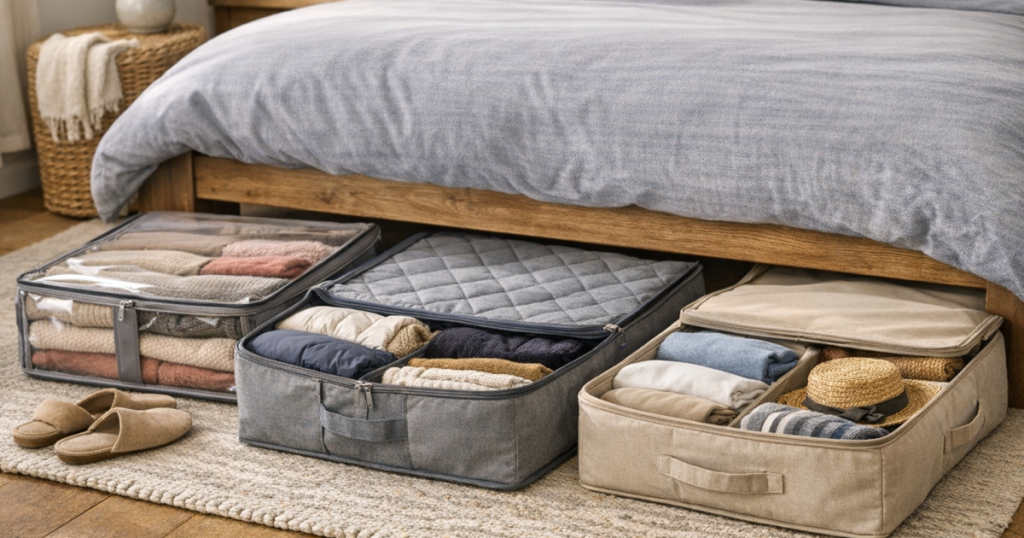
- Soft zipped fabric bags: Best for general seasonal clothing, knitwear and spare bedding. They are flexible and usually easy to slide into tight spaces, but they need careful filling to avoid sagging.
- Structured fabric cases: Better for regular access because they keep their shape. They suit wardrobes where clothes are rotated by season, school term or household member.
- Clear-window bags: Useful for children’s clothes, uniform spares and holiday wear. Check that the window panel feels smooth and well-stitched, with no rough plastic edges near delicate fabrics.
- Vacuum bags inside a fabric cover: Useful for bulky synthetic bedding or robust casualwear, but not ideal for wool, cashmere, down, structured tailoring or embellished pieces.
- Drawer-style under-bed organisers: Good when you need frequent access, though they are less forgiving on uneven floors and may be too rigid for some divan bases.
Examples many UK shoppers may recognise include the IKEA SKUBB Storage Case, the Amazon Basics Underbed Fabric Storage Bags and SONGMICS Under Bed Storage Bags. Treat these as examples of the type rather than automatic answers: check the current dimensions, materials, zip design, handle placement and returns information against your own bed and wardrobe.
Key checks before clothes go under the bed
Check for dryness, not just cleanliness
Clothes can feel dry on the surface while seams, waistbands and cuffs still hold moisture. Let thicker garments air fully before packing. If your home is prone to condensation, avoid storing bags tight against external walls and check them during colder months. A stale smell usually means trapped moisture, residue or poor airflow rather than a problem with the bag alone.
Check the zip and seams
A storage bag fails fastest at the zip, handle or corner seam. Run the zip slowly before filling the bag. Look for loose threads, sharp teeth, thin plastic and handles that pull against a single weak seam. A slightly sturdier bag is usually better value than one that tears the first time it is pulled from beneath a bed.
Check the fabric surface
The inside of the bag should feel smooth enough for knitwear and delicate fabrics. Rough woven interiors, exposed hook-and-loop fastenings, cracked plastic windows or unfinished seams can catch fine fibres. For cashmere, merino, silk blends and embellished clothing, add a soft cotton layer between the garment and the bag.
Check whether you can identify the contents
Under-bed storage becomes frustrating when every bag looks identical. Use a luggage tag, masking tape label or written inventory slipped inside a clear sleeve. Keep categories simple: winter jumpers, summer tops, spare schoolwear, holiday clothes, occasionwear. The aim is to avoid opening every bag and disturbing neatly folded clothes.
How to pack seasonal clothes properly
- Sort by fabric and use: Keep wool with wool, summer cottons together, and structured garments separate from heavy casualwear.
- Clean first: Store only garments that are free from body oils, food marks and strong fragrances.
- Fold with fewer hard edges: Sharp folds can set over months. Refold delicate items halfway through long storage if possible.
- Do not overfill: A bulging bag strains zips and crushes garments. Leave enough give for the bag to close without force.
- Place heavier items at the bottom: This prevents small or delicate garments being compressed unevenly.
- Add a simple label: Label by season, person or garment type so the bag is useful rather than hidden clutter.
If you are storing coats, jumpers or delicates for more than a season, it is worth following a fuller routine. Our long-term clothes storage guide for coats, jumpers and delicates covers preparation, folding and checking in more depth.
When under-bed bags are the wrong answer
Some garments are better stored elsewhere. Avoid under-bed bags for damp-prone rooms, heirloom textiles, heavily structured tailoring, leather, suede, fur, down garments that need loft, and anything with fragile surface decoration. These items generally need more space, more airflow or a hanging position.
Also be cautious if you have pets that sleep under the bed, a bed frame with rough unfinished wood, or a room where condensation forms on windows most mornings. In those cases, a wardrobe shelf, breathable garment cover or lidded storage box in a drier area may protect clothes better.
Helpful questions
Are vacuum bags good for seasonal clothes?
They are useful for robust, bulky items such as some synthetic bedding, but they are poor choices for wool, cashmere, down, structured jackets and embellished garments. Compression can flatten fibres and set creases.
Should clothes storage bags be plastic or fabric?
Fabric is usually better for garments because it allows more breathability. Plastic can work as a dust barrier for short periods, but trapped moisture and condensation are bigger risks in many UK homes.
How often should I check clothes stored under the bed?
Check seasonal clothes every couple of months, and more often in damp rooms or during colder weather. Look for musty smells, moth activity, condensation, zip strain and crushed folds.
Can I store shoes with clothes under the bed?
Keep shoes separate. Soles can transfer dirt and odour, and leather or suede may need different airflow. If space is tight, use a separate shoe organiser rather than mixing shoes with clean clothing.
The big picture
The best under-bed clothes storage bags are the ones that suit your fabrics as well as your space. For most seasonal wardrobes, choose breathable zipped storage, avoid overfilling, keep wool moth-aware, and reserve compression for sturdy items only. Under-bed storage should make clothes easier to find and kinder to keep, not turn next season’s wardrobe into a creased, stale-smelling surprise.