A wool-heavy wardrobe can look perfectly clean while moth larvae are working through seams, cuffs and folded knitwear. Good clothes moth protection starts with choosing the right mix of monitoring, cleaning, storage barriers and, where needed, targeted moth-control products.
The aim is not to make every cupboard smell strongly of cedar or lavender. It is to reduce the conditions moths like, spot activity early, and protect the garments that would be most expensive or upsetting to lose.
The short version
- Use pheromone traps to monitor adult moth activity, not as the only line of defence.
- Clean wool before storage because larvae are attracted to food marks, perspiration and body oils.
- Choose sealed breathable storage for off-season knitwear and coats, rather than relying on an open rail.
- Use labelled moth-control products exactly as directed, especially around children, pets and delicate fabrics.
- Check wardrobes regularly; prevention works best before holes appear.
What you are actually protecting wool from
The damaging stage is the larva, not the fluttering adult moth you see near the wardrobe. Larvae feed on animal fibres such as wool, cashmere, alpaca, mohair, silk blends and fur trims, and they are more likely to settle where garments are undisturbed, slightly soiled or packed tightly.
UK homes can create ideal pockets for them: warm bedrooms, fitted wardrobes against external walls, spare-room rails, under-bed storage and winter coats left untouched through summer. Wool does not need to be visibly dirty to be vulnerable. A fine layer of skin oils around collars or food traces on a cuff can be enough to make one jumper more attractive than another.
When using insecticide sprays, papers, cassettes or hanging units, follow the product label exactly, including where it can be used, how long it lasts, and whether garments need airing before wearing. Avoid spraying unknown finishes, vintage linings, leather trims or beaded garments without checking suitability first.
Step 1: inspect before you buy anything
Buying a box of sachets is tempting, but inspection tells you whether you need prevention, monitoring or a more active response. Empty the wardrobe enough to see corners, shelf edges, carpet joins and the underside of folded piles. Look for irregular holes, gritty debris, shed larval cases, webbing, loose fibres and unexplained thinning on cuffs, hems or underarms.
Pay close attention to cashmere and lambswool because fine fibres can show damage quickly. If your main concern is high-value knitwear, it is worth pairing this article with the separate advice on storing cashmere jumpers to prevent moth damage, as folded storage and cleaning habits matter as much as the moth product you choose.
If you find one damaged item, do not assume the problem is limited to that garment. Check neighbouring pieces, the shelf beneath and any fabric storage boxes nearby. Moths rarely respect the neat boundaries of wardrobe sections.
Step 2: choose the right type of moth product
Different products do different jobs. A strong wardrobe plan usually combines two or three of the following, rather than expecting one item to solve everything.
Pheromone traps for monitoring
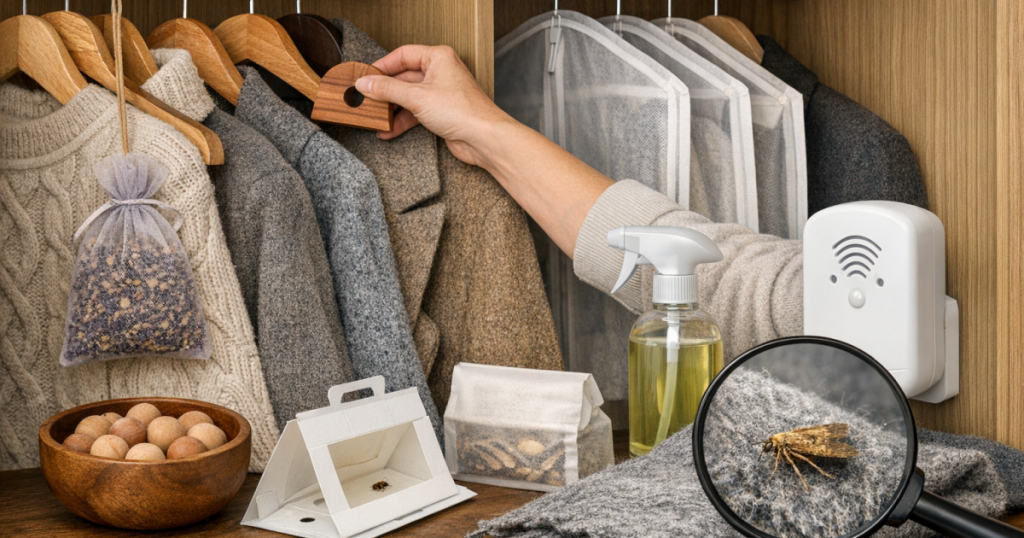
Pheromone traps attract certain adult male clothes moths, depending on the species the trap is designed for. They are useful for showing whether moths are active and where activity is highest, but they do not kill larvae already feeding on wool. Place them where the label advises and check them on a routine, rather than hiding them behind piles of clothes and forgetting them.
For example, Zero In Clothes Moth Traps are the sort of product to compare if you want a visible monitoring option for wardrobes, cupboards or storage areas. Before buying, check the pack details for intended moth type, number of traps, replacement timing and where they should be positioned.
Repellent sachets for low-risk wardrobes
Lavender, cedar and other scented sachets can make storage areas less inviting, but they should be treated as support rather than a cure. They are most useful in clean, regularly checked wardrobes where you have no sign of a serious infestation. If the scent fades, the product may need replacing or refreshing according to the instructions.
Natural-scented options such as Total Wardrobe Care Natural Moth Repellent Hanging Sachets are worth comparing if you dislike harsh smells but still want a tidy hanging format. Check whether the fragrance could transfer to delicate fabrics, and avoid placing sachets directly against pale silk linings, vintage wool or embellished pieces.
Killer papers, cassettes and hanging units
More active products are designed for situations where you have seen moths, found damage, or want extra protection in a closed wardrobe. These can be useful, but only when the product is suitable for the space and used exactly as labelled. Do not mix multiple insecticide products casually in a small cupboard, and do not assume that a stronger smell means better protection.
Acana Moth Killer and Freshener Sachets are one example of a hanging or sachet-style option readers may compare for enclosed wardrobe use. Check the current label for active ingredients, coverage, duration, scent and restrictions before placing anything near valuable garments.
Storage bags and boxes as physical barriers
Sealed storage is often the most overlooked part of clothes moth protection. Clean wool jumpers folded into zip storage bags or lidded boxes are harder for moths to access than an open stack on a shelf. For natural fibres, avoid trapping dampness: garments should be fully dry, cool and clean before sealing.
For seasonal coats, formalwear, wool blankets and delicates, use storage that keeps dust and pests out without crushing the fabric. The broader long-term clothes storage guide for coats, jumpers and delicates explains how to prepare garments before they disappear into cupboards for months.
Step 3: match protection to your wardrobe setup
A fitted wardrobe with doors needs a different plan from an open rail in a spare room. The more exposed the clothes are, the more you should rely on cleaning, garment rotation and sealed bags for valuable wool pieces.
Closed fitted wardrobes
Closed wardrobes are good for containing moth-control products, but they also create dark, undisturbed areas. Vacuum the floor and corners, leave a little space between garments, and use traps to understand whether activity is present. Hanging units or sachets may suit this setup if the product label allows wardrobe use.
Open rails and overflow storage
Open rails make garments easier to see and rotate, which can help, but they also expose wool to dust and household fibres. Keep the rail away from dark corners and avoid treating it as permanent storage for winter knitwear. If overcrowding is the underlying issue, consider whether a better rail or rearranged wardrobe would help; the guide to freestanding clothes rails for overflow wardrobe storage covers what to look for when clothing is spilling out of cupboards.
Drawers and under-bed boxes
Drawers are convenient for jumpers, but they can be neglected for long periods. Fold only clean wool, avoid overpacking, and place monitoring or repellent products where the label says they can be used. Under-bed boxes should close properly and be kept away from damp-prone rooms where condensation or mustiness could affect wool.
Step 4: check the label before choosing
The best choice is the one that fits your garments, storage space and tolerance for scent or chemicals. Before you buy, check these points carefully:
- Intended use: Is it for wardrobes, drawers, rooms, carpets or general household moths? Food moth traps are not the same as clothes moth traps.
- Target pest: Look for wording that clearly refers to clothes moths, not just moths in general.
- Coverage and replacement: Check how many wardrobes, drawers or cubic metres the pack is designed for, and how often it should be replaced.
- Fabric contact: Some products should hang freely and not touch clothing. This matters for pale wool, silk linings, suede, leather and embellished garments.
- Scent level: Strong fragrance can cling to coats and knitwear. Choose lighter options for small bedrooms or wardrobes used daily.
- Household suitability: Read precautions for homes with children, pets, allergy-prone occupants or sensitive skin.
- Evidence of infestation: If you have holes, larvae or webbing, monitoring alone is not enough. Clean, isolate and treat the storage area.
Step 5: set up a simple wardrobe routine
Once you have chosen the right products, the routine matters more than perfection. Start by removing wool items from the affected area. Launder washable pieces according to the care label, or use professional dry cleaning for garments that cannot be washed at home. Let everything dry fully before it goes back.
Vacuum shelves, skirting boards, wardrobe floors and drawer corners, then empty the vacuum promptly. Brush coats, shake out scarves and check inside pockets. Place traps or sachets where they can work without being crushed. For folded knitwear, keep the most valuable pieces in sealed bags or boxes and leave everyday items where you will disturb them often.
Repeat quick checks at natural changeover points: when winter coats come out, when jumpers are packed away, and when you notice moths near bedrooms or airing cupboards. A five-minute inspection every few weeks during warm months is more useful than a large rescue mission after damage appears.
Questions people ask
Are cedar balls enough for wool wardrobes?
Cedar balls can help as part of a clean, well-managed wardrobe, but they are not enough for an active infestation. Their scent also fades, so they need maintaining or replacing according to the product instructions.
Should I wash wool before storing it?
Yes, if the care label allows. Moth larvae are attracted to perspiration, body oils and food residues, so storing worn-but-unclean wool increases the risk of damage.
Do moth traps protect cashmere jumpers?
They help you detect adult moth activity, but they do not protect a jumper by themselves. Clean storage, sealed bags and regular checks are still needed for cashmere.
Can I use moth spray inside a wardrobe?
Only if the spray label says it is suitable for that use. Keep it away from direct fabric contact unless permitted, and be cautious with vintage garments, silk linings, leather trims and delicate finishes.
Why do moths keep coming back?
Common reasons include untreated larvae, dirty garments put back into storage, overfilled wardrobes, old wool blankets nearby, or traps placed in the wrong area. Work through the whole storage space, not just the damaged item.
What stands out
The most reliable clothes moth protection for a wool wardrobe is a layered system: clean garments, reduced clutter, sealed storage for valuable pieces, monitoring traps, and carefully chosen moth-control products where the risk is higher. Scented sachets can be useful, but they should not distract from the bigger habits that actually protect wool.
If you are starting from scratch, inspect first, clean second, then buy only what matches the wardrobe you actually have. That approach saves money, reduces unnecessary chemical use and gives your coats, jumpers and delicates a much better chance of surviving the season untouched.