Putting coats, jumpers and delicates away for several months is not just a matter of finding an empty box. For long-term clothes storage, the aim is to prevent three things: trapped soil, poor support and the wrong microclimate. Wool, silk, down, lace and structured tailoring all respond differently to pressure, humidity and pests, so the best storage setup is usually a mix of cleaning, folding, hanging and sensible airflow.
In brief
- Store only clean, fully dry clothes. Body oils, food marks, perfume and damp can all worsen while garments are packed away.
- Hang structured coats on supportive hangers, but fold knitwear and most delicate pieces to avoid stretching.
- Use breathable garment covers for wool coats and tailored pieces, not the thin plastic bags from dry cleaners.
- Keep storage away from damp-prone lofts, garages and external walls unless the space is consistently dry and well ventilated.
- Check stored clothes every couple of months if you are worried about moths, condensation or creasing.
Start with cleaning, not containers
The biggest storage mistake is packing away garments that look clean but carry invisible residue. Sweat, skin oils, food splashes and deodorant marks can oxidise over time, leaving yellowing, odour or weakened fibres. Moths and carpet beetles are also more attracted to natural fibres when they carry food-based or body-based residue.
Before storage, read the care label and treat each garment according to its fabric and construction. A washable cotton knit may only need a gentle cycle and careful drying, while a wool coat, beaded dress or lined silk blouse may need professional cleaning. Do not store anything that feels even slightly damp. In a British home, where spare rooms and cupboards can fluctuate with the weather, that small amount of moisture can quickly turn into mustiness.
Repairs are worth doing at this stage too. Loose buttons, torn linings, dropped hems and small moth holes tend to get worse when garments are handled later. If you cannot repair them immediately, label the item so it is not pulled out and worn in a hurry next season.
Coats need shape, space and breathable protection
Coats are usually the bulkiest items in seasonal storage, but they are also among the easiest to distort. Heavy wool coats, trench coats, padded jackets and structured overcoats should not be crushed into a vacuum bag or folded into a box for months unless the care label and construction make that safe.
Empty all pockets before storage. Keys, lip balm, tissues and receipts can mark linings, distort pocket bags or attract pests. Brush wool coats gently to remove lint and surface dust, fasten buttons or zips to help the garment sit straight, and hang the coat on a broad, shaped hanger that supports the shoulders.
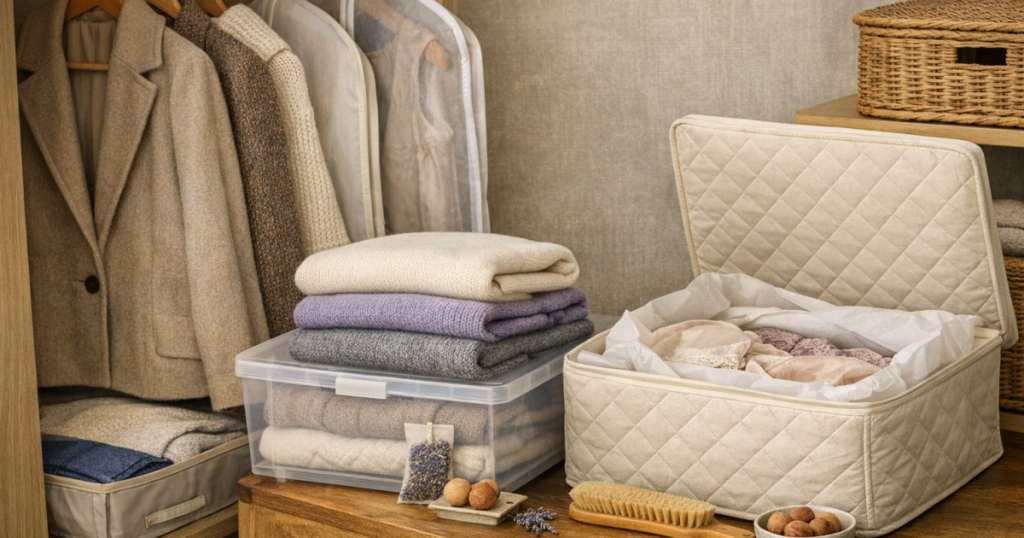
For long coats, choose a storage spot with enough drop so the hem is not curled on the floor. A breathable cotton or non-woven garment cover helps keep dust off while allowing air movement. Avoid the thin plastic covers supplied after dry cleaning; they are designed for short-term transport, not months in a wardrobe. Plastic can trap moisture and may encourage stale odours.
If your main wardrobe is already overfilled, moving off-season outerwear to a separate rail can be kinder to the garments than squeezing everything together. A sturdy rail with enough height for coats can also make it easier to air items before winter. For overflow setup ideas, see the guide to freestanding clothes rails.
Jumpers should be folded, not suspended
Knitwear behaves differently from tailoring. Wool, cashmere, alpaca, cotton and blended jumpers can stretch out of shape if they spend months on hangers, especially at the shoulders. Even a padded hanger can leave distortion in a heavy jumper over time.
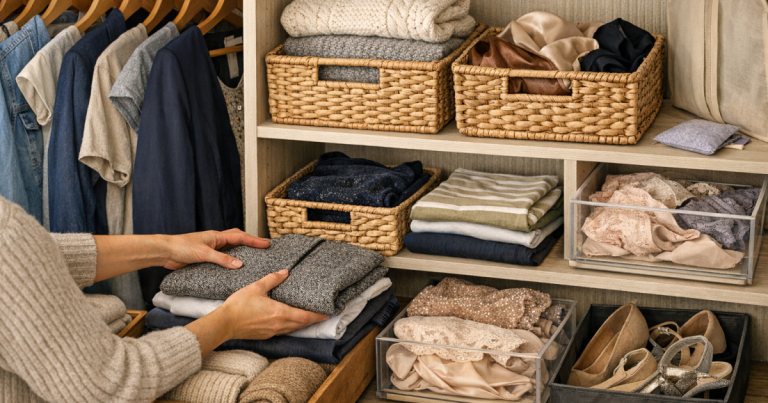
Fold jumpers along their natural lines and stack them loosely, with heavier knits at the bottom and finer pieces near the top. If the jumper is precious, pale or prone to creasing, place acid-free tissue between folds to reduce pressure marks. Do not overpack the storage box; a compressed jumper is more likely to come out flattened, creased and musty.
Vacuum storage bags are tempting because they save space, but they are a poor default for wool and cashmere. Compression can flatten fibres and make garments harder to refresh later. They can be useful for robust synthetic items or spare bedding, but knitwear generally stores better with a little air around it.
Moth prevention matters most with animal fibres. Cleanliness is the first defence, followed by sealed but not airtight storage, regular checks and good housekeeping around wardrobes and skirting boards. Cedar blocks and lavender sachets may help as part of a wider routine, but they are not a complete solution on their own. For more detail on protecting premium knits, read the separate advice on storing cashmere jumpers safely.
Delicates need gentler decisions
Delicates are not one single category. A silk camisole, lace bra, satin bridesmaid dress, embroidered scarf and fine viscose blouse all need slightly different handling. The common rule is to avoid unnecessary pressure, friction and snagging.
Bras should not be flattened into a box with heavy garments on top. Moulded cups can dent, lace can catch, and underwires can distort if the garment is twisted. Fasten hooks before storing, nest cups where the design allows, and place bras in a shallow drawer, lidded box or fabric pouch rather than a tightly packed bag. If they need washing before storage, follow careful methods for washing bras without bending the underwire.
Silk and satin garments should be stored clean and away from direct light, which can fade or yellow delicate fibres. Avoid hanging very fine bias-cut dresses for months if the weight of the fabric could lengthen the garment. For embellished or beaded pieces, flat storage with tissue support is usually safer than hanging, because the decoration can pull on the base fabric.
Scarves, lace tops and fine camisoles can be rolled loosely or folded with tissue. Keep items with hooks, sequins, beading or rough fastenings away from smooth fabrics. One snag during storage can be harder to fix than a crease.
Where to store clothes in a British home
The right location is as important as the right box. Many UK homes have limited built-in storage, so it is common to use under-bed drawers, spare-room wardrobes, airing-cupboard shelves, loft spaces or garage shelving. Not all of these are suitable for valuable clothing.
Under-bed storage can work well if the room is dry and the boxes allow garments to lie flat. Choose containers that close securely against dust but do not trap damp clothes inside. If the bed is against an external wall or the room is prone to condensation, check the boxes periodically.
Lofts and garages are more variable. Heat, cold and damp can fluctuate sharply, and pests are harder to monitor. They may be acceptable for robust, washable items in sealed containers, but they are not ideal for wool coats, cashmere, silk or sentimental pieces. If you must use a loft, avoid placing boxes directly on dusty boards or against roofline condensation points, and check them before and after the coldest months.
Airing cupboards can seem sensible because they are warm, but they are not always suitable for delicate storage. Heat can set stains and dry out some fibres over time. Keep special garments in a cool, dark, stable space instead.
Containers, covers and labels that actually help
Fabric storage does not need to be complicated, but it should be deliberate. Breathable garment bags are useful for coats, suits and occasionwear. Lidded boxes are useful for folded jumpers, scarves and delicates. Acid-free tissue is helpful for pale, delicate or embellished garments, particularly where folds might otherwise create sharp creases.
Avoid using ordinary newspaper in direct contact with clothes, as print can transfer. Avoid cardboard boxes in damp-prone spaces, as they can absorb moisture and may attract pests. Clear plastic boxes make contents easy to identify, but they should only be used for fully dry garments and checked occasionally for condensation or stale odour.
Labels save unnecessary rummaging. Mark boxes by garment type and season, such as winter wool jumpers, summer silk tops or occasionwear. If you store clothes in opaque bags, add a paper tag to the hanger or handle. The less you have to dig, the less friction and creasing you create.
Different garments, different trade-offs
There is no single perfect storage method because space, fabric and risk all pull in different directions. Hanging protects the shape of coats but can stretch knitwear. Folding protects jumpers but can crease silk. Plastic boxes block dust and pests but may trap moisture if used carelessly. Breathable bags allow airflow but are not always pest-proof.
- For wool coats: clean, brush, hang on a broad hanger, cover with a breathable garment bag and give the coat space.
- For padded coats: follow the care label, avoid crushing the filling for long periods, and store loosely where possible.
- For chunky jumpers: fold in a breathable or lidded container, with heavier items underneath.
- For cashmere and fine wool: clean thoroughly, fold with tissue if needed, and monitor for moth activity.
- For bras and lingerie: store shallowly, avoid crushing cups, and separate rough fastenings from lace or silk.
- For silk and occasionwear: keep away from light, damp and heavy compression; use tissue where folds are unavoidable.
Refresh stored clothes before wearing
When garments come out of storage, resist the urge to wear them immediately if they smell stale or look compressed. Air them in a dry room away from strong sunlight. Shake out jumpers gently, brush coats, and inspect seams, cuffs, collars and underarms for marks that may have developed during storage.
Steam can help relax creases in many fabrics, but it is not suitable for every delicate finish, trim or structured garment. Test cautiously and keep steam away from leather trims, glued embellishments and fabrics that water-mark easily. If a garment smells musty after airing, wash or dry clean it before wearing rather than masking the odour with fragrance.
Common questions
Can I store coats in vacuum bags?
It is not ideal for structured wool coats, tailored coats or padded outerwear. Compression can distort shoulders, crush insulation and set deep creases. Use a breathable garment cover and a supportive hanger instead.
Should I wash every jumper before putting it away?
Yes, if it has been worn. Even if it looks clean, body oils and small food traces can attract moths or cause odour. Make sure the jumper is completely dry before folding it away.
Are plastic storage boxes bad for clothes?
Not necessarily. They can protect against dust and pests, but they must be used with dry garments in a dry space. Check occasionally for condensation, especially in cold rooms or under beds.
How often should I check stored clothes?
For valuable wool, cashmere or silk, check every couple of months. Look for moth activity, musty smells, condensation, colour change and deep creasing.
What is the best way to store delicates with hooks or beading?
Fasten hooks, wrap or separate textured areas, and avoid placing them against silk, satin or lace. Store the most fragile pieces flat with tissue rather than tightly folded.
Key takeaways
Good storage is less about buying special containers and more about matching the method to the fabric. Coats need support and airflow. Jumpers need folding and moth awareness. Delicates need light handling, separation from snagging details and protection from crushing.
If you start with clean, dry garments and choose a stable storage spot, most seasonal clothes will come out fresher, better shaped and easier to wear. The main warning signs to avoid are damp, compression, overcrowding and forgotten stains.