Knitwear loses its shape most often when it is heavy with water, unsupported at the shoulders, or pulled by pegs and narrow airer bars. The safest way to dry knitwear flat is to remove excess moisture first, support the whole garment, and reshape it before it starts to set. This matters for wool, cashmere, cotton blends and chunky acrylics, because weight and gravity can distort them even when the wash itself was gentle.
A good flat-drying routine does not need complicated equipment. A clean towel, a level surface, airflow underneath or around the garment, and a little patience are usually enough to keep cuffs, hems and shoulders from stretching.
The short version
- Never hang wet knitwear from a hanger, washing line or pegs, as the water weight can pull the garment longer.
- Press water out gently instead of wringing, twisting or dragging the fabric.
- Roll the garment in a clean towel before drying to reduce weight and speed up drying.
- Lay it on a flat surface in its natural shape, with sleeves, neckline, cuffs and hem supported.
- Turn it part-way through drying and improve airflow so it does not stay damp for too long.
Why wet knitwear stretches so easily
Knitted fabric is made from interlocking loops rather than a tightly woven structure. When those loops are wet, they are heavier, more flexible and more likely to move out of alignment. That is why a jumper that looked fine in the machine can end up with a longer body, drooping shoulders or flared cuffs if it is hung to dry.
Different fibres behave differently. Wool and cashmere can felt or shrink if agitated, heated or rubbed, but they can also stretch while wet if they are unsupported. Cotton knitwear can become particularly heavy after washing, so it is prone to lengthening. Acrylic and blended knits may seem more robust, but chunky stitches can still pull out of shape under their own weight.
The drying method matters as much as the wash. If you are dealing with wool specifically, it is worth checking the wash stage too: our guide to washing wool jumpers without shrinking or felting explains how to avoid damage before the garment even reaches the drying surface.
Step 1: Remove water without twisting the fibres
After washing, lift the knitwear with both hands so the full weight is supported. Do not hold it by the shoulders, neckline or one sleeve, because those points can stretch immediately when the garment is saturated.
If you have hand-washed the item, drain the basin first, then press the garment gently against the side or base of the basin to release water. Avoid wringing. Twisting forces the loops against each other and can permanently distort the shape, particularly around ribbed cuffs and hems.
If the item has come out of the washing machine, check whether it is still dripping. A gentle spin setting can help remove water from some machine-washable knits, but only follow the care label. Delicate wool, cashmere and embellished knitwear may need pressing and towel-rolling instead.
Step 2: Towel-roll before laying it out
Towel-rolling is the most useful preparation step because it removes excess water without stretching the garment. Lay a clean, dry bath towel on a flat surface. Place the knitwear on top, roughly in shape, then roll the towel and garment together from one end to the other.
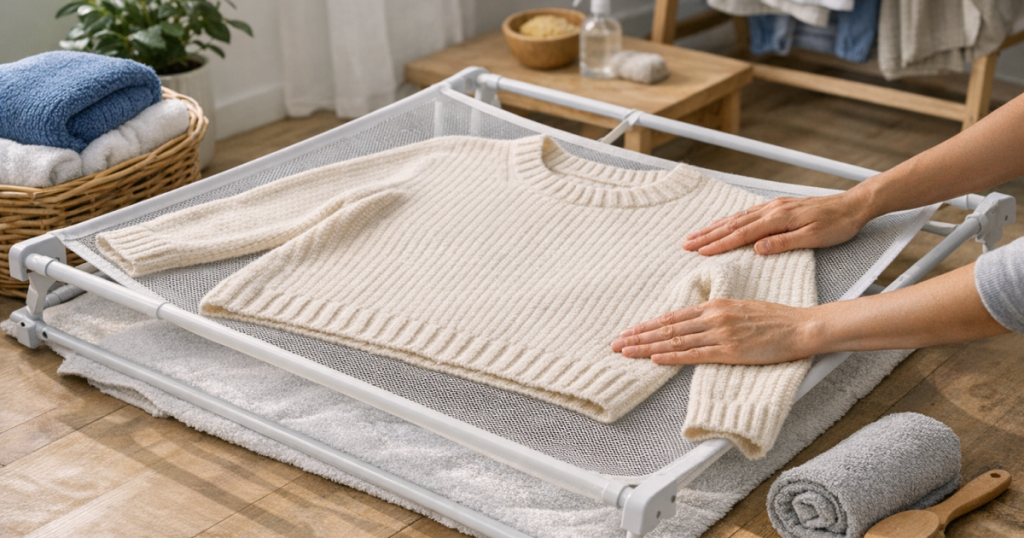
Press down along the roll with your hands. You are encouraging the towel to absorb moisture, not trying to squeeze the knitwear flat. Leave it for a few minutes, unroll, and move the garment to a dry towel or drying mesh. For thick jumpers, you may need to repeat the process with a second towel.
Use light-coloured towels for pale knitwear if there is any chance of dye transfer. Avoid towels with heavy lint shedding when drying darker cashmere or fine merino, as lint can cling to damp fibres.
Step 3: Choose the right flat surface
The ideal drying surface is flat, clean, colourfast and breathable. A mesh drying rack is useful because air can circulate underneath. A towel on a table, worktop, spare bed or clean floor can also work, provided the room has decent airflow and the surface will not be damaged by moisture.
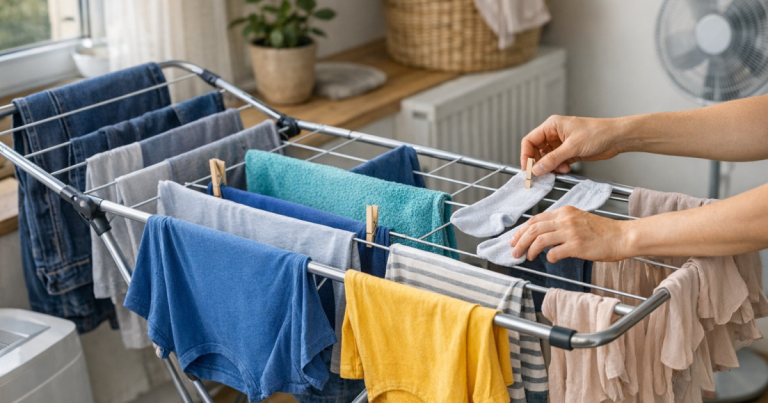
Avoid placing damp knitwear directly on radiators, heated towel rails or very hot surfaces. Heat can tighten, harden or distort fibres, and radiator bars can leave ridges in the fabric. Heated airers can be useful for general laundry, but knitwear still needs broad support rather than narrow pressure points.
If you are using a towel on a solid surface, replace the towel once it becomes damp. Leaving the garment on a wet towel slows drying and can encourage a stale smell, especially in cooler UK homes during autumn and winter.
Step 4: Lay the garment in its natural shape
Place the knitwear flat and smooth it gently with your hands. Do not pull it to make it look larger or neater. The aim is to return it to its natural proportions, not stretch it into a sharper outline.
For jumpers and cardigans
- Align the shoulder seams so they sit evenly.
- Bring the side seams straight without tugging the body longer.
- Lay sleeves slightly away from the body so air can circulate.
- Pat ribbed cuffs and hems back into shape rather than stretching them flat.
- Button cardigans loosely if that helps the front edges sit straight, but do not force tight buttoning on a damp garment.
For scarves and knitted accessories
- Support the full length instead of letting ends hang over the edge of a rack or table.
- Keep edges straight by patting them into place, not by pulling from the corners.
- For ribbed hats, shape the crown gently and avoid stuffing with towels unless the care label or maker recommends it.
If the garment had a good fit before washing, you can use another similar jumper as a rough visual reference. Do not stretch the wet item to match exact measurements unless you know the fabric responds well to blocking.
Step 5: Dry with airflow, not force
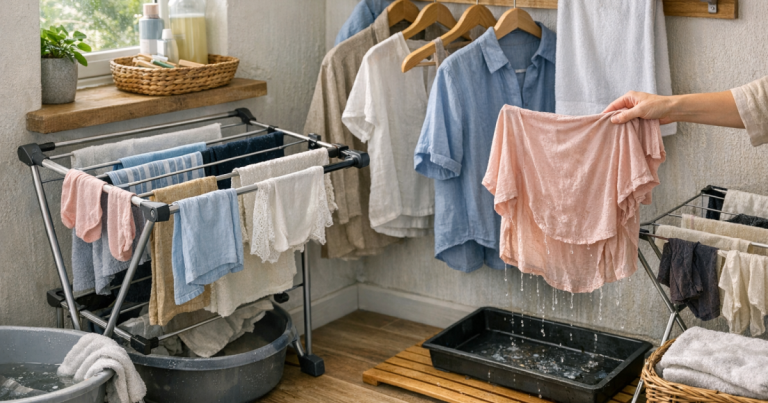
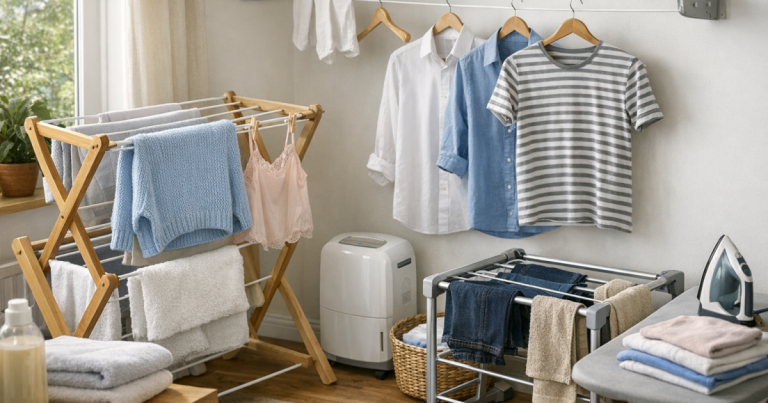
Flat drying can be slower than hanging, so airflow matters. Open an internal door, use a well-ventilated room, and keep the garment away from walls or corners where damp air gets trapped. In colder months, a dehumidifier can help the room dry laundry more efficiently without exposing the fibres to direct heat.
Do not blast a hairdryer at one area or place the garment in strong direct sunlight for long periods. Uneven drying can cause rippling, stiffness or faded patches, depending on the fibre and dye. A steady room temperature with gentle air movement is safer.
If indoor laundry often develops a stale smell in your home, the issue is usually lingering moisture rather than the knitwear itself. For more troubleshooting, read our advice on stopping air-dried clothes smelling damp indoors.
Step 6: Turn it carefully part-way through
Once the top feels noticeably less wet and the garment is stable enough to move, turn it over. Use both hands and support the whole piece, particularly with heavy cotton or chunky wool. If it feels too floppy to lift without stretching, slide your hands and forearms underneath or use a dry towel to help flip it.
Replace any damp towel underneath with a dry one. Smooth the garment back into shape after turning, paying attention to hems, cuffs, necklines and button bands. These areas set into shape as they dry, so it is easier to correct them while they are still slightly damp.
Do not rush the final stage. Knitwear can feel dry on the outside while still holding moisture inside thicker seams, ribbing or folded areas. Wearing or storing it too early can create creases, odour or misshapen pressure marks.
Checks before you put it away
Before folding knitwear back into a drawer or wardrobe, check it in good light. The garment should feel dry at the seams, underarms, cuffs and waistband, not just across the main body. Press thicker areas between your fingers; any cool, clammy feel means it needs longer.
Check the shape while it is still on the drying surface. If one sleeve is longer, a hem has kicked out, or the neckline has widened, pat the area back into place and allow it to finish drying flat. Minor reshaping is much easier before the fibres are fully dry.
Once dry, fold knitwear rather than hanging it. Hangers can create shoulder peaks and lengthen heavier garments over time. For seasonal storage, clean and fully dry knitwear first, then protect natural fibres from pests; our guide to clothes moth protection for wool wardrobes covers sensible options for wool and cashmere.
Common mistakes that cause stretching
- Hanging from the shoulders: wet shoulders take the strain first, leaving hanger bumps or a longer body.
- Pegging by the hem: this can pull the garment downwards and leave peg marks in ribbing.
- Using a narrow airer bar: the weight drops on either side of the bar, creating a crease and distortion.
- Dragging the garment when wet: lifting from one edge or sleeve stretches that section before the rest is supported.
- Leaving it on a soaked towel: slow drying increases odour risk and can make the fabric feel limp.
- Over-correcting the shape: pulling a jumper wider or longer can set the distortion you were trying to avoid.
What to do if knitwear has already stretched
If a jumper has stretched slightly while drying, re-dampen the affected area with cool water, press out excess moisture with a towel, and reshape it flat. This can help with mild distortion, especially at cuffs, hems or sleeves. Work gently and avoid trying to shrink one area with heat, as that can create a patchy texture or uneven fit.
For wool and cashmere, a light steam held at a safe distance can sometimes relax misshapen edges before you pat them back into place, but do not press heavily or drag the iron. Always protect delicate fibres with a pressing cloth if you use an iron near them, and test cautiously on an inconspicuous area.
If a garment has stretched dramatically, especially after being hung while soaked, it may not return fully to its original fit. In that case, focus on restoring symmetry and comfort rather than forcing it back to the exact size it was before.
Common questions
Can I dry a wool jumper on a normal clothes airer?
Yes, but only if the jumper is fully supported. Lay it across the top of the airer over a dry towel or mesh surface, rather than hanging it over one narrow bar or pegging it by the shoulders.
How long does flat-dried knitwear take to dry?
Light knitwear may dry within a day in a warm, ventilated room. Thick wool, cotton or chunky knits can take longer, especially in cool or damp weather. Turning the garment and replacing wet towels speeds things up.
Should I dry knitwear near a radiator?
Keep it near gentle warmth if the room is cold, but not directly on the radiator. Direct heat can distort fibres, create ridges and dry some areas faster than others.
Can I put knitwear in the tumble dryer?
Only if the care label clearly allows it. Many wool, cashmere and delicate knitted garments are not suitable for tumble drying because heat and movement can shrink, felt or distort them.
Is blocking the same as flat drying?
No. Flat drying is everyday garment care: you support the item and let it dry in its natural shape. Blocking is a more deliberate reshaping technique, usually used for hand-knits or specific fibre projects.
Main points
To keep knitwear from stretching, reduce water weight before drying, support the full garment, and reshape it gently while it is damp. Avoid hangers, pegs, radiator bars and heavy pulling. With a dry towel, a flat surface and good airflow, most jumpers, cardigans and knitted accessories can dry safely without losing their fit.