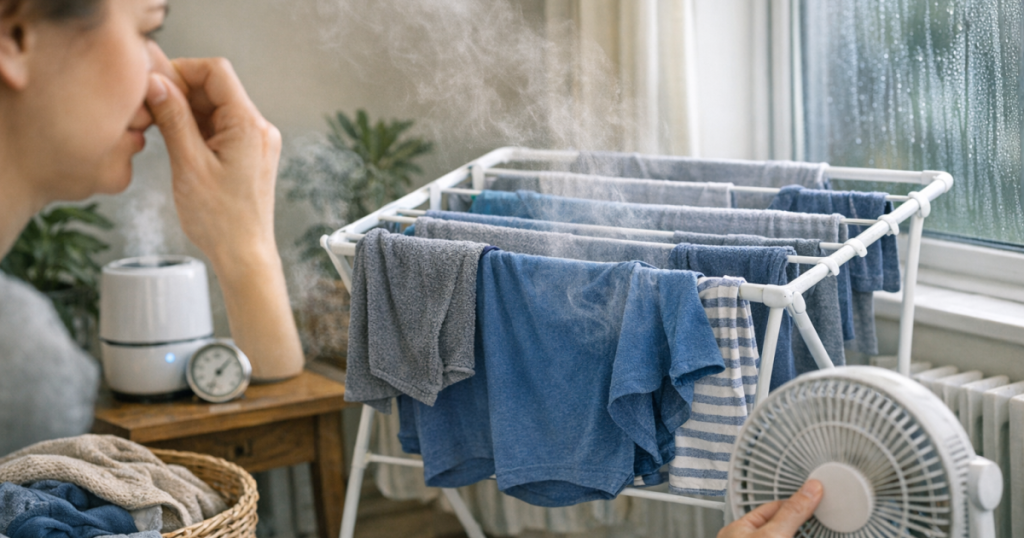
When clothes smell damp indoors, the problem is usually slow drying rather than dirty washing. Fabric that stays wet for too long gives odour-causing microbes time to develop, particularly in cool British homes where windows stay shut and laundry is packed tightly onto an airer.
The fix is not to add more fragrance. It is to get moisture out of the fabric faster, stop stale air sitting around the washing, and avoid habits that trap detergent, sweat or dampness in the fibres.
The short version
Fresh-smelling indoor drying comes down to four things: a clean wash, a strong final spin, enough space between garments, and controlled room humidity. If any one of those is poor, laundry can dry slowly and pick up that musty, cupboard-like smell even when it looked clean going into the machine.
- Do not overload the washing machine; clothes need movement to rinse properly.
- Use the highest spin speed the care label and fabric can tolerate.
- Hang garments with air gaps rather than draping them in thick layers.
- Dry in a ventilated room with a window ajar, extractor fan, heated airer or dehumidifier where suitable.
- Put clothes away only when seams, waistbands, cuffs and pockets are completely dry.
Start with the wash, not the airer
A damp smell often starts before the clothes leave the washing machine. If detergent, body oils and bacteria are not rinsed out properly, slow indoor drying makes the odour more obvious. This is common with gym kit, school shirts, chef whites, socks, towels and synthetic base layers, but it can happen with cotton T-shirts and bedding too.
Check three things first. The drum should not be packed solid, because laundry needs room to tumble through the water. Detergent should be measured for the load size, soil level and local water hardness rather than poured in generously. Too much detergent can leave residue, especially on towels, sportswear and dark synthetics. Finally, choose a wash programme with enough time and water movement for the load; quick washes are useful for lightly worn items, but they are not always the best choice for sweaty or heavily soiled laundry.
If the machine itself smells musty, clean the door seal, detergent drawer and filter according to the manufacturer’s instructions, then run a maintenance cycle if your machine provides one. Leaving the door and drawer slightly open after washing also helps the drum dry between loads.
Spin out as much water as the fabric allows
The wetter the laundry is when it reaches the airer, the longer it has to sit in the danger zone for odour. A stronger final spin can make a bigger difference than adding extra heat later, because it removes water before the drying stage begins.
Use a high spin for sturdy cottons, bedding, towels, jeans and everyday school uniform items where the care label allows it. Use more caution with wool, embellished clothing, delicate knits and garments that rely on shape, lining or surface texture. For those, excess twisting or aggressive spinning can cause distortion, felting or damage. If you are dealing with woollens, it is worth following a dedicated care process such as washing wool jumpers without shrinking or felting rather than treating them like ordinary cotton laundry.
For mixed loads, separate heavy and light items before drying. Towels and jeans hold a lot more moisture than shirts or underwear, and they can keep the whole airer humid for longer. If you have time, give very wet items an extra spin on their own before hanging them.
Give every garment an air gap
Indoor air drying fails when damp fabric is stacked too closely. Moisture evaporates from the surface of the cloth, so garments need exposed surfaces and moving air around them. If sleeves, trouser legs and towels are folded over themselves, the inner layers can stay damp long after the outside feels dry.
Hang shirts on hangers from a rail or door frame rather than folding them across several bars. Put trousers over two bars if you can, so the layers are separated. Open waistbands, cuffs, pockets and hoods. For hoodies, turn the hood out so it does not sit as a thick damp lump against the back. For towels, use the widest bars available and avoid laying one towel directly over another.
A winged airer can work well for everyday laundry because it lets you spread garments by length and weight. Larger items can sit across the wings, while small items can be kept to the centre bars without creating a dense wet block. If you are reviewing your basic setup, the Minky Winged Airer 20m review is a useful example of how a simple indoor airer fits normal household loads.
Choose the right room
The best drying room is not always the warmest room. It is the room where moisture can leave the air. A small spare room with the door shut may become saturated quickly, while a kitchen with an extractor fan or a room with a window cracked open may dry laundry more reliably.
Aim for gentle airflow rather than a blast of cold air. Keep the airer away from walls, wardrobes and curtains so moisture is not trapped against cool surfaces. If condensation forms on windows, tiles or external walls, the room is holding more moisture than it can comfortably manage. That does not just slow drying; it can leave clothes smelling stale and make the room feel clammy.
Drying in a bedroom is not ideal if it leaves the room humid overnight. If it is the only available space, leave the door open during the day, avoid cramming the airer into a corner, and make sure the washing is fully dry before bedtime if possible. In flats and smaller homes, rotating laundry position during the day can help: start near ventilation, then move lighter almost-dry items to a less busy spot while heavier pieces continue drying.
Control humidity rather than masking odour
Fabric sprays and highly scented detergent can temporarily hide damp smells, but they do not solve the cause. Humidity control is more reliable. A dehumidifier can be especially useful in UK homes during wet, cool weather, because it removes moisture from the room while clothes dry. Placement matters, though: the machine needs access to the damp air coming off the laundry, not a blocked corner behind furniture. For a fuller setup method, see this guide to positioning a dehumidifier when drying laundry indoors.
If you do not use a dehumidifier, combine modest ventilation with sensible spacing. Open a window slightly for part of the drying time, use an extractor fan where available, and keep internal doors positioned so air can move. In very cold weather, a short burst of ventilation can still help remove moisture, but avoid leaving laundry in a chilly, stagnant room all day.
Heated airers can also help because they add gentle warmth at the point where fabric is drying. They are not magic cupboards: clothes still need spacing and the room still needs a way to deal with moisture. A cover can speed drying on some setups, but it should not leave garments bunched together or create a wet tent with no airflow. For a realistic look at the trade-offs, the Lakeland DrySoon 3-Tier Heated Airer review covers how this type of indoor drying arrangement behaves in normal home use.
Dry different fabrics in different ways
Not every garment should be treated the same. Thick cotton and terry towelling need space and time; synthetics may dry quickly but can hold odours if not washed thoroughly; wool needs gentle reshaping and careful drying away from direct heat. Sorting by fabric type prevents one slow-drying item from making the rest of the load smell stale.
Towels and bedding
Towels are among the worst offenders because they hold water deep in the pile. Do not crowd them. Give them the strongest suitable spin, shake them out before hanging, and avoid folding them over narrow bars in several layers. Bedding should be spread as widely as space allows; a duvet cover twisted into a rope will take far longer to dry.
School uniform and workwear
Blazers, trousers, shirts and uniforms often need to be ready quickly, so avoid leaving them trapped between heavier wet items. Shirts dry better on hangers with buttons opened and collars shaped. Lined garments need particular care because the outer fabric may feel dry before the lining is ready.
Sportswear and synthetics
Synthetic fibres can smell damp or sour if sweat and detergent residue remain. Wash them promptly after wear, avoid overloading the drum, and let them dry with plenty of air around underarms, waistbands and elasticated sections. Do not assume a quick wash is enough for heavily worn kit.
Wool and delicate knits
Wool should usually be dried flat after excess water has been gently removed. Hanging a wet wool jumper can stretch the shoulders and length. Reshape it while damp, keep it away from direct heat, and give it time in a well-ventilated spot. Damp wool can smell musty if stored too soon, so check thick seams and ribbed trims carefully.
Do not put laundry away too early
Clothes can feel dry on the surface while still holding moisture in thicker areas. Before folding, check waistbands, hems, collars, cuffs, underarm seams, pockets, hood seams and the corners of bedding. These spots dry last because fabric is doubled, stitched or compressed.
If an item is almost dry but not quite there, give it another hour in open air rather than putting it into a drawer. Wardrobes and drawers are enclosed spaces, so even a small amount of retained moisture can make surrounding clothes smell stale. This is also why ironing slightly damp clothes and then folding them immediately can backfire unless they have cooled and dried fully before storage.
When laundry has dried slowly, smell it before storing. If the odour is faint, extra airing may be enough. If it smells sour or musty while dry, rewashing is usually better than spraying it and hoping the smell disappears.
A simple indoor drying routine that works
Use this sequence when the weather makes outdoor drying unrealistic:
- Wash a manageable load rather than filling the drum to the limit.
- Choose a suitable programme and avoid excessive detergent.
- Run the strongest safe spin for that fabric group.
- Shake garments out as soon as the cycle ends.
- Hang heavy items separately from light items.
- Leave clear gaps between garments and open thick areas such as hoods and pockets.
- Dry in a room with ventilation, a dehumidifier or controlled gentle heat.
- Check hidden damp spots before folding or storing.
If you regularly find that clothes smell damp indoors after following these steps, look for a bottleneck: a washing machine that needs cleaning, a room with persistent condensation, an overloaded airer, or thick items drying alongside everything else. Fixing the bottleneck is more effective than changing fragrance or adding more detergent.
Helpful questions
Why do clothes smell damp indoors even after washing?
They usually dried too slowly, were not rinsed properly, or were stored before fully dry. Detergent residue, sweat and poor airflow make the smell more likely.
Is it better to open a window or use a dehumidifier?
Both can help. A window lets moist air escape, while a dehumidifier removes moisture without relying on outdoor conditions. In cold, wet weather, a dehumidifier is often more consistent.
Can fabric conditioner stop damp smells?
Fabric conditioner can add fragrance, but it will not fix slow drying or residue. On towels and some sportswear, too much conditioner can reduce absorbency or trap odour.
How long is too long for clothes to dry indoors?
There is no exact cut-off, but laundry that stays damp into the next day is more likely to smell stale. Improve spin, spacing, airflow or humidity control if drying routinely takes that long.
Should I rewash clothes that already smell musty?
If the smell remains once the item is dry, rewash it. Airing can help a slight enclosed smell, but a sour or musty odour usually needs a proper wash and faster drying.
In brief
Stopping damp smells is mainly about drying speed and moisture control. Wash loads need enough space to rinse clean, garments need a strong suitable spin, and the airer needs gaps so moisture can escape from the fabric. Indoors, the room matters as much as the airer: stale, humid air will slow everything down. Once you combine better washing habits with airflow, spacing and humidity control, air-dried laundry should come off the rack smelling clean rather than cupboard-damp.