Delicate dresses can look freshly pressed with very little contact, but they can also show every droplet if steam condenses on the surface. The safest way to steam delicate dresses is to use controlled, indirect steam, keep the fabric lightly supported, and let the dress dry fully before wearing or storing it.
The aim is not to blast creases out as quickly as possible. It is to relax the fibres without soaking the face fabric, disturbing the finish or trapping moisture in linings, seams and embellishments.
The short version
- Check the care label first, especially on silk, viscose, acetate, satin, chiffon, velvet and embellished occasionwear.
- Use clean water and let the steamer or iron reach full steam before it goes near the dress.
- Purge the first burst of steam into a towel, not onto the garment.
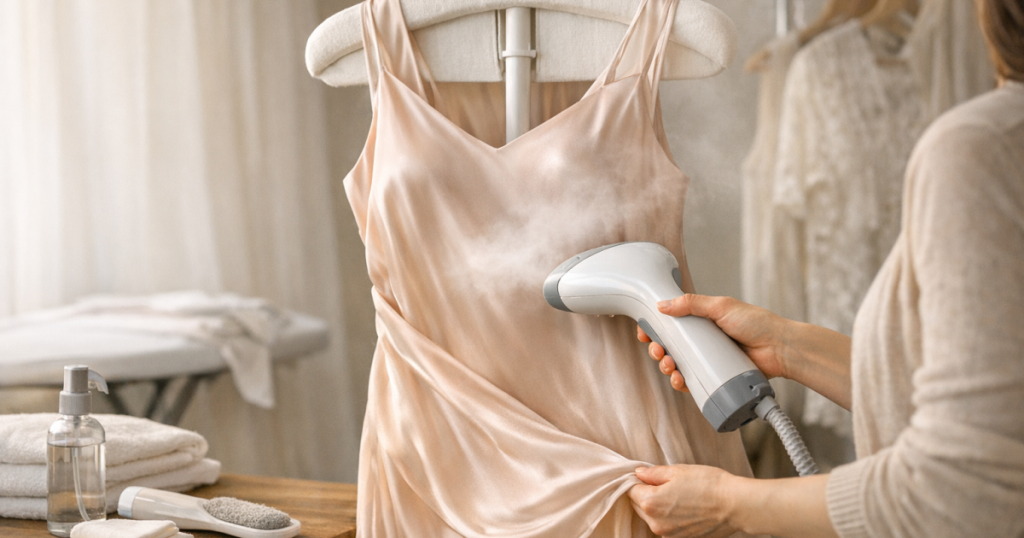
- Hold the steamer head slightly away from the fabric rather than pressing it flat against delicate surfaces.
- Steam from the inside where possible, working in small sections from top to bottom.
- Let the dress air dry completely before wearing it, putting it in a garment bag or returning it to the wardrobe.
Why water marks happen on delicate dresses
Water marks usually appear when droplets sit unevenly on the fabric, then dry at different rates. On smooth or light-reflective finishes such as satin, silk and some viscose blends, even a small patch of uneven moisture can leave a visible tide line.
They can also come from minerals in the water, stale water left inside a steamer tank, condensation inside the hose, or holding the steam plate too close to the dress. In hard-water parts of the UK, mineral residue is a common culprit, but you should still follow the appliance manual on what type of water is suitable, as some steamers and irons have specific guidance.
Fabric structure matters too. A tightly woven satin face may show a ring where moisture dries; a crinkle viscose dress may stretch if over-wet; and a lined evening dress can trap steam between layers. If the garment has beading, sequins, metallic thread, flocking or glued trim, treat it as extra sensitive.
Set up before the steam reaches the dress
Preparation prevents most marks. Do these checks before switching into a full steaming routine:
- Read the care label: if it says dry clean only, steaming may still be possible for gentle refreshing, but avoid heavy steaming and never use it to remove stains.
- Test a hidden area: use the inside hem, seam allowance or lining edge. Let it dry fully before judging the result.
- Empty the pockets and remove belts: weight can pull damp fabric out of shape.
- Close zips and fasten buttons: this helps the garment hang in its intended shape.
- Use a smooth, supportive hanger: narrow hangers can create shoulder points on fine fabrics. For longer-term storage, see the guide to choosing hangers that stop shoulder bumps.
- Place a clean towel underneath: it catches drips and gives you somewhere to purge steam away from the garment.
- Work in good light: water specks are easier to spot early on a satin or silk finish than after the whole dress has been treated.
Step-by-step: steaming without speckling the fabric
1. Let the appliance heat fully
Do not start with the first weak puff of steam. Whether you are using a handheld garment steamer, an upright steamer or an iron on a vertical steam setting, wait until the steam flow is steady. The early bursts can spit water, especially if the tank has just been filled or the appliance has been moved around.
2. Purge steam into a towel first
Point the nozzle or soleplate away from the dress and release steam into a clean white towel for a few seconds. This clears condensation from the head and hose. If droplets continue to spit, stop and check the water level, heat setting and appliance instructions before going near the fabric.
3. Start from the inside where you can
Turn the dress slightly so you can steam through the reverse side or lining in areas such as the bodice, skirt panels and sleeves. This reduces direct moisture on the visible face. For very sheer fabrics, keep your free hand behind the fabric only if you can do so safely without putting skin in the steam path; otherwise use a clean steaming mitt or padded board behind the section.
4. Keep a small gap
For delicate fabrics, avoid clamping the steamer head onto the cloth. A gap of around 5–10 cm is a sensible starting point for fragile surfaces, then adjust based on how the fabric responds. If the dress needs more help, increase gentle tension rather than soaking the same spot.
5. Use light tension, not force
Hold the hem or side seam lightly so the fabric is smooth but not stretched. Steam relaxes fibres; pulling too firmly while the fibres are warm and damp can distort bias-cut dresses, viscose skirts and fine jersey panels. Work downwards with gravity rather than dragging the garment into shape.
6. Move continuously
Keep the steam moving in slow vertical passes. Do not hover over one crease until the fabric looks wet. If a crease remains, let the area cool for a moment, then repeat with another light pass. Multiple gentle passes are safer than one saturated pass.
7. Let it dry on the hanger
After steaming, leave the dress hanging in open air until the surface and inner layers feel dry. Do not put it straight into a wardrobe, plastic cover or suitcase. If your home has limited drying space, a planned airflow area helps prevent trapped moisture; the advice on a drying setup that protects clothes is useful for delicate garments as well as laundry.
Adjust the method for the fabric
- Silk: steam from the reverse where possible, use the lowest effective exposure, and stop immediately if the surface darkens or ripples. Never try to steam out a stain.
- Viscose: use minimal tension because damp viscose can stretch. If this is a recurring issue in your wardrobe, the separate guide to steaming viscose without water marks covers that fibre in more detail.
- Satin: keep the nozzle moving and avoid touching the shiny face. Satin often shows uneven moisture before other fabrics do.
- Chiffon and georgette: steam from a distance and avoid directing steam at one layer folded over another, as trapped condensation can form patches.
- Velvet or pile fabrics: avoid pressing the head against the pile. Steam from the reverse or let steam rise gently beneath the fabric to refresh it without flattening the texture.
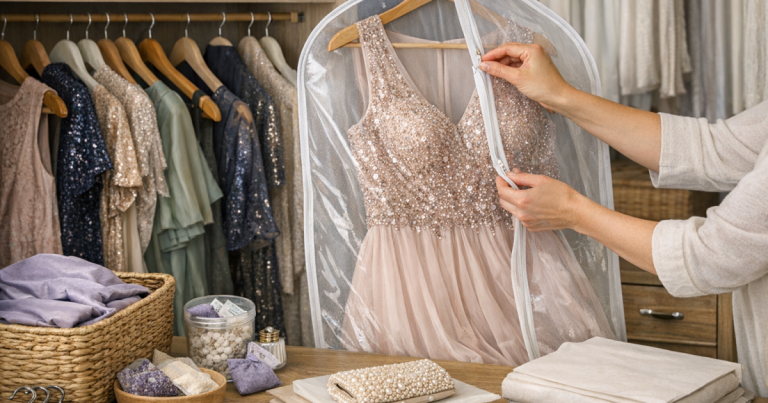
- Embellished dresses: avoid direct steam on glued stones, sequins, metallic trims and delicate appliqué. Concentrate on plain fabric areas around them.
When a steamer is not the right tool
Some dresses need a different approach. Sharp pleats, tailored seams, collars, cuffs and structured waist details may respond better to careful pressing with a cloth, if the care label allows it. A steamer is excellent for relaxing soft creases, but it is not a replacement for every ironing job.
If you regularly care for occasionwear, work dresses or mixed-fibre garments, it helps to understand the difference between steaming and pressing. The guide to garment steamers and irons explains where each tool tends to give better fabric care results.
If a water mark appears
Stop steaming the area straight away. Let the fabric cool, then blot gently from the reverse with a clean, dry white cloth. Do not rub the face fabric, as rubbing can lift dye, flatten texture or create a shiny patch.
If the mark is only moisture, it may disappear once the whole area dries evenly. Hang the dress in good airflow and check it after it is fully dry. If there is a visible ring, mineral residue or a stain that was activated by steam, avoid adding more water. For valuable silk, vintage garments, bridal dresses or heavily embellished pieces, a specialist cleaner is safer than repeated home attempts.
Common mistakes that cause water marks
- Starting too close: direct contact can transfer droplets before you notice them.
- Using an overfilled tank: this can encourage spitting on some appliances.
- Steaming flat on a bed: steam cannot escape properly and moisture pools under the fabric.
- Using coloured towels behind pale dresses: damp heat can transfer dye from an unstable cloth.
- Rushing straight into storage: trapped humidity can leave creases, odour or marks in linings.
- Trying to fix stains with steam: heat can set some marks, including oily food, perfume residue and make-up.
FAQ
Can I use tap water in a clothes steamer?
Check the appliance manual. In many UK homes, hard water can leave mineral residue, but some appliances specify which water types are suitable. Always empty old water and start with a clean tank.
Should I steam a dress before or after doing my hair and make-up?
Steam the dress first, let it dry fully, then keep it away from hairspray, perfume and make-up. These residues can mark delicate fabrics and may become harder to remove with heat.
Can steaming shrink a delicate dress?
It can contribute to shrinkage or distortion if the fabric is heat-sensitive, over-wet or pulled while damp. Viscose, silk blends and loosely woven fabrics need especially gentle handling.
How long should I leave a steamed dress before wearing it?
Leave it until it feels completely dry at seams, hems and linings, not just on the surface. For a lined occasion dress, allow extra time in open air before wearing or packing.
Is it safe to steam a dress with sequins?
Use caution. Avoid direct steam on sequins, glued embellishments and metallic trims. Steam the plain fabric around them from the reverse and stop if any trim loosens or changes appearance.
Main points
Water marks are usually caused by droplets, condensation, mineral residue or over-wetting rather than steam itself. The safest routine is to test first, purge the appliance, steam from the reverse where possible, keep a little distance, move continuously and allow the dress to dry properly before use.
For delicate dresses, patience gives better results than intensity. If the fabric darkens, spits, stretches or reacts during testing, stop early and choose a lower-risk care method rather than trying to force the crease out.