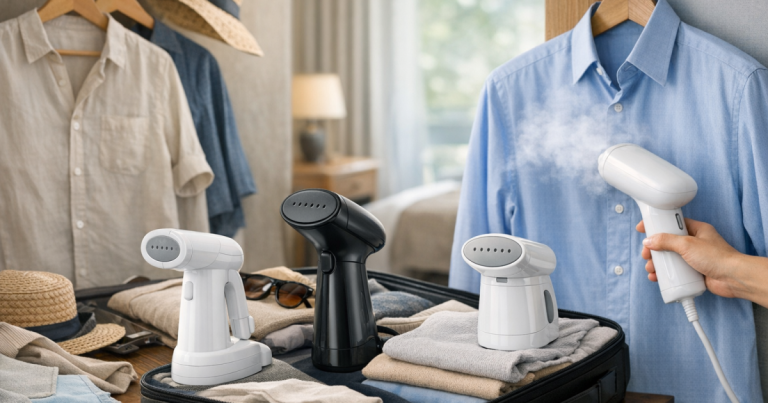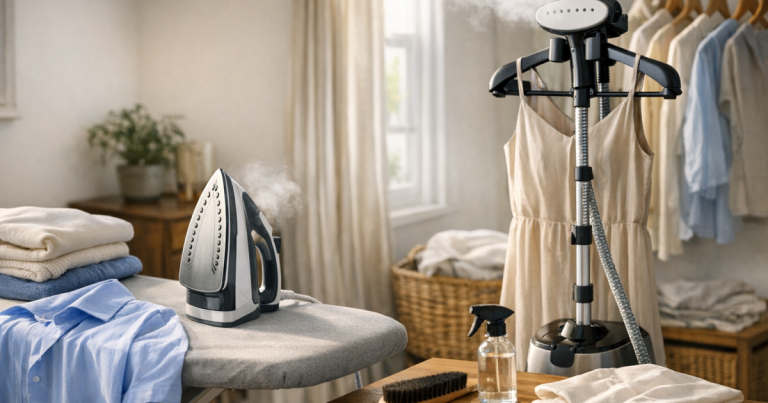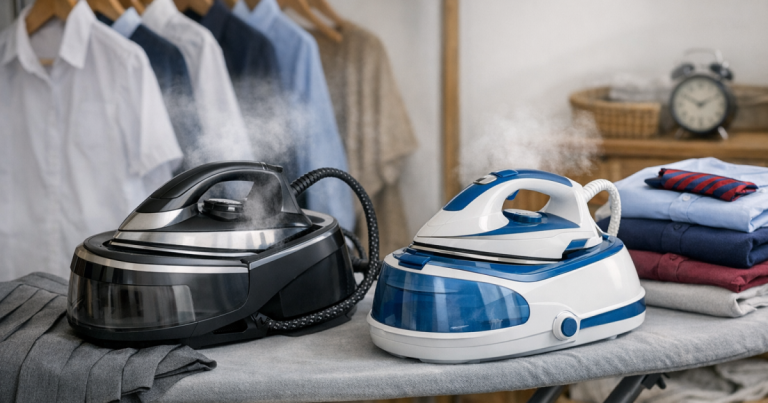
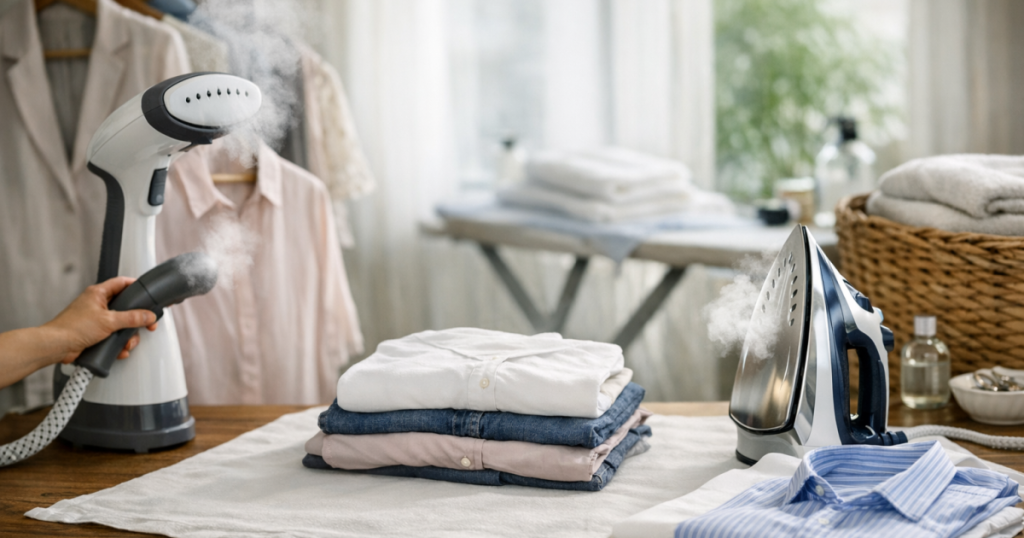
A crisp shirt, a revived wool coat and a travel-crumpled dress all need different handling. Choosing between garment steamers and irons is less about one tool being better and more about fabric, finish, time and storage. Steam relaxes fibres; pressure, heat and a board create sharpness. Knowing when to use each helps you avoid shine, water marks, stretched knitwear and disappointing creases.
The short answer
An iron is still the better tool when you want a flat, pressed finish: formal shirts, cotton trousers, pillowcases, tea towels and anything needing a crease line. A steamer is better for quick refreshing, soft drape and awkward garments: lined jackets, pleated skirts, dresses with gathers, coats, curtains and items that are hard to lay flat.
For many UK homes, the most useful setup is not the most expensive one. A reliable steam iron and a stable board can handle most weekly laundry. A handheld or upright steamer earns its place when you regularly refresh workwear, occasionwear, outerwear or delicate pieces that dislike firm pressure.
- Choose an iron for sharpness, flattened seams and structured cottons.
- Choose a steamer for drape, speed and garments with texture or lining.
- Use lower heat and more caution on synthetics, satin, viscose and blends.
- Think beyond the shelf price: storage, descaling, board space and time matter too.
What garment steamers and irons actually change in fabric
Creasing happens when fibres are bent, compressed or dried in a folded position. Heat and moisture help those fibres relax. The difference is in the finishing method. An iron combines heat, steam, pressure and a flat surface. That pressure is why it can sharpen collars, cuffs and pleats, but it is also why it can flatten texture, create shine on dark fabrics or leave imprints from seams and pockets.
A garment steamer uses hot vapour with little or no pressure. It softens creases while the garment hangs, so fabric keeps more movement and surface texture. That is useful on wool coats, lined blazers, floaty dresses and embellished areas where pressing could crush detail. The trade-off is that a steamer rarely gives the crisp, freshly pressed look of a well-used iron.
Feature differences that matter in real laundry
Steam output and control
More steam is not automatically better. Cotton shirts and linen can benefit from generous steam, while some synthetics need restraint to avoid damp patches or distortion. Look for clear steam control, a reliable burst function on irons, and a steamer that produces steady vapour rather than spitting water. Always test on an inside seam if the fabric is unfamiliar.
Soleplate, pressure and board support
With irons, the soleplate and the board work together. A smooth soleplate helps glide over cotton and polycotton, but the finish also depends on a firm ironing board, a clean cover and enough space to move the garment without re-creasing it. For shirt-heavy households, the board can be as important as the iron itself. If shirts are your main concern, our guide to choosing between a steam iron or generator iron for shirts goes deeper into the workflow differences.
Water tank and refill rhythm
Small handheld steamers are convenient but can require more frequent refilling. Upright steamers and steam generator irons usually support longer sessions, although they take more storage space. Rather than relying only on advertised capacity, think about your usual load: two work shirts, a full family ironing pile, or one dress before leaving the house.
Heat settings and fabric labels
Heat is where results and damage often separate. Cotton and linen usually tolerate more heat than acetate, nylon, satin-weave synthetics or delicate viscose blends, but care labels should lead the decision. A dot symbol on the iron icon matters: it tells you the maximum heat level the garment maker considers suitable. If the label says do not iron, steaming may still be unsuitable unless the care instructions specifically allow it.
What each tool does best
- Business shirts: an iron gives cleaner collars, plackets and cuffs. Steam alone may soften wrinkles but leave the shirt looking unfinished.
- Linen: an iron gives the neatest result, though some people prefer a relaxed, lightly steamed look rather than a perfectly flat finish.
- Wool coats: a steamer can refresh the surface and relax packing creases without flattening the nap. Keep the head moving and avoid soaking the fabric.
- Blazers and tailored jackets: steaming can help with light creases, but avoid forcing shape into the lapels. For more detail, see our advice on steamers for coats and blazers.
- Satin dresses: both heat and moisture can mark some satin fabrics, especially acetate or delicate synthetics. Use the care label first, and read our guide to cleaning satin dresses while keeping the sheen before applying steam.
- Knitwear: steaming can relax fibres, but hanging heavy damp knitwear can stretch it. Use minimal steam and support the garment if you are refreshing wool or cashmere.
Cost is more than the current £ price
The cheapest tool is not always the lowest-cost choice over time. A basic iron may be inexpensive to buy, but it still needs a board, space to set up and careful maintenance if you live in a hard-water area. A handheld steamer can be good value if you only refresh occasional garments, but it may feel slow for a full laundry basket. A steam generator iron costs more to purchase and store, yet can reduce time spent on large shirt loads or household linens.
When judging cost, include the whole routine:
- Initial purchase: basic irons, premium irons, handheld steamers, upright steamers and generator irons sit in different price bands.
- Accessories: ironing board, board cover, pressing cloth, hanging hook, garment hanger or heat-resistant rest.
- Maintenance: anti-scale cartridges, descaling products or replacement parts where the manufacturer requires them.
- Energy use: longer heat-up and ironing sessions use more electricity, so the practical cost depends on how often and how long you use the appliance.
- Garment risk: scorching a shirt, shining a dark trouser leg or watermarking a dress is a real cost, even if it never appears on the receipt.
Care results: what a good finish looks like
A good result is not always maximum smoothness. On a cotton work shirt, success means a flat collar, smooth sleeves and no puckering around buttons. On a wool coat, success may mean refreshed pile and fewer storage creases without a pressed-flat surface. On a satin dress, the aim is usually to preserve sheen and drape, not to chase every tiny line aggressively.
Use a pressing cloth when ironing dark, delicate or slightly textured fabrics. It creates a barrier between the soleplate and the garment, reducing the risk of shine and accidental drag marks. For steamers, keep the nozzle close enough for steam to reach the fibres, but not pressed hard into the surface unless the manual and fabric type allow it. Let garments dry fully before wearing or storing them, as trapped moisture can encourage musty smells indoors.
Common mistakes that spoil results
- Using too much heat too soon: start lower, then increase only if the fabric label permits it.
- Steaming while the garment is unsupported: tension helps creases release, but pulling too hard can distort seams or hems.
- Ironing over stains: heat can set residue from deodorant, food, sun cream or body oils.
- Putting damp steamed garments straight into a wardrobe: allow air circulation until the fabric is dry to the touch.
- Ignoring limescale: blocked steam vents and spitting water can leave marks, especially on pale shirts.
Hard water, limescale and maintenance
Many parts of England have hard or very hard water, which makes maintenance more important. Follow the appliance manual on whether to use tap water, filtered water, demineralised water or a mix. Do not assume vinegar is safe; some manufacturers advise against it because it can damage internal components or seals.
Empty the water tank after use if the manual recommends it, wipe the soleplate once cool, and keep steam vents clear. If an iron starts dragging, staining or producing brown droplets, stop using it on good garments until it has been cleaned according to the instructions. For steamers, check the head and hose for mineral build-up and allow the unit to dry before storing it in a cupboard.
Checks before you commit shelf space and budget
Before choosing a setup, match the tool to your actual clothes rather than an idealised laundry routine. A household of school shirts and office shirts needs different equipment from someone who mainly wears knitwear, jeans and occasional dresses. Storage matters too: a generator iron or upright steamer may be useful, but only if it is easy enough to get out and use.
- Fabric mix: count how many garments are cotton, wool, viscose, satin, linen or synthetic blends.
- Finish preference: decide whether you need crisp structure or soft crease release.
- Session length: occasional touch-ups suit different tools from weekly batch ironing.
- Space: consider board storage, hanging height, cupboard depth and safe cooling space.
- Maintenance tolerance: hard-water homes should pay close attention to anti-scale systems and cleaning steps.
FAQ
Can a garment steamer replace an iron?
Not completely for most households. A steamer is excellent for refreshing and softening creases, but an iron is better for collars, cuffs, pleats, seams and crisp cotton finishes.
Is steam safe for all delicate fabrics?
No. Some delicate fabrics can water mark, shrink, lose sheen or distort. Always follow the care label and test a hidden area before steaming satin, viscose, silk blends or embellished garments.
Do steam generator irons give better results than standard irons?
They can make large loads faster and easier because they are designed for sustained steam, but the final result still depends on heat setting, board support, fabric type and technique.
Why does my iron leave brown marks?
Brown marks often come from limescale, old water, residue on the soleplate or scorched fabric build-up. Stop using it on clean garments and clean it according to the manufacturer’s instructions.
Should clothes be dry before steaming or ironing?
They should not be dripping wet. Slight moisture can help some fabrics release creases, but garments need to dry fully before wearing or storing to avoid damp odours and fabric stress.
The big picture
Irons and steamers solve different fabric problems. The iron is the tool for structure, sharpness and traditional laundry finishing. The steamer is the tool for quick refreshes, awkward shapes and fabrics that look better with movement than pressure. The best choice is the one that fits your clothes, your space, your water hardness and the level of finish you actually need.