Silk scarves can bleed when strong dyes meet too much water, heat, rubbing or detergent, especially around printed borders and rolled hems.
The safest way to hand wash silk scarves is to test the dye first, use cool water, keep contact time short and dry the scarf flat between towels.
What to know first
Silk is a protein fibre, so it behaves differently from cotton, polyester or school uniform fabric. It can weaken when soaked for too long, lose lustre if scrubbed, and show water marks if it dries unevenly. Colour bleed is usually caused by unstable dye rather than dirt, so the aim is not to “wash harder” but to reduce the conditions that make dye move.
- Use cool water, not warm or hot water.
- Test each strong colour before washing the whole scarf.
- Wash one scarf at a time, especially if it has red, navy, black, emerald or deep purple areas.
- Keep the wash brief: a few minutes is usually enough for light freshening.
- Never wring silk, as twisting can distort the weave and push dye through pale sections.
If the scarf is labelled dry clean only, is vintage, has hand-painted detailing, has metallic threads or is irreplaceable, treat home washing as risky. A very light freshen may be possible, but full immersion can permanently change colour, finish and texture.
Step 1: check the scarf before it touches water
Lay the scarf flat in good daylight and look closely at the dye layout. The biggest bleed risk is not always the darkest scarf overall; it is often a design with dark motifs next to cream, pale pink or ivory ground fabric. Borders, contrast hems and screen-printed areas need particular care.
Check for stains, make-up, perfume marks, sun fading and old water rings. If a scarf already has tide marks, washing the whole piece can sometimes make them spread before they improve. Avoid spot rubbing, because a clean patch on silk can look worse than the original mark.
Also check the care label. “Hand wash” gives you more confidence, but it does not remove the need for a dye test. “Dry clean only” means the maker is warning that water may affect the fabric, dye, finish or structure.
Step 2: do a colourfastness test properly
A quick test can save a scarf. Dampen a corner of a clean white cotton cloth with cool water. Press it gently onto a hidden part of the scarf, such as the back of a hem or an area near the care label, for about 20 to 30 seconds. Do not rub.
Check the cloth. If you see visible colour transfer, especially from more than one shade, do not immerse the scarf. If the cloth stays clean, repeat the test with a tiny amount of diluted silk-safe detergent on another hidden area. This matters because some dyes behave in water but move once detergent is added.
For multicoloured scarves, test the strongest colour and any dark border. One stable patch does not prove that the entire scarf is stable.
Step 3: set up a gentle wash bath
Use a clean basin or bowl rather than the kitchen sink if possible, as food residue and cleaning products can mark silk. Fill it with cool water, roughly room temperature or slightly cooler. Add a very small amount of detergent suitable for silk or wool, then swirl the water to disperse it before the scarf goes in.
More detergent does not mean a cleaner scarf. Excess detergent takes longer to rinse out and can increase handling time, which is exactly what you are trying to avoid. Avoid biological detergents, oxygen bleach, chlorine bleach, stain-removing powders and heavy fabric conditioners. Silk needs a mild, low-residue wash, not an aggressive laundry treatment.
Do not add salt or vinegar as a colour “fix” for a finished scarf. These home remedies are unreliable on modern dyes and can affect the feel or finish of silk. If the dye is unstable, the safer choice is not to immerse the scarf.
Step 4: wash with almost no friction
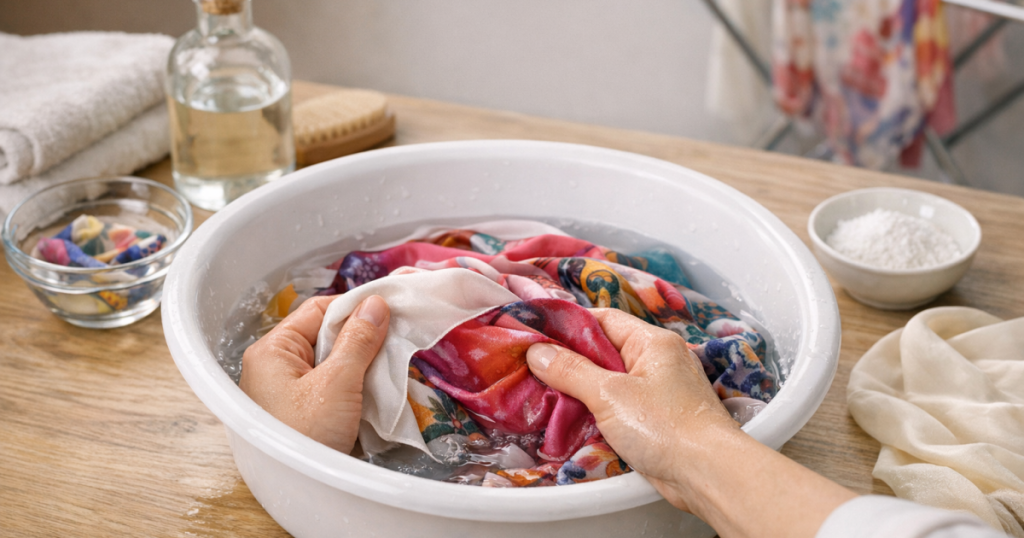
Place the scarf into the water and gently press it below the surface. Move it slowly through the bath with open hands, supporting the fabric rather than bunching it up. Think of it as releasing dust, perfume and light skin oils, not scrubbing laundry.
Keep the wash short. For a scarf that is lightly worn rather than stained, one to three minutes is usually enough. If the water starts changing colour quickly, lift the scarf out straight away and move to rinsing. Do not leave it soaking while you do something else; prolonged soaking is one of the easiest ways to encourage colour bleed.
If there is a small make-up mark on the edge, resist rubbing it directly. Press the area gently between your fingers under the water, then reassess after drying. Silk often looks different when wet, so aggressive stain work at this stage can cause permanent dull patches.
Step 5: rinse without shocking the fibres
Drain the wash water and refill the basin with fresh cool water. Support the scarf with both hands as you transfer it. Swish lightly, drain and repeat until the water is clear and the scarf no longer feels slippery with detergent.
Avoid running a powerful tap directly onto the scarf, especially onto printed areas. A strong stream can concentrate pressure in one place and create uneven wetting. If your tap is the only practical option, let the basin fill first, then place the scarf into the still water.
Do not use a final warm rinse to “finish” the wash. Temperature changes can affect silk handle and may encourage unstable dye to move.
Step 6: remove water with towels, not twisting
Lift the scarf out in a loose bundle, supporting its weight. Let excess water drip back into the basin for a few seconds, then lay the scarf flat on a clean white towel. Roll the towel and scarf together like a Swiss roll, pressing gently as you go. Unroll and repeat with a dry towel if the scarf is still very wet.
Use white or colourfast pale towels so towel dye cannot transfer back to the scarf. Avoid textured towels that shed lint, and do not leave the damp scarf rolled up for long. The towel stage is for water removal only, not storage.
If you often dry delicate items indoors, moisture control matters. Slow drying in a cool, crowded room can leave fabrics smelling stale and may increase the chance of uneven drying marks. The same ventilation principles used for clothes drying setups apply here; for broader drying-room planning, see our guide to planning a laundry drying setup that protects clothes.
Step 7: dry flat and reshape the edges
Lay the scarf flat on a dry towel or mesh drying surface, away from radiators, direct sunlight and heated airers. Smooth it gently into shape while it is damp, paying attention to rolled hems and corners. Do not peg it by the corners, as wet silk can stretch and distort under its own weight.
Turn the scarf once if needed, replacing the towel if it becomes damp. The goal is even drying. Strong heat may feel efficient, but it can make silk feel crisp, fade delicate colours and set creases in awkward places.
Once dry, check whether it needs further finishing. A steamer can help relax creases, but keep the head slightly away from the fabric and avoid spitting water onto pale silk. For a related delicate-fabric method, read our advice on steaming delicate dresses without leaving water marks.
What different scarves need
Printed silk twill scarves
Silk twill often has a firm, slightly ribbed texture and holds printed colour beautifully, but contrast borders can bleed into pale centres if soaked. Test both the border and the main print. Keep immersion brief and dry flat with the border well spread out, not folded over the centre.
Chiffon, georgette and very sheer silk
Sheer silk scarves can snag and stretch more easily than twill. Use extra water in the basin so the scarf can move without dragging against itself. Avoid jewellery, rough nails and laundry baskets with sharp seams.
Vintage or hand-painted scarves
Older dyes and painted details can be unpredictable. Even if a scarf looks sturdy, the finish may already be weakened by age, perfume or sunlight. If a colour test shows transfer, do not try to overcome it with colder water or a shorter wash. Keep to airing, careful steaming from a distance, or specialist cleaning.
Mistakes that make colour bleed worse
- Soaking for too long: silk scarves rarely need a long soak, and unstable dyes have more time to move.
- Using hot water: heat can loosen dye and change the feel of silk.
- Rubbing stains: friction can cause pale scuffs, shiny patches and local dye movement.
- Washing several scarves together: one unstable scarf can tint another in minutes.
- Drying over a radiator: heat and uneven drying can leave marks, stiffness and distorted hems.
- Using ordinary stain removers: many are too strong for silk and may strip colour.
How to store silk scarves after washing
Only put a silk scarf away when it is completely dry. Even slight dampness can create musty odours, mildew risk and creasing, particularly in wardrobes against cold external walls. Fold loosely along natural lines, or roll the scarf around acid-free tissue if you want to reduce sharp creases.
Keep silk away from direct sunlight, strong fragrances and damp storage boxes. If your wardrobe often feels cool or clammy, moisture control is worth addressing before storing delicate accessories for months. Our guide to wardrobe dehumidifiers and moisture absorbers for stored clothes explains the practical options for UK homes.
FAQ
Can I use baby shampoo on a silk scarf?
It is sometimes used in emergencies, but it is not ideal. A detergent made for silk or wool is more predictable because it is designed to rinse cleanly and treat protein fibres gently.
What should I do if colour starts bleeding in the basin?
Stop washing immediately, lift the scarf out, rinse briefly in fresh cool water and dry it flat between white towels. Do not keep rinsing for ages, as more water contact can worsen the problem.
Can I iron a silk scarf after hand washing?
Yes, if the care label allows it. Iron on the reverse while the scarf is slightly damp or use a pressing cloth on a low silk setting. Avoid spraying water directly onto the scarf.
Is dry cleaning always safer for silk scarves?
Not always, but it is usually safer for dry-clean-only, vintage, heavily dyed, embellished or valuable scarves. For washable silk, careful home washing can work well if the dye test is clean.
How often should I wash a silk scarf?
Wash only when it genuinely needs it. Airing after wear, keeping perfume off the fabric and storing it dry will reduce washing frequency and help preserve colour.
Final thoughts
Colour bleed prevention is mostly about restraint: test first, use cool water, avoid friction and get the scarf dry evenly. A silk scarf does not need a strong wash routine to feel fresh; it needs a controlled one. When in doubt, stop before the scarf is fully immersed, because once dye has moved into a pale section, it is very difficult to reverse without changing the fabric further.