Wedding guest dresses, bridesmaid dresses and party pieces often spend more time in storage than on the body. The aim is to store occasion dresses so they keep their shape, colour and finish between invitations, without creating creases, mildew or hanger dents.
Good storage starts before the dress reaches the wardrobe: clean fabric, gentle drying, breathable covering and enough space matter more than elaborate systems.
The short version
- Never put an occasion dress away with perfume, deodorant, food marks or dampness still in the fabric.
- Use the care label to decide whether to wash, hand wash, steam, air or dry clean before storage.
- Choose hanging for light structured dresses and flat or supported folded storage for heavy, beaded or stretchy dresses.
- Use a breathable garment cover, not the thin plastic bag from the dry cleaner.
- Keep dresses away from radiators, sunny windows, damp external walls and tightly packed rails.
- Check stored dresses a few weeks before the next event so there is time to deal with creases, odours or loose embellishment.
Step 1: check the dress before it goes near the wardrobe
Do a calm inspection in daylight, ideally the day after wearing. Look at the underarms, neckline, hem, waist, cuffs, zip area and anywhere the dress touched food, drink, fake tan, perfume or body lotion. Many stains are faint at first, then darken during storage as oils and sugars oxidise.
Brush off dry debris gently with clean hands or a soft clothes brush. Do not rub embellished, flocked, metallic, pleated or satin areas, as friction can flatten texture or create a dull patch. If the dress has detachable belts, brooches, corsages or straps, remove them before storage so they do not press marks into the fabric.
Check the construction too. Loose hooks, pulling seams, dangling beads and stressed straps are easier to sort before the dress is packed away. If you store a dress with a small tear under tension, the damage can worsen on the hanger.
Step 2: clean according to the fabric, not the occasion
Occasion dresses vary hugely. A polyester satin party dress, viscose wrap dress, silk blouse-style dress, tulle bridesmaid dress and beaded evening gown all need different handling. The care label should set the boundary: if it says dry clean only, do not assume a quick machine wash will be harmless because the dress feels robust.
Washable polyester and cotton-blend dresses are usually the most forgiving, provided you use a gentle cycle, moderate detergent and low spin where the label allows. Viscose needs more caution because it can distort, shrink or feel fragile when wet; if that is the fabric you are dealing with, follow a dedicated method for washing viscose dresses without shrinking or warping before you decide to clean it at home.
Silk, acetate, velvet, heavily pleated fabric and dresses with glued stones, sequins or complex linings are more likely to need professional cleaning or very careful local treatment. If you are only dealing with a faint smell from one evening, airing may be better than unnecessary washing, especially for delicate fibres and special finishes.
Step 3: dry completely before covering
A dress can feel dry on the outside while seams, linings, waistband layers or padded bust areas still hold moisture. That trapped dampness is one of the main causes of stale odours, mildew marks and storage creases that refuse to drop out later.
After washing or steaming, let the dress air in a well-ventilated room until it is fully dry and cool. Avoid direct heat from radiators, heated airers or intense sunlight, which can weaken elastane, fade colour or leave hard-set creases. If the dress has a lining, turn it gently so air can reach both layers, but do not leave delicate outer fabric scrunched or twisted.
For hand-washed pieces, create a controlled drying spot where water can fall safely without stretching the garment. A structured setup for setting up a drip-drying area for hand-washed clothes is particularly useful for dresses that cannot be wrung or spun hard.
Step 4: decide whether to hang or fold
The biggest storage mistake with occasion dresses is treating every dress as a hanger garment. Hanging is convenient, but it is not always kind to the fabric. Weight, stretch, embellishment and neckline shape matter more than how expensive or formal the dress is.
Hang these dresses with support
- Lightweight tailored dresses with stable shoulder seams.
- Short satin, crepe or polyester occasion dresses that do not drag down under their own weight.
- Structured dresses with internal hanger loops designed to take some of the load.
- Tulle or organza dresses that need space to avoid crushing, provided they are not too heavy.
Use a broad, smooth or padded hanger rather than a thin wire hanger. Fasten zips, hooks and buttons so the dress sits in its intended shape. If the dress has hanger loops, place those over the hanger to reduce strain on the shoulders, but check they are not pulling the neckline out of shape.
Fold these dresses instead
- Heavy beaded, sequinned or embellished dresses that pull downwards on a hanger.
- Bias-cut silk or satin dresses that can lengthen or distort when suspended.
- Stretch jersey, knitted or elastane-heavy party dresses.
- Very long gowns where the hem pools on the wardrobe floor.
Fold with clean acid-free tissue or plain white cotton between layers if the fabric is prone to creasing, colour transfer or surface abrasion. Avoid coloured tissue, printed paper and strongly scented drawer liners, as dyes and fragrance oils can transfer during long storage.
Step 5: protect the surface without trapping air
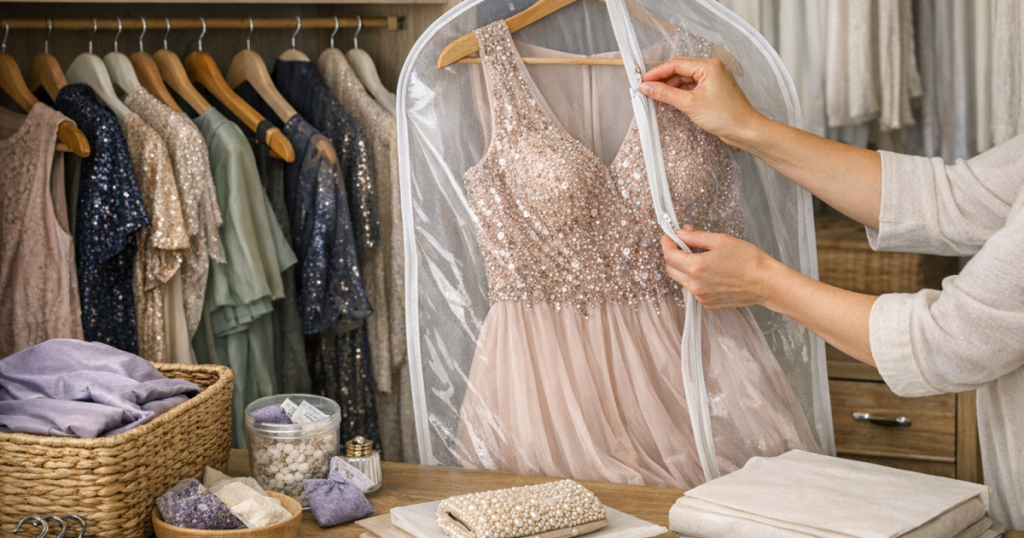
A breathable garment bag is usually the best outer protection for hanging occasion dresses. Cotton, calico or good-quality non-woven covers help keep dust off while allowing moisture to escape. The thin plastic sleeve from dry cleaning is only intended for transport, not long-term wardrobe storage.
Plastic can trap humidity, cling to embellishment and encourage yellowing or odour if the dress is not perfectly dry. It can also press sharp creases into satin or tulle when dresses are packed tightly. If you need to transport the dress in plastic because of rain, remove the cover as soon as you are home and let the fabric breathe.
For folded dresses, use a clean storage box or drawer with enough depth that the dress is not compressed. Line the base with white cotton or acid-free tissue. Do not vacuum-pack occasion dresses with boning, padding, beads, pleats, appliqué, feathers or delicate trims; compression can distort shape and leave permanent marks.
Step 6: choose the safest wardrobe spot
Occasion dresses should not be squeezed into the busiest part of the wardrobe. A cramped rail causes crushed sleeves, bent straps, flattened bows and shiny pressure marks on satin. Give each dress enough breathing space so it can hang or lie in its natural shape.
Avoid storing special-occasion clothing against an outside wall if that area feels cold or slightly damp in winter. UK homes can have pockets of condensation, particularly in wardrobes placed on external walls or in rooms that are not heated evenly. Leave a small gap behind wardrobes where possible and avoid pushing garment bags hard against the back panel.
Keep dresses away from bright windows, loft extremes, airing cupboards and radiator heat. A bedroom wardrobe or under-bed storage drawer in a stable, dry room is usually kinder than a hot loft or damp garage. If your wardrobe is crowded, use the same thinking as zoning a wardrobe for safer clothes storage: everyday garments at the front, delicate and occasional pieces in a calmer section, and anything seasonal checked before it disappears for months.
Step 7: store accessories separately
Belts, pins, corsages, detachable straps, chains and embellished sashes can all damage a dress if left attached under pressure. Metal can tarnish or mark pale fabric. Beads and stones can snag net, chiffon and lace. A firm belt can leave a ridge across the waist if the dress is folded with it still in place.
Place accessories in a labelled cotton pouch or small box near the dress, not loose inside the garment bag where they can rub. If a belt is essential to the outfit, store it rolled loosely or laid flat, depending on its construction. For dresses worn with a matching scarf or wrap, make sure both pieces are clean and dry before storing them together.
Fabric-by-fabric storage examples
Satin wedding guest dress
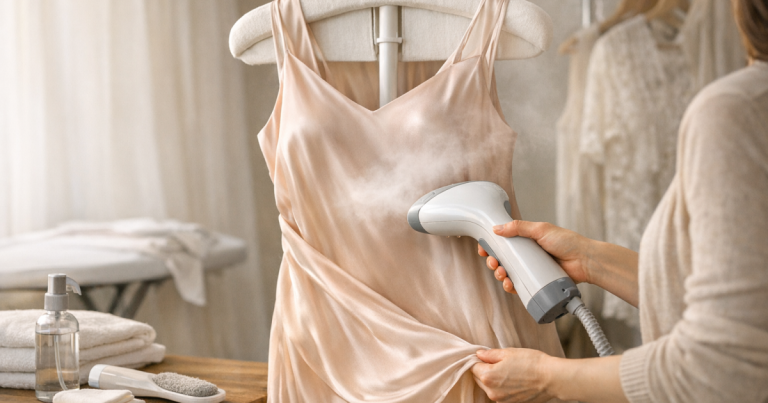
Hang a lightweight satin dress on a smooth padded hanger, fastened properly, inside a breathable garment cover. Keep it away from textured coats or rough sequins that could snag or scuff the surface. If creases form, steam from the inside where the care label allows, keeping the steamer head from pressing hard on the sheen.
Beaded evening gown
Heavy embellishment is usually safer folded flat, with tissue supporting the folds and protecting beadwork from rubbing against itself. Do not hang it for months by narrow straps. If the gown came with internal support loops, they can help for short periods, but weight is still the deciding factor.
Viscose party dress
Let viscose dry completely and return to its normal feel before storage. Hang only if the garment is light and stable; otherwise fold to prevent lengthening. Keep folds soft rather than sharp, and avoid overfilling the drawer or box.
Tulle bridesmaid dress
Tulle needs volume. Hang it where the skirt is not crushed, or fold very loosely in a large breathable box with tissue supporting the skirt. Keep it away from hook-and-loop fastenings, exposed zips and jewellery, which can catch the net.
Silk slip dress
Silk shows pressure and water marks easily, so store it clean, dry and away from perfume residue. A padded hanger works for a stable lightweight slip, but a bias-cut or stretchy-feeling silk dress may be better folded with tissue to prevent the neckline and hem from dropping unevenly.
Refresh the dress before the next invitation
Do not wait until the morning of a wedding to inspect a stored dress. Check it at least one to two weeks before the event. That gives you time to air it, deal with creases, book cleaning if needed, mend a hook or replace a missing button.
Take the dress out of its cover and let it hang in a ventilated room, away from kitchen smells and direct sunlight. Light creases may relax naturally. If steaming is suitable, work slowly from the inside or through a clean cloth, and avoid soaking trims, glued embellishments or delicate pleats with steam.
If the dress smells musty, do not mask it with perfume. Air it first, then reassess. Persistent mustiness can mean the dress was stored slightly damp or in a humid space, and fragrance will only add residue that may stain over time.
Common storage mistakes to avoid
- Leaving dresses in dry-cleaner plastic for months.
- Hanging heavy gowns by thin straps until the neckline stretches.
- Putting dresses away after only a quick visual check, without looking at underarms and hems.
- Using scented sachets directly against delicate fabric.
- Storing pale dresses next to dark, unstable dyes or coloured tissue paper.
- Packing embellished dresses so beads, sequins or stones press into softer fabric.
- Keeping special dresses in lofts, garages or damp spare rooms because they are worn infrequently.
Helpful questions
Can I keep an occasion dress in the dry-cleaning bag?
Only briefly for transport. For storage, remove the plastic and use a breathable garment cover so moisture is not trapped against the fabric.
Is it better to hang or fold a bridesmaid dress?
It depends on weight and fabric. Light structured dresses can hang, while heavy, stretchy, beaded or bias-cut dresses are usually safer folded with soft support.
How often should I check stored occasion dresses?
Check them every few months, and again one to two weeks before wearing. Look for odour, creases, loose trims, dampness and any signs of fabric stress.
Can I use lavender or cedar near party dresses?
You can use them nearby, but keep them from touching the fabric. Scented oils and wood contact can mark pale, silk or delicate surfaces.
Should I steam a dress before putting it away?
Only if the fabric tolerates steam and the dress will be allowed to dry fully afterwards. Never cover or pack a warm, damp or freshly steamed dress.
In brief
Cleanliness, dryness, support and breathable protection are the four rules that keep occasion dresses ready for the next wedding, party or formal event. Hang light stable dresses on suitable hangers, fold heavy or stretchy pieces with soft support, and avoid plastic, damp corners and crowded rails. A few minutes of checking before storage saves far more effort than trying to rescue creases, odours or misshapen fabric the day before an invitation.